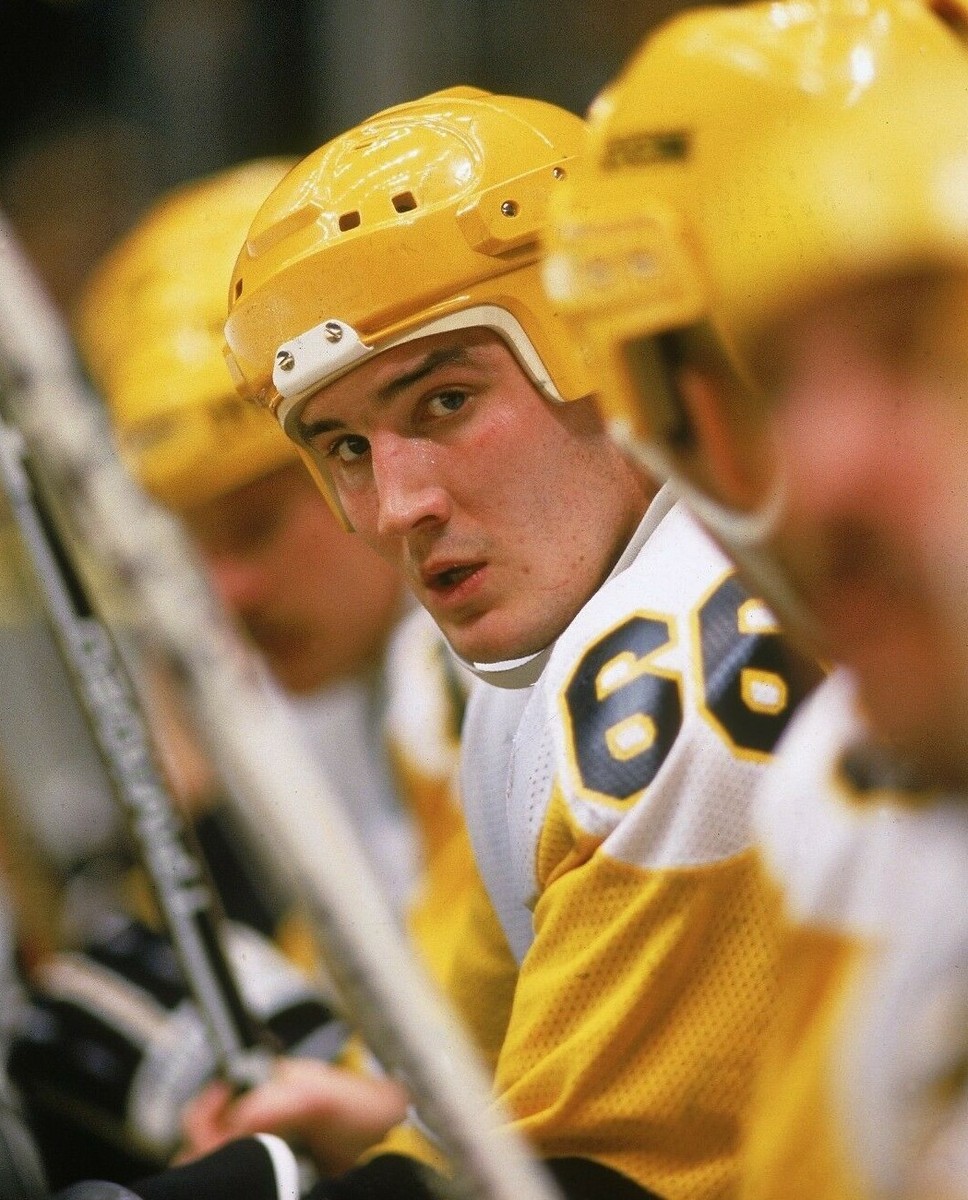
Mario Lemieux
 Canada
Also known as: Super Mario, Le Magnifique, The Magnificent One
Birthday
October 5, 1965
Birth Sign
Libra
Birthplace
Montreal, Quebec, Canada
Age
60 years old
Height
6 ft 4 in (193 cm)
About
Mario Lemieux is a Canadian former professional ice hockey player and owner, widely regarded as one of the greatest players in NHL history. Born in Montreal, he spent his entire 17-season playing career with the Pittsburgh Penguins, whom he later rescued from bankruptcy and owned. Nicknamed "Super Mario," he combined rare size, skill, and hockey sense to dominate the game despite battling serious health issues.
As a player, Lemieux led the Penguins to back-to-back Stanley Cup titles in 1991 and 1992, winning the Conn Smythe Trophy both times. He captured six Art Ross Trophies as the league's top scorer, three Hart Trophies as MVP, and an Olympic gold medal with Canada in 2002. His career averages of 0.754 goals and 1.883 points per game rank second only to Wayne Gretzky.
Since retiring in 2006, Lemieux has focused on ownership and philanthropy. He founded the Mario Lemieux Foundation in 1993, which has raised millions for cancer research. As of 2026, he remains part-owner and chairman of the Penguins, and in 2026 he is set to be inducted into the Pittsburgh Walk of Fame.
Early Life & Background
Mario Lemieux was born into a working-class family in Montreal, the youngest of four children. His older brother Alain played in the NHL, and Mario often skated on outdoor rinks in the city's Villeray neighborhood, developing his exceptional hands and vision. He attended the École secondaire de la Cité-des-Jeunes, where his hockey talent quickly stood out.
At 16, Lemieux joined the Laval Voisins of the QMJHL, where he put up staggering numbers: 184 points in 1982-83 and 282 points in 1983-84, setting a league record that still stands. His dominance made him the consensus first overall pick for the 1984 NHL Entry Draft. The Pittsburgh Penguins, who had finished last in the league, selected him, and he made an immediate impact in his rookie season, scoring 100 points and winning the Calder Memorial Trophy as Rookie of the Year.
Before the NHL, Lemieux had also represented Canada at the 1983 World Junior Championship, earning a bronze medal. His early life was marked by a single-minded focus on hockey, with his family often making sacrifices to support his development. The nickname "Super Mario" came from his junior days, a playful nod to the video game character, and it stuck throughout his career.
Career Growth
Lemieux's breakthrough came in his rookie season of 1984-85, when he led all rookies in scoring and won the Calder Trophy. The following year, he scored 141 points, and in 1987-88 he set a career-high 168 points, winning his first Art Ross Trophy. His most iconic regular-season moment came on New Year's Eve 1988, when he scored a goal in all five game situations (even strength, power play, short-handed, penalty shot, and empty net) in a single game, a feat no one else has matched.
The pinnacle of his playing career arrived in 1991 and 1992, when he led the Penguins to consecutive Stanley Cup championships, earning the Conn Smythe Trophy as playoff MVP both years. In 1992-93, he was on pace for a record-breaking 200-point season when he was diagnosed with Hodgkin's lymphoma. He missed two months for radiation treatment, returned, and still won the scoring title with 160 points, capturing the Hart Trophy.
After retiring in 1997, he returned in 2000 and won another scoring title in 2001-02 with 99 points. He played in the 2002 Olympics, winning gold, and helped Canada win the 2004 World Cup. He retired for good in 2006 due to an irregular heartbeat. Off the ice, he bought the Penguins in 1999, saving them from relocation, and under his ownership the team won three more Stanley Cups in 2009, 2016, and 2017. He sold controlling interest to Fenway Sports Group in 2021 but remains part-owner and chairman.
Public Image & Style
Mario Lemieux's public image is that of a quiet, humble superstar who let his play do the talking. He was known for his effortless style, often making difficult plays look routine. Media and fans alike have praised his sportsmanship and his resilience in overcoming cancer and chronic back issues, which endeared him to Pittsburgh and hockey fans worldwide.
His nickname "Super Mario" became a brand, and his number 66 is iconic. Lemieux never sought the spotlight, preferring to let his performance speak. Off the ice, he is seen as a shrewd businessman who saved the Penguins franchise, cementing his legacy as a loyal steward of the team. Fans appreciate his accessibility and his commitment to the Pittsburgh community through his foundation.
In recent years, Lemieux has maintained a low profile, appearing at Penguins events and supporting charitable causes. His induction into the Pittsburgh Walk of Fame in 2026 reflects the deep affection the city holds for him.
Fame & Fandom
Mario Lemieux commands a global presence that transcends the boundaries of professional sports, maintaining a resonance in cultural memory that few athletes ever achieve. This enduring attention places him as the 6th most famous person in Ice Hockey according to the iFANN Global Fame Rankings, a position he has held steady through multiple assessment cycles. While his fame is anchored in athletic supremacy, the public perception of Lemieux extends into a realm of mythic resilience where fans view him as a symbol of survival rather than merely a competitor. The fanbase does not operate under a unified formal name or organized subgroups; instead, supporters are identified collectively by their reverence for "Super Mario" within the broader Pittsburgh Penguins community. This connection is maintained through active participation in the Mario Lemieux Foundation, where fans contribute to cancer research initiatives, and annual community events like the 6.6K Run & Family Walk. Unlike modern stars who rely on digital campaigns, Lemieux's bond with his audience stems from direct community involvement and a legacy of returning from life-threatening illness to dominate the game. His influence remains intrinsic to the city of Pittsburgh, where new ownership groups explicitly seek to preserve his role in team operations due to his unique standing with the populace.
Interesting Facts and Legends
Mario Lemieux famously scored a goal on his first NHL shift against Boston Bruins goaltender Pete Peeters in October 1984, marking an immediate impact on his debut. He is one of only three players in NHL history to have the standard three-year waiting period for Hockey Hall of Fame induction waived, joining Wayne Gretzky and Bobby Orr. During his 1993 cancer treatment, he missed 23 games yet still won the scoring title with 160 points, finishing 12 points ahead of his nearest rival. In 1989, he recorded eight points in a single game against the Philadelphia Flyers, including five goals and one in overtime. His number 66 is retired by the Penguins, and he is affectionately known as "Le Magnifique" in French. A story fans still retell involves his 1987 playoff performance against the Washington Capitals, where he averaged nearly two points per game and scored five goals in a single contest to eliminate the series. This era solidified his reputation as a player who could physically overpower opponents, leading rival staff at *The Athletic* to later name him the biggest villain in Capitals' history. In 2026, he was inducted into the Pittsburgh Walk of Fame alongside other local legends, cementing his status as a civic icon beyond the rink.
Family & Personal Life
Mario Lemieux married Nathalie Asselin in 1993, and the couple has six children: Austin, Mark, David, Lauren, Sydney, and Alexa. The family resides in Pittsburgh, where Lemieux has lived since his playing days. His older brother Alain also played in the NHL, appearing with the St. Louis Blues and Quebec Nordiques, and the brothers are not related to Claude Lemieux, despite occasional confusion.
Lemieux's parents, Pierrette and Jean-Guy, were supportive of his hockey career, with his father working as a carpenter. The family valued hard work and modesty, traits Lemieux has carried into his business and philanthropic endeavors. He has spoken about how his children have kept him grounded, and his foundation's work is often inspired by his own health battles, ensuring his legacy extends beyond the rink.
Relationships & Dating History
Mario Lemieux married Nathalie Asselin, a former model, in 1993. The couple met in the late 1980s in Pittsburgh, where Asselin was working. They have six children together, and their marriage has remained stable throughout Lemieux's health struggles and his demanding career.
Before his marriage, Lemieux was linked to a few high-profile relationships, including a rumored romance with actress Susan Anton in the mid-1980s, though neither confirmed it. He was known to be private about his personal life, preferring to keep his focus on hockey. As of 2026, Mario and Nathalie are still married, and the family resides in Pittsburgh.
- RumouredSusan Anton1985 - 1986Rumored romance in the mid-1980s, never confirmed.
- MarriedNathalie Asselin1993 - presentCurrentMarried in 1993, six children together.
Salary, Net Worth In 2026
$300 Million
iFANN Editorial Team estimate
Per iFANN's editorial analysis, Mario Lemieux's net worth in 2026 is estimated at $300 million. This fortune stems from his NHL playing career, which earned him over $40 million in salary, and his savvy business ventures, most notably his ownership of the Pittsburgh Penguins. In 1999, Lemieux purchased the bankrupt Penguins for $107 million, using deferred salary and other investments. Under his ownership, the team's value skyrocketed, especially after winning three more Stanley Cups. In 2021, he sold a controlling stake to Fenway Sports Group in a deal that valued the franchise at around $900 million. Lemieux retained a minority share and a role as chairman, which continues to generate substantial income. Beyond hockey, Lemieux has invested in real estate and other ventures, and he earns from endorsements and appearances. His foundation, while philanthropic, also benefits from his financial acumen. The sale of the Penguins was a major windfall, and his remaining stake continues to appreciate as the team's value grows, now estimated at over $1.5 billion.
Awards Won (21)
Mario Lemieux's trophy case is among the most decorated in hockey history. He won two Stanley Cups as a player and three as an owner, but his individual accolades are just as impressive. He captured the Hart Memorial Trophy as league MVP three times, the Art Ross Trophy as scoring champion six times, and the Conn Smythe Trophy as playoff MVP twice. He also won the Lester B. Pearson Award four times, the Calder Trophy as rookie of the year, and the Bill Masterton Trophy for perseverance. Internationally, he earned an Olympic gold medal and a World Cup of Hockey championship.
1992 · Playoff Champion
Pittsburgh Penguins
1991 · Playoff Champion
Pittsburgh Penguins
1992 · Playoff MVP
Pittsburgh Penguins
1991 · Playoff MVP
Pittsburgh Penguins
Known For
Pittsburgh Penguins
1984 · Center
Stanley Cup Champion
1991 · Player
Stanley Cup Champion
1992 · Player
Olympic Gold Medal
2002 · Team Canada
Keywords
Sources
Quick Facts
- Profession
- ice hockey player
- Born
- October 5, 1965
- Birthplace
- Montreal, Quebec, Canada
- Height
- 6 ft 4 in (193 cm)
- Spouse
- Nathalie Asselin
- Children
- Six children
- Net Worth
- $300 Million
Personal Details
- Full Name
- Mario Lemieux
- Height
- 6 ft 4 in (193 cm)
- Spouse
- Nathalie Asselin
- Children
- Six children: Austin, Mark, David, Lauren, Sydney, Alexa
Frequently Asked Questions
Who is Mario Lemieux?
What is Mario Lemieux's net worth in 2026?
How many Stanley Cups did Mario Lemieux win?
Is Mario Lemieux still involved with the Pittsburgh Penguins in 2026?
What is Mario Lemieux known for?
Social Media

Join the community
fans discussing