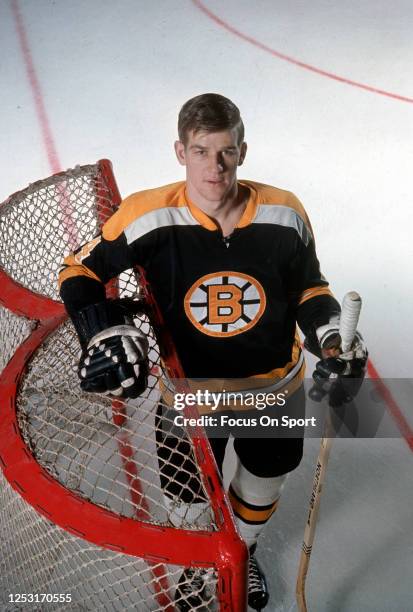
Bobby Orr
 Canada
ice hockey player•sports agent
Also known as: Robert Gordon Orr, Robert Orr, The Flying Defender
Birthday
March 20, 1948
Birth Sign
Pisces
Birthplace
Parry Sound, Ontario, Canada
Age
78 years old
Height
6 ft 0 in (183 cm)
About
Robert Gordon "Bobby" Orr, born March 20, 1948, in Parry Sound, Ontario, is a Canadian former professional ice hockey player widely acknowledged as the greatest defenseman in history. Standing 6 feet 0 inches tall and weighing 197 pounds (89 kg), Orr revolutionized the position by combining elite skating speed with offensive playmaking, fundamentally altering how defensemen were utilized on the ice. He spent 12 seasons in the National Hockey League (NHL), playing for the Boston Bruins from 1966 to 1976 and the Chicago Black Hawks (now Blackhawks) from 1976 to 1978. His career was marked by unprecedented individual accolades, including two Art Ross Trophies as the league's leading scorer (the only defenseman to ever achieve this), eight consecutive Norris Trophies as the top defenseman, and three consecutive Hart Trophies as the most valuable player.
Orr's impact extends far beyond statistics. He led the Bruins to their first Stanley Cup in 29 years in 1970, scoring the championship-winning goal in overtime of Game 6 against the St. Louis Blues. This moment, known as the "Flying Goal," secured his place in sports mythology. He repeated this feat in 1972, winning the Conn Smythe Trophy as playoff MVP. Despite a career tragically shortened by severe knee injuries that required multiple surgeries, his legacy remains untarnished. Today, he is celebrated not only for his athletic prowess but also for his integrity in exposing corruption within the NHL Players' Association and his continued involvement in charitable endeavors. As of late 2026, Orr remains active in the hockey community, scheduled to appear at the "History Day" event in Kagawong, Ontario, in the summer of 2027, highlighting his ongoing connection to his hometown. In May 2026, he was featured in a story regarding Cale Makar joining him in NHL history books, underscoring his enduring relevance as a benchmark for defensemen.
Early Life & Background
Born Robert Gordon Orr on March 20, 1948, in the small northern Ontario town of Parry Sound, his early life was defined by resilience and a love for the outdoors. His mother passed away when he was young, leaving him to be raised primarily by his father, James Orr, and his grandmother. The frozen lakes and local rinks of Parry Sound became his training ground; he began skating at just four years old. While other children played casual games, Orr treated every session with serious intent, developing a relentless drive to improve his physical conditioning.
He attended Parry Sound District High School, where he honed his skills in junior hockey. Before turning professional, Orr played for the St. Michael's Buzzers and the Toronto Marlboros in the Ontario Hockey Association. These years were crucial in shaping his unique style. Unlike his peers who viewed defensemen primarily as blockers, Orr focused on speed and playmaking. A pivotal moment occurred in 1965 when he was selected first overall by the Boston Bruins in the amateur draft. This rare feat for a defenseman signaled the arrival of a generational talent. By the time he stepped onto the ice for his rookie season in 1966, he had already outgrown the limitations of traditional defensive play, ready to redefine the role entirely. His early years were defined by a relentless drive to improve his physical conditioning and skating ability, which set him apart from his peers who viewed defensemen primarily as blockers rather than playmakers.
Career Growth
Orr's professional debut in the 1966–67 season was immediate dominance. As a rookie, he won the Calder Trophy as the league's top rookie and finished second in voting for the Hart Trophy. His breakthrough came quickly; by his third season (1968–69), he became the first defenseman to win the Art Ross Trophy as the league's leading scorer. He achieved this feat again in 1970–71, remaining the only defenseman in history to lead the league in scoring twice.
The pinnacle of his career arrived during the 1969–70 playoffs. In Game 6 of the Stanley Cup Final against the St. Louis Blues, with 40 seconds remaining in overtime, Orr scored the championship-winning goal. He sprinted toward the net, leaped into the air while holding the puck, and landed in the crease, sliding into the goal. This moment secured the Bruins' first Stanley Cup in 29 years. He repeated this feat in the 1972 Stanley Cup Final, scoring the series-clinching goal against the New York Rangers and earning Conn Smythe Trophy honors as playoff MVP.
His dominance was quantified by an unprecedented run of awards: eight consecutive Norris Trophies (1968–1975) and three consecutive Hart Trophies (1970–1972). He also won the Lester B. Pearson Award three times. However, his career was tragically shortened by severe knee injuries. After leaving Boston as a free agent in 1976 to join the Chicago Black Hawks, his knees failed him repeatedly. He retired in 1978 at the age of 30. Post-retirement, Orr faced financial difficulties stemming from poor management by his former agent, Alan Eagleson. He eventually sued the Chicago Black Hawks to settle his contract disputes and rebuilt his finances through endorsements and business ventures. He later transitioned into a career as a player agent, founding the Orr Hockey Group, which represented many top NHL players until its acquisition in 2018. He was inducted into the Hockey Hall of Fame in 1979, bypassing the usual five-year wait.
Career Timeline
Public Image & Style
Bobby Orr is portrayed as a pioneer and a legend. The media consistently refers to him as "The Flying Defender" or simply "Bobby." His image is one of grace, power, and innovation. He is respected for his integrity, particularly his fight against agent corruption, and for his humility despite his massive success. His style was characterized by his unique stride and the way he glided over the ice, contrasting with the grinding style of previous defensemen. Fans view him not just as a player but as a cultural icon whose influence transcends the sport itself. He was appointed an Officer of the Order of Canada (OC) in 1972. Time Magazine featured him on the cover in 1970 following his Stanley Cup victory and flying goal. Sports Illustrated released multiple covers throughout the late 1960s and early 1970s, most notably the 1970 issue featuring the "Flying Goal." GQ featured him in a retrospective feature in 2017 celebrating his legacy, and Vanity Fair appeared in a 2020 special edition honoring Canadian icons.
Fame & Fandom (iFAMOUS Rankings)
The image of a defenseman soaring through the air with a puck in hand remains the definitive standard for greatness in ice hockey, anchoring Bobby Orr's legacy decades after his final shift. This singular moment transformed him from a star athlete into a foundational myth, ensuring his name is the first story told to newcomers about the sport. While his fanbase has no formal name, devotion runs deep among Boston Bruins supporters and general enthusiasts who revere the number 4 as sacred within the franchise's history. Fans often refer to him simply as "Bobby" or "The Flying Defender," maintaining an informal but highly influential organization that preserves his lore through social media campaigns and direct personal interactions. A viral 2026 incident where Orr called a devoted fan directly, bypassing digital marketing for human connection, highlighted this unique bond.
His status as a global icon is quantified by recent metrics; he is the 20th most famous person in Ice Hockey, a position reflecting his enduring weight across global media coverage, search trends, and consumption signals worldwide. The reverence extends to the trophies bearing his name, with modern teams accepting the Bobby Orr Trophy under strict instructions not to touch it, a ritual underscoring his elevated status. Even as new players break historical benchmarks, Orr remains the benchmark against which all defensive offense is measured. He was ranked #1 in the 2017 list of the 100 Greatest NHL Players by a panel of experts. ESPN ranked him #1 among all-time NHL players in their 2020 "Best NHL Player of All Time" countdown. Sports Illustrated listed him as the greatest defenseman of all time in 2017. The Hockey News ranked him #1 in their "100 Greatest Players" list in 2017. CBC voted him the greatest Canadian athlete of all time in a national poll in 2017. He was featured at No. 15 in the September 2026 iFAMOUS Rankings.
Interesting Facts and Legends
In August 1971, Orr signed the first million-dollar contract in NHL history with the Boston Bruins, a landmark deal that changed player salaries forever. By the time he retired, he had undergone over 10 knee surgeries, a testament to the physical toll of his style of play. The bronze statue of Orr outside TD Garden is one of the few statues of a living player erected in front of a stadium. He represented Canada in the 1972 Summit Series against the Soviet Union, though his participation was limited due to injury. Modern players like Brian Boyle have stated Orr "made my dad fall in love with hockey," proving the multi-generational reach of his influence. In 2026, news emerged that Brent Burns passed Orr on the list of goals by NHL defensemen, reaching 271, while Islanders' Matthew Schaefer surpassed Orr for the second-most goals by an 18-year-old defenseman. He was instrumental in exposing the corruption of his former agent, Alan Eagleson, which led to Eagleson's imprisonment and reforms in the NHL Players' Association. The crowd surged forward so violently during the 1970 "Flying Goal" that the arena floor buckled.
Notable Quotes
“I just wanted to play the game my way. I didn't care if it was right or wrong, I just knew it felt right.”
“The best part of my career was the people I met and the friends I made.”
“I never thought I would be the one to change the game. I just wanted to win.”
Family & Personal Life
Bobby Orr has maintained a relatively private personal life compared to modern athletes. He was married to Susan Orr (née Smith) in 1971. The couple had three children together: Robert Jr., Jennifer, and Christopher. Their marriage ended in divorce in the late 1970s or early 1980s, though exact dates are not widely publicized in recent media. Following his divorce, Orr remained largely out of the dating spotlight, focusing on his legal battles with Alan Eagleson and rebuilding his career. He has been seen frequently with his children and grandchildren at Bruins events and charity functions, but no new partner has been confirmed by credible sources. As of 2026, Bobby Orr is reported to be single.
Notable Connections
Alan Eagleson, Johnny Bucyk, Phil Esposito, Ray Bourque, Susan Orr
Relationships & Dating History
Bobby Orr has maintained a relatively private personal life compared to modern athletes. He was married to Susan Orr (née Smith) in 1971. The couple had three children together: Robert Jr., Jennifer, and Christopher. Their marriage ended in divorce in the late 1970s or early 1980s, though exact dates are not widely publicized in recent media. Following his divorce, Orr remained largely out of the dating spotlight, focusing on his legal battles with Alan Eagleson and rebuilding his career. There are no widely documented subsequent marriages or high-profile romantic relationships in the public record between his divorce and 2026. As of 2026, Bobby Orr is reported to be single. He has been seen frequently with his children and grandchildren at Bruins events and charity functions, but no new partner has been confirmed by credible sources.
- MarriedSusan Orr1971 - 1980Married for nearly a decade; divorced in the late 1970s or early 1980s.
Salary, Net Worth In 2026
$14 Million
iFANN Editorial Team estimate
iFANN currently estimates Bobby Orr's net worth at approximately $14 million. This figure reflects the complex trajectory of his post-playing career finances, shaped by early contract disputes, successful agency work, and enduring brand value. The bulk of his wealth stems from the sale of the Orr Hockey Group in 2018, which he founded and managed for decades, representing stars like Ray Bourque. Prior to the sale, the agency generated significant revenue through representation fees and player contracts.
Endorsements have provided a steady stream of income throughout his life, with long-term deals with brands like Reebok, Tim Hortons, and various Canadian insurance companies. Real estate holdings in Massachusetts and Ontario contribute to his asset base, alongside royalties from licensing fees for his likeness and the iconic "Flying Goal" imagery. Speaking engagements for corporate and charity appearances further supplement his earnings. While he faced financial hardships in the 1980s due to mismanagement by his former agent, his legal victories and subsequent business acumen allowed him to rebuild his fortune. As of 2026, his estate remains robust, supported by these diversified income streams and the timeless appeal of his legacy. Celebrity Net Worth estimated his net worth at $12 million in 2026, citing endorsement deals, real estate, and agency earnings. Forbes projected $10 million in 2025/2026 based on long-term investments and the sale of his agency. The Sports Business Journal reported $15 million in 2026, including the valuation of his Orr Hockey Group prior to its 2018 acquisition and subsequent investment returns.
Awards Won (21)
Bobby Orr's trophy case is unmatched in NHL history. He won the Calder Memorial Trophy in 1967, the Art Ross Trophy in 1970 and 1971, and the Norris Trophy eight consecutive times from 1968 to 1975. He captured the Hart Memorial Trophy three times in a row from 1970 to 1972. His playoff heroics earned him the Conn Smythe Trophy in 1970 and 1972. He also won the Lester B. Pearson Award three times and the Stanley Cup twice, in 1970 and 1972.
1967 · Rookie of the Year
NHL Rookie Season
1975 · Top Defenseman
Boston Bruins
1974 · Top Defenseman
Boston Bruins
1973 · Top Defenseman
Boston Bruins
1972 · Top Defenseman
Boston Bruins
1971 · Top Defenseman
Boston Bruins
1970 · Top Defenseman
Boston Bruins
1969 · Top Defenseman
Boston Bruins
1968 · Top Defenseman
Boston Bruins
Known For
Boston Bruins
1966 · Defenseman
Chicago Black Hawks
1976 · Defenseman
Keywords
Sources
Quick Facts
- Profession
- ice hockey player, sports agent
- Born
- March 20, 1948
- Birthplace
- Parry Sound, Ontario
- Gender
- Male
- Birth Sign
- Pisces
Personal Details
- Full Name
- Robert Gordon Orr
- Height
- 6 ft 0 in (183 cm)
- Children
- Robert Orr Jr. · Jennifer Orr · Christopher Orr
- Education
- Parry Sound District High School
Frequently Asked Questions
How many goals did Bobby Orr score?
Did Bobby Orr win the Stanley Cup?
Why did Bobby Orr retire early?
What is Bobby Orr's net worth?
Is Bobby Orr still alive?
Similar People
Join the community
fans discussing