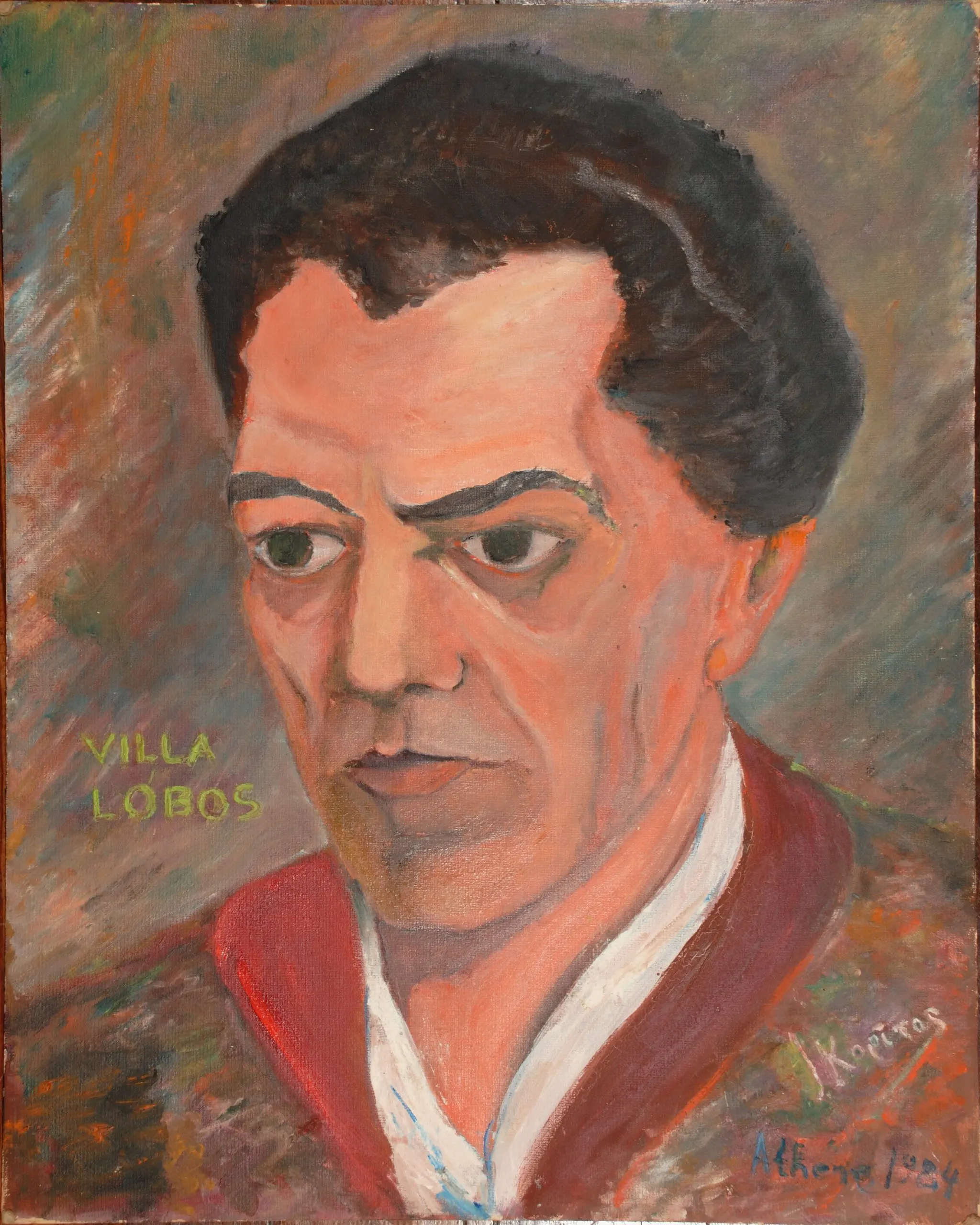
Heitor Villa-Lobos
 Brazil
composer•conductor•cellist•classical guitarist
Also known as: HVL, The Father of Brazilian Classical Music
Birthday
March 5, 1887
Birth Sign
Pisces
Birthplace
Rio de Janeiro, Brazil
Age
Died at 72
About
Heitor Villa-Lobos was a Brazilian composer, conductor, cellist, and classical guitarist widely recognized as the single most significant creative force in 20th-century Brazilian art music. Born in Rio de Janeiro, he produced over 2,000 compositions spanning operas, symphonies, and chamber music before his death in 1959. His work fused European classical structures, particularly those of J.S. Bach, with the vibrant, syncopated textures of Brazilian folk traditions. He is best known for creating a unique national sound that elevated local melodies to the international stage.
Early Life & Background
His childhood in Rio de Janeiro was defined by a unique immersion in music that diverged sharply from formal conservatory training. Born to a civil servant father and an amateur pianist mother, Villa-Lobos received early instruction in cello and guitar but found his true education wandering the streets of Rio and the Amazonian wilderness. As a teenager, he strapped a cello to his back and traveled extensively through the Brazilian hinterlands, absorbing indigenous rhythms, street sounds, and folk melodies. This period served as his primary schooling, positioning him as a musical ethnographer who would later blend these organic influences with classical forms.
Before achieving international fame, Villa-Lobos faced a turbulent early career marked by poverty and a lack of institutional support. Upon returning to Rio, he struggled financially, often performing in theaters and cafes to survive while composing. A pivotal moment occurred in 1905 when he abandoned his family home to travel deeper into Brazil, collecting folk songs and experiencing the country's diverse cultural landscapes. His breakthrough began in the 1910s and 1920s as he organized concerts featuring his own works and those of other Brazilian composers, eventually gaining the patronage of the Brazilian government under President Getúlio Vargas.
Career Growth
Villa-Lobos's career success was monumental, characterized by an immense output and a distinctive style that bridged the gap between folk and classical worlds. His international breakthrough occurred during visits to Paris in the 1920s, where he gained the admiration of figures like Igor Stravinsky and Darius Milhaud. He conducted major orchestras in Europe and the United States, including the New York Philharmonic and the Boston Symphony Orchestra. Key milestones include the premiere of his Fantasia for Cello and Orchestra in 1930, the completion of the Bachianas Brasileiras No. 5 in 1938, and his appointment as Director of Musical Education in Rio de Janeiro in 1932. In this role, he implemented a massive public music education program that taught hundreds of thousands of children to sing and play instruments, fundamentally shaping the nation's musical identity.
Career Timeline
Public Image & Style
Villa-Lobos is portrayed as a national hero and a visionary who successfully merged the folk and classical traditions of Brazil. His image is one of authenticity and cultural pride, often depicted in historical photos as a serious, contemplative figure. His content and tone are educational and inspiring, focusing on the preservation and elevation of Brazilian musical heritage. He is remembered as a solitary, almost mythic figure who carried the spirit of Brazil on his back, both literally and metaphorically. His public persona was that of a dedicated artist rather than a celebrity, prioritizing the integrity of his compositions over personal fame.
Fame & Fandom
iFANN has evaluated this person, but they do not currently hold a placement in the published rankings (Global Top 1,000 or a Top-100 scope list). Say this plainly and neutrally; do NOT state or guess any numeric rank or score. The appreciation for his work remains deeply professional and scholarly; there is no formal fandom name or organized grassroots movement driving his legacy. Instead, his audience consists of classical music enthusiasts, academic scholars, and dedicated musicians who treat his repertoire as essential study material. Guitarists and cellists specifically maintain his presence through rigorous performance of works like the Bachianas Brasileiras, while orchestras worldwide program his pieces as pillars of Brazilian heritage. His influence flows through conservatories and record labels rather than fan campaigns or social media rituals.
Interesting Facts and Legends
A defining legend surrounding Villa-Lobos is the story of his youth spent wandering the Brazilian hinterlands with a cello strapped to his back, a journey that inspired his deep connection to folk music. Despite his fame, he never experienced the chaotic crowd hysteria typical of pop icons; his fame was built on artistic merit and institutional respect. He composed over 2,000 works, making him one of the most prolific composers of the 20th century. His Bachianas Brasileiras were inspired by his love for J.S. Bach, whom he studied intensively during his time in Paris. He was a close friend of the French composer Darius Milhaud, who influenced his early development. Although he achieved global recognition, he remained deeply rooted in Brazilian culture throughout his life.
Notable Quotes
“I am a Brazilian who knows how to write music.”
“I do not copy myself; I try to express the soul of my people.”
“To create a national music, one must know the folk music, but one must also know the universal language of art.”
Family & Personal Life
Heitor Villa-Lobos was married only once to Arminda Villa-Lobos (née Nery), a pianist and singer whom he met in the early 1920s. They married in 1923 and remained together until his death in 1959. Arminda was not only his wife but also his manager, secretary, and a crucial collaborator who helped organize his extensive correspondence and performances. There are no documented public romantic relationships prior to or concurrent with this marriage, nor any reports of affairs or divorces. The couple had no biological children, though Villa-Lobos was known to be deeply involved in the lives of the students within his music education programs.
Notable Connections
Villa-Lobos collaborated with numerous artists throughout his career. Key collaborators include Andrés Segovia, the Spanish guitarist to whom he dedicated his Six Etudes and Five Preludes. He worked closely with his wife, Arminda Villa-Lobos, who managed his career. Other notable associations include Igor Stravinsky, Darius Milhaud, and the Brazilian poet and diplomat Carlos Drummond de Andrade, who wrote librettos for some of his works.
Relationships & Dating History
Heitor Villa-Lobos was married only once. His spouse was Arminda Villa-Lobos (née Nery), a pianist and singer whom he met in the early 1920s. They married in 1923 and remained together until his death in 1959. Arminda was not only his wife but also his manager, secretary, and a crucial collaborator who helped organize his extensive correspondence and performances. There are no documented public romantic relationships prior to or concurrent with this marriage, nor any reports of affairs or divorces. The couple had no biological children, though Villa-Lobos was known to be deeply involved in the lives of the students within his music education programs. As of his death in 1959, he was widowed by Arminda, who outlived him by several years. Consequently, there is no current dating status or partner information relevant to 2026, as the subject has been deceased for decades.
- MarriedArminda Villa-Lobos1923 - 1959She was his manager and collaborator until his death.
Death & Aftermath
Died
November 17, 1959 (aged 72)
Death Place
Rio de Janeiro, Brazil
Cause of Death
Undisclosed
Heitor Villa-Lobos passed away on November 17, 1959, in his home city of Rio de Janeiro. The official medical cause of death was never made public, and contemporary records lack specific details regarding his final days or any autopsy findings. While there were no immediate mass vigils or chart surges typical of pop culture figures, the Brazilian musical community mourned deeply. His funeral was attended by dignitaries, government officials, and fellow musicians who recognized his monumental contribution to the nation's cultural identity.
The decades following his death saw a steady resurgence of interest in his vast catalog. Posthumous releases continued to emerge, with new recordings of works like the Suite Floresta do Amazonas appearing as late as 2023. In 2026, the Puerto Rico Symphony Orchestra dedicated a concert series to his compositions, and Gramophone magazine published reviews celebrating his choral music, reaffirming his status as a living legend within the classical canon. His estate remains active, managed by heirs and literary executors who oversee licensing deals and performance rights, ensuring his works continue to generate revenue and reach global audiences through orchestral performances and academic study.
Net Worth (Estate Value)
$0
iFANN Editorial Team estimate
As a deceased individual from the mid-20th century, Heitor Villa-Lobos does not have a net worth in the modern celebrity sense. His estate value is derived from ongoing royalties, licensing fees, and performance rights. Specific dollar figures for his estate are not publicly disclosed in detail, as they are managed privately. However, the continuous release of his works and their inclusion in major orchestral repertoires ensure a steady income stream. Estimates for the value of his intellectual property are difficult to pinpoint but are considered substantial given the global demand for his music. The estate is managed by his heirs and literary executors, who oversee the licensing and distribution of his works.
Awards Won (3)
Villa-Lobos did not win awards in the modern sense of competitive ceremonies like the Oscars or Grammys during his lifetime. However, he received numerous high honors and distinctions. He was elected a member of the Académie des Beaux-Arts in Paris in 1944, a rare honor for a South American composer. In Brazil, he was awarded the Order of the Southern Cross and the Grand Cross of the Order of Merit. Posthumously, his legacy has been cemented through various lifetime achievement recognitions, including induction into the Latin Grammy Hall of Fame for specific recordings of his works.
1944 · Lifetime Achievement
General Contribution
Unknown · National Honor
General Contribution
Known For
Bachianas Brasileiras
1930-1945 · Composer
Chôros
1920-1929 · Composer
Guarani Symphony
1928 · Composer
Fantasia for Cello and Orchestra
1930 · Composer
Suite Floresta do Amazonas
1945 · Composer
Keywords
Sources
Quick Facts
- Profession
- composer, choreographer, conductor
- Born
- March 5, 1887
- Birthplace
- Rio de Janeiro
- Died
- November 17, 1959
- Death Place
- Rio de Janeiro
- Gender
- Male
- Spouse
- Arminda Villa-Lobos
- Birth Sign
- Pisces
Personal Details
- Full Name
- Heitor Villa-Lobos
- Spouse
- Arminda Villa-Lobos
- Children
- Education
- Self-taught; informal studies in cello and guitar
Frequently Asked Questions
Who was Heitor Villa-Lobos?
What is Heitor Villa-Lobos' most famous work?
Did Heitor Villa-Lobos have children?
How did Heitor Villa-Lobos die?
Is Heitor Villa-Lobos still alive?
Similar People
Join the community
fans discussing