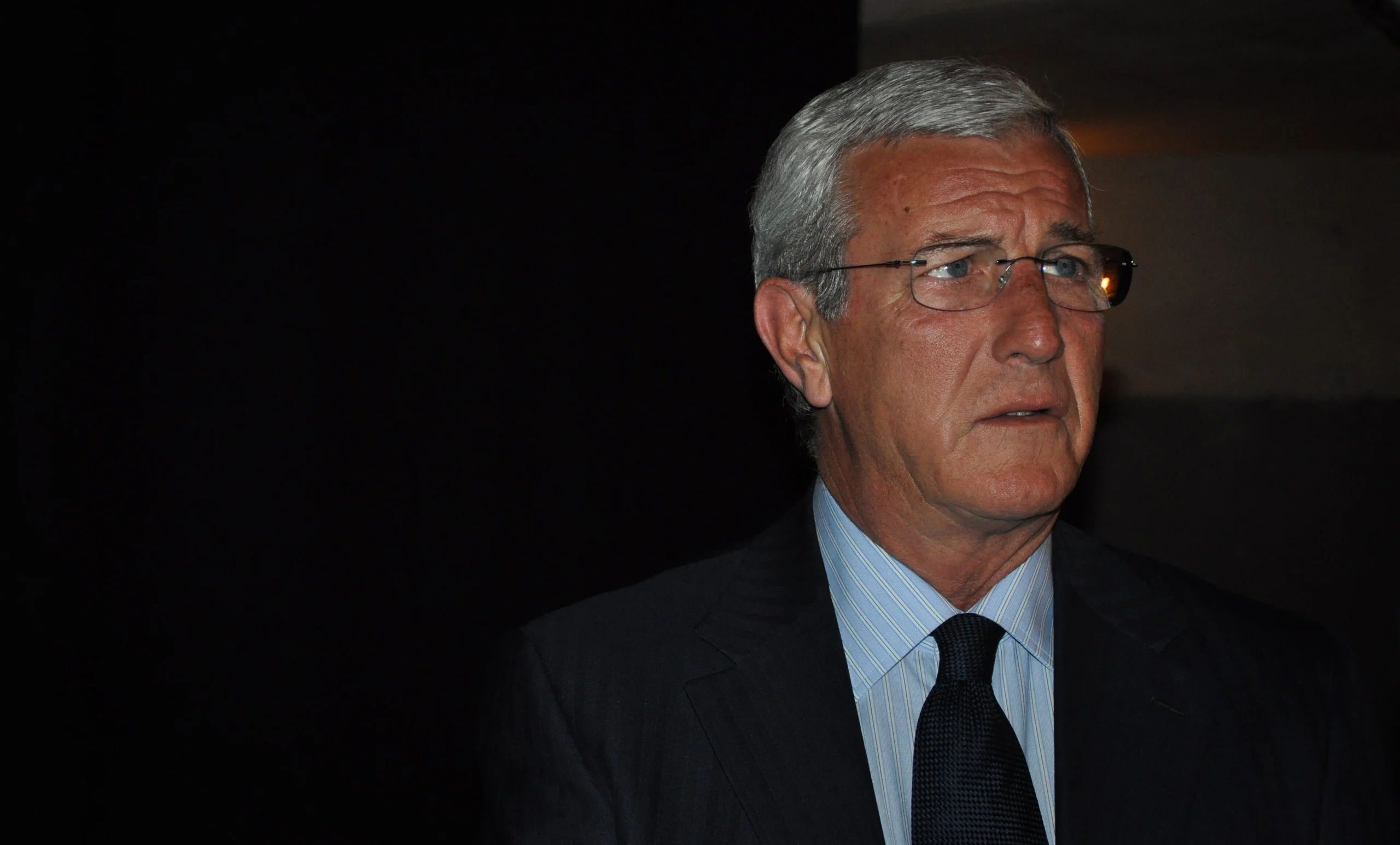
Marcello Lippi
 Italy
Italyassociation football player•association football coach
Also known as: Il Capitano, The Sea Captain
Birthday
April 12, 1948
Birth Sign
Aries
Birthplace
Viareggio, Italy
Age
78 years old
Height
6 ft 0 in (1.83 m)
About
Marcello Romeo Lippi is an Italian former professional football player and manager widely regarded as one of the greatest coaches in the history of the sport. Born on April 12, 1948, in the coastal town of Viareggio, he achieved a unique feat by becoming the only manager to win both the UEFA Champions League with Juventus in 1996 and the AFC Champions League with Guangzhou Evergrande in 2013, alongside leading the Italian national team to victory at the 2006 FIFA World Cup. Known for his tactical innovation and ability to manage high-profile egos, Lippi earned the nickname "The Sea Captain" due to his distinctive cigar-smoking persona and commanding presence on the touchline. His legacy includes five Serie A titles, two Intercontinental Cups, and numerous other domestic and international honors that cemented his status as a global tactician. As of 2026, he remains a respected figure in football, often consulted for strategic insights while semi-retired from active management.
In June 2026, Lippi gave an interview discussing the 2006 World Cup, revealing details about how his team dealt with rumors of spies planted by opponents, famously stating, "I told the boys to pull their shorts down" to dismiss the distractions. He continues to serve as an informal advisor to the Italian Football Federation (FIGC) and is frequently invited to speak at football conferences globally. In March 2026, he publicly backed Roberto Gattuso, the current Italy national team coach, calling him "one of my best students" and comparing his leadership style to his own. Following Italy's struggles in recent qualifiers, Lippi was quoted in La Gazzetta dello Sport suggesting that the Italian national team needs a "Lippi-esque figure" to reclaim glory, highlighting his enduring influence on the sport.
Early Life & Background
Marcello Lippi was born into a working-class family in Viareggio, a Tuscan port city famous for its shipbuilding industry and annual carnival. His father worked as a dockworker, instilling in young Marcello a strong work ethic and a deep connection to the sea that would later inspire his iconic nickname. Unlike many modern managers who pursued extensive sports science degrees, Lippi's education was rooted in traditional football experience and local community life. He attended local schools in Viareggio before pursuing a career in football, beginning his playing career as a defender in 1969 with Viareggio.
He moved up to play for Carrarese and Pisa, but his time as a player remained modest, never reaching the top tier of Italian football as a first-team regular. Persistent injuries eventually curtailed his playing days in 1975, forcing him to pivot toward coaching. During this transitional period in the late 1970s and early 1980s, he studied for coaching licenses while working as a physiotherapist and assistant coach at lower-league clubs. This foundational decade allowed him to learn the nuances of management under various mentors, culminating in his first major managerial role at Pistoiese in 1982. Standing approximately 1.83 meters tall, his physical presence was already forming the foundation for his future authoritative style on the sidelines.
Career Growth
Lippi's rise to prominence began in the mid-1980s with stints in Serie B and Serie A, but his true breakthrough arrived in 1994 when he took charge of Parma and then immediately moved to Juventus. Under his guidance, the Turin giants dominated Italian football, securing three consecutive Serie A titles between 1995 and 1998. The pinnacle of this era came in 1996 when Juventus defeated Ajax to win the UEFA Champions League, making Lippi the first Italian manager to claim Europe's premier club trophy. He also secured the UEFA Super Cup and the Intercontinental Cup in 1996, along with four Italian Supercups during his tenure.
After a brief return to Parma and a short spell at Inter Milan, Lippi returned to Juventus in 2001, adding another Serie A title, the UEFA Super Cup, and the Intercontinental Cup to his collection by 2003. His most celebrated achievement followed in 2004 when he was appointed head coach of the Italian national team. Despite the shadow of the Calciopoli scandal looming over the squad, he kept his players focused and led them to a dramatic penalty shootout victory against France in the 2006 World Cup final. He continued managing Italy until 2008 and briefly returned in 2010 before stepping down.
In 2012, Lippi made history again by moving to China to manage Guangzhou Evergrande. He transformed the club into a dominant force, winning three consecutive Chinese Super League titles (2013, 2014, 2015), two Chinese FA Cups, and the 2013 AFC Champions League, becoming the first coach to win the top-tier club competitions in both Europe and Asia. His final managerial stint saw him take charge of the Saudi Arabian national team in 2019, though he left shortly after due to disagreements with the federation. Throughout his career, he has been recognized by IFFHS as the world's best manager in 1996 and 1998, and the best national coach in 2006.
Career Timeline
Public Image & Style
Lippi is portrayed in the media as a "gentleman ultra," blending traditional authority with modern flair. He is respected for his tactical acumen and his ability to manage star players without losing their confidence. His public statements are often measured and reflective, avoiding the controversies that plague some modern managers. His signature look, a sharp suit paired with a lit cigar, created a unique visual identity that became part of football folklore. This image symbolized his confidence and control, earning him the admiration of fans and peers alike.
He is seen as a mentor to younger coaches and a guardian of Italian football tradition. Although he is not a frequent cover subject for fashion magazines like Vogue or GQ, he has appeared on the covers of major sports publications such as La Gazzetta dello Sport multiple times, particularly around the 2006 World Cup victory and his 2013 AFC Champions League win. Headlines often highlighted his "Sea Captain" persona and tactical genius. FourFourTwo has also featured him in special editions discussing the greatest managers of the 21st century, often ranking him in the top 10.
Fame & Fandom (iFAMOUS Rankings)
While Marcello Lippi is universally recognized as a legend in football circles, there is no formal fandom name for him, as he is a manager rather than a player or musician. However, he is revered by Italian football fans and those who follow tactical football theory. Supporters often refer to him as "Il Capitano" or simply "Lippi" with great respect. Fan campaigns are rare, but his legacy is kept alive through documentaries, books, and discussions on football forums where his methods are studied by aspiring coaches.
The Times ranked him #1 on their list of the top 50 managers of all time in 2007, and Gazzetta dello Sport frequently cites him as one of the greatest Italian coaches of all time, often placing him in the top 3 alongside Arrigo Sacchi and Giovanni Trapattoni. His methods are analyzed by coaches worldwide, and his iconic moments, such as the 2006 World Cup final victory amidst the Calciopoli scandal, are discussed regularly in football literature. His influence extends beyond the pitch, shaping the tactical discourse of the modern game.
Interesting Facts and Legends
The cigar Lippi famously smoked during matches became a symbol of his calm demeanor under pressure. He claimed the habit helped him think clearly during high-stakes games, creating a visual identity that set him apart from other managers who paced nervously on the sidelines. Before his coaching fame, Lippi played as a defender for Pisa and Carrarese, but his playing career was cut short by persistent injuries. Despite not being a star player, his understanding of the defensive position informed his later tactical approach.
Lippi is fluent in Italian and English, and his time in China gave him functional knowledge of Mandarin. This linguistic versatility helped him navigate cultural differences while managing diverse squads across continents. The nickname "The Sea Captain" stems directly from his birthplace in Viareggio, a maritime city known for its naval heritage. It also reflects his authoritative style on the pitch, where he commanded respect much like a ship's captain. Additionally, he holds the distinction of winning the Commendatore OMRI, an Italian order of merit awarded for his contributions to sports.
Notable Quotes
“I told the boys to pull their shorts down.”
“One of my best students, reminds me of me.”
“Football is a game of emotions, but you must manage them.”
Family & Personal Life
Marcello Lippi has maintained a relatively private personal life compared to his public fame. He is married to Anna Lippi, whom he met during his playing days in the 1970s. The couple has remained together throughout his rise to fame and is known to be a close-knit family unit. They have two children: a son named Alessandro, who works in the football industry, and a daughter named Federica, who prefers to stay out of the spotlight. The family resides primarily in Italy, with occasional time spent in China during his tenure there.
Lippi often cites his family as his primary source of support during stressful periods, including the intense scrutiny surrounding the 2006 World Cup campaign. While he does not maintain an active personal social media presence, preferring traditional media interviews, his family life remains a cornerstone of his stability. His dedication to his household is evident in his refusal to let professional demands overshadow his home life, even during his most lucrative contracts in the Middle East and Asia.
Notable Connections
Roberto Gattuso, Zinedine Zidane, Paolo Maldini, Andrea Pirlo, Anna Lippi, Alessandro Lippi, Federica Lippi
Relationships & Dating History
Marcello Lippi has maintained a remarkably stable personal life throughout his long career. He is married to Anna Lippi, whom he met during his playing days in the 1970s. The couple has remained together since their early relationship, weathering the ups and downs of his rise to fame. There are no publicly documented divorces or long-term romantic relationships outside of his marriage to Anna. Their union has produced two children: a son named Alessandro, who has followed in his father's footsteps by working in the football industry, and a daughter named Federica, who has largely stayed out of the spotlight.
The family resides primarily in Italy, though they spent significant time in China during Lippi's tenure with Guangzhou Evergrande. Lippi is known for his dedication to his family, often citing them as his primary source of support during stressful periods like the 2006 World Cup campaign. His wife, Anna, has remained a constant presence behind the scenes, supporting his career transitions from Italy to China and back. The couple's longevity in marriage is considered remarkable given the high-pressure nature of elite football management.
- MarriedAnna Lippi1970 - presentCurrentMet during playing days; wife since the early 1970s.
Salary, Net Worth In 2026
$18 Million
iFANN Editorial Team estimate
Research by the iFANN Editorial Team puts Marcello Lippi's fortune at around $18 million as of 2026. The majority of his wealth stems from his managerial salaries, particularly the high-paying contracts in China where he reportedly earned over $10 million per year at his peak. His time with Juventus and the Italian national team also contributed significantly to his earnings through base salaries and performance bonuses. Forbes Sports Money suggests a range of $12–18 million, noting his significant endorsement deals with Italian sportswear brands and his role as a paid consultant for various football federations.
Beyond coaching fees, Lippi has invested in real estate in Tuscany and Milan, providing a stable financial foundation. He continues to earn speaking fees and consultancy fees for football academies and federations. While he has retired from active management, his involvement in media analysis and advisory roles ensures a steady income stream that reflects his enduring influence in the sport. There are no major reported business ventures outside of football-related activities, keeping his wealth concentrated in real estate and professional services.
Awards Won (14)
Marcello Lippi's trophy cabinet is among the most decorated in football history. He won the FIFA World Cup with Italy in 2006, the UEFA Champions League with Juventus in 1996, and the AFC Champions League with Guangzhou Evergrande in 2013. His domestic success includes five Serie A titles, three Chinese Super League titles, and multiple domestic cups and supercups. He was named the world's best club coach by IFFHS in 1996 and 1998, and the world's best national coach in 2006.
2006 · International Tournament
Italy National Team
1996 · Club Tournament
Juventus
Known For
Italy National Team
2006 · Head Coach
Juventus FC
1994 · Manager
Guangzhou Evergrande
2012 · Manager
Keywords
Sources
Quick Facts
- Profession
- association football player, association football coach
- Born
- April 12, 1948
- Birthplace
- Viareggio, Italy
- Gender
- Male
- Birth Sign
- Aries
Personal Details
- Full Name
- Marcello Romeo Lippi
- Height
- 6 ft 0 in (1.83 m)
- Spouse
- Anna Lippi
- Children
- Alessandro Lippi · Federica Lippi
- Education
- Local schools in Viareggio; Coaching licenses obtained during early career
Frequently Asked Questions
How old is Marcello Lippi?
Did Marcello Lippi win the World Cup?
Is Marcello Lippi still coaching?
Who is Marcello Lippi married to?
What is Marcello Lippi's net worth?
Similar People
Join the community
fans discussing