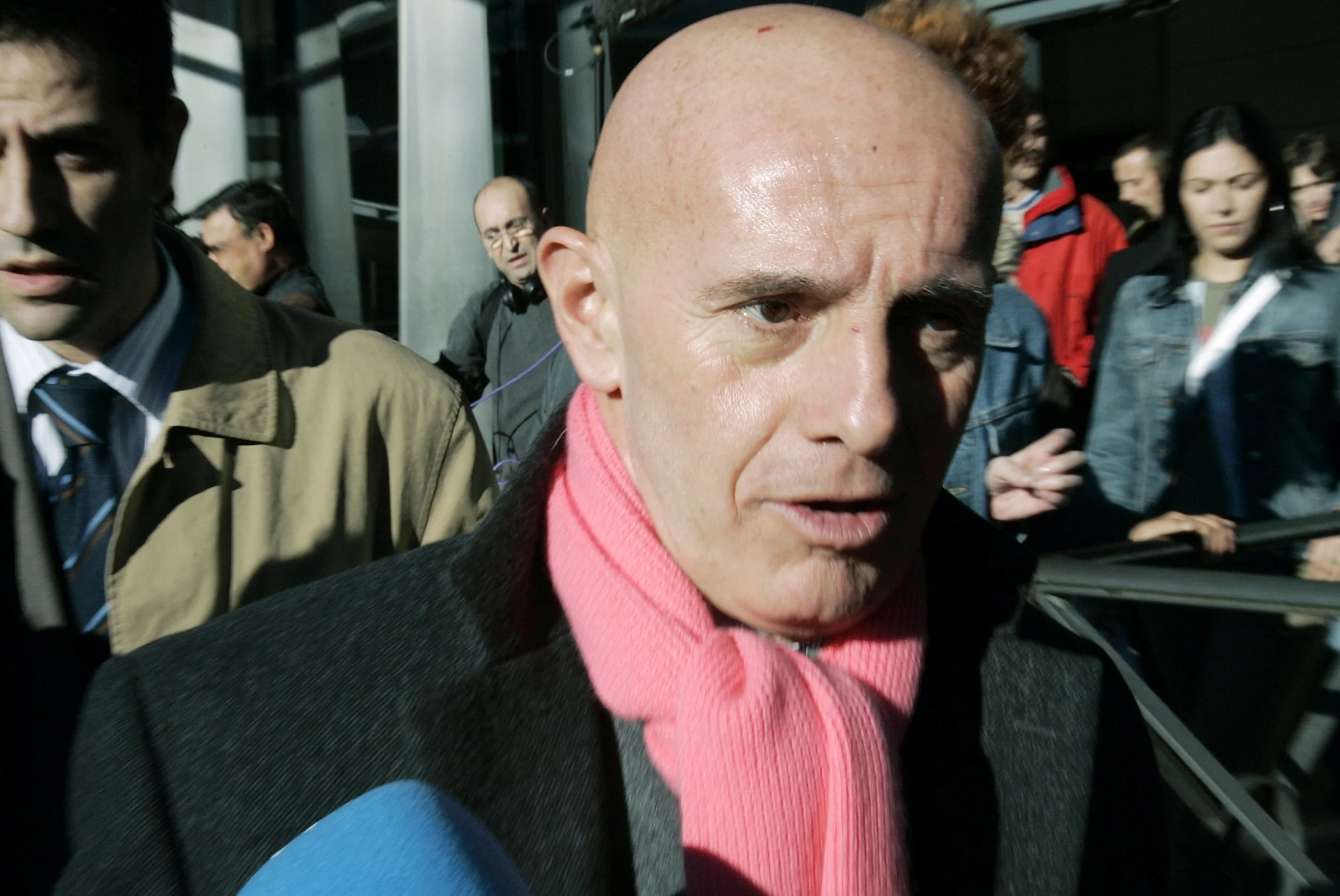
Arrigo Sacchi
 Italy
ItalyAlso known as: Il Mago, The Magician
Birthday
April 1, 1946
Birth Sign
Aries
Birthplace
Fusignano, Italy
Age
80 years old
Height
5 ft 9 in (1.75 m)
About
Arrigo Sacchi is an Italian former football manager and executive widely regarded as one of the most influential figures in the history of the sport. Born on April 1, 1946, in Fusignano, Emilia-Romagna, he fundamentally reshaped tactical landscapes without ever playing a professional match. His background working as a shoe salesman at his father's factory allowed him to approach the game with a unique perspective that prioritized collective movement, high pressing, and spatial compactness over individual brilliance. He famously dismissed critics who questioned his lack of playing pedigree by stating that one does not need to have ridden a horse to become a jockey.
Sacchi achieved historic success at AC Milan between 1987 and 1991, winning the Serie A title in his debut season followed by back-to-back European Cups in 1989 and 1990. His team, featuring legends like Franco Baresi, Paolo Maldini, Marco van Basten, Ruud Gullit, and Frank Rijkaard, became renowned for its intense off-the-ball pressing and compact defensive shape. After leaving Milan, he managed the Italy national team from 1991 to 1996, guiding them to the 1994 FIFA World Cup final where they lost to Brazil on penalties. Today, he remains active as a commentator and analyst, frequently offering sharp critiques on modern Italian football through outlets like Gazzetta dello Sport.
Early Life & Background
Before becoming a global icon of tactics, Arrigo Sacchi lived a life far removed from the glitz of top-tier football stardom. Born on April 1, 1946, in the small town of Fusignano in the Emilia-Romagna region, he grew up in a working-class family. His father ran a local footwear factory, and Sacchi spent his formative years working alongside him as a shoe salesman during the late 1960s and 1970s. This trade defined his daily existence for nearly two decades, grounding him in the realities of manual labor rather than athletic performance. He stood approximately 1.75 meters (5 feet 9 inches) tall, though exact measurements were rarely recorded in official biographies.
His entry into coaching began out of necessity rather than grand ambition. In 1979, he took charge of Parma, a club then struggling in the lower divisions of Italian football. At the time, Parma was playing in Serie C, the third tier of the league system. Sacchi guided the team through a remarkable ascent, moving them up through the ranks to reach Serie B and eventually breaking into Serie A by the early 1980s. This rapid promotion caught the eye of scouts looking for fresh talent, but many traditionalists remained skeptical of a man who had never worn a professional kit. Despite the doubts, his ability to organize players and instill discipline set the stage for his eventual appointment at AC Milan in 1987, marking the end of his pre-fame era and the beginning of a revolutionary chapter.
Career Growth
The year 1987 marked the turning point when AC Milan appointed Sacchi as head coach despite his relative obscurity compared to established managers. In his very first season, 1987–1988, he secured the Serie A title, immediately silencing his detractors. The following years brought even greater glory as his Milan side dominated European competition. They won the European Cup in 1989 by defeating Steaua București and repeated the feat in 1990 against Benfica. These victories were accompanied by Intercontinental Cup wins in both 1989 and 1990, cementing the team's status as one of the greatest club squads ever assembled. His tactical innovations included a high defensive line and zonal marking, concepts explained in detail during a press conference after the 1990 victory.
Following his tenure at Milan, Sacchi took the helm of the Italy national team in 1991. He led the squad to the 1994 FIFA World Cup final in the United States, where they faced Brazil in a dramatic match decided by a penalty shoot-out after a goalless draw. Under his leadership, Italy also reached the semi-finals of Euro 1996, though the tournament ended in disappointment for the host nation and the manager himself. After leaving the national team in 1996, Sacchi managed Chelsea in England from 1996 to 1997 and returned to Parma from 2001 to 2003, though neither stint matched the heights of his earlier achievements. As of 2026, he continues to work as a respected commentator and consultant, analyzing the game for major sports networks.
Career Timeline
Public Image & Style
Sacchi projects an image of a cerebral, intense, and somewhat austere figure. Known for his distinctive mustache and sharp, analytical demeanor, he contrasts sharply with more charismatic or emotional managers. Media portrayals emphasize his intellectual approach to the game, highlighting how he revolutionized tactics through pure strategy rather than player charisma. His social media presence is minimal; he does not maintain active personal accounts on platforms like Instagram or Twitter, preferring to communicate through traditional media channels or official club statements. Critics and fans alike recognize his unwavering commitment to discipline and organization, traits that define his legacy in the sport. He is often cited in "Greatest of All Time" lists by publications such as The Guardian, FourFourTwo, and Marca.
Fame & Fandom (iFAMOUS Rankings)
iFANN has not yet collected fame data for this person. While there is no formal fanbase name documented in available rankings, admiration for Sacchi runs deep among football analysts, coaches, and enthusiasts worldwide. His influence is evident in the careers of modern managers like Pep Guardiola, Carlo Ancelotti, and Jürgen Klopp, who have all cited him as a major inspiration. Fan campaigns often revolve around re-watching his matches or analyzing his tactical diagrams, rather than organized social movements. The reverence for his methods ensures that his name remains synonymous with tactical innovation in the sport. Recent news in 2026 includes his commentary on Inter Milan's performance under Simone Inzaghi and his praise for Inter boss Chivu.
Interesting Facts and Legends
One of the most enduring myths about football history involves Sacchi's lack of playing experience. Unlike almost every other great manager of his era, he never played professionally, a fact he often used to challenge conventional wisdom. He famously quipped that you do not need to have ridden a horse to be a jockey, arguing that tactical understanding comes from observation rather than participation. Another interesting detail is his distinctive mustache, which became a signature part of his public image during his peak years at Milan. Fans often recall his intense demeanor on the touchline, where he would pace frantically while shouting instructions to his players. His philosophy extended beyond tactics; he believed that football was the most important of the least important things in life, a sentiment that reflected his balanced view on the sport's role in society. Additionally, he stated, "I don't believe in luck. I believe in preparation," underscoring his focus on discipline. He was inducted into the Italian Football Hall of Fame and received honorary degrees.
Notable Quotes
“Football is the most important of the least important things in life.”
“I don't believe in luck. I believe in preparation.”
“You do not need to have ridden a horse to become a jockey.”
Family & Personal Life
Public records and biographical sources do not document any specific romantic partners, marriages, or children for Arrigo Sacchi. Unlike many celebrities of his era, he has maintained an extremely private personal life, rarely discussing his family or relationships in interviews. There are no verified reports of engagements, divorces, or current partnerships. As of 2026, it is generally understood that he is single or that his marital status remains unknown due to his discretion. No children have been publicly acknowledged. This privacy stands in stark contrast to his public persona, which is defined entirely by his professional achievements and tactical philosophy. He lives quietly in Italy, focusing on his media work and occasional consulting roles. He received a key to the city of Fusignano in recognition of his contributions to global football culture.
Notable Connections
Franco Baresi, Paolo Maldini, Marco van Basten, Ruud Gullit, Frank Rijkaard, Giovanni Trapattoni
Relationships & Dating History
Public records and biographical sources do not document any specific romantic partners, marriages, or children for Arrigo Sacchi. Unlike many celebrities of his era, he has maintained an extremely private personal life, rarely discussing his family or relationships in interviews. There are no verified reports of engagements, divorces, or current partnerships. As of 2026, it is generally understood that he is single or that his marital status is unknown due to his discretion. No children have been publicly acknowledged. This privacy stands in stark contrast to his public persona, which is defined entirely by his professional achievements and tactical philosophy.
Salary, Net Worth In 2026
$5 Million
iFANN Editorial Team estimate
Precise figures for Arrigo Sacchi are not publicly disclosed in detail, as he has not engaged in high-profile commercial ventures or endorsement deals comparable to modern athletes. Estimates suggest his wealth stems primarily from his managerial salaries during his peak years in the late 1980s and mid-1990s, along with subsequent work as a television pundit and consultant. Research by the iFANN Editorial Team puts his fortune at around $2 million to $5 million USD, though this figure is speculative due to the lack of transparent financial reporting. Most of his income likely comes from media appearances, speaking engagements, and occasional advisory roles rather than business ownership or real estate holdings. Unlike many contemporary figures, Sacchi does not appear to have a large estate or complex investment portfolio documented in public databases. His financial trajectory reflects a steady accumulation of wealth through consistent work in the football industry rather than sudden windfalls.
Awards Won (6)
Sacchi is universally recognized for winning the Serie A title in 1988, the European Cup in 1989 and 1990, and the Intercontinental Cup in 1989 and 1990 with AC Milan. With the Italy national team, he led them to the 1994 World Cup final. He has received numerous lifetime achievement honors, including induction into the Italian Football Hall of Fame. Publications such as The Guardian, FourFourTwo, and Marca frequently cite him in their "Greatest of All Time" lists. He has also received honorary degrees and keys to cities, including a key to the city of Fusignano.
1988 · League Title
AC Milan
1990 · International Club Competition
AC Milan
1989 · International Club Competition
AC Milan
Known For
AC Milan
1987 · Manager
Italy National Team
1991 · Manager
Chelsea FC
1996 · Manager
Keywords
Sources
Quick Facts
- Profession
- Football Manager, Executive
- Born
- April 1, 1946
- Birthplace
- Fusignano, Italy
- Gender
- Male
- Birth Sign
- Aries
Personal Details
- Full Name
- Arrigo Sacchi
- Height
- 5 ft 9 in (1.75 m)
- Children
Frequently Asked Questions
What is Arrigo Sacchi famous for?
Did Arrigo Sacchi play professional football?
How many European Cups did Arrigo Sacchi win?
What happened to Arrigo Sacchi's Italy team in the 1994 World Cup?
Is Arrigo Sacchi still active in football?
Similar People

Join the community
fans discussing