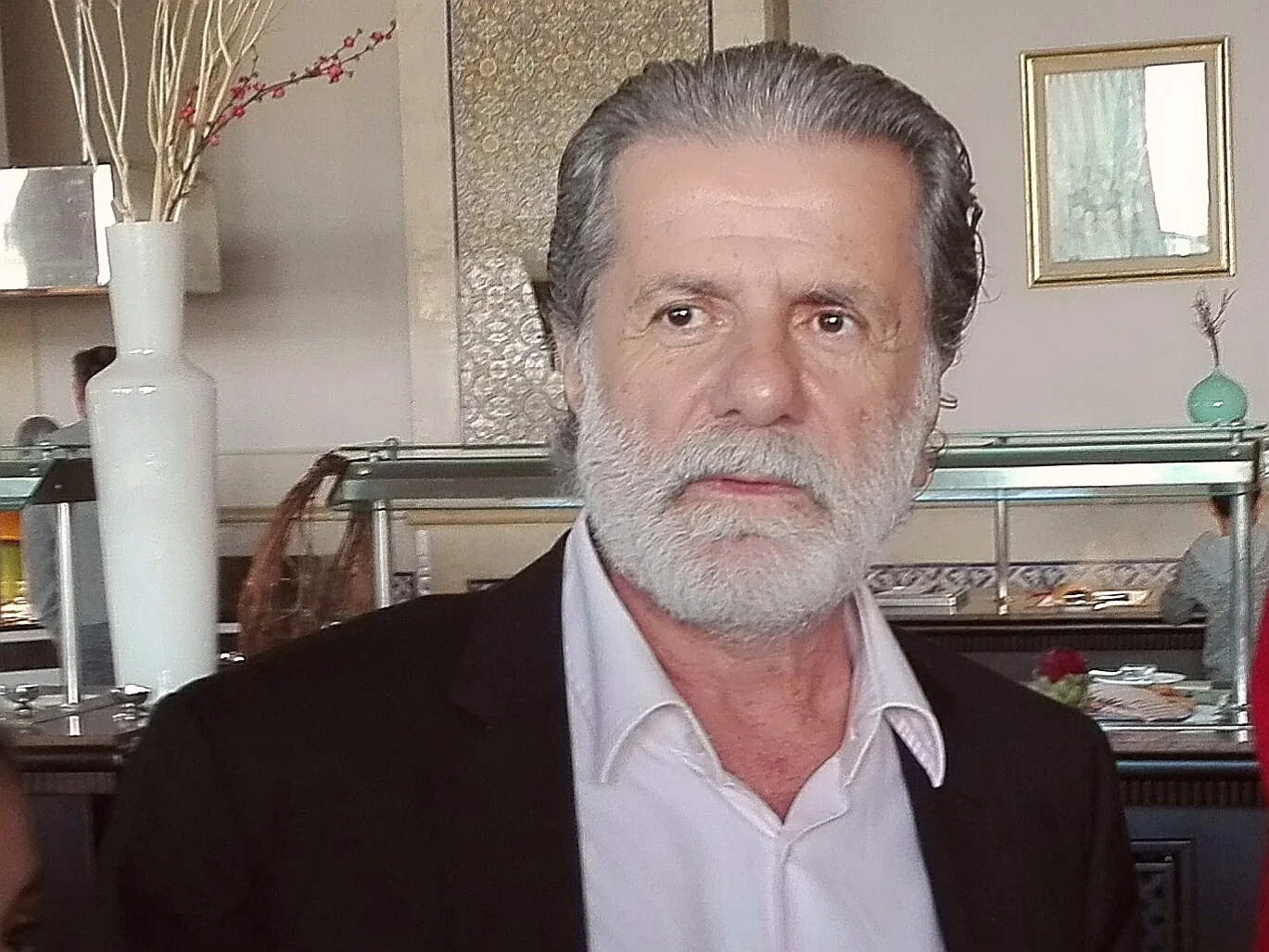
Marcel Khalife
 Lebanon
Also known as: Marcel Khalifé, Marcelo Khalife
Birthday
June 10, 1950
Birth Sign
Gemini
Birthplace
Aamchit, Lebanon
Age
76 years old
About
Marcel Khalife is a Lebanese composer, singer, and virtuoso oud player whose work has made him a cultural touchstone across the Arab world. Born in the coastal village of Aamchit, he has spent over five decades blending traditional Arabic maqamat with contemporary political and social themes. His music, often set to the poetry of Mahmoud Darwish, has become synonymous with resistance, exile, and national identity, earning him comparisons to Bob Dylan for its poetic weight and protest spirit.
With more than twenty albums and countless performances from the Olympia in Paris to the United Nations, Khalife's reach extends far beyond his homeland. Songs like "Oummi" and "Passport" have become anthems for generations, while his mastery of the oud has influenced a new wave of Arab musicians. As of 2026, he continues to perform and record, touring with his sons and remaining a vital voice for peace and human dignity.
Early Life & Background
Marcel Khalife grew up in Aamchit, a small village in the Keserwan District of Mount Lebanon, where rural traditions and a love of learning shaped his early years. He took up the oud as a boy, drawn to its deep, resonant tone, and later enrolled at the Beirut National Conservatory of Music, graduating in 1971. His training there combined rigorous classical study with the improvisational freedom of Arab folk music, a blend that would define his style.
In the late 1960s and early 1970s, Beirut was a hive of intellectual and artistic ferment, and Khalife immersed himself in its poetry circles and political debates. He began experimenting with setting classical Arabic verse to modern instrumentation, a path that would lead him to the work of Mahmoud Darwish. Before his breakthrough, he performed in small venues and taught music, honing the craft that would soon make him a household name.
Career Growth
Khalife's professional career took off in 1974 when he founded the Al-Mayadeen Ensemble, a group dedicated to performing traditional and contemporary Arabic music. During the Lebanese Civil War (1975–1990), the ensemble became a vehicle for his political commentary, giving voice to the marginalized and displaced. His collaborations with Mahmoud Darwish produced iconic songs like "Oummi" and "Passport," the latter written after the 1982 Israeli invasion of Lebanon, which became a global symbol of Palestinian struggle.
Throughout the 1980s and 1990s, he released albums such as Promises of the Storm (1983) and Jadal (1993), and in 1996 he formed the Marcel Khalife Group, cementing his status as a leading figure in Arab music. In the 2000s, he expanded into film and theater composition, earning acclaim for his versatility. His sons, Bachar and Rami, have become accomplished musicians in their own right, and they frequently tour with him, as seen in their 2017 US tour and the 2025 "Legacy Tour" in Atlanta.
Career Timeline
Public Image & Style
In the media, Khalife is often described as a "cultural revolutionary" and the "voice of the people." His public persona is serious, poetic, and deeply committed to social justice. He is known for his distinctive appearance, often wearing elegant, traditional Arab attire that reflects his cultural roots. Fans, who span generations, revere him for his unwavering stance on human rights and his ability to articulate the collective pain and hope of the Arab world. His Instagram account, @khalifemarcel, offers a behind-the-scenes look at his concerts and his messages of peace and unity.
Fame & Fandom
Marcel Khalife stands as a towering figure in Arab cultural history, recognized globally for his role as a musical voice of resistance and exile. While his influence permeates the region, iFANN's Global Fame Engine has evaluated this person, but they do not currently hold a placement in the published rankings (Global Top 1,000 or a Top-100 scope list). This absence from the global top tier reflects a career defined by deep regional resonance rather than mass-market commercial saturation typical of pop icons. His reputation rests on a legacy built over five decades, where his work is often compared to that of Bob Dylan for its poetic weight and protest spirit, though he himself has expressed discomfort with such direct equivalencies. The audience surrounding Khalife has no formal name, operating instead as a broad, transnational community of Arabic music enthusiasts bound by shared political consciousness rather than organized fandom rituals. Unlike modern stars who cultivate specific fan clubs with coordinated campaigns, Khalife engages his public through activism and humanitarian causes, creating a dynamic where the line between performer and audience blurs during communal gatherings. His performances, ranging from the Barbican Centre in London to the Algiers Opera House, are characterized by profound emotional resonance rather than the chaotic adulation seen at rock superstars' concerts. The narrative of his life is one of the "resistance musician," where every concert serves as a reaffirmation of peace and human rights. Recent developments include his Legacy Tour featuring collaborations with his sons, which showcases a multi-generational musical dynasty revered by fans as a continuation of his artistic vision. Despite maintaining an Instagram presence with significant followers, these channels serve primarily as official announcements rather than hubs for fan-driven organization.
Interesting Facts and Legends
Khalife faced blasphemy charges in the 1990s for singing a Quranic verse in his song "Ana Yousef Ya Abi" (I am Joseph, Oh Father). The charges were eventually dropped, but the incident highlighted his willingness to challenge religious and political taboos. His music has been banned in some Arab countries due to its political content, yet it thrives among diaspora communities and opposition movements. He is renowned for a unique oud technique that fuses classical and folk traditions, often using the instrument to mimic the human voice. Khalife has a long-standing friendship with the Palestinian poet Mahmoud Darwish, and their collaboration is considered one of the most significant in modern Arab music. A central pillar of his legend involves the founding of the Al-Funoun Popular Dance Ensemble in 1986, which became famous for fusing traditional Lebanese folk dance with contemporary political themes during the civil war. Stories of the ensemble performing in refugee camps under dangerous conditions are frequently recounted as examples of his commitment to social healing. In October 2019, a performance at the Barbican Centre was noted for blending Lebanese humor with heart, captivating audiences accustomed to his serious themes. More recently, a celebrated appearance at the Algiers Opera House in March 2026 marked another chapter in his enduring legacy as a performer who continues to draw large crowds across North Africa.
Notable Quotes
“All work that aims to move us forward is a work of resistance; whether it be musical, social, intellectual or poetic.”
“I am not Bob Dylan. I am a musician from my land, speaking to my people.”
Family & Personal Life
Marcel Khalife is married to Yolla Khalifé, and the couple has raised their family in Lebanon. They have three sons, all musicians: Bachar, Rami, and Sary. Bachar and Rami are accomplished oud players and composers who frequently perform with their father, continuing the family's musical legacy. The Khalife household is deeply rooted in Lebanese culture, and family gatherings often turn into impromptu music sessions. Despite his international fame, Khalife maintains a strong connection to his hometown of Aamchit, where he still spends time when not touring.
Notable Connections
Marcel Khalife is closely associated with Palestinian poet Mahmoud Darwish, whose verses he set to music, creating some of the most powerful protest songs in the Arab world. His sons, Bachar and Rami, are his frequent collaborators and continue his musical legacy. He has also worked with other prominent Arab artists and has been featured by outlets like NPR and PBS.
Relationships & Dating History
Marcel Khalife has been married to Yolla Khalifé for decades, and the couple has remained together throughout his long career. They met in Lebanon, where both were part of the artistic and intellectual circles of Beirut. Their marriage has been a quiet constant in his life, with Yolla often staying out of the spotlight. As of 2026, they are still married and have three sons, all of whom are musicians. There is no public record of any other romantic relationships.
- MarriedYolla KhaliféCurrentMarried for decades, they have three sons together.
Salary, Net Worth In 2026
$5 Million
iFANN Editorial Team estimate
Per iFANN's editorial analysis, Marcel Khalife's net worth is estimated at $5 million as of 2026. This figure reflects a career built on live performances, album sales, streaming royalties, and commissions for film and theater scores. Unlike commercial pop stars, Khalife's income comes from a steady stream of touring, including recent legacy tours with his sons, and from his extensive discography, which continues to be streamed by new generations. He also earns from teaching masterclasses and from licensing his music for documentaries and human rights campaigns. Over the years, his financial standing has remained stable, supported by a loyal fan base and critical acclaim rather than mass-market endorsements. While exact figures are not publicly disclosed, his net worth aligns with that of a respected cultural icon who has prioritized artistic integrity over commercial gain.
Awards & Accolades
View 1 records, honours and achievementsKnown For
Oummi
1984 · Composer/Singer
Passport
1982 · Composer/Singer
Promises of the Storm
1983 · Album
Jadal
1993 · Album
Keywords
Sources
Quick Facts
- Profession
- composer, singer, musician
- Born
- June 10, 1950
- Birthplace
- Aamchit, Lebanon
- Gender
- Male
- Spouse
- Yolla Khalifé
- Birth Sign
- Gemini
- Children
- Bachar, Rami, Sary
- Education
- Beirut National Conservatory of Music
Personal Details
- Full Name
- Marcel Khalifé
- Spouse
- Yolla Khalifé
- Children
- Bachar Khalife, Rami Khalife, Sary Khalife
- Education
- Beirut National Conservatory of Music
Frequently Asked Questions
Who is Marcel Khalife?
Is Marcel Khalife still alive?
What is Marcel Khalife's wife's name?
Why is Marcel Khalife called the 'Bob Dylan of the Middle East'?
Did Marcel Khalife face legal trouble for his music?
Social Media
Similar People
Join the community
fans discussing