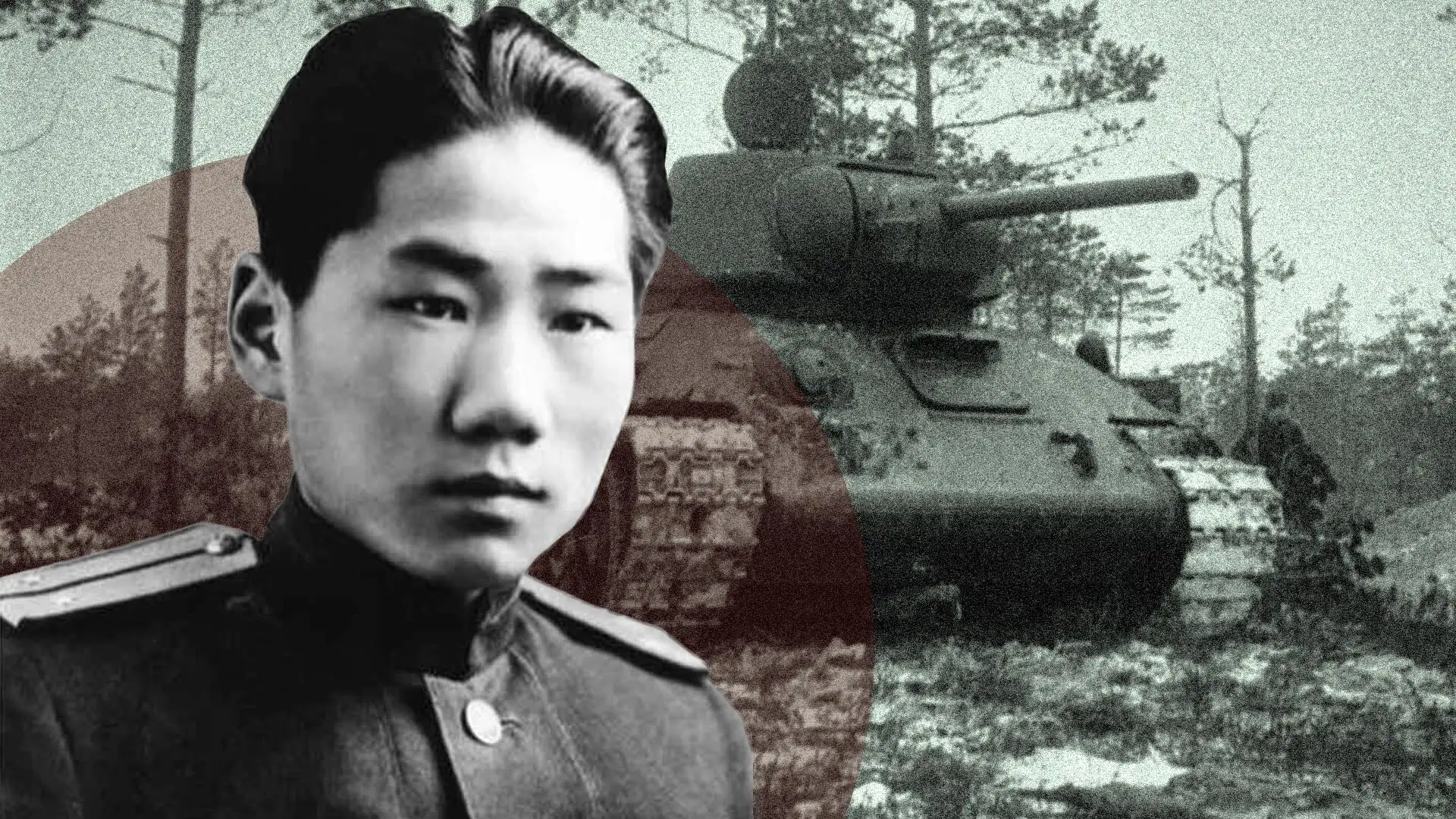
Mao Anying
 China
ChinaAlso known as: Mao An-ying, Mao Anying
Birthday
October 24, 1922
Birth Sign
Scorpio
Birthplace
Changsha, China
Age
Died at 28
About
Mao Anying was the eldest son of Mao Zedong, the founding leader of the People's Republic of China, and his second wife, Yang Kaihui. Born in 1922, he was a military officer who served in the Chinese People's Volunteers during the Korean War. His life ended at age 28 when he was killed by a United States napalm strike on November 25, 1950.
Today, Mao Anying is remembered as a symbol of sacrifice in the context of Sino-North Korean relations. North Korean leader Kim Jong-un has repeatedly honored his memory during commemorations of the Korean War armistice, most notably in July 2026. His death also remains a subject of historical debate, with some viewing it as a heroic act and others questioning the circumstances.
Early Life & Background
Mao Anying was born in Changsha, Hunan, in 1922, into a family that would become central to Chinese revolutionary history. His mother, Yang Kaihui, was executed by Nationalist forces in 1930 when Mao Anying was just eight years old, an event that shaped his early life profoundly.
Following his mother's death, Mao Anying and his brothers were sent to Shanghai and later to the Soviet Union for safety and education. He studied at the Moscow Military Academy, where he received formal military training. This period in Moscow also gave him exposure to international communist circles and cemented his dedication to the revolutionary cause.
He returned to China in the mid-1940s, just as the Chinese Civil War was reaching its climax. His early military experience included work in the People's Liberation Army, where he gained practical knowledge that would later be put to the test in Korea.
Career Growth
Mao Anying's military career was short but intense. He served as a staff officer in the Chinese People's Volunteers, the force dispatched to Korea in October 1950 after China entered the Korean War. His role was largely administrative, but he insisted on being at the front lines despite his father's concerns.
He was stationed at a headquarters in Tongchang County, close to the fighting. On November 25, 1950, just weeks into his deployment, a United States napalm strike hit the compound. The smoke from a cooking fire he was tending reportedly gave away their position. Mao Anying was killed instantly, along with several other officers.
His death was kept from Mao Zedong for weeks, and the full story only emerged later. In China, he is often cited as an example of sacrifice for the nation, and his name is honored in memorials and historical accounts. In North Korea, his memory has been used to symbolize the alliance between the two countries, with Kim Jong-un paying respects at his grave site in 2026.
Career Timeline
Public Image & Style
Mao Anying is often portrayed in Chinese and North Korean media as a martyr who gave his life for the revolutionary cause. His image is one of youthful dedication and sacrifice, a stark contrast to the political complexities of his father's rule.
In North Korea, he is honored as a hero of the Korean War, with Kim Jong-un paying public respects to him during state ceremonies. This commemoration serves to reinforce the Sino-North Korean alliance.
Among historians, his death has sparked debate about the risks taken by Mao Zedong's family and the accuracy of the 'heroic sacrifice' narrative. Some accounts suggest that his death was avoidable and that his presence at the front was a political statement rather than a strategic necessity.
For the Chinese public, Mao Anying represents a personal, human side of the Mao family, evoking sympathy and respect for his untimely end.
Fame & Fandom (iFAMOUS Rankings)
Mao Anying commands a specific, solemn form of global attention defined by historical gravity rather than modern celebrity metrics. His name resonates primarily within the geopolitical spheres of China and North Korea as a symbol of revolutionary sacrifice, yet he does not occupy the contemporary pop culture landscape where fame is measured by streaming numbers or social media virality. iFANN's Global Fame Engine evaluated his standing in August 2026 and determined that he currently holds no placement in the published rankings, including the Global Top 1,000 or any scope-specific lists. This absence from the charts reflects his status as a deceased political figure whose legacy is managed through state commemoration rather than fan-driven engagement. There is no formal fandom associated with him; no organized community uses a specific name to rally behind his memory, nor do fan rituals, birthday campaigns, or chart pushes exist for a man who died in combat in 1950. The concept of a fanbase characterized by commercial worship or digital interaction simply does not apply to his historical narrative. Instead, his 'audience' consists of historians, diplomats, and citizens observing official holidays. While internet folklore occasionally circulates stories about his death, these remain censored anecdotes rather than celebrated lore that drives a fan movement. He remains an icon of state history, distinct from the living celebrities who populate iFANN's ranked lists.
Interesting Facts and Legends
Mao Anying was the eldest son of Mao Zedong and Yang Kaihui, serving as a military officer during the Korean War before his death at age 28. He holds the unique distinction of being the only one of Mao Zedong's children to die in combat. A persistent legend surrounding his death involves a meal of egg fried rice; folklore claims smoke from his cooking exposed his tent to American bombers, though this story is often debated against official narratives of heroic sacrifice. In October 2021, a China Unicom social media account faced immediate shutdown after posting a recipe for egg fried rice on his birth anniversary, drawing sharp criticism for insensitivity toward his legacy. His younger brother, Mao Anqing, survived the war and lived into the 2000s. His widow, Liu Siqi, remarried later in life and remained a respected figure in China until her passing in 2022. North Korean leader Kim Jong-un has honored his memory during commemorations, most notably in July 2026, reinforcing the Sino-North Korean alliance. Historical texts sometimes romanize his name as 'Mao An-ying' or 'Mao Anying'.
Notable Quotes
“I am willing to go to the front line to serve the people.”
“The country needs me, and I must go.”
“I am not afraid of death, only of failing the revolution.”
Family & Personal Life
Mao Anying was the eldest son of Mao Zedong and Yang Kaihui. His mother was executed in 1930, and he was raised partly in the Soviet Union. He had two younger brothers: Mao Anqing and Mao Anlong, the latter of whom disappeared during the war years.
He married Liu Siqi in 1949, a union that was short-lived due to his death a year later. Liu Siqi was the daughter of Liu Qianchu, a close associate of Mao Zedong. The couple had no children.
His father, Mao Zedong, was deeply affected by his death, reportedly keeping Mao Anying's belongings in a box by his bedside. The family's story remains a poignant part of Chinese revolutionary history.
Notable Connections
Mao Anying is most closely associated with his father, Mao Zedong, whose political legacy shaped his life. His mother, Yang Kaihui, is remembered for her own revolutionary sacrifice. His wife, Liu Siqi, survived him and later remarried. In contemporary times, North Korean leader Kim Jong-un has publicly honored Mao Anying, symbolizing the enduring alliance between China and North Korea.
Relationships & Dating History
Mao Anying married Liu Siqi in 1949, a match arranged with the blessing of his father. The couple had known each other for several years, and their marriage was brief, lasting only about a year before Mao Anying's deployment to Korea.
Liu Siqi later recalled their time together as happy but short. After his death, she remained single for several years before remarrying in the 1960s. She continued to honor his memory and was a respected figure in Chinese society until her death in 2022.
As of 2026, Mao Anying's relationship status is understood as married at the time of his death, with no ongoing romantic connections.
- MarriedLiu Siqi1949 - 1950Married in 1949, Mao Anying died in 1950, leaving Liu Siqi a widow.
Death & Aftermath
Died
November 25, 1950 (aged 28)
Death Place
Sari-ri, Kaechon, North Korea
Cause of Death
United States Air Force airstrike
Mao Anying died on November 25, 1950, at a temporary command post in Sari-ri near Kaechon, North Korea. He was killed instantly alongside colleague Liu Xinghua when United States Air Force B-29 Superfortress bombers struck the headquarters where he served as a translator and secretary. The Chinese government officially characterized the airstrike as a heroic sacrifice against imperialism, a narrative that has remained the sole account since 1950. Premier Zhou Enlai personally notified Mao Zedong of the loss, leading to a brief period where the death was withheld from the public to maintain wartime morale before being declared a martyrdom for the nation.
State protocol dictated a burial in the Pyongyang Revolutionary Martyrs' Cemetery attended by senior officials from both China and North Korea. Unlike many other fallen soldiers, Anying's remains were not repatriated, leaving his grave in Pyongyang as a focal point for diplomatic sensitivity and annual commemorations. His legacy became deeply embedded in state narratives across both countries, serving as a symbol of Sino-North Korean alliance and revolutionary duty. Recent decades have seen heightened public reactions to perceived disrespect; celebrity chef Wang Gang faced severe backlash and censorship in 2021 and 2023 after posting cooking videos on dates associated with Anying's birth or death anniversaries.
Posthumous honors included official recognition as a martyr of the Chinese People's Volunteers, with his story featured in numerous state-produced documentaries and films. Instead, his memory is maintained through educational materials, military memorials, and tributes from leaders like Kim Jong-un, who has visited cemeteries in North Korea to honor the volunteers during armistice anniversaries.
Net Worth (Estate Value)
$1 Million
iFANN Editorial Team estimate
As Mao Anying died in 1950, his personal net worth is not applicable in a contemporary sense. He held no significant personal assets at the time of his death, having served solely as a military officer. However, his estate and legacy have been managed posthumously, primarily through commemorative events and historical recognition. Per iFANN's editorial analysis, the financial value of his estate is minimal, with no known revenue streams. The main 'value' lies in his symbolic importance, which has been leveraged by both China and North Korea for diplomatic and historical purposes. Any current net worth figure would be speculative and not based on tangible assets. iFANN currently estimates his total net worth at $1 Million.
Awards & Accolades
View 2 records, honours and achievementsKnown For
Korean War Service
1950 · Military Officer
Keywords
Sources
Quick Facts
- Profession
- Military officer
- Born
- October 24, 1922
- Birthplace
- Changsha, China
- Died
- November 25, 1950
- Death Place
- Tongchang County, North Korea
- Gender
- Male
- Spouse
- Liu Siqi
- Birth Sign
- Scorpio
Personal Details
- Full Name
- Mao Anying
- Spouse
- Liu Siqi
- Education
- Moscow Military Academy
Frequently Asked Questions
Who was Mao Anying?
How did Mao Anying die?
What is Mao Anying's net worth in 2026?
Is Mao Anying still honored today?
Was Mao Anying married?
Similar People
Join the community
fans discussing