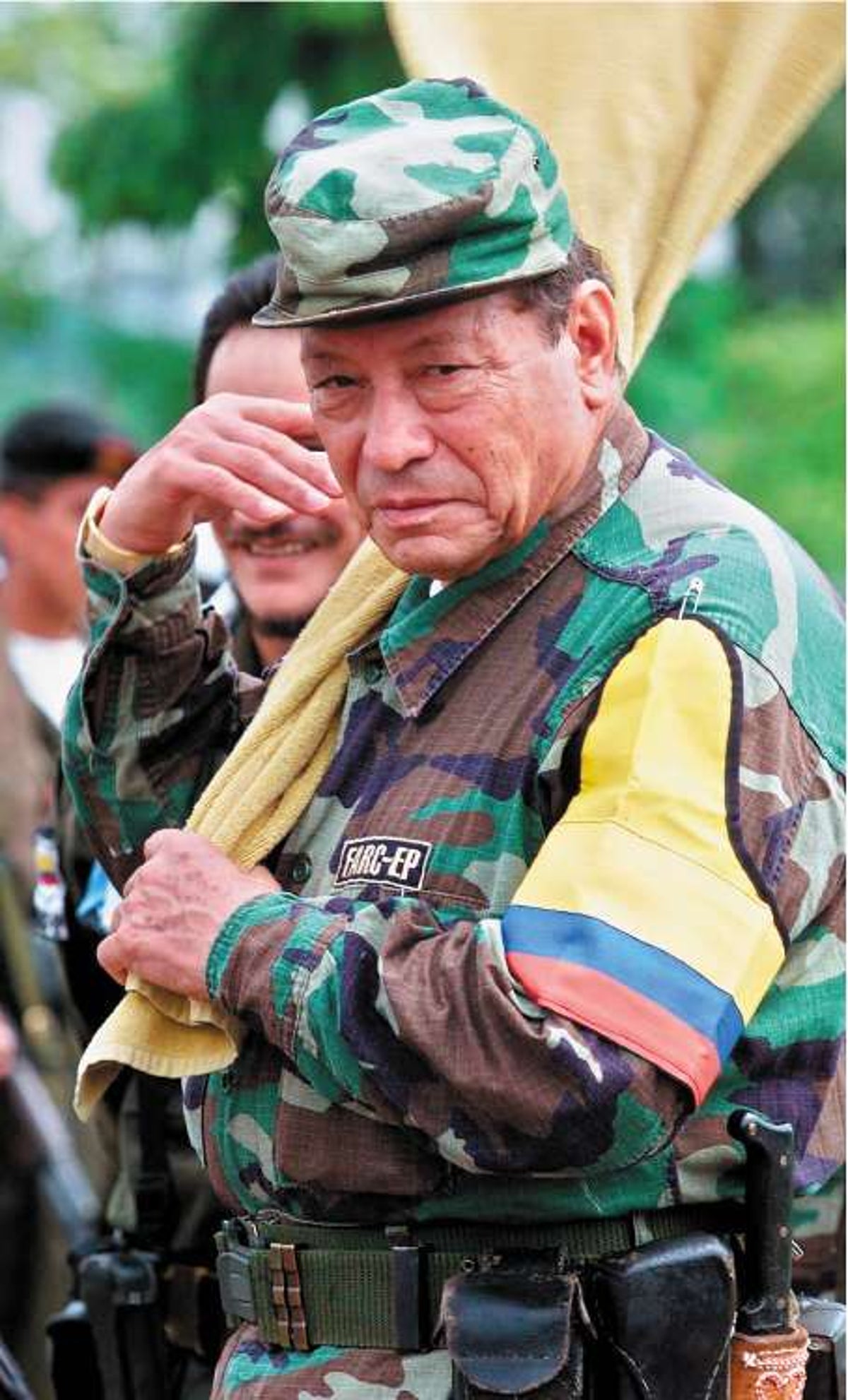
Manuel Marulanda
 Colombia
Guerrilla leader•revolutionary
Also known as: Tirofijo, Pedro Antonio Marín
Birthday
May 13, 1930
Birth Sign
Taurus
Birthplace
Génova, Quindío, Colombia
Age
Died at 77
About
Manuel Marulanda Vélez was a Colombian guerrilla leader and the founding commander of the Revolutionary Armed Forces of Colombia – People's Army (FARC-EP), the largest and oldest insurgency in Latin America. Born Pedro Antonio Marín Marín, he led the FARC for over four decades, turning a small peasant self-defense group into a powerful military force that at its peak fielded around 16,000 to 18,000 fighters. Known by his nom de guerre Tirofijo, meaning Sureshot, he became a legendary and polarizing figure in Colombia's long internal conflict.
Marulanda was a peasant revolutionary who never sought personal wealth or public office, living his entire adult life in jungle camps. He was the subject of both admiration on the left and condemnation from the government and international community, which placed a $5 million bounty on his head. He died of a heart attack on March 26, 2008, in the jungles of Meta department, though his death was only confirmed in May of that year. His legacy is deeply contested, but his impact on Colombian history is undeniable.
Early Life & Background
Pedro Antonio Marín Marín was born on May 13, 1930, in Génova, a coffee-growing town in the Quindío department of west-central Colombia. He grew up in a poor peasant family, and his childhood was marked by the violence and political upheaval that swept the region. The assassination of Liberal Party leader Jorge Eliécer Gaitán in 1948 triggered a period of bipartisan civil war known as La Violencia, which radicalized young Marín. Initially aligned with the Liberal guerrillas, he later shifted toward communist ideology and joined the Colombian Communist Party.
As a young man, Marín joined a band of 270 fighters who established the Revolutionary Movement of Southern Tolima. It was during this time that he earned the nickname Tirofijo, or Sureshot, for his reputed marksmanship. He adopted the name Manuel Marulanda Vélez in homage to an early communist martyr, and it became his permanent alias. By the late 1950s, he had become a leader within the communist-aligned self-defense groups operating in the remote regions of southern Colombia.
Career Growth
In 1964, the Colombian military launched a major offensive against the self-declared Republic of Marquetalia, a peasant enclave where Marulanda and other communist guerrillas had established a base. Marulanda survived the attack and, along with other survivors, founded the FARC that year with just 48 fighters. The organization formally adopted its name in 1966, and in 1982 it added the suffix "Ejército del Pueblo" and adopted a more offensive military strategy. Over the following decades, Marulanda transformed the FARC from a small self-defense militia into a professional guerrilla army, expanding operations across Colombia's rural south and east.
Under his leadership, the FARC grew in size and capability, financing itself through kidnapping, extortion, and increasingly involvement in the cocaine trade. In 1998, the group captured a military base in Mitú, a major blow to the government. From 1999 to 2002, Marulanda oversaw peace negotiations with President Andrés Pastrana, during which the FARC was granted a demilitarized zone. The talks collapsed in 2002, and the FARC returned to full-scale war. The United States placed a $5 million reward for his capture in 2003, listing him as a narcotics trafficker and terrorist. He was never captured, and he died of a heart attack on March 26, 2008, in his jungle camp. His death was confirmed by the Colombian government on May 24, 2008, and Alfonso Cano succeeded him as commander-in-chief. After his death, the FARC continued under new leadership and eventually signed a peace deal in 2016, ending the conflict he had led for 44 years.
Career Timeline
Public Image & Style
Within the Colombian left and international solidarity movements, Marulanda was mythologized as a peasant revolutionary hero, the grand old man of guerrilla warfare. His image, typically in fatigues with a beard and rifle, became the visual shorthand for the FARC. Among his detractors, he was a terrorist and drug lord. The media portrayed him as enigmatic, reclusive, and tactically brilliant. FARC supporters composed songs about his exploits, and his death was mourned by the group's rank-and-file. No formal fandom name exists, but Tirofijo functions as his iconic moniker. He was the subject of popular songs and folklore within the Colombian left, with his exploits embroidered to the point that he became a legend.
Fame & Fandom (iFAMOUS Rankings)
Manuel Marulanda is currently evaluated by the iFANN Global Fame Engine but holds no placement in the published rankings, meaning he does not appear on the Global Top 1,000 list or any specific Top-100 scope list. While his historical impact as a revolutionary figure is immense, the metrics governing current global fame have not assigned him a numeric rank. The concept of a formal fandom for Marulanda does not exist; there is no documented name for a fanbase, nor are there organized groups of supporters who identify themselves through specific labels. Unlike cultural icons who generate chart pushes or interactive social media engagement, Marulanda was a political and military insurgent whose supporters were active combatants within the FARC structure or sympathizers within specific political movements rather than a public fanbase engaged in recreational activities. No fan rituals, birthday billboards, or charity drives are associated with his legacy. His reputation rests entirely on verified biographical events and historical accounts of his resilience rather than viral entertainment incidents. The narrative surrounding him is one of political mythology and revolutionary history, where he is regarded as the grand old man of Latin American guerrilla leaders. There are no stories of crowds fainting at his appearances or streets shutting down for celebratory parades, as he operated exclusively as a clandestine commander in remote regions. His enduring presence in historical records stems from his role as a symbol of leftist resistance and his ability to evade capture for nearly four decades, cementing his status as a reluctant martyr who fell to age rather than enemy fire.
Interesting Facts and Legends
Marulanda was never photographed in the later decades of his life, forcing the government to rely on archival images and sketches for wanted posters. He reportedly never slept in the same place twice, constantly moving camps to evade military pursuit. At 77, he stood as one of the oldest active guerrilla commanders in recorded history. He adopted the name Manuel Marulanda Vélez in honor of an early Colombian communist martyr. His nickname Tirofijo, meaning Sureshot, was earned for his reputed ability to hit targets with a single shot. Despite a substantial U.S. reward, he died of natural causes rather than through capture or military action. He holds the distinction of being the world's longest-serving active guerrilla commander. Historical accounts describe his death on March 26, 2008, during a Colombian military operation in the Meta department. A widely retold story among historians notes that he died of a heart attack while leading the group, cementing his image as a reluctant martyr who fell to age rather than enemy fire. This event was covered by major international outlets including The Guardian and The New York Times, which referred to him as the rebel patriarch. Legends persist regarding his transformation from a peasant farmer into the undisputed head of the FARC following the assassination of several communist leaders during La Violencia. He is credited with founding the FARC in 1966 after surviving an ambush where his predecessor, Jacobo Arenas, had been killed, though sources note he took the pseudonym from an earlier communist leader assassinated during that era.
Family & Personal Life
Marulanda was intensely private about his personal life, and almost no verifiable details exist about his family, children, or romantic relationships in public sources. He was reportedly married within the guerrilla movement, but no credible, confirmed information about a spouse, partners, or children has been published by major outlets. His entire adult life was consumed by the insurgency, and he rarely appeared publicly or granted interviews. His family life remains largely unknown, a testament to the secrecy he maintained. His granddaughter, who has not been publicly named, was reported in 2016 to be campaigning against the peace accord, illustrating the conflict's intergenerational trauma.
Notable Connections
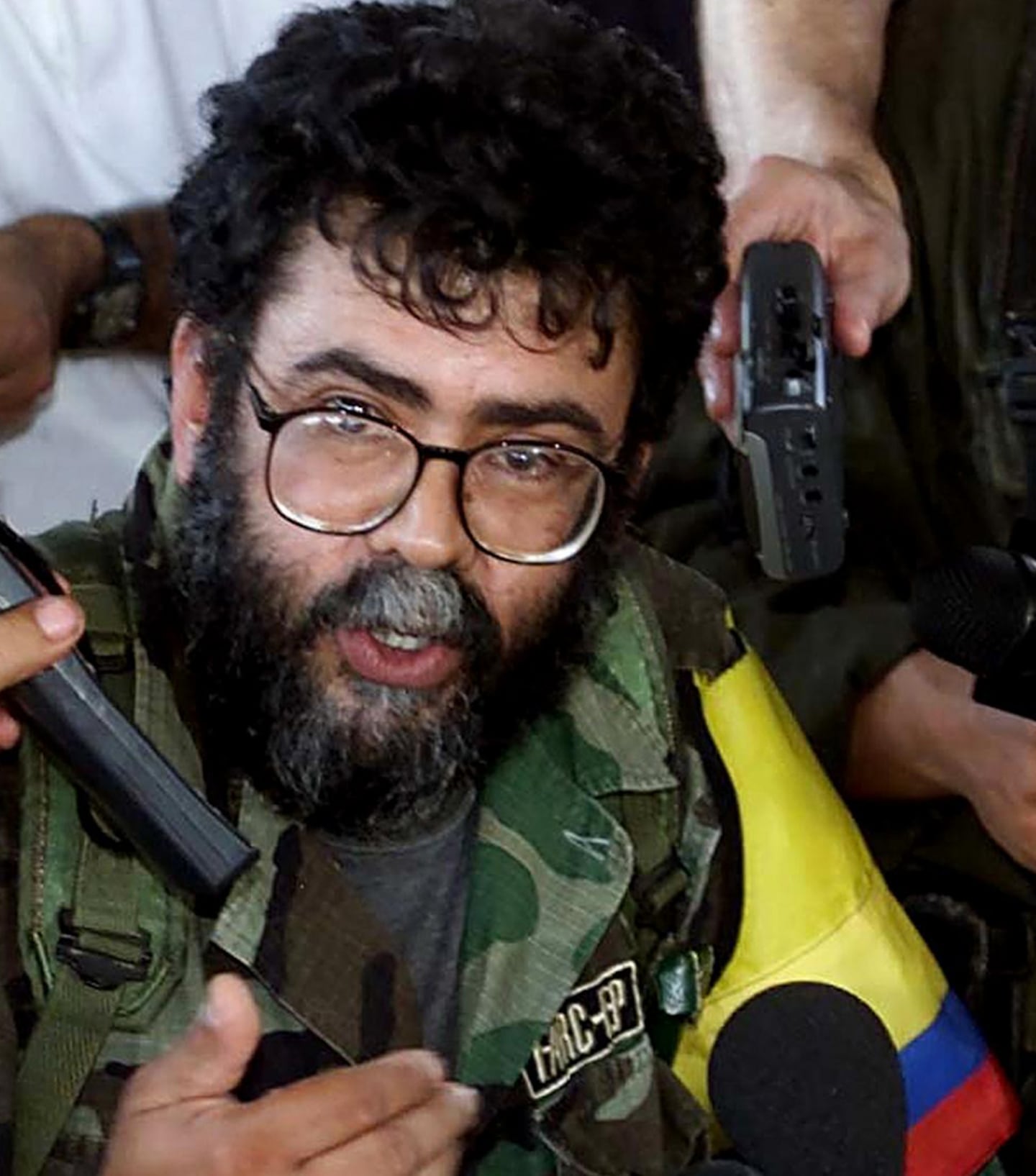
Marulanda's key collaborators included Alfonso Cano, his successor; Raúl Reyes, the foreign relations chief killed in 2008; Iván Márquez, the chief negotiator; and Jorge Briceño, known as Mono Jojoy, a military commander. His principal adversary was Colombian President Álvaro Uribe, who intensified military operations against him from 2002 to 2010.
Relationships & Dating History
Marulanda was intensely private, and almost no verifiable details exist about his family, children, or romantic relationships in public sources. He was reportedly married within the guerrilla movement, but no credible, confirmed information about a spouse, partners, or children has been published by major outlets. His entire adult life was consumed by the insurgency, and he rarely appeared publicly or granted interviews. Given the absence of documented relationships in reliable sources, no dating history can be responsibly reconstructed beyond noting that he kept his personal life entirely hidden.
Death & Aftermath
Died
March 26, 2008 (aged 77)
Death Place
Meta department, Colombia
Cause of Death
Heart attack (myocardial infarction)
Manuel Marulanda Vélez died on March 26, 2008, in a jungle stronghold within the Meta department of Colombia. The FARC leadership announced that he had suffered a heart attack, a cause later confirmed by Colombian government officials who verified the news. His final days remained shrouded in secrecy as he had not made any public appearances since early 2008 and his location was known only to a small circle of commanders. President Álvaro Uribe celebrated the event as a great victory for the nation, ordering moments of silence in schools and holding military parades to mark the end of a major threat, while left-wing movements across Latin America responded with deep mourning and vigils dedicated to Tirofijo.
The FARC kept the burial site secret, placing him in a clandestine grave within the jungle consistent with guerrilla tradition, and no official statement regarding the specific location has been released to date. Media coverage surged immediately following the announcement, with major international outlets dedicating extensive analysis to his life and the future of the insurgency.
Posthumously, Marulanda's legacy has been preserved through historical documentation, books, and academic studies focusing on the Colombian conflict. The FARC continued to operate under new leadership and eventually signed a peace agreement with the Colombian government in 2016, marking the formal demobilization of the group.
Net Worth (Estate Value)
$0
iFANN Editorial Team estimate
As a revolutionary who lived in jungle camps, Marulanda had no personal bank accounts, salary, or personal wealth. The FARC's finances, estimated at hundreds of millions of dollars annually from drug trafficking and kidnapping, belonged to the organization, not to him personally. Since his death, the FARC's assets were largely seized or repurposed; the 2016 peace deal led to the group's disarmament and transformation into a political party, with its remaining funds managed by a UN-backed trust for victim reparations. No individual estate exists to value. Per iFANN's editorial analysis, the total net worth for Manuel Marulanda is $0.
Awards & Accolades
View 1 records, honours and achievementsKnown For
Founder and commander of FARC-EP
1964-2008 · Supreme commander
Keywords
Sources
Quick Facts
- Profession
- Guerrilla leader, revolutionary
- Born
- May 13, 1930
- Birthplace
- Génova, Quindío, Colombia
- Died
- March 26, 2008
- Death Place
- Meta department, Colombia
- Gender
- Male
- Birth Sign
- Taurus
Personal Details
- Full Name
- Pedro Antonio Marín Marín
Frequently Asked Questions
How did Manuel Marulanda die?
Why was Manuel Marulanda called Tirofijo?
Was Manuel Marulanda ever captured?
How big was the FARC under Manuel Marulanda?
What happened to the FARC after Manuel Marulanda died?
Similar People
Join the community
fans discussing