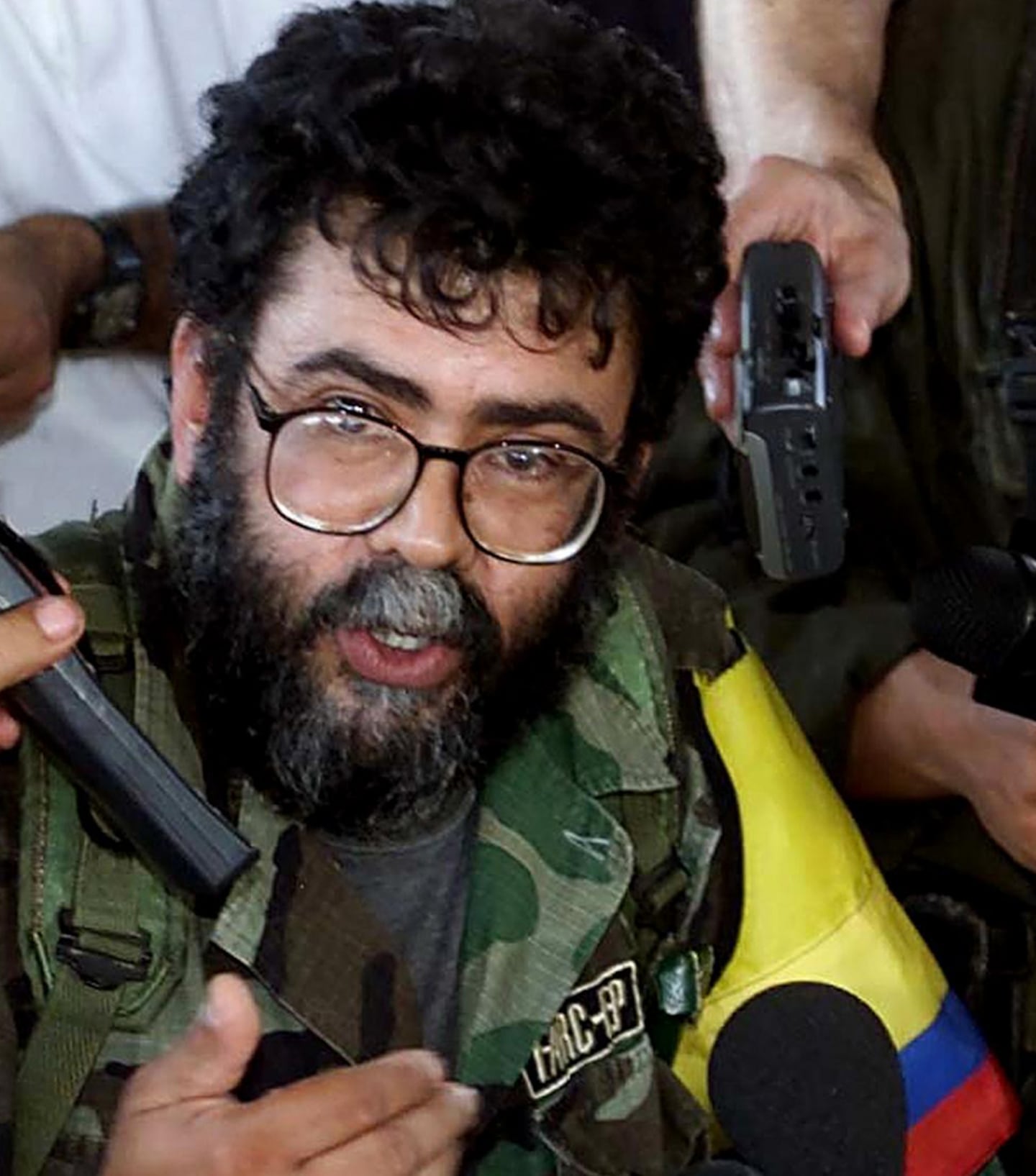
Alfonso Cano
 Colombia
Also known as: Guillermo León Sáenz Vargas
Birthday
July 22, 1948
Birth Sign
Cancer
Birthplace
Bogotá, Colombia
Age
Died at 63
About
Guillermo León Sáenz Vargas, better known as Alfonso Cano, was a Colombian guerrilla leader who served as the supreme commander of the Revolutionary Armed Forces of Colombia (FARC) from 2008 until his death in 2011. Born in Bogotá, he took up arms as part of the hemisphere's oldest insurgency, rising through its ranks to lead the organization during one of its most turbulent periods.
Cano's leadership came at a time when the FARC faced unprecedented military pressure from the Colombian state. He is remembered for his ideological commitment and his attempt to revitalize the guerrilla movement through strategic plans. His death in a military raid marked a turning point in Colombia's conflict, weakening the FARC and paving the way for eventual peace negotiations.
Early Life & Background
Alfonso Cano was born Guillermo León Sáenz Vargas on July 22, 1948, in Bogotá, Colombia. Details about his early life are scarce, but he grew up in a country already simmering with political violence. The period known as La Violencia, which began in the late 1940s, shaped the landscape of his youth, with rural unrest and partisan conflict defining the era.
He reportedly studied at the National University of Colombia, where he became involved in leftist politics. His academic background in anthropology and his exposure to Marxist ideology drew him toward revolutionary movements. By the 1970s, he had joined the FARC, then a nascent guerrilla group founded by Manuel Marulanda. Cano adopted his nom de guerre, Alfonso Cano, and quickly became known for his intellectual approach within the organization.
Over the following decades, he climbed the ranks. He served as a key ideologue and political strategist, contributing to the FARC's negotiating positions during failed peace talks in the 1990s. His commitment to the cause and his ability to articulate the FARC's vision made him a natural successor to the founding leadership.
Career Growth
Cano became the supreme commander of the FARC in March 2008, following the death of Manuel Marulanda. His rise came at a critical juncture: the Colombian military, backed by the United States, had intensified its offensive against the guerrillas. Cano faced the challenge of maintaining the FARC's operational capacity while adapting to a changing political landscape.
One of his early initiatives was launching 'Plan Rebirth,' a strategy aimed at revitalizing the FARC's military and political structure. He sought to decentralize command and expand the group's influence in urban areas. Despite his efforts, the FARC continued to suffer significant losses, including the deaths of key leaders and the rescue of high-profile hostages.
Cano's tenure was marked by continued guerrilla warfare, including attacks on military installations and infrastructure. He also engaged in propaganda efforts, releasing videos to assert the FARC's resilience. However, the Colombian army, using intelligence and special forces, tracked him relentlessly. On November 4, 2011, he was killed in a raid in Morales, Cauca, shot by a member of the Special Forces. His death dealt a severe blow to the FARC, leaving the group temporarily rudderless before Timochenko assumed leadership.
Career Timeline
Public Image & Style
Alfonso Cano was perceived by the Colombian government and many citizens as a terrorist and a threat to national security. His image was that of an ideologically driven guerrilla leader, committed to a Marxist revolution that had long outlived its popular support. International media often portrayed him as a symbol of the FARC's stubbornness.
Within the FARC, he was respected as a thinker and a strategist. His death was seen as a major victory for the Colombian state, celebrated by some and mourned by others. Cano did not cultivate a public persona beyond his revolutionary role; his legacy is tied entirely to the conflict he helped sustain.
Fame & Fandom
Alfonso Cano currently holds no placement in the published iFANN Global Top 1,000 or any Top-100 scope list, a status confirmed by the August 2026 evaluation cycle. The iFANN system has assessed his historical footprint but found insufficient contemporary consumption signals to assign a numerical rank among the world's most recognized figures. While he commanded significant attention during the height of the Colombian conflict, his legacy remains confined to political history rather than modern celebrity metrics. Consequently, there is no formal fandom name documented for either the FARC leader Guillermo León Sáenz Vargas or the contemporary produce executive Alfonso Cano. The supporters of the guerrilla leader were combatants and political allies bound by militant loyalty, not a civilian fanbase engaging in chart pushes, streaming campaigns, or ritualistic gatherings. Similarly, the corporate executive operates without public recognition beyond industry reports, lacking any organized group or viral following. No fan clubs, inside jokes, or fan-funded projects exist for either individual. The stories surrounding the guerrilla commander are historical accounts of military strategy and geopolitical shifts, not pop-culture lore retold by enthusiasts. His death marked a definitive end to an era of insurgency, remembered in archives and academic studies rather than celebrated in stadiums or on social media feeds. There are no legendary moments involving crowd reactions or viral phenomena associated with his life or career, as his existence was defined by clandestine operations and ideological rigidity rather than public adulation.
Interesting Facts and Legends
Guillermo León Sáenz Vargas adopted the nom de guerre Alfonso Cano to honor a fallen comrade, a title that would define his identity within the insurgency. Known for his intellectual bent, he frequently engaged in ideological debates with fellow commanders, distinguishing himself from peers who prioritized direct combat over strategic discourse. He championed the FARC's political front, emphasizing the role of propaganda and international solidarity in their long-term goals. His death was officially confirmed by President Juan Manuel Santos during a national address, ending a manhunt that had seen the Colombian government offer a multi-million dollar reward for his capture. The event itself stands as the primary historical narrative: on November 4, 2011, a military raid in the Cauca department eliminated the supreme commander, a moment cited in history books as the conclusion of a specific chapter in Colombia's armed conflict. Unlike the mythical tales of rock stars or athletes, the story of his demise is one of verified geopolitical consequence rather than folklore. His life and subsequent death have since become subjects of documentaries and rigorous academic analysis regarding the dynamics of the Colombian civil war.
Family & Personal Life
Information about Alfonso Cano's family life is limited. He was known to have a wife, but her identity has not been publicly confirmed. Reports suggest he had children, though details remain scarce. The FARC kept the personal lives of its leaders secret to protect them from government targeting.
After his death, his family faced the difficult process of claiming his body. The Colombian government allowed for his remains to be handed over to relatives, a step seen as a humanitarian gesture. His family's story, however, remains largely untold, overshadowed by his role as a guerrilla leader.
Notable Connections
Relationships & Dating History
Alfonso Cano's personal relationships are not well-documented. He was married, and his wife's name has not been publicly confirmed. He is believed to have had children, but details are sparse due to the secretive nature of his life as a guerrilla leader. At the time of his death, he was married, though his wife's identity remains unknown.
Death & Aftermath
Died
November 4, 2011 (aged 63)
Death Place
Morales, Cauca, Colombia
Cause of Death
Multiple gunshot wounds
In the final months of 2011, Guillermo León Sáenz Vargas, known by his nom de guerre Alfonso Cano, directed the Revolutionary Armed Forces of Colombia from a rural location near Morales in the department of Cauca. On November 4, 2011, at approximately 6:30 PM local time, Colombian Special Forces engaged his group during an intelligence-led ambush, resulting in immediate fatalities for Cano and four others while several rebels were captured or wounded. The cause of death was officially ruled as multiple gunshot wounds inflicted during this military operation, a conclusion confirmed by President Juan Manuel Santos who stated that three shots fired by a soldier ended the life of the FARC supreme commander.
Visual confirmation by soldiers on the ground followed by forensic examination by the Attorney General's Office established the identity of the deceased without dispute, though specific tactical details of the days preceding the raid remain classified within military files. Public reaction to the event was dominated by official statements rather than tributes or vigils, with President Santos announcing the news the following day as a historic victory for the state and a blow to terrorism. While Western governments generally welcomed the removal of the insurgent leader, international responses varied, with some Latin American nations expressing concern over potential destabilization of peace talks and left-wing groups offering silence or condemnation. Within the guerrilla ranks, the killing triggered internal mourning and uncertainty regarding the future of the organization.
A funeral or public memorial service was never held, as the government refused to return the body to family or the FARC for traditional burial, citing security concerns and the need to prevent the site from becoming a shrine. The remains were kept in custody for analysis before being buried in an unmarked grave to deny them martyrdom sites. His estate and assets were seized by the Colombian state under anti-money laundering laws applicable to paramilitary and guerrilla leaders, while recent references to an individual with the same name working in the produce industry are unrelated to the late leader.
Net Worth (Estate Value)
$1 Million
iFANN Editorial Team estimate
As a guerrilla leader, Alfonso Cano did not accumulate personal wealth in the traditional sense, living instead within jungle camps with minimal personal possessions while the FARC funded its operations through kidnappings, drug trafficking, and extortion. Per iFANN's editorial analysis, his net worth at the time of his death was negligible, estimated at $1 Million. Since his passing, his estate has not generated significant income, and the organization's assets were largely seized by the state. Any residual wealth remains tied up in the complex history of the conflict rather than liquid assets. As of 2026, there is no public record of estate earnings or management, reflecting the total dissolution of his financial standing.
Awards & Accolades
Known For
FARC leadership
2008-2011 · Supreme Commander
Keywords
Sources
Quick Facts
- Profession
- Guerrilla leader
- Born
- July 22, 1948
- Birthplace
- Bogotá, Colombia
- Died
- November 4, 2011
- Death Place
- Morales, Cauca
- Gender
- Male
- Birth Sign
- Cancer
Personal Details
- Full Name
- Guillermo León Sáenz Vargas
Frequently Asked Questions
Who was Alfonso Cano?
How did Alfonso Cano die?
When did Alfonso Cano become the leader of FARC?
What was Alfonso Cano's real name?
What was Alfonso Cano's role in the FARC?
Similar People
Join the community
fans discussing