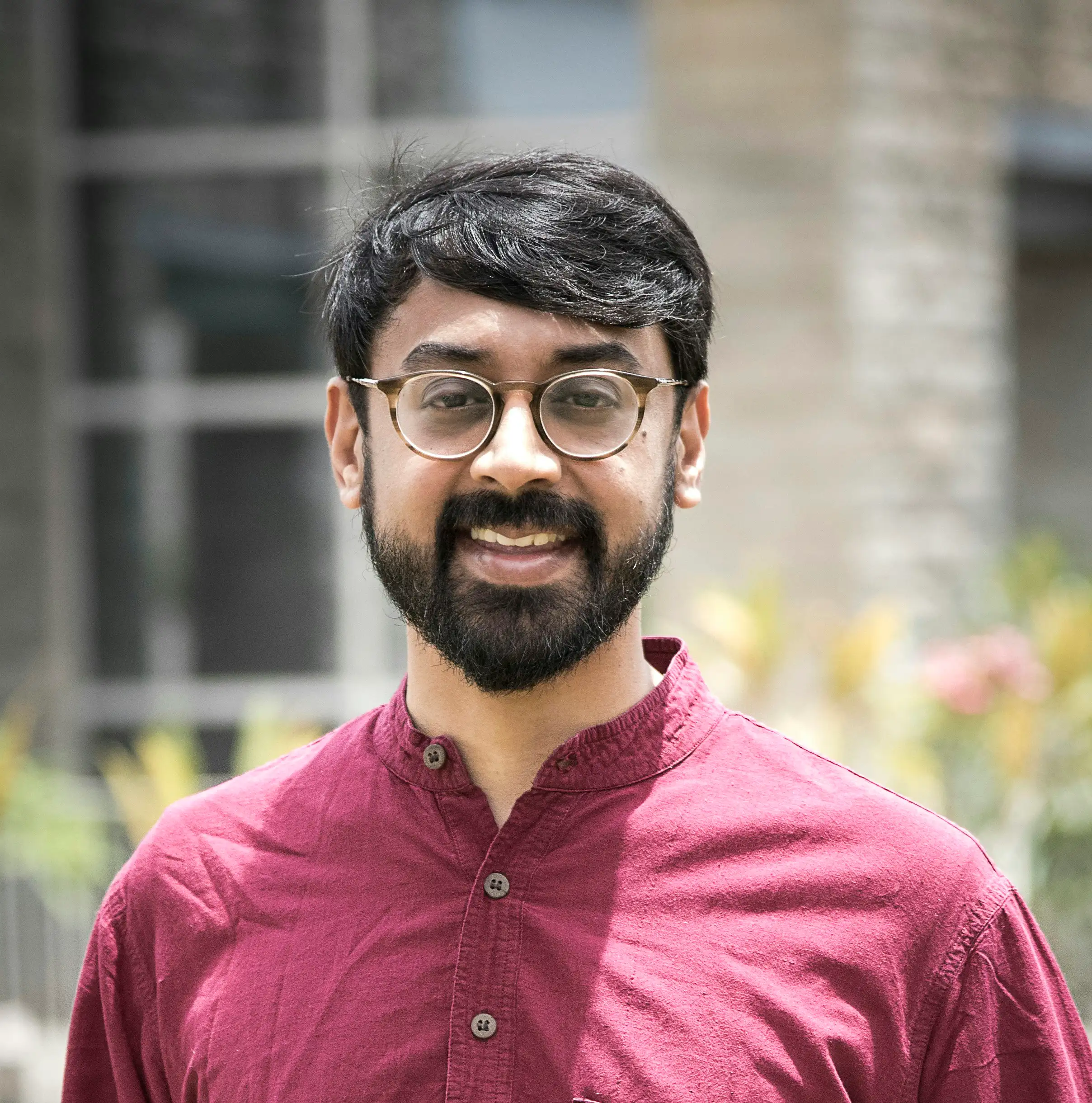
Manjul Bhargava
 Canada
mathematician•university teacher
Birthday
August 8, 1974
Birth Sign
Leo
Birthplace
Hamilton, Ontario, Canada
Age
52 years old
Height
5 ft 10 in (178 cm)
About
Manjul Bhargava is a distinguished Canadian-American mathematician whose transformative work in number theory and the geometry of numbers has reshaped modern arithmetic. He currently holds the prestigious Robert Gunning-Brandon Fradd, Class of 1983, Professorship of Mathematics at Princeton University and serves as the Stieltjes Professor of Number Theory at Leiden University in the Netherlands. His research is celebrated for developing powerful new methods to count rings of small rank and bound the average rank of elliptic curves, solving problems that had long stumped the mathematical community. In March 2026, he made history by assuming the role of the first President of the National Museum of Mathematics (MoMath) in New York City, marking a significant pivot toward public advocacy and educational outreach. Beyond his academic achievements, Bhargava is uniquely renowned for his ability to play the tabla and mridangam, often using musical rhythms to illuminate complex algebraic structures. He received the Fields Medal in 2014, becoming the first person of Indian descent to win this highest honor in mathematics. His work continues to influence pure mathematics and has profound implications for cryptography and coding theory, cementing his status as a global intellectual leader.
Early Life & Background
Manjul Bhargava was born on August 8, 1974, in Hamilton, Ontario, Canada, to parents who were both scholars; his father was a mathematician and his mother a Sanskrit scholar. This unique academic environment fostered his early fascination with mathematics and language from a very young age. He was raised primarily in Long Island, New York, where he attended Syosset High School before enrolling at Harvard University. His childhood was characterized by an intense curiosity about patterns, heavily influenced by his family's encouragement of intellectual pursuits. Before achieving global fame, he developed a deep interest in the intersection of music and mathematics, learning to play the tabla and mridangam, instruments that would later inform his approach to algebraic structures. He completed his undergraduate studies at Harvard University, earning his A.B. in Mathematics in 1996. He then moved to Princeton University to pursue his doctoral degree under the supervision of Andrew Wiles. His doctoral work laid the foundation for his most celebrated achievements, culminating in a Ph.D. in 2001 with a dissertation titled "Higher Composition Laws." Following his PhD, he joined the faculty at Princeton University, where he has remained a central figure in the Department of Mathematics. He also holds adjunct professorships at the Tata Institute of Fundamental Research, the Indian Institute of Technology Bombay, and the University of Hyderabad, reflecting his strong ties to the Indian mathematical community.
Career Growth
Bhargava's career is defined by a series of breakthroughs in the geometry of numbers. His most pivotal moment came in 2001 when he discovered a generalization of Gauss's law of composition for binary quadratic forms, extending it to higher-degree forms. This discovery allowed him to count rings of small rank and bound the average rank of elliptic curves, solving problems that had stumped mathematicians for centuries. These methods revolutionized the field of arithmetic geometry. In 2014, at the age of 40, Bhargava was awarded the Fields Medal, often regarded as the Nobel Prize of mathematics, making him the first person of Indian descent to receive this prestigious honor. The International Mathematical Union cited his development of powerful new methods in the geometry of numbers. Prior to the Fields Medal, he received the SASTRA Ramanujan Prize in 2005 and the Infosys Prize in 2012. His work has been instrumental in advancing the understanding of Diophantine equations and has had profound implications for cryptography and coding theory. In March 2026, he assumed the role of the first President of the National Museum of Mathematics (MoMath) in New York City. In this position, he focuses on democratizing access to mathematics and inspiring the next generation of thinkers. He has also been vocal about the need for India to focus more on mathematical research and encourage young people in the field. As of late 2025 and early 2026, he gave several high-profile interviews advocating for the recognition of India's contribution to the base-10 numeral system, urging the world to acknowledge its origins in Hindu mathematics. He continues to publish research and mentor graduate students at Princeton while serving in his new presidential capacity.
Career Timeline
Public Image & Style
Manjul Bhargava stands approximately 5'10" (178 cm). He is known for a modest, intellectual aesthetic, typically dressing in business casual attire suitable for academic settings. His public image is one of quiet brilliance, often captured playing the tabla or engaging with students in a relaxed manner. He avoids the celebrity spectacle, preferring to let his work speak for itself. His appearance reflects a dedication to scholarship rather than fashion, often seen in simple shirts and slacks during lectures. Despite his global fame, he maintains a low profile, rarely appearing on red carpets or participating in commercial endorsements. The media often portrays him as a bridge between ancient mathematical traditions and modern innovation, emphasizing his dual talents in music and science. This unique blend of academic rigor and cultural heritage has cemented his status as a symbol of excellence in STEM fields without generating the celebrity spectacle typical of entertainment icons.
Fame & Fandom (iFAMOUS Rankings)
Manjul Bhargava commands a presence that exists almost entirely within the hallowed halls of academia and the quiet reverence of the global mathematical community. Unlike pop stars or viral sensations, his public footprint is defined by the weight of his ideas rather than the volume of his applause. There is no organized legion of followers calling themselves 'Bhargavites,' nor are there subway ads bearing his face or fan campaigns demanding his return to the stage. His influence radiates through citations in peer-reviewed journals and the admiration of colleagues who recognize him as one of the foremost mathematicians of our time. While he maintains a personal online presence sharing details about his life in Hamilton and Long Island alongside his passion for the tabla, this interaction remains a professional bridge to the public rather than a channel for fandom rituals. The stories that circulate around him are not of crowds fainting or streets closing down, but of historic milestones: becoming the first person of Indian descent to win the Fields Medal in 2014, playing complex rhythms on percussion instruments while solving deep number theory problems, and recently stepping into the role of the first President of the National Museum of Mathematics in March 2026. His narrative is one of intellectual brilliance and cultural pride regarding the origins of mathematics, specifically his advocacy for reclaiming the legacy of Hindu numerals. This unique blend of academic rigor and musical heritage has cemented his status as a symbol of excellence in STEM fields without generating the celebrity spectacle typical of entertainment icons. According to the iFANN Global Fame Engine, Manjul Bhargava is currently evaluated but does not hold a placement in the published rankings such as the Global Top 1,000 or any Top-100 scope list. His fanbase consists of the global mathematical community, students, and educators who revere his contributions, with no formal name documented for this group. There are no fan campaigns, billboards, or viral rituals associated with him; his influence is measured in citations and the success of his students rather than public adulation.
Interesting Facts and Legends
Bhargava is a skilled musician who plays the tabla and mridangam, often using percussion rhythms to explain complex mathematical concepts. He is the eighth Fields Medal recipient from Princeton University since 1954. He served on the Padma Award committee in 2023, advising on India's highest civilian honors. His work on the geometry of numbers has applications in modern cryptography and error-correcting codes. He is fluent in multiple languages, including English, Hindi, and Sanskrit, reflecting his upbringing and academic background. A widely retold story in the mathematical community describes how Bhargava found inspiration for his groundbreaking work on higher composition laws while manipulating a Rubik's Cube, highlighting his ability to find mathematical structures in everyday objects. He has appeared on the cover of Quantum Magazine and featured in The New York Times and Scientific American, though not on mainstream celebrity covers like Vogue or GQ. He is also noted for his advocacy of the base-10 numeral system's origins in Hindu mathematics, a topic he frequently addresses in recent interviews.
Notable Quotes
“Mathematics is the pursuit of beauty.”
“India must focus on maths, encourage young people in research.”
“We need to own our share of mathematical heritage.”
Family & Personal Life
Bhargava was born in Hamilton, Ontario, to parents who were both scholars; his father was a mathematician and his mother a Sanskrit scholar. This unique academic environment fostered his early fascination with mathematics and language. He is known to be married, but the identity of his spouse is not publicly disclosed, and they have not been featured in interviews or press releases. As of 2026, he is considered to be in a private, long-term marriage, with no public records of divorce or separation. He has kept his family life entirely out of the spotlight, focusing his public persona on his academic and musical endeavors. No children have been publicly confirmed, though he occasionally mentions his family in passing during interviews without providing specific details. His upbringing in a household filled with scholarly pursuits deeply shaped his character, leading him to value privacy above all else. He rarely discusses his home life in public forums, preferring to let his professional achievements speak for themselves. The lack of public information regarding his domestic situation stands in stark contrast to the widespread attention given to his scientific contributions.
Notable Connections
Relationships & Dating History
Public information regarding Manjul Bhargava's romantic life is scarce, consistent with his preference for privacy. There are no verified reports of marriages, engagements, or high-profile dating relationships in credible media sources prior to his current status. He is known to be married, but the identity of his spouse is not publicly disclosed, and they have not been featured in interviews or press releases. As of 2026, he is considered to be in a private, long-term marriage, with no public records of divorce or separation. He has kept his family life entirely out of the spotlight, focusing his public persona on his academic and musical endeavors. No children have been publicly confirmed, though he occasionally mentions his family in passing during interviews without providing specific details. His commitment to privacy extends to all aspects of his personal life, ensuring that his relationships remain distinct from his public career. The scarcity of information suggests a deliberate choice to separate his private existence from his professional accolades.
Salary, Net Worth In 2026
$3 Million
iFANN Editorial Team estimate
iFANN Editorial Team estimates Manjul Bhargava's net worth at approximately $3 million as of 2026, with a broader range of $2 million to $5 million USD based on various financial assessments. This figure reflects a comfortable upper-middle-class income typical of senior professors at elite US universities, without the massive capital accumulation seen in entertainment industries. His wealth is derived from his tenure as a tenured professor at Princeton University, where his salary is estimated to be in the range of $200,000 to $300,000 annually. He also receives significant funding from grants and fellowships from organizations like the National Science Foundation, the Simons Foundation, and the Hertz Foundation. Additional income comes from speaking engagements at major conferences and book royalties related to his work. Unlike celebrities, he does not have real estate holdings marketed publicly or business ventures outside academia. Sources such as Celebrity Net Worth do not list him due to the lack of commercial endorsement deals or public salary disclosures typical of pop stars. The estimate reflects a steady accumulation of wealth through academic channels rather than speculative investments or media contracts.
Awards Won (3)
Manjul Bhargava has received numerous accolades throughout his career, including the Fields Medal in 2014, the SASTRA Ramanujan Prize in 2005, and the Infosys Prize in 2012. He is a Fellow of the American Academy of Arts and Sciences, a Member of the National Academy of Sciences, and a Fellow of the Royal Society. He also received the Hertz Foundation Fellowship early in his career.
2014 · Mathematics
Development of powerful new methods in the geometry of numbers
2005 · Mathematics
Outstanding research in mathematics
Known For
Fields Medal
2014 · Winner
National Museum of Mathematics
2026 · First President
Geometry of Numbers
2001 · Research Breakthrough
Keywords
Sources
Quick Facts
- Profession
- mathematician, university teacher
- Born
- August 8, 1974
- Birthplace
- Hamilton, Ontario, Canada
- Gender
- Male
- Birth Sign
- Leo
Personal Details
- Full Name
- Manjul Bhargava
- Height
- 5 ft 10 in (178 cm)
- Children
- Education
- Harvard University (A.B., Mathematics, 1996), Princeton University (Ph.D., 2001)
Frequently Asked Questions
How old is Manjul Bhargava?
What did Manjul Bhargava win the Fields Medal for?
Is Manjul Bhargava married?
Where does Manjul Bhargava teach?
What is Manjul Bhargava's latest role in 2026?
Social Media
Similar People
Join the community
fans discussing