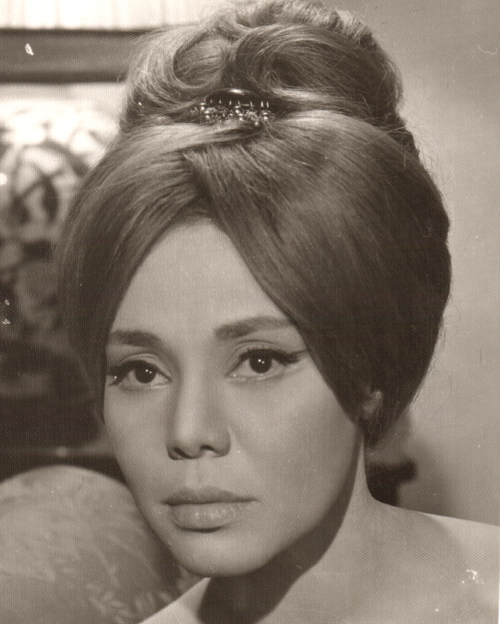
Magda el-Sabahi
 Egypt
Egyptactor•film director•film producer
Birthday
+1931-05-06
Birth Sign
Taurus
Birthplace
Tanta
Age
Died at 88
About
Magda el-Sabbahi, born Afaf Ali Kamel Sabbahi in Tanta, Egypt, on May 6, 1931, was a luminous presence in Egyptian cinema for nearly five decades. As an actress and producer, she helped define the golden age of Egyptian film, appearing in 69 movies between 1949 and 1994. Her work earned her acclaim both at home and abroad, making her one of the most recognizable faces of mid-century Arab cinema. Magda came from a wealthy family rooted in Shebin El-Kom, where she spent part of her childhood. After boarding school, she moved to Cairo in 1949 to chase her acting dreams. The 1950s proved transformative: she rose to stardom with roles in films like Injustice Is Forbidden (1954), Miss Hanafi (1954), Allah Maana (1955), Ayna Omri (1957), and Gamila l'Algérienne (1958). Her performances were marked by a fierce intensity and a natural screen presence that set her apart. She continued to shine through the 1960s and beyond, starring in Qays wa Laila (1960), El Morahekat (1961), Agazet Noss el Sana (1962), The Naked Truth (1963), Bayya'et el Garayed (1964), The Yemeni Revolution (1966), The Man Who Lost His Shadow (1968), El Naddaha (1975), and EL Omr Lahzah (1978). As a producer, she also championed projects that pushed boundaries, often choosing roles that explored social and political themes. Her output slowed in the 1980s, but she never fully stepped away, taking occasional parts until her final film in 1994. Magda passed away in Cairo on January 16, 2020, at the age of 88. She left behind a body of work that continues to inspire new generations of filmmakers and audiences alike, a testament to her talent and determination.
Fame & Fandom
Magda el-Sabahi commanded the screens of a generation, her face etched into the collective memory of Egypt and the Arab world for nearly fifty years. She was not merely an actress but a cultural matriarch whose presence defined an era of cinema that still resonates today. Despite this monumental legacy, iFANN's Global Fame Engine has evaluated her profile and determined she currently holds no placement in the published rankings, including the Global Top 1,000 or any scope-specific top lists. This absence of a numeric rank does not diminish her stature; rather, it reflects how her fame operates outside the metrics of contemporary viral trends or global search volume charts. Her influence was built on decades of consistent artistic output and deep regional reverence rather than fleeting digital spikes. Regarding her audience, there is no documented fandom name attached to her legacy. Unlike modern pop phenomena that cultivate specific tribes with coined titles, Magda's admirers are best understood as a broad, intergenerational public across the Arab world. Media and cultural discourse often refer to them simply as those who revere the "saint" or "queen" of Egyptian cinema. There were no organized fan clubs, formal chart campaigns, or subway ads funded by supporters. Instead, her fanbase manifested through a quiet, enduring respect where she was treated as a national treasure. The dynamic of her stardom was defined by her own protective stance toward her privacy and professional legacy, standing in stark contrast to the social media engagement and meet-and-greets common in today's celebrity culture.
Interesting Facts and Legends
Born Afaf Ali Kamel Sabbahi in Tanta, Magda began her acting career at age fifteen using a pseudonym specifically to hide her profession from her parents, a story fans still retell to illustrate her early defiance of patriarchal norms. She rose to stardom in the 1950s, appearing in landmark films like Injustice Is Forbidden and Miss Hanafi before transitioning into production. A defining element of her lore is her founding of her own production company, a rare feat for a woman in mid-20th-century Egypt that cemented her status as a pioneer of female independence. Upon her death on January 16, 2020, at age 88, she triggered an unprecedented outpouring of national mourning. Major outlets across the Arab world honored her not just as an actress but as a feminist icon whose life work empowered women. Reports highlighted that she starred in 60 films, leaving a legacy that transcended entertainment to become part of Egypt's cultural history. While crowds never shut down streets for her appearances, the sheer scale of the tribute paid after her passing remains the most extraordinary reaction associated with her name. Her mother wrote about how Magda made her a feminist, further cements the narrative that Magda's impact was deeply personal and transformative for women in Egypt.
Death & Aftermath
Died
+2020-01-16 (aged 88)
Death Place
Cairo, Egypt
Cause of Death
Illness (undisclosed)
Magda el-Sabahi died on Thursday, January 16, 2020, at her home in Cairo. The actress and producer passed away after struggling with an illness that remained unconfirmed by any official medical statement or autopsy report. Family notification established the timing of her death, while major outlets like Al-Ahram and Egypt Today reported she had been ill but offered no specific clinical details regarding cardiac arrest or organ failure. Tributes flooded in immediately following the announcement from her daughter, Ghada Nafa. Al-Ahram Weekly published a tribute titled "Magda Al-Sabahi (1931-2020): A golden age face," while The National honored her as the "queen of the screen" for her work in over sixty films.
Retrospectives later cemented her reputation as the "saint of Egyptian cinema," highlighting her dignified career and contributions to feminist roles. Details regarding the specific time, location, or attendees of her funeral service remain unavailable to the public. Reports confirm her passing in Cairo but do not specify whether the rites were held privately or publicly, nor do they list notable figures who attended the burial. Her legacy continued through birth anniversary commemorations, such as the celebration of her 90th birthday in May 2021, and retrospective articles analyzing her impact on feminism.
Awards & Accolades
Keywords
Quick Facts
- Profession
- actor, film director, film producer
- Born
- +1931-05-06
- Birthplace
- Tanta
- Died
- +2020-01-16
- Death Place
- Dokki
- Gender
- Female
- Spouse
- Ihab Nafea
- Birth Sign
- Taurus
Personal Details
- Spouse
- Ihab Nafea
Join the community
fans discussing