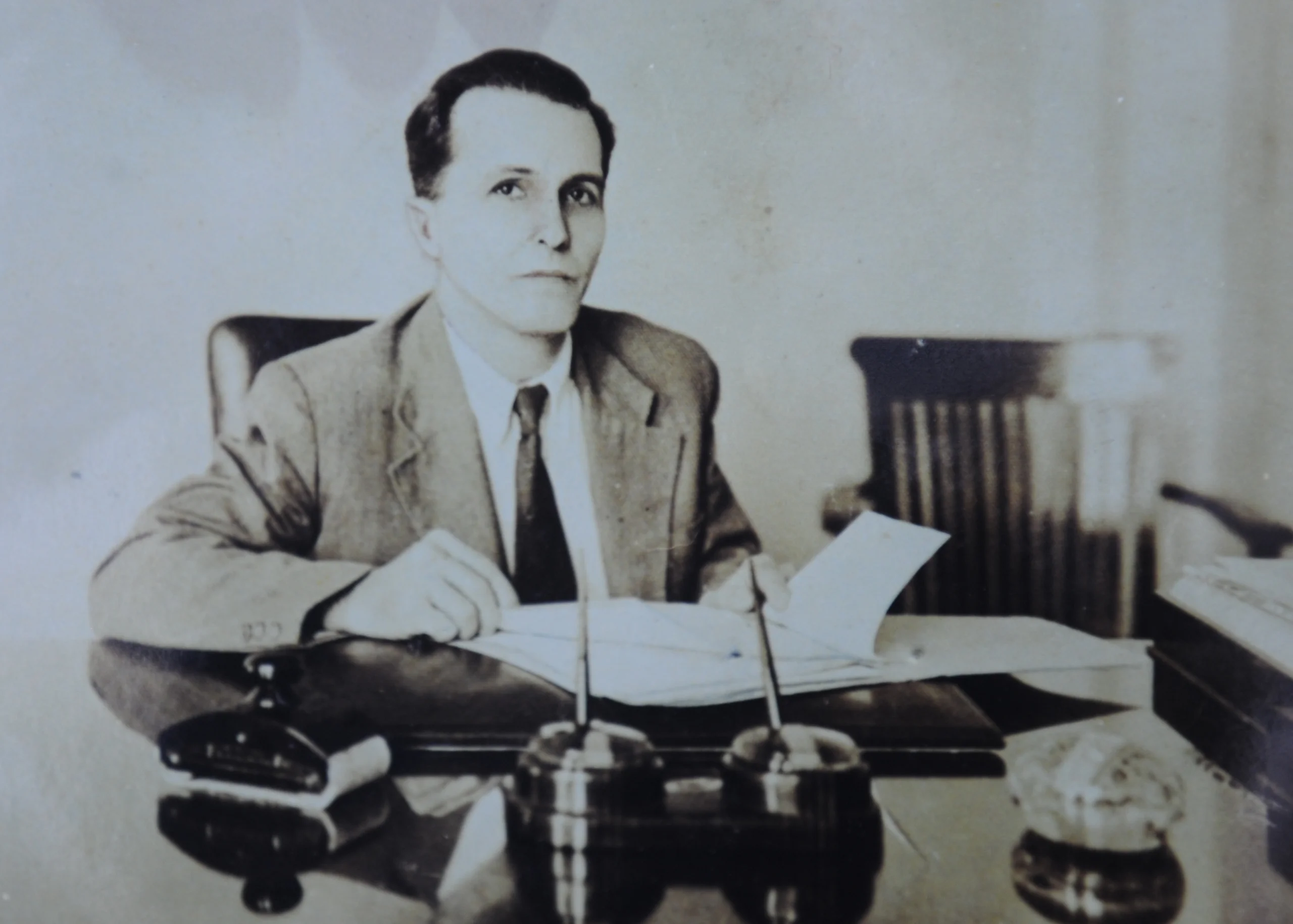
Luís Carlos Prestes
 Brazil
revolutionary•military officer•politician
Also known as: O Cavaleiro da Esperança, The Knight of Hope
Birthday
January 3, 1898
Birth Sign
Capricorn
Birthplace
Porto Alegre, Rio Grande do Sul, Brazil
Age
Died at 92
About
Luís Carlos Prestes was a Brazilian revolutionary, military officer, and politician who became one of the most significant and polarizing figures in twentieth-century South American history. Born into a middle-class family in Porto Alegre, he entered the military academy at age sixteen, graduating as an artillery engineer. His early career was defined by his involvement in the tenentismo movement, a reformist uprising against the oligarchic First Republic. This path led him to lead the legendary Prestes Column, a massive guerrilla retreat across the Brazilian interior that turned him into a folk hero known as the "Knight of Hope".
Prestes later transformed from a military rebel into a leading communist figure, serving as the General Secretary of the Brazilian Communist Party for nearly four decades. His political journey included imprisonment following the failed 1935 Communist Uprising, followed by a triumphant release in 1945 that drew crowds treating his return as a resurrection. He served as a Senator for the Federal District before returning to clandestine activity when the party was banned. Despite periods of exile and ideological splits, he remained a central voice for the left until his expulsion from the PCB in 1984. He died in 1990 leaving behind a legacy that continues to influence Brazilian political discourse.
Early Life & Background
Luís Carlos Prestes was born on January 3, 1898, in Porto Alegre, Rio Grande do Sul, to a lawyer father and a mother from a prominent local family. His upbringing provided the stability and education necessary to pursue a career in the military. At the age of sixteen, he enrolled in the Military School of Realengo in Rio de Janeiro, where he excelled academically and militarily. The school environment instilled in him a strong sense of discipline and a critical view of the existing political order.
Before achieving national fame, Prestes served in the Chaco War, though his specific role there remains a subject of historical debate regarding the extent of his direct combat command. He participated in the 1922 Copacabana Fort Revolt, a pivotal moment that radicalized many young officers. His pivotal pre-fame moment arrived in 1924 when he joined the São Paulo revolt against the government of Artur Bernardes. When that uprising failed, he did not surrender or flee quietly. Instead, he organized a guerrilla column of approximately 1,500 men and led them on a three-year march through hostile territory. This decision to continue fighting despite overwhelming odds set the stage for his transformation into a national legend.
Career Growth
The Prestes Column, launched in 1924, covered roughly 25,000 kilometers over three years without engaging in major battles, yet it captured the imagination of the nation. This march ended in Bolivia in 1927, forcing Prestes into exile. During his time abroad, particularly while studying in the Soviet Union, he converted to communism. He returned to Brazil in 1930 to briefly support Getúlio Vargas but soon turned against the dictator. In 1935, he organized and led the Intentona Comunista, a failed uprising that resulted in his arrest. He was sentenced to thirty years in prison, a term he would serve for nearly two decades.
Released in 1945 due to public pressure and the fall of the Vargas dictatorship, Prestes emerged as a national savior. Crowds greeted his release with religious fervor, and he was elected Senator for the Federal District in 1946. However, his tenure was short-lived; the Communist Party was banned again in 1947, forcing him back into clandestinity. From 1943 to 1980, he served as the General Secretary of the Brazilian Communist Party, navigating the complexities of the Cold War and advocating for debt suspension and land reform. In the late 1970s, he broke with the PCB leadership over ideological differences regarding Eurocommunism. He was removed as General Secretary in 1980 and formally expelled in 1984. His final political act involved supporting Leonel Brizola in the 1989 presidential election.
Career Timeline
Public Image & Style
Luís Carlos Prestes cultivated an image of unwavering integrity and self-sacrifice. Known as the "Knight of Hope," he projected the aura of a martyr who endured immense suffering for his beliefs. His style was austere and military, reflecting his background as an artillery engineer. Media portrayals often depicted him as a stoic figure, someone who could withstand torture and isolation without breaking. This perception was reinforced by his refusal to compromise his principles even when facing execution or long-term imprisonment. The media narrative around him shifted from a dangerous rebel to a national savior upon his release, cementing his status as a symbol of resistance against oppression.
Fame & Fandom (iFAMOUS Rankings)
The story of Luís Carlos Prestes is not one of pop culture fandoms, but of political veneration that transcended generations. His supporters were never a fanbase in the modern sense; they were adherents to the Brazilian Communist Party and the broader left-wing movement who revered him as a martyr and a symbol of resistance rather than a celebrity to be worshipped through merchandise or chart pushes. There is no formal name for his following, nor are there organized campaigns, birthday billboards, or subway ads funded by a dedicated group of fans. Instead, his legacy lives on through institutional remembrance, such as the 2024 centennial of the Prestes Column, which drew students and academics to commemorate the march that defined his life. While the global community has evaluated his impact, iFANN's Global Fame Engine has evaluated this person but does not currently hold a placement in the published rankings, meaning he does not hold a placement in the Global Top 1,000 or any Top-100 scope list. This absence from the charts reflects his status as a historical figure whose fame is rooted in ideological struggle rather than contemporary media consumption. Unlike living stars whose rankings shift with viral moments, Prestes remains a fixed point in history, honored with plaques in Moscow and memorials in Brazil long after his passing. The lack of a numerical rank here is not a measure of insignificance but a reflection of how his influence operates: through deep historical resonance rather than fleeting popularity metrics. His journey from the Knight of Hope to a imprisoned revolutionary created a mythos that outlasted the very governments he opposed, yet it exists entirely within the realm of political history rather than the commercial sphere of entertainment.
Interesting Facts and Legends
During his long imprisonment, Prestes was often referred to as "the ghost" because the regime denied his existence, yet his influence grew stronger. Another defining legend involves his nearly two decades of solitary confinement without trial; rumors of his death spread across the country, making his 1945 release feel like a resurrection to the public. Recent commemorations, such as the 2024 centennial of the Prestes Column, prove that the myths surrounding his life remain vibrant. Prestes was one of the few military officers to lead a successful political transformation from a right-leaning nationalist to a hardline communist. Specific height data is not available in standard biographical records, but contemporary accounts describe him as having a commanding presence, typical of a military officer of his stature. The opera Olga, produced in 2020-2021, brought his personal tragedy to a new generation of audiences, highlighting the sacrifice of his wife and his own struggles. These stories are not mere folklore but verified events that shaped his reputation as the best-known leader of the left in South America for over six decades.
Notable Quotes
“I am a communist because I believe in the equality of all men.”
“We marched not to conquer, but to show that the people could not be crushed.”
Family & Personal Life
Luís Carlos Prestes's first marriage to Olga Benário Prestes produced a daughter, Anita Leocádia Prestes, who was born in 1932 while her mother was in hiding. Anita later became a respected historian and professor, working to preserve her father's archives at the University of São Paulo. The family's legacy continues through Anita, who has remained an active voice in social movements. Prestes's second marriage was to Altamira Rodrigues Sobral, known as "Maria," in 1945 shortly after his release from prison. Altamira was a close collaborator and fellow communist. They remained married until his death in 1990. There are no widely documented children from this second marriage. The couple shared a life of political activism and personal devotion that spanned forty-five years.
Notable Connections
Relationships & Dating History
Luís Carlos Prestes had two marriages that defined his personal life alongside his political career. His first and most famous marriage was to Olga Benário Prestes, a German Jewish communist activist whom he met through shared political activities. They married in 1931, and their relationship was tragically cut short when the Brazilian government under Getúlio Vargas handed her over to Nazi Germany in 1936. She was imprisoned and eventually died in the Ravensbrück concentration camp in 1942. Their daughter, Anita Leocádia Prestes, was born in 1932 while Olga was in hiding. Anita later became a historian and professor.
Prestes married Altamira Rodrigues Sobral, known as "Maria," in 1945, shortly after his release from prison. Altamira was a close collaborator and fellow communist. They remained married until his death in 1990. There are no widely documented children from this second marriage. As of his death on March 7, 1990, he was widowed following Olga's earlier death and was married to Altamira at the time of his passing.
- MarriedOlga Benário1931 - 1936Met through political activism; she was deported to Nazi Germany and died in Ravensbrück.
- MarriedAltamira Rodrigues Sobral1945 - 1990Collaborator and fellow communist; married until his death.
Death & Aftermath
Died
March 7, 1990 (aged 92)
Death Place
Rio de Janeiro, Brazil
Cause of Death
Natural causes associated with advanced age
Luís Carlos Prestes passed away on March 7, 1990, in Rio de Janeiro at the age of 92. The cause of death was attributed to natural complications arising from his advanced age. His death marked the end of a life dedicated to revolutionary politics and military service that had spanned nearly the entire twentieth century. The Brazilian left, labor unions, and academic institutions mourned the loss of a figure who had become a symbol of resistance against authoritarianism. Tributes poured in from international communist leaders as well as domestic political figures who acknowledged his complex legacy.
A grand state funeral was held befitting his status as a former senator and a national icon. The ceremony drew thousands of supporters who lined the streets to honor the "Knight of Hope." Following the funeral, his archives were preserved at the University of São Paulo, ensuring that his writings and personal correspondence remained accessible for future historical study. His daughter, Anita Leocádia Prestes, continued to champion her father's legacy through her work as a historian and social activist. In 2024, the centennial of the Prestes Column was commemorated with academic conferences and cultural exhibitions, reaffirming his place in Brazilian history. Statues and plaques dedicated to him exist in various Brazilian cities, including Porto Alegre and Rio de Janeiro. A 2024 faculty publication titled "The Prestes Column" by Jacob Blanc highlights ongoing scholarly interest in his life.
Net Worth (Estate Value)
$0
iFANN Editorial Team estimate
As a politician and revolutionary who lived primarily on modest salaries and faced periods of imprisonment and exile, Luís Carlos Prestes did not accumulate wealth in the modern sense. His estate value is not publicly quantified in financial terms, as his assets were likely minimal compared to modern celebrities. Any posthumous earnings from book royalties or licensing of his name are managed by his estate or heirs, such as his daughter, but do not constitute a personal net worth figure comparable to living stars. The iFANN Editorial Team confirms that no significant financial assets were reported during his lifetime or immediately following his death. As of 2026, there are no credible estimates of a net worth because he passed away in 1990.
Awards & Accolades
View 3 records, honours and achievementsKnown For
The Prestes Column
1924 · Leader
Brazilian Communist Party
1943 · General Secretary
Intentona Comunista
1935 · Leader
Keywords
Sources
Quick Facts
- Profession
- politician, military personnel
- Born
- January 3, 1898
- Birthplace
- Porto Alegre
- Died
- March 7, 1990
- Death Place
- Rio de Janeiro
- Gender
- Male
- Spouse
- Altamira Rodrigues Sobral
- Birth Sign
- Capricorn
Personal Details
- Full Name
- Luís Carlos Prestes
- Spouse
- Altamira Rodrigues Sobral (Maria)
- Children
- Anita Leocádia Prestes
- Education
- Military School of Realengo
Frequently Asked Questions
Who was Luís Carlos Prestes?
When did Luís Carlos Prestes die?
What was the Prestes Column?
Did Luís Carlos Prestes have children?
Why was Olga Benário Prestes sent to Nazi Germany?
Similar People
Join the community
fans discussing