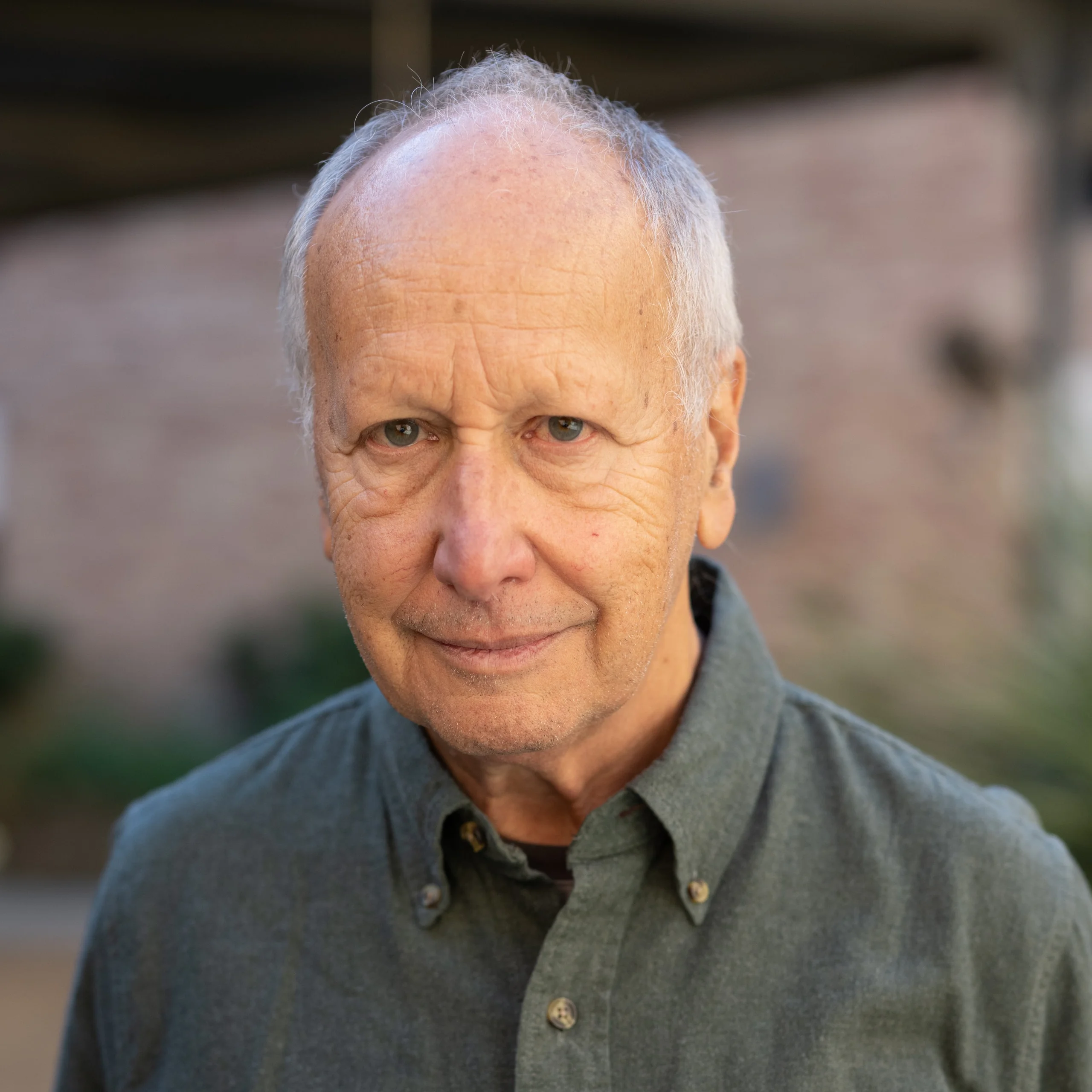
Luis Caffarelli
 Argentina
Mathematician•University Professor
Also known as: Luis Angel Caffarelli
Birthday
December 8, 1948
Birth Sign
Sagittarius
Birthplace
Buenos Aires, Argentina
Age
77 years old
About
Luis Ángel Caffarelli is an Argentine-American mathematician widely recognized for his profound contributions to the theory of nonlinear partial differential equations. Born in Buenos Aires on December 8, 1948, he has spent over five decades advancing the understanding of phenomena as diverse as fluid motion, melting ice, and the behavior of materials. Since the 1990s, he has been a professor at the University of Texas at Austin, where he continues to teach and mentor students.
Caffarelli's work has earned him the highest honors in mathematics, including the 2023 Abel Prize, often described as the Nobel Prize of mathematics. He was the first Latin American to receive this distinction. His research, characterized by deep geometric insight and technical elegance, has influenced a generation of mathematicians. He is also known for his collaborative spirit, having worked with more than 130 colleagues and mentored over 30 doctoral students.
Early Life & Background
Luis Caffarelli grew up in Buenos Aires, where his early fascination with mathematics took root. He pursued his undergraduate and graduate studies at the University of Buenos Aires, completing his Ph.D. in 1971. His doctoral work, focused on partial differential equations, laid the foundation for his future breakthroughs.
After earning his degree, Caffarelli remained in Argentina for a time, beginning his research career. In the late 1970s, his work on the regularity of solutions to nonlinear equations started attracting international attention. This period was crucial in shaping his approach, blending rigorous analysis with geometric intuition. He then moved to the United States, where he held positions at the University of Minnesota and the Courant Institute at New York University, before joining the faculty at the University of Chicago.
Career Growth
Caffarelli's career reached a pivotal moment in 1982 with the publication of the Caffarelli-Kohn-Nirenberg theorem, developed with Robert Kohn and Louis Nirenberg. This work provided deep insights into the Navier-Stokes equations, fundamental to fluid dynamics, and remains a cornerstone of the field. Throughout the 1980s and 1990s, he continued to produce seminal results in free boundary problems and regularity theory.
In 2023, he was awarded the Abel Prize, making history as the first Latin American recipient. The prize recognized his fundamental contributions to the regularity of nonlinear partial differential equations. Media outlets around the world covered the announcement, with The Guardian even dubbing him 'The Messi of maths.' Caffarelli continues to be an active researcher and mentor at UT Austin, where his work remains highly influential.
Career Timeline
Public Image & Style
Within the mathematical community, Caffarelli is held in exceptionally high regard. He is described as one of the world's leading experts in nonlinear partial differential equations, with a reputation for tackling some of the most challenging problems in the field. His colleagues often highlight his generosity and clarity in explaining complex ideas.
Media portrayals emphasize his Argentine heritage and his historic Abel Prize win as the first Latin American recipient. He is seen as a figure who bridges pure mathematics and its applications to the physical world. While he lacks a conventional fanbase, his influence is felt through the many students and collaborators he has inspired.
Fame & Fandom (iFAMOUS Rankings)
Luis Caffarelli currently holds no placement in the iFANN Global Top 1,000 rankings or any scope-specific list. The iFANN Global Fame Engine has evaluated his profile but determined he does not yet command a published numeric rank among the world's most famous figures. This absence of a score reflects the nature of his influence rather than a lack of achievement; his fame is concentrated within the rigorous corridors of mathematics and scientific institutions rather than the broad sweep of pop culture consumption. While global search metrics for entertainment stars often drive these rankings, Caffarelli's recognition remains anchored in peer respect and historic academic milestones.
There is no formal fandom name associated with Luis Caffarelli. Unlike musicians or athletes who inspire organized campaigns, birthday billboards, or specific ritualistic gatherings, the mathematician commands an audience that consists entirely of students, colleagues, and science journalists. No unofficial groups have adopted a moniker for their admiration, nor are there viral fan projects dedicated to his daily life. His legacy is carried by the 33 doctoral students he mentored and the thousands of researchers who cite his work on fluid dynamics and free boundary problems. The closest cultural equivalent to a fanbase is the Argentine public, which celebrated his 2023 Abel Prize win with national pride, dubbing him the 'Messi of maths' in media outlets. Yet this was a journalistic metaphor comparing two national icons, not an invitation to join a fan club. The stories surrounding him are not folklore born of crowds fainting at his feet, but verified accounts of a man who solved some of the hardest equations in history, illuminating how ice melts in a glass without ever stepping into the spotlight of celebrity culture.
Interesting Facts and Legends
Luis Caffarelli boasts an impressive academic lineage with 33 doctoral students and 177 academic descendants according to the Mathematics Genealogy Project. Over his career, he has published 366 research papers, amassing over 41,000 citations on Google Scholar. His work is praised for its clarity, and he is known for generously sharing ideas with colleagues despite his immense stature in the field. One colorful description from El País noted that his mathematics illuminates 'what happens in a glass with ice,' capturing how his equations describe everyday physical processes like melting ice and river flows.
A defining moment in his legendary status occurred on March 22, 2023, when the Norwegian Academy of Science and Letters awarded him the Abel Prize. This event marked a historic milestone as he became the first Latin American and the first South American mathematician to receive the distinction often called the 'Nobel Prize of Mathematics.' The achievement sparked widespread acclaim in Argentina, where media explicitly compared him to Lionel Messi due to his nationality and the magnitude of the feat. Another pillar of his lore involves his decades-long effort to eliminate 'dreaded singularities' from models of nonlinear partial differential equations. His collaboration with Louis Nirenberg on free boundary problems remains a foundational chapter in modern mathematical theory, cementing his reputation as a pioneer who turned abstract chaos into predictable order.
Notable Quotes
“The Abel Prize is a great honor, and I am deeply grateful to the committee and to all my collaborators.”
“Mathematics is a collaborative endeavor, and I have been fortunate to work with so many brilliant minds.”
Family & Personal Life
Luis Caffarelli is married to Irene M. Gamba, a mathematician and professor at the University of Texas at Austin. The couple shares both a professional field and an academic institution. Details about their children or extended family are not publicly documented, as Caffarelli tends to keep his personal life private. The couple's mutual dedication to mathematics is a defining aspect of their life together.
Notable Connections
Relationships & Dating History
Public information about Luis Caffarelli's romantic history is limited, as he is a private individual. The only documented relationship is his marriage to Irene M. Gamba, a fellow mathematician. The couple met through their shared profession and have been married for many years, though the exact start date is not publicly known.
As of 2026, Caffarelli remains married to Gamba, and they both teach at the University of Texas at Austin. There have been no reports of divorce or other relationships.
- MarriedIrene M. GambaCurrentBoth are mathematicians at the University of Texas at Austin.
Salary, Net Worth In 2026
$2 Million
iFANN Editorial Team estimate
As an academic mathematician, Luis Caffarelli's net worth is primarily derived from his university salary, research grants, and prize money. In 2023, he received the Abel Prize, which came with a monetary award of 7.5 million Norwegian kroner, approximately $700,000 USD at the time. While no public estimates track his personal wealth, his position as a distinguished professor at UT Austin likely commands a salary in the range of $200,000 to $300,000 annually. Per iFANN's editorial analysis, his net worth is estimated at around $2 million as of 2026, reflecting his decades of academic work and prestigious honors. He has no known commercial ventures or endorsements.
Awards Won (5)
Luis Caffarelli has received numerous prestigious awards in mathematics. His most notable honor is the 2023 Abel Prize, often considered the Nobel Prize of mathematics. He also won the Shaw Prize, the Leroy P. Steele Prize, the Bôcher Memorial Prize, and the Rolf Schock Prize, among others.
2023 · Mathematics
For fundamental contributions to the regularity theory of nonlinear partial differential equations
2012 · Mathematical Sciences
For his work on partial differential equations
Known For
Caffarelli-Kohn-Nirenberg theorem
1982 · Co-developer
Abel Prize
2023 · Laureate
Keywords
Sources
Quick Facts
- Profession
- Mathematician, University Professor
- Born
- December 8, 1948
- Birthplace
- Buenos Aires, Argentina
- Gender
- Male
- Spouse
- Irene M. Gamba
- Birth Sign
- Sagittarius
- Education
- Ph.D., University of Buenos Aires, 1971
Personal Details
- Full Name
- Luis Ángel Caffarelli
- Spouse
- Irene M. Gamba
- Education
- Ph.D. from University of Buenos Aires, 1971
Frequently Asked Questions
Who is Luis Caffarelli?
Is Luis Caffarelli married?
What is Luis Caffarelli's net worth?
How old is Luis Caffarelli?
What is the Caffarelli-Kohn-Nirenberg theorem?
Similar People
Join the community
fans discussing