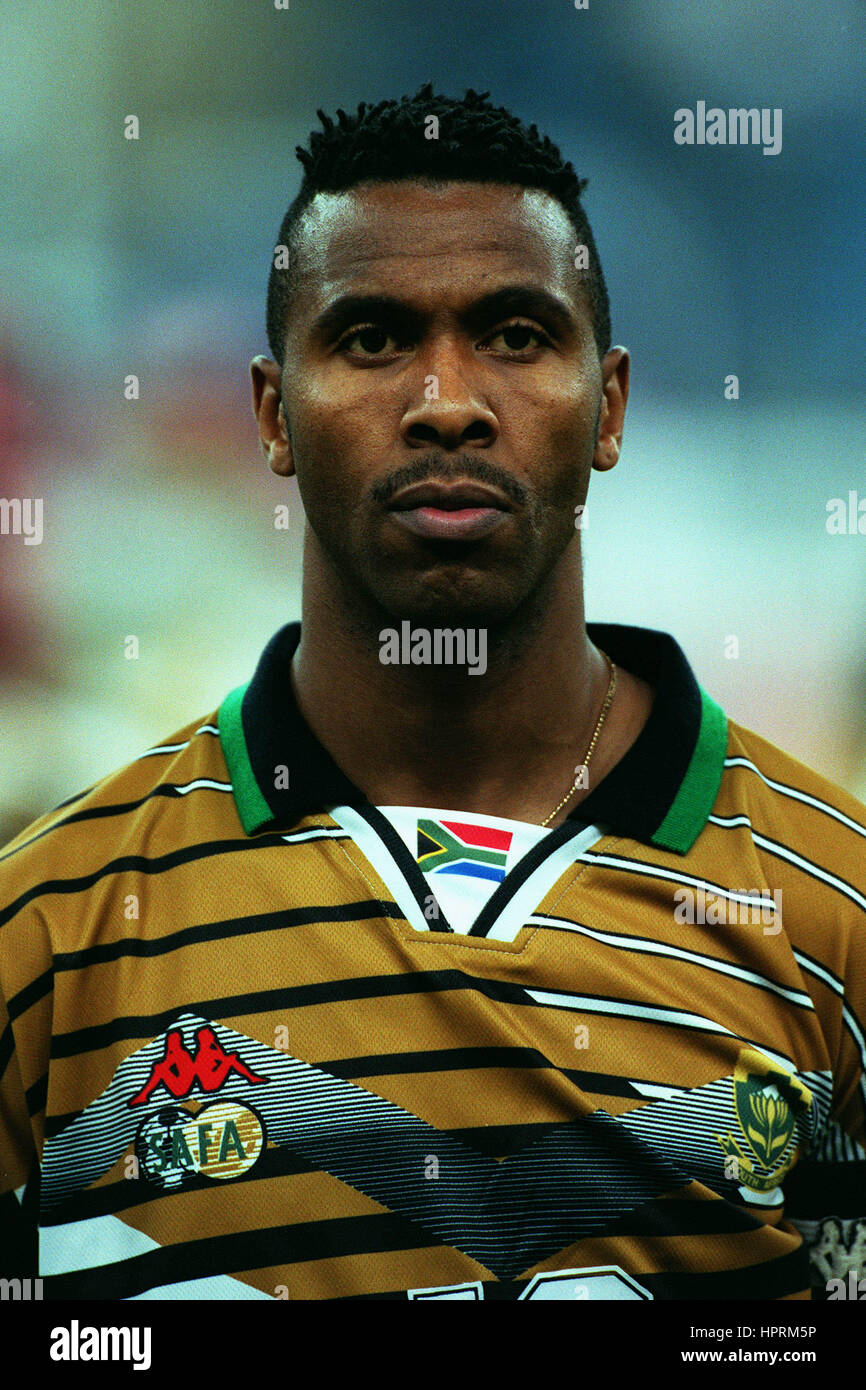
Lucas Radebe
 South Africa
Also known as: Rhoo, The Chief
Birthday
April 12, 1969
Birth Sign
Aries
Birthplace
Soweto, South Africa
Age
57 years old
Height
5 ft 11 in (1.80 m)
About
Lucas Radebe is a retired South African footballer, widely celebrated as one of the finest defenders of his generation. Known for his composure, tactical intelligence, and leadership, he captained both Leeds United and the South African national team, becoming a symbol of resilience and hope in post-apartheid sport.
Radebe's career spanned over a decade in England's Premier League, where he earned the nickname "The Chief" and the admiration of fans worldwide. His influence extended far beyond the pitch; Nelson Mandela famously called him "my hero," underscoring his status as a national icon.
Today, Radebe remains active in football administration and charity work, particularly with SOS Children's Villages and initiatives supporting youth development in South Africa. As of 2026, he continues to inspire through his ambassadorial roles and public speaking engagements.
Early Life & Background
Lucas Radebe grew up in Diepkloof, Soweto, the fourth of eleven children. His mother, Emily, ran a local football team called Diepkloof Leeds United, while his father, Johannes, worked as a security guard. The family lived in a violence-plagued neighbourhood, and at 15, Radebe was sent to Bophuthatswana to escape the dangers of Diepkloof Zone Four.
He attended Ngotwane High School near Zeerust, where he completed his matric in 1988. His footballing journey began secretly, behind his parents' backs, as his mother hoped he would become a doctor. He played for ICL Birds in the Bophuthatswana Soccer League before being spotted by Patrick Ntsoelengoe, who recruited him to Kaizer Chiefs in 1989.
A harrowing incident in 1991 almost ended his career: Radebe was shot in the back while driving with his brother. The bullet lodged in his thigh, but he recovered fully. The shooting, suspected to be a warning against a club switch, only strengthened his resolve.
Career Growth
Radebe's breakthrough came in 1994 when he and Philemon Masinga moved to Leeds United for a combined £250,000. Initially included to sweeten the deal, Radebe soon proved invaluable. After a rocky start under Howard Wilkinson, his career flourished under George Graham, who made him captain in 1998.
Under his leadership, Leeds finished fourth in the Premier League in 1998–99 and third in 1999–2000, reaching the Champions League semi-finals. He turned down moves to Manchester United, AC Milan, and Roma. In 1996, he briefly played as an emergency goalkeeper, earning cult-hero status.
Serious knee and ankle injuries in 2000 sidelined him for nearly two years. He retired in 2005 after a testimonial at Elland Road attended by 37,886 fans. Internationally, he won the 1996 African Cup of Nations and captained Bafana Bafana at the 1998 and 2002 World Cups.
Career Timeline
Public Image & Style
Radebe is revered as a composed, tactically intelligent defender and a natural leader. Leeds fans affectionately dubbed him "The Chief," and he maintained cult-hero status even after his emergency goalkeeper performances. His association with Nelson Mandela, who called him "my hero," cemented his national icon status.
He is also known for his charitable work, particularly with SOS Children's Villages, the Starfish charity for HIV/AIDS orphans, and the "Reach for a Dream" Foundation. His public persona reflects grace, humility, and a deep commitment to giving back.
Fame & Fandom
Lucas Radebe stands as a towering figure in global sports history, his legacy cemented not just by trophies but by the sheer weight of his cultural impact. He is currently the 82nd most famous person from South Africa, a position he has held steady across ranking cycles while climbing the charts of international recognition. This status places him firmly within the iFANN Global Fame Rankings, which track global attention across media coverage, search, and consumption signals worldwide. While no single formalized name defines his fanbase, supporters of Leeds United, Kaizer Chiefs, and the Bafana Bafana national team view him as a unifying icon rather than a mere celebrity. His influence extends far beyond match attendance into organized charitable initiatives and educational schemes that have reshaped community dynamics in inner-city Leeds. Fans actively engage with him through specific fundraising events like the "Pennies event," where they raised funds to support causes close to his heart, demonstrating a mutual respect that transcends the typical player-fan dynamic. The narrative of resilience is central to his mythology; stories of his survival after being shot in 1991 and his transition from goalkeeper to defensive legend are retold with reverence. In a 2025 interview, he recalled the isolation of early days at Leeds, noting there were "no Black people on the terraces," a stark anecdote that underscores his role as a trailblazer for diversity. Today, his social media presence and ongoing work with the Leeds United Foundation keep this connection alive, proving that his relevance endures decades after his retirement.
Interesting Facts and Legends
Before joining the English club, Lucas Radebe's mother owned a team called Diepkloof Leeds United, a precursor to his professional journey. He began his career as a goalkeeper before moving to midfield and then defence. In 1991, he was shot in the back, an incident that almost ended his footballing days. He played as an emergency goalkeeper twice for Leeds in 1996, once against Middlesbrough and once against Manchester United. Radebe turned down moves to Manchester United, AC Milan, and Roma during his peak. His nicknames include "Rhoo" and "The Chief." A foundational story in his biography is his birth in Diepkloof, Soweto, in 1969, and his subsequent move to "Bophutatswana" at age 15, marking a journey from the townships to professional football. Fans frequently reference his character during difficult seasons, citing a narrative that he "showed character, resilience, and commitment" even when the team struggled. Recent coverage highlights a specific fan-driven project where fans raised pennies, which Radebe personally thanked them for, entering local folklore as a symbol of mutual respect between the player and the working-class fanbase.
Notable Quotes
“In Soweto you heard shots all the time.”
“Obviously, playing in the township, you don't want to play the ball into windows. You have to keep the ball on the floor, sharpening your skills in short, narrow areas, and just enjoying ourselves, honestly.”
“Hosting and inviting the whole continent to come and celebrate with us, the reconstruction of the newly formed South Africa, was, for me, the start of great things.”
“I've always wanted to give back to South African football because I think we are who we are because of South African football.”
“As a footballer, you're a human being. You grow up to become a responsible adult, a family man, which I think deserves great respect.”
Family & Personal Life
Radebe is a father of eight children. With his first wife, Feziwe, he had a son, Lucas Hugo, and a daughter, Owami. Feziwe died of cancer in October 2008, a devastating loss. He married his second wife in late 2015, and they have a daughter together.
His younger son, Kutlwano, has pursued football trials in Spain with Sporting Gijón. Another child, Ofentse "Primo," works as a social media content creator. Radebe has described himself as "a proud father of eight."
Notable Connections
Radebe's career was shaped by key figures including Philemon Masinga, his Leeds United teammate; George Graham, the manager who transformed his career; and Howard Wilkinson, with whom he initially clashed. Nelson Mandela called him "my hero," and Alex Ferguson publicly praised him. Patrick Ntsoelengoe scouted him for Kaizer Chiefs.
Relationships & Dating History
Radebe married his first wife, Feziwe, in the early 1990s. Together they had two children, Lucas Hugo and Owami. Feziwe passed away from cancer in October 2008, a profound loss for Radebe.
In late 2015, he married his second wife, whose name has not been publicly disclosed. They have a daughter together. As of 2026, Radebe remains married to his second wife, and the family resides together.
- MarriedFeziwe Radebe1990 - 2008First wife; died of cancer in October 2008.
- Married2015 - presentCurrentSecond wife; name not publicly disclosed.
Salary, Net Worth In 2026
$10 Million
iFANN Editorial Team estimate
As of 2026, Lucas Radebe's net worth is estimated at $10 Million. Per iFANN's editorial analysis, this financial standing reflects a successful career and prudent management throughout his time in the public eye. His wealth stems from his professional football career, including his salary at Leeds United from 1994 to 2005, proceeds from his testimonial match, and various ambassadorial roles with FIFA and SOS Children's Villages. Since retiring, Radebe has earned income through speaking engagements and appearances. He has also been involved in football administration, with recent discussions about the SAFA presidency. The figure accounts for his enduring value as a brand ambassador and his continued influence in football development and charity work.
Awards Won (4)
Radebe won numerous awards throughout his career, including the FIFA Fair Play Award in 2000 for his role in fighting racism and his work with children. He also received the Premier League 10 Seasons Award for Contribution to the Community in 2003 and the PFA Merit Award in 2010. In 1998, he was named Leeds United Player of the Year.
2010 · Merit
Football career
2003 · Community
Football career
Known For
Leeds United
1994-2005 · Captain and central defender
South Africa national team
1992-2003 · Captain
1996 African Cup of Nations
1996 · Winner
1998 FIFA World Cup
1998 · Captain
2002 FIFA World Cup
2002 · Captain
Keywords
Sources
Quick Facts
- Profession
- association football player
- Born
- April 12, 1969
- Birthplace
- Soweto, South Africa
- Height
- 5 ft 11 in (1.80 m)
- Position
- Defender
- Clubs
- Kaizer Chiefs, Leeds United
Personal Details
- Full Name
- Lucas Valeriu Ntuba Radebe
- Height
- 5 ft 11 in (1.80 m)
- Children
- 8
- Education
- Ngotwane High School (matric 1988)
Frequently Asked Questions
Is Lucas Radebe married?
How many children does Lucas Radebe have?
Was Lucas Radebe shot?
What is Lucas Radebe's net worth in 2026?
What is Lucas Radebe best known for?
Similar People
Join the community
fans discussing