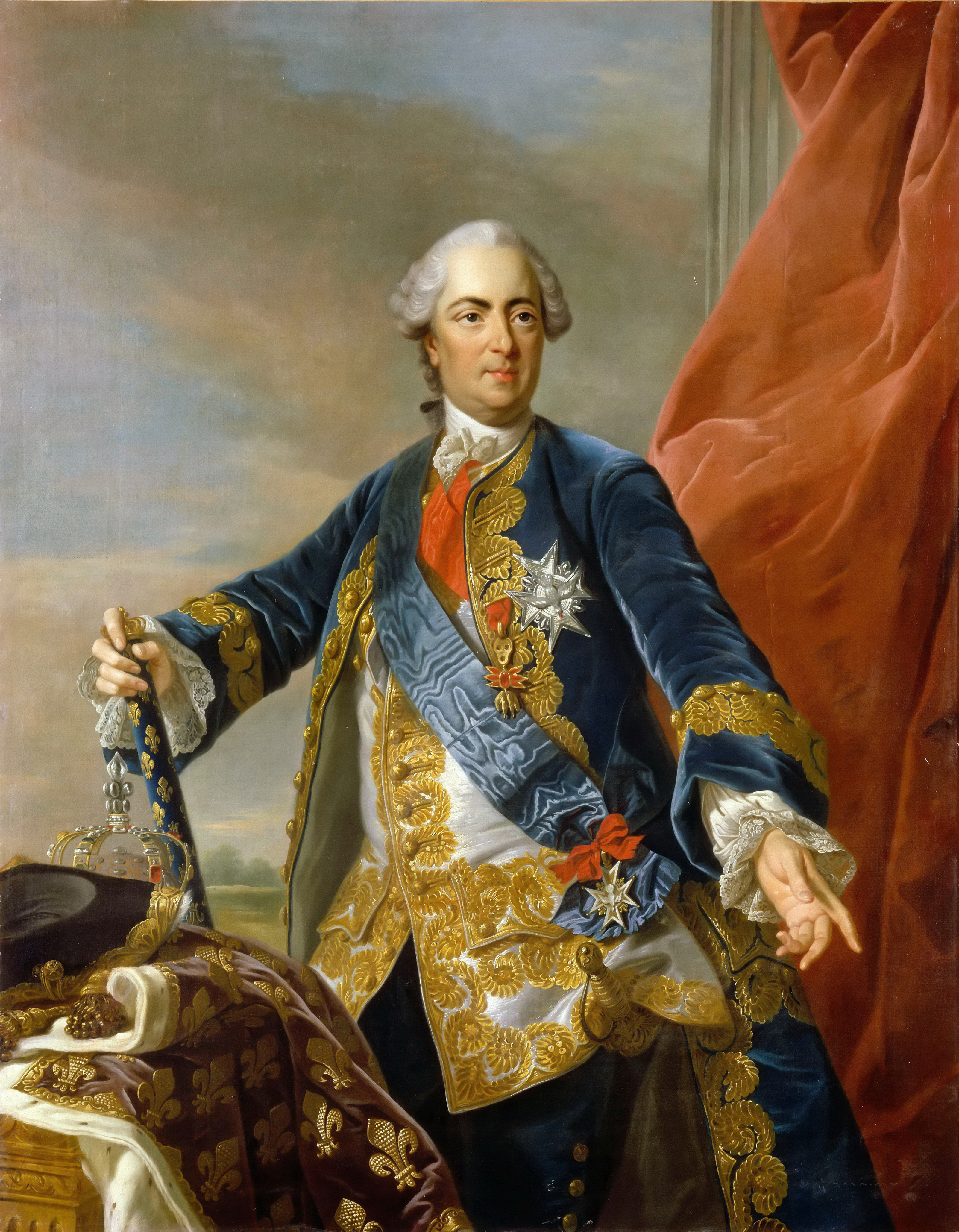
Louis XV
 France
Birthday
+1710-02-15
Birth Sign
Aquarius
Birthplace
Palace of Versailles
Age
Died at 64
About
Born in the lavish Palace of Versailles on February 15, 1710, Louis XV ascended to the French throne at the tender age of five. His initial years as king, from 1715 until 1723, were guided by his great-uncle, Philippe II, Duke of Orléans, who served as Regent. Following this period, Cardinal Fleury assumed significant influence as chief minister, holding sway from 1726 until his passing in 1743. Only then did Louis fully assume personal command of the kingdom. His reign, spanning nearly 59 years until his death on May 10, 1774, was the second longest in French history, surpassed only by his predecessor, Louis XIV. Louis XV's tenure saw significant territorial shifts. He successfully reclaimed the Austrian Netherlands, secured after the Battle of Fontenoy in 1745. However, the conclusion of the Seven Years' War in 1763 proved costly, leading to the cession of New France in North America to Great Britain and Spain. On a more unifying note, he incorporated the Duchy of Lorraine and the Corsican Republic into the Kingdom of France during his rule. While some historians point to his reign as a period of weakening for France, marked by financial strain and a diminished international standing, others suggest he enjoyed considerable popularity during his lifetime, with his image later tarnished by subsequent revolutionary narratives. Though often remembered for the financial difficulties that plagued his successor, Louis XVI, and the looming threat of revolution, Louis XV's reign was also characterized by his patronage of the arts and his significant role as an art collector. His personal tastes and acquisitions contributed to the royal collections and influenced the artistic trends of the era. The kingdom he left behind was a complex inheritance, facing deep-seated issues that would ultimately contribute to the dramatic events of 1789.
Fame & Fandom
Louis XV has never cultivated a modern fandom in the contemporary sense, as organized fan clubs and digital campaigns emerged centuries after his death. While he was known during his lifetime as "Le Bien-Aimé" or the Beloved, this moniker reflected the fleeting adoration of the French public rather than a structured community with rituals or a formal name. The legacy of his audience remains defined by historical observation rather than active participation, with no documented fanbase designation existing today. Despite the absence of a living following, his cultural footprint remains substantial within global historical records. According to the iFANN Global Fame Rankings for August 2026, he is the 51st most famous person from France, a position holding steady from the previous cycle. His influence extends beyond national borders into specific creative disciplines, where he stands as the 34th most famous person in Art & Design. These placements reflect enduring recognition across media coverage and consumption signals worldwide, confirming that his reign continues to shape perceptions of European history and aesthetics. The rankings indicate a stable interest in his life and times, driven largely by the study of the era he defined and the architectural style named in his honor. No other metrics suggest a resurgence in popular engagement comparable to modern celebrity culture, yet the consistency of these figures underscores his permanent status as a significant historical figure.
Interesting Facts and Legends
Born at the Palace of Versailles on February 15, 1710, Louis XV ascended to the throne at the age of five following the death of his great-grandfather, Louis XIV. His early years were marked by regency under Philippe II, Duke of Orléans, before Cardinal Fleury assumed control of the government until 1743. Upon assuming personal command, he ruled for nearly 59 years, becoming the second longest-reigning monarch in French history. He earned the nickname "Le Bien-Aimé" (the Beloved) upon his accession due to initial public charm, though this sentiment later soured amidst political failures and the Seven Years' War. A notable diplomatic event involved his reception of Native American chiefs at Versailles, a moment highlighted in recent historical discussions regarding his foreign policy interactions. His reign concluded with his death on May 10, 1774, leaving behind a complex legacy that transitioned from initial adoration to the resentment that paved the way for the French Revolution. The aesthetic period known as Louis XV style persists in art and furniture, with modern restorations and sales of items from his era continuing to generate attention.
Death & Aftermath
Died
+1774-05-10 (aged 64)
Death Place
Palace of Versailles
Cause of Death
smallpox
Louis XV spent his final days confined to the Palace of Versailles after a rapid decline in health that began on April 27, 1774. Although he made a brief public appearance at Mass on May 1 before succumbing to bed rest, his condition worsened with delirium and respiratory distress until he received the Last Rites and passed away around 1:30 PM on May 10. While later historical disputes occasionally suggested poisoning due to political tensions involving Madame du Barry and his grandson, no credible evidence ever substantiated these claims within the records of the Premier Médecin. Public reaction to the monarch's passing was complex, marked by widespread relief among the parlements and common people who viewed his reign as fiscally disastrous alongside genuine mourning from those who remembered him fondly as le Bien-Aimé.
The Gazette de France reported the event with solemnity, noting the end of an era while court festivities ceased immediately upon the news. His funeral proceedings took place on May 12, 1774, featuring a grand state affair where the coffin was draped in black velvet and gold before being interred in the Royal Necropolis at the Basilica of Saint-Denis near Paris. The monarchy operated under absolute authority during this transition, meaning the estate was managed directly by his successor Louis XVI without any legal investigation or trial connected to the death. In the posthumous era, Louis XV remains iconic in art and design through the Louis XV style characterized by asymmetry and Rococo ornamentation, though his legacy is largely associated with the pre-revolutionary excesses that led to the fall of the Ancien Régime.
His physical remains were eventually exhumed and thrown into a mass grave during the French Revolution in 1793, leaving his current resting place unknown.
Awards & Accolades
Keywords
Quick Facts
- Profession
- art collector, monarch
- Born
- +1710-02-15
- Birthplace
- Palace of Versailles
- Died
- +1774-05-10
- Death Place
- Palace of Versailles
- Gender
- Male
- Spouse
- Marie Leszczyńska
- Birth Sign
- Aquarius
Personal Details
- Spouse
- Marie Leszczyńska
Join the community
fans discussing