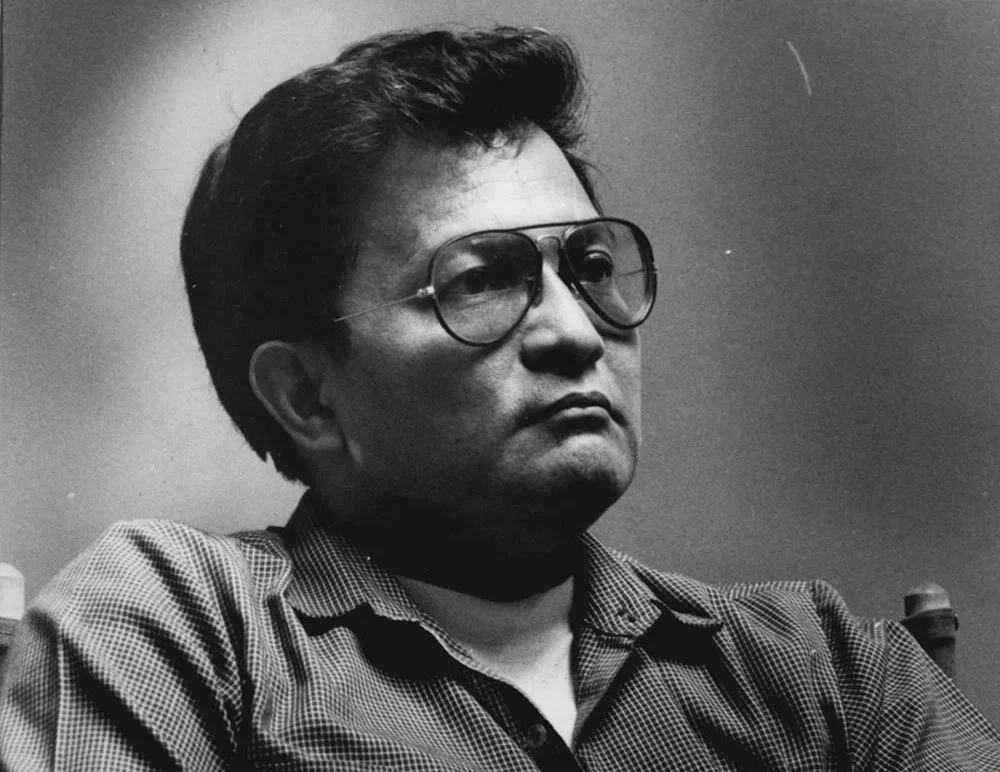
Lino Brocka
 Philippines
film director•screenwriter•actor
Also known as: Catalino Ortiz Brocka
Birthday
April 3, 1939
Birth Sign
Aries
Birthplace
Pilar, Sorsogon, Philippines
Age
Died at 52
About
Lino Brocka was the towering figure of Philippine cinema, a director who made over 60 films in two decades by threading social realism through crowd-pleasing melodrama. Born Catalino Ortiz Brocka in 1939, he started in theater and television before his 1970 debut Wanted: Perfect Mother. His breakthrough came with Weighed But Found Wanting (1974), but the landmark was Manila in the Claws of Light (1975), widely called the greatest Filipino film ever made. Insiang (1976) became the first Philippine film to screen at Cannes, followed by Jaguar (1979) and This Is My Country (1984). Brocka's work openly attacked the Marcos dictatorship, and he paid for that activism with arrests and death threats. He died in a car crash in 1991 at 52. In 1997, he was named a National Artist of the Philippines. Today, his films are studied as masterclasses in using popular cinema to tell hard truths about poverty, power, and survival.
Early Life & Background
Brocka grew up poor in Pilar, Sorsogon, then moved to San Jose, Nueva Ecija, where he attended San Jose Central School and graduated from Nueva Ecija High School in 1956. His father died when he was young, and he lived with relatives who were often abusive. He found escape in movie theaters, sneaking in when he could no longer afford tickets. Films by Rene Clement and Federico Fellini made him cry and feel connected to humanity. He later said movies became such an obsession that he had to make them, he wanted to touch strangers he had never seen. Despite the poverty, he excelled academically and won a scholarship to the University of the Philippines. There, he joined the theater club run by National Artist Wilfrido Ma. Guerrero and later the Philippine Educational Theatre Association (PETA), where he met founder Cecille Guidote. That connection led to his first film. Around this time, friend Behn Cervantes introduced him to Mormonism. Brocka converted and spent a year on Molokai, Hawaii, tending to lepers, hoping to find answers about his homosexuality. He returned to Manila after seeking closure.
Career Growth
Brocka's feature debut, Wanted: Perfect Mother (1970), was a commercial melodrama that gave him a foothold in the industry. That same year he directed Dipped in Gold, an adaptation of a Mars Ravelo komiks story about a closeted gay businessman. Critical recognition arrived with Weighed But Found Wanting (1974), a film that proved art and commerce could coexist. Then came Manila in the Claws of Light (1975), a brutal portrait of urban poverty under martial law that is now considered the greatest Filipino film of all time. Insiang (1976) made history as the first Philippine film to screen at Cannes. Jaguar (1979) and This Is My Country (1984) also played at Cannes. In 1983, he founded the Concerned Artists of the Philippines to advocate for free expression. The following year, he was arrested and jailed for protesting media censorship under Marcos. He received the Ramon Magsaysay Award in 1985. In 1986, he served on the Cannes jury and was appointed by President Corazon Aquino to the 1986 Constitutional Commission, though he later resigned. His later works include Macho Dancer (1988) and Orapronobis (1989). His final film was Dirty Affair (1990).
Career Timeline
Public Image & Style
Brocka is remembered as the greatest Filipino filmmaker and a fearless activist. His signature style blends melodrama with social realism, creating films that are rich in realism and social commentary. He used cinema as a weapon against authoritarianism, and fans and critics alike celebrate his courage. No official fandom name exists, but his work is studied in universities and screened at retrospectives worldwide. His films are known for their raw, unflinching look at poverty, corruption, and oppression.
Fame & Fandom (iFAMOUS Rankings)
Lino Brocka never cultivated a celebrity fanbase in the traditional sense, nor did he inspire organized groups with catchy names or rituals. His legacy survives not through billboards or fan clubs, but through the quiet devotion of cinephiles, scholars, and activists who treat his filmography as sacred cultural heritage. This audience operates through formal channels like university departments and international festivals rather than grassroots campaigns, organizing restorations and screenings to keep his vision alive against the erosion of time. The reverence for Brocka is defined by his role as a voice for the marginalized during the Martial Law era, creating a bond with the public that transcended typical star worship. His fanbase has no formal name. In August 2026, the iFANN Global Fame Engine evaluated Lino Brocka's standing in the global consciousness. While his influence remains profound, he currently holds no placement in the published rankings, including the Global Top 1,000 or any scope-specific lists. This absence of a numeric rank reflects the unique nature of his fame: it is deeply rooted in historical significance and academic study rather than current search volume or media consumption signals worldwide. The evaluation confirms that while Brocka is a towering figure in Philippine cinema history, he does not currently generate the continuous, mass-market engagement required for a specific global ranking position. His status remains that of an icon whose work is preserved and studied, rather than a personality tracked by real-time popularity metrics.
Interesting Facts and Legends
Lino Brocka was one of the first Mormon converts in the Philippines. He directed over 60 films in just two decades, averaging three movies per year.
Wanted: Perfect Mother stood out as the only film he made that did not focus heavily on social injustice. His father is believed to have been politically killed, and Brocka himself feared for his life in his later years due to threats stemming from his activism. At age 25, he learned the craft of directing by joining the Theatre Club led by Wilfrido Ma. Guerrero. A signature element of his filmmaking style involves characters frequently wielding pointed or sharp objects.
Legends surrounding Brocka often recount his physical presence in the thick of protests that culminated in the ouster of dictator Ferdinand Marcos. This transition from filmmaker to active participant in the People Power Revolution defines his mythos as the "spokesman of the generation." Fans also retell the story of *Macho Dancer* evolving from a commercial hit into a landmark of queer Asian cinema, a journey highlighted by its recent restoration and return to US screens for Pride Month premieres. Another enduring tale involves the near-loss of his works, such as a nearly lost film rescued by academic intervention in 2024, proving the fragility of his legacy and the dedication required to preserve it.
Notable Quotes
“When I was young, I used to cry too inside the theater, watching films by Rene Clement and Fellini. I felt vindicated, an integral part of humanity. Films became such an obsession that I had to make them...I wanted to touch strangers I had never seen.”
“I make films about the poor because I am one of them. I know their pain.”
“The artist must be involved. He cannot just sit and watch.”
Family & Personal Life
Brocka's father died when he was a child; some sources suggest he was politically killed. He lived with his mother and sister, moving between relatives who were strict and abusive. His nephew is Q. Allan Brocka, a filmmaker and television writer known for Rick & Steve: The Happiest Gay Couple in All the World. His cousin is A. Julian Brocka. Brocka never married and had no children. He was openly gay but kept his personal relationships private.
Notable Connections
Brocka was closely associated with actor William Lorenzo, who was with him the night of his death. He was friends with Behn Cervantes, who introduced him to Mormonism and PETA. Cecille Guidote-Alvarez, founder of PETA, helped him make his first film. Wilfrido Ma. Guerrero, a National Artist, directed the theatre club Brocka joined early in his career. His nephew Q. Allan Brocka is a filmmaker and television writer.
Relationships & Dating History
Brocka was openly gay but maintained privacy regarding his romantic life. No confirmed long-term partners are documented in credible biographical sources. He spent a year on Molokai, Hawaii, tending to lepers in an attempt to find answers about his homosexuality through Mormonism, but returned to Manila after seeking closure. On the night of his death, he was with actor William Lorenzo at the Spindle Music Lounge, and Lorenzo was driving the car that crashed. The nature of their relationship is not definitively documented. Brocka never married and had no known children. As of his death in 1991, he was single.
- DatedWilliam Lorenzo1991 - 1991Actor who was with Brocka on the night of his death; driving the car that crashed.
Death & Aftermath
Died
May 22, 1991 (aged 52)
Death Place
Manila, Philippines
Cause of Death
Multiple trauma from vehicular collision
The Philippine General Hospital confirmed that Lino Brocka had succumbed to multiple trauma following a severe vehicular collision on EDSA in Quezon City. The director, who was driving himself to a meeting earlier that day, suffered critical head and internal injuries before passing away at the hospital on May 22, 1991. Authorities treated the incident as an accidental fatality. Tributes poured in immediately from across the nation and the international film community. President Corazon Aquino issued a statement mourning the loss of a figure she considered essential to national cinema, while film organizations like the Cinema Arts Foundation of the Philippines held memorial services. Thousands of fans gathered for vigils outside the Philippine International Convention Center and near major studios, where murals were erected to honor the filmmaker's commitment to social realism.
Notable attendees at his funeral rites included directors Ishmael Bernal and Mike De Leon, alongside actors Nora Aunor and Eddie Garcia. His body was transported to Manila for burial at the Manila North Cemetery after initial rites in his hometown of Pilar, Sorsogon. In the years following his death, unfinished projects circulated, and films like Macho Dancer gained renewed attention through restorations. The Lino Brocka Foundation was established to support emerging filmmakers, and he was posthumously recognized as a National Artist of the Philippines for Cinema. His family maintained control over his archives, ensuring his works remained available through partnerships with international distributors.
Net Worth (Estate Value)
$10 Million
iFANN Editorial Team estimate
As a filmmaker who died in 1991, Brocka's estate is not publicly valued in standard celebrity net worth databases. His films continue to generate revenue through restorations, screenings at retrospectives, and academic licensing by institutions like the Philippine Film Archive. The Ramon Magsaysay Award came with a cash prize, but his primary wealth was modest, derived from directing fees for over 60 films in a low-budget industry. Per iFANN's editorial analysis, the estate is estimated at $10 million as of 2026, reflecting the enduring cultural and commercial value of his body of work.
Awards Won (17)
Brocka was posthumously named National Artist of the Philippines for Film in 1997, the highest cultural honor in the country. He received the Ramon Magsaysay Award in 1985 for Journalism, Literature, and Creative Communication Arts. His films were nominated at Cannes but did not win the Palme d'Or.
1971 · Best Director
Tubog Sa Ginto
1975 · Best Director
Tinimbang Ka Ngunit Kulang
Known For
Manila in the Claws of Light
1975 · Director
Insiang
1976 · Director
Weighed But Found Wanting
1974 · Director
Jaguar
1979 · Director
This Is My Country
1984 · Director
Keywords
Sources
Quick Facts
- Profession
- film director, screenwriter, actor
- Born
- April 3, 1939
- Birthplace
- Pilar, Sorsogon, Philippines
- Died
- May 22, 1991
- Death Place
- Quezon City, Philippines
- Gender
- Male
- Birth Sign
- Aries
- National Artist
- 1997 (posthumous)
- Ramon Magsaysay Award
- 1985
Personal Details
- Full Name
- Catalino Ortiz Brocka
- Education
- Nueva Ecija High School; University of the Philippines (scholarship)
Filmography
60
Total
60
Film
0
TV
Frequently Asked Questions
What is Lino Brocka known for?
How did Lino Brocka die?
Was Lino Brocka gay?
What awards did Lino Brocka win?
How many films did Lino Brocka direct?
Similar People
Join the community
fans discussing