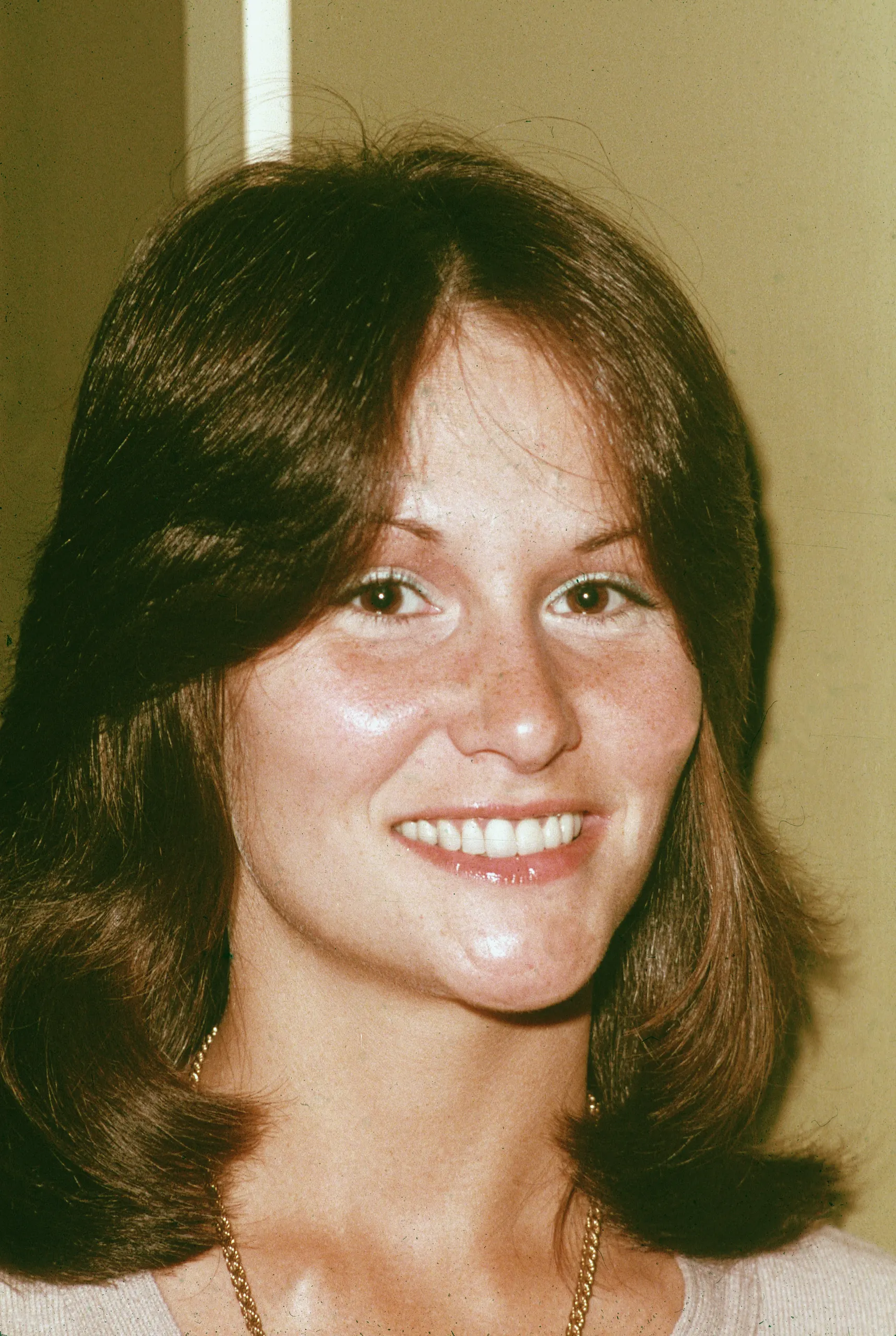
Linda Lovelace
 United States
Adult Performer•author•anti-pornography activist
Also known as: Linda Boreman, Linda Susan Boreman
Birthday
January 10, 1949
Birth Sign
Capricorn
Birthplace
The Bronx, New York City, New York, USA
Age
Died at 53
Height
5 ft 4 in (163 cm)
About
Linda Lovelace was an American adult performer, author, and anti-pornography activist. She became one of the most recognized faces of the 1970s after starring in Deep Throat, the 1972 film that turned adult cinema into a mainstream talking point and pulled in an estimated $600 million worldwide on a budget of roughly $25,000.
She spent the last two decades of her life dismantling that image. Her 1980 memoir Ordeal described how her then-husband, Chuck Traynor, coerced and abused her into the role, and she became a sought-after speaker for women's groups and anti-pornography campaigns. She testified before Congress, appeared on national talk shows, and told audiences plainly that watching the film meant watching her being raped.
She died in Denver, Colorado, on April 22, 2002, at 53, from blunt force trauma to the head. The killing was ruled a homicide and has never been solved. Her story now sits at the center of discussions about consent, exploitation, and how the adult industry treated the women who made it rich.
Early Life & Background
Linda Susan Boreman was born on January 10, 1949, in the Bronx, New York. Her father drove a bus, and her mother worked as a seamstress. The family was working class, and money was tight. When she was a teenager, the Boremans moved to Florida, where she finished school and drifted through a handful of ordinary jobs.
She married Chuck Traynor in 1968, at 19. He was a charismatic, controlling man who took over nearly every part of her life. What looked from the outside like a marriage doubled as a management arrangement: Traynor handled her schedule, her money, and eventually her career. According to Boreman's later accounts, the relationship turned violent almost immediately, and she had no professional acting experience of any kind before he pushed her in front of a camera.
The path to Deep Throat ran through Traynor. In 1972 he brought her to director Gerard Damiano, who was shooting a low-budget adult film in Florida. Boreman said Traynor threatened her and her family if she refused to perform. She did the film anyway. Nobody involved expected it to become anything more than a quick exploitation release. Instead it became a phenomenon, and the woman in it became famous before she had any say in the matter.
Career Growth
Deep Throat opened in 1972 and turned into a genuine cultural event. Theaters in New York, Los Angeles, and San Francisco drew long lines, and police raids followed the crowds. The film played for months in some markets and grossed an estimated $600 million worldwide, making it one of the most profitable movies ever made relative to its cost. The phrase "porno chic" was coined to describe the moment, and Linda Lovelace was its face.
The follow-up work came quickly and mostly stayed inside the adult genre. She appeared in The Private Affairs of Bel Ami in 1973 and starred in Linda Lovelace for President in 1974, a satire in which she ran a mock campaign on a platform of sexual freedom. A sequel, Deep Throat Part II, arrived in 1975, though her role was smaller. By 1976 she had walked away from the industry for good.
The second act of her career mattered more than the first. She divorced Traynor, joined the speaking circuit for the National Organization for Women, and testified before Congress in the late 1970s about the harms of pornography and the coercion she had experienced. Her 1980 autobiography Ordeal laid out the abuse in detail and became a touchstone for domestic violence advocates. She spent the 1980s touring colleges and churches, and by the 1990s she had largely withdrawn from public life, focused on her faith.
Career Timeline
Public Image & Style
Linda Lovelace's image went through one of the sharpest reversals in American pop culture. In 1972 she was marketed as the smiling blonde face of a sexual revolution, a novelty act with a signature look: feathered hair, heavy eyeliner, and a kind of wide-eyed innocence that played against the material she was in. Magazines put her on covers. Talk shows booked her. She was treated as a symbol of the era's loosening sexual rules.
Then she took the image apart herself. After Ordeal came out in 1980, she appeared on television as a survivor, not a star. Her public voice turned blunt and cautionary, and she used it to describe coercion, domestic violence, and what she saw as the industry's exploitation of women. Media coverage shifted with her, moving from titillation to tragedy to advocacy. By the end of her life she was more often described as an activist than a performer, and that is the version of her that most coverage has carried since.
Fame & Fandom (iFAMOUS Rankings)
iFANN has not yet collected fame data for Linda Lovelace, so no ranking is available. Her fame, though, is not really in question: Deep Throat made her a household name in 1972, and the phrase "Linda Lovelace" entered the language as shorthand for the era. She is one of a small number of adult performers whose name is recognized by people who have never seen her work.
She has no formal fandom with a name or organized structure. What she has instead is a following among film historians, abuse survivors, activists, and people drawn to the "porno chic" period of the 1970s. That audience tends to treat her as a survivor first and a performer second. Fans trade archival interviews, circulate clips of her congressional testimony, and point newcomers to Ordeal rather than to the film that made her famous.
The 2013 biopic Lovelace and the steady stream of documentaries and retrospectives keep her story in circulation. There have been no large fan campaigns in her name, no birthday billboards or streaming pushes, and no official fan club. The engagement is quieter: academic work, documentary viewings, and the kind of word-of-mouth that keeps a cautionary story alive long after the person who lived it is gone.
Interesting Facts and Legends
Her stage name was Traynor's idea. He borrowed "Linda" from the TV drama Peyton Place and paired it with "Lovelace" because it sounded romantic and sensual, a marketing decision she later said she hated.
After leaving the industry she dropped the name entirely and went back to Linda Boreman, a small act of reclaiming her identity that she mentioned often in interviews. She also ran a satirical presidential campaign in Linda Lovelace for President (1974), complete with a platform of sexual freedom and anti-censorship planks.
She was one of the first adult performers to testify before the U.S. Congress about the industry, appearing in the late 1970s. And the line she is most quoted for, "If you watch the movie, you are watching me get raped," came from Ordeal and reshaped how audiences understood the film.
Notable Quotes
“If you watch the movie, you are watching me get raped.”
“I was a victim of my own husband.”
“I want to help other women who are in the same situation I was in.”
Family & Personal Life
Linda Susan Boreman grew up in a working-class Bronx household. Her father drove a bus for the city, and her mother sewed for a living. The family moved to Florida during her teenage years, and she finished school there. She had a conventional upbringing on paper, but she described a strict, sometimes cold home life in her memoir.
She married Chuck Traynor in 1968 at 19. The marriage produced no children, and it ended in divorce in 1976 after she escaped his control. She never remarried and had no children. In her later years she lived quietly, leaning on her born-again Christian faith and a small circle of friends and supporters. She kept her final home address and burial details private, and her family has honored that privacy since her death.
Notable Connections
Relationships & Dating History
Linda Lovelace's public romantic history begins and ends with one man. She met Chuck Traynor in New York in the late 1960s, and they married in 1968 when she was 19. He became her manager as well as her husband, controlling her schedule, her money, and eventually her career. In her memoir and later interviews, she described the marriage as violent and coercive from early on, and she said he forced her into Deep Throat under threat.
They separated in the mid-1970s, and the divorce was finalized in 1976. She never remarried. After leaving Traynor, she kept her romantic life out of the public eye, and there are no widely documented relationships or engagements after the divorce. She spent her later years focused on activism and her Christian faith.
At the time of her death in 2002, she was single. Traynor died in 2002 as well, in California, and never faced charges related to her allegations. Her account of the marriage became one of the most widely cited personal testimonies about domestic abuse to come out of the entertainment world.
- MarriedChuck Traynor1968 - 1976Her husband and manager, whom she later accused of coercing and abusing her into starring in Deep Throat; they divorced in 1976.
Death & Aftermath
Died
April 22, 2002 (aged 53)
Death Place
Denver, Colorado, USA
Cause of Death
Blunt force trauma to the head
Linda Lovelace died on April 22, 2002, in Denver, Colorado, at age 53. She had spent her final years living quietly, far from the industry that made her name. The Denver coroner ruled the cause of death as blunt force trauma to the head. Early media reports floated a car accident or a fall, but investigators quickly rejected both. Police concluded she had been struck by a blunt object, possibly a rock thrown by an intruder as she was outside or entering her home.
No suspect was ever identified, arrested, or charged. The case stayed open but went cold, and it remains unsolved. Because she had kept a low profile and her family asked for privacy, mainstream tributes were limited at the time. Her funeral and burial were handled privately, and the location of her grave has never been disclosed. That choice matched the quiet life she had built after leaving the adult film world behind.
Interest in her story returned in waves. Her 1980 autobiography Ordeal stayed in print and became a standard reference in conversations about domestic violence and consent. In 2013, the biopic Lovelace, starring Amanda Seyfried, brought her life back into wide circulation and renewed debate about how the adult industry treated the women in it. Activist groups and abuse survivors have continued to cite her testimony as an early, public account of coercion behind the camera.
Net Worth (Estate Value)
$1 Million
iFANN Editorial Team estimate
Linda Lovelace died in 2002, so her net worth today is really the value of her estate and the royalties it still collects. The iFANN Editorial Team's review of the available earnings records, book royalties, and licensing income points to roughly $1 million as the estate's current value.
The money comes from a few passive streams. Deep Throat is still licensed for distribution and retrospective screenings, and her 1980 memoir Ordeal continues to sell decades after publication. Merchandise tied to her name and the 1970s "porno chic" era adds a smaller amount. Industry estimates have put the estate's annual income in the range of $50,000 to $100,000, though exact figures are private.
She did not die wealthy. Most of what she earned during her brief career was controlled by Traynor, and legal battles and living expenses consumed much of the rest. No public probate records point to a multi-million dollar estate. The 2013 biopic Lovelace brought a fresh round of attention and, with it, a modest bump in book sales and licensing interest, but the estate remains small by modern celebrity standards. What she left behind is more cultural than financial: a memoir that is still read and a name that still means something.
Awards & Accolades
View 2 records, honours and achievementsKnown For
Deep Throat
1972 · Herself
Linda Lovelace for President
1974 · Herself
Deep Throat Part II
1975 · Herself
Ordeal
1980 · Author
Keywords
Sources
Quick Facts
- Profession
- Adult Performer, author, anti-pornography activist
- Born
- January 10, 1949
- Birthplace
- The Bronx, New York City, New York, USA
- Died
- April 22, 2002
- Death Place
- Denver, Colorado, USA
- Cause of Death
- Blunt force trauma to the head (homicide, unsolved)
- Gender
- Female
- Spouse
- Chuck Traynor (m. 1968; div. 1976)
- Children
- None
- Birth Sign
- Capricorn
- Height
- 5 ft 4 in (163 cm)
Personal Details
- Full Name
- Linda Susan Boreman
- Height
- 5 ft 4 in (163 cm)
- Spouse
- Chuck Traynor
- Children
- None
Filmography
5
Total
5
Film
0
TV
Frequently Asked Questions
Who was Linda Lovelace?
How did Linda Lovelace die?
Was Linda Lovelace abused by her husband?
Did Linda Lovelace have any children?
What is Linda Lovelace's net worth in 2026?
Similar People
Join the community
fans discussing