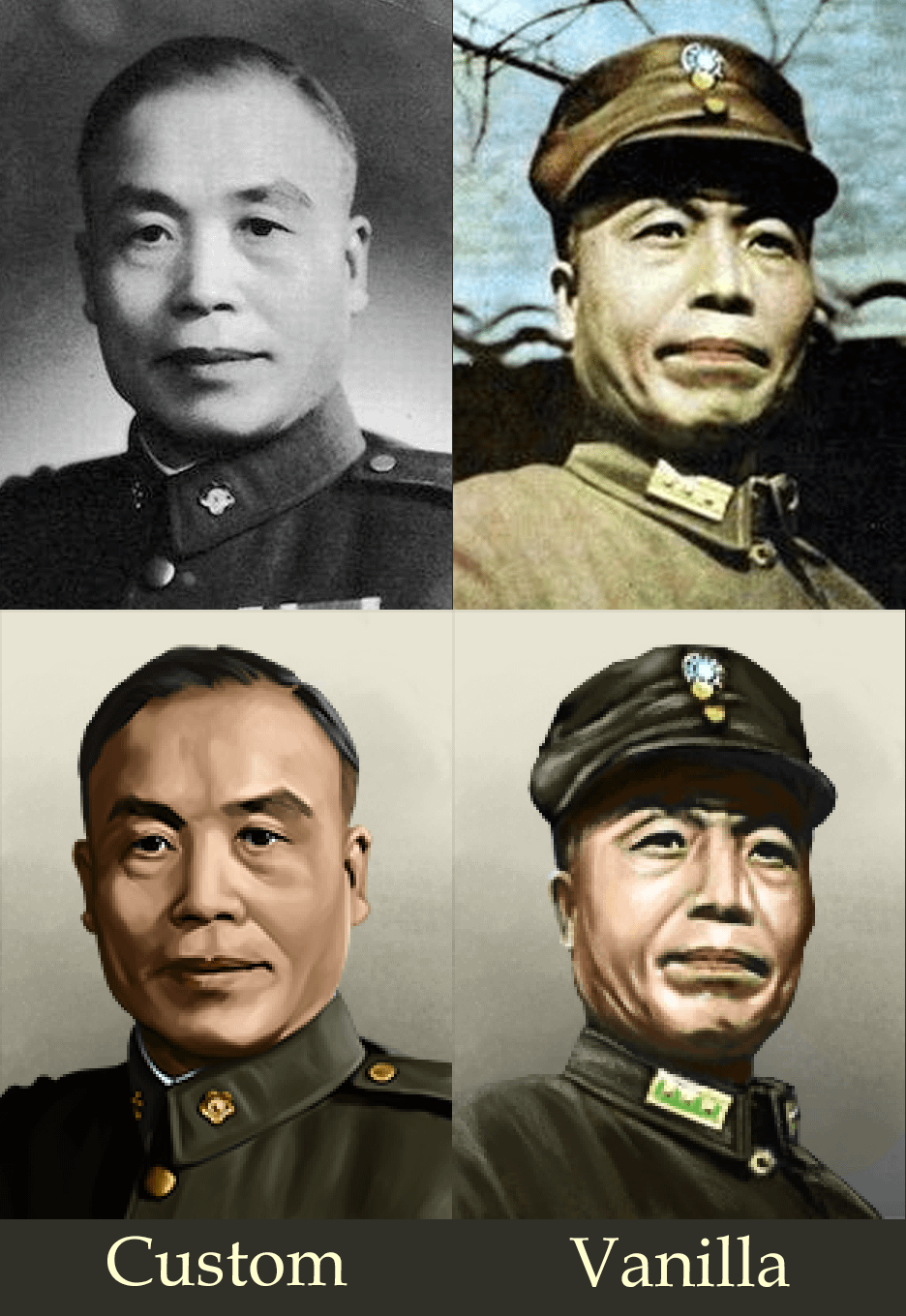
Li Zongren
 China
ChinaAlso known as: Li Tsung-jen, Li Tsong-jen
Birthday
August 13, 1890
Birth Sign
Leo
Birthplace
Lingui District, Guilin Prefecture, Guangxi, Qing Dynasty China
Age
Died at 78
About
Li Zongren was a Chinese military commander and politician who shaped the course of Republican China. Born in 1890 in Guangxi, he rose from a rural farming family to become one of the most powerful warlords of his era, commanding armies that fought in the Northern Expedition and the Second Sino-Japanese War. He served as vice president of the Republic of China from 1948 to 1949 and as acting president in 1949, during the final months of Nationalist rule on the mainland.
His career was defined by shifting alliances and fierce rivalries, most notably with Chiang Kai-shek. After the Nationalist defeat in the Chinese Civil War, Li lived in exile in the United States for sixteen years before returning to the People's Republic of China in 1965, a dramatic move that stunned observers and served as a propaganda victory for Mao Zedong's government. He died in Beijing in 1969.
Early Life & Background
Li Zongren was born on August 13, 1890, in Lingui District, Guilin Prefecture, in China's Guangxi province. His family were farmers, and he grew up in rural poverty during the twilight years of the Qing Dynasty. As a boy, he received a traditional Confucian education, learning the classics that would later inform his conservative political outlook.
In his late teens, Li entered the Guangxi Military Academy, where he received modern military training. The 1911 Revolution that toppled the Qing Dynasty plunged China into a chaotic period of warlordism, and Li seized the opportunity to advance. He quickly distinguished himself as a disciplined and capable officer, gradually consolidating control over Guangxi through a series of campaigns against rival warlords.
By the mid-1920s, Li had emerged as the dominant warlord of Guangxi, forming a partnership with fellow commander Bai Chongxi. Together they built the Guangxi Clique, a formidable military-political faction known for its effectiveness and relatively clean governance. Under their rule, Guangxi earned a reputation as a model province, with improved public works and lower corruption than most of China.
Career Growth
Li Zongren's breakthrough came in 1926 when he allied the Guangxi forces with Chiang Kai-shek's Nationalist government during the Northern Expedition, the campaign to reunify China. His troops proved among the most effective in the fighting, and their contributions helped the Nationalists take control of much of the country.
During the Second Sino-Japanese War, Li commanded the 5th War Zone. In 1938, he directed Chinese forces at the Battle of Taierzhuang, the first major Chinese victory of the war. The battle was a turning point in morale, and Li's reputation as a military strategist was cemented. Chiang Kai-shek personally visited the front during the battle.
In 1948, Li was elected vice president of the Republic of China under the new constitution, a result that went against Chiang Kai-shek's wishes. In January 1949, with the Nationalist position collapsing, Chiang resigned and Li became acting president. He attempted to open peace negotiations with the Communist forces, but the talks failed, and the Nationalists retreated to Taiwan later that year.
Instead of following Chiang to Taiwan, Li emigrated to the United States, where he lived in exile for sixteen years. He published his memoirs in the 1950s, offering a candid account of the Nationalist government's internal divisions. In a stunning reversal, Li returned to the People's Republic of China in July 1965, welcomed by Mao Zedong's government. He lived in Beijing until his death on January 30, 1969.
Career Timeline
Public Image & Style
Li Zongren is remembered as a complex figure in modern Chinese history. To Nationalist historians, he is a capable commander whose rivalry with Chiang Kai-shek weakened the Nationalist cause. To Communist historians, his return to the PRC is celebrated as evidence of the regime's unifying appeal.
His military reputation rests primarily on his performance at the Battle of Taierzhuang, where he achieved the first major Chinese victory of the Sino-Japanese War. That battle remains a point of pride in both Chinese and Taiwanese historical narratives.
In the West, Li is often portrayed as a tragic figure, a man who tried to steer a middle course between the Communists and Chiang's hardliners, only to be overtaken by events. His decision to return to China in 1965 remains a subject of debate among historians and political commentators.
Fame & Fandom (iFAMOUS Rankings)
Li Zongren commands the attention of historians and students rather than a global celebrity audience. His legacy is anchored in the specific political and military upheavals of Republican China, where his name evokes the complexities of warlordism and national unity. In August 2026, the iFANN Global Fame Engine evaluated this historical figure but determined that he does not currently hold a placement in the published rankings for the Global Top 1,000 or any Top-100 scope list. This absence reflects his status as a subject of academic study rather than a figure with contemporary viral metrics or mass-market consumption signals. There is no documented fandom name associated with Li Zongren; the concept of an organized fanbase with rituals or collective titles does not apply to a leader who died in 1969. While historical preservationists and tourists visit sites like the Li Zongren Heritage Gallery in Lingui County, these groups function as researchers and cultural visitors rather than a mobilized fan community. Similarly, appearances in strategy games like Kaiserreich represent fictionalized alternate history gameplay rather than an active real-world movement. The lack of a formal fan identity underscores the distinction between modern celebrity culture and historical veneration.
Interesting Facts and Legends
Li Zongren's return to Communist China in 1965 was such a propaganda coup that Mao Zedong personally welcomed him at a ceremony in Beijing. Despite being a lifelong anti-communist, Li's decision to return was seen as a gesture of patriotism and a desire for national unity. His personal papers, held at Columbia University, cover the period from 1944 to 1951, spanning the end of World War II, the Chinese Civil War, and his acting presidency. They offer historians a rare glimpse into the inner workings of the Nationalist government. Li was known for his clean governance of Guangxi, which stood in stark contrast to the corruption of many other warlord regimes. His administration built roads, schools, and hospitals, earning the province a reputation as a model for the rest of China. Despite his rivalry with Chiang Kai-shek, Li fought alongside him during the Northern Expedition and the war against Japan, demonstrating a pragmatic willingness to cooperate when necessary. The Battle of Taierzhuang remains the defining legend of his career, celebrated as the first major Chinese victory of the Sino-Japanese War that shattered the myth of Japanese invincibility. His tenure as Acting President during the final months of Nationalist rule on the mainland further cemented his role as a pivotal figure in the transition of power.
Family & Personal Life
Li Zongren's first wife was Li Xiuwen, whom he married in a traditional arranged marriage typical of rural China in the early 20th century. She accompanied him through much of his rise to power, and the couple remained married throughout his career.
His second wife, Guo Dejie, reflected the changing social norms of Republican-era China, where prominent figures often took additional wives. Guo was with Li during his years of exile in the United States and his final years in Beijing. Li had no documented children from either marriage.
Notable Connections
Li Zongren's career was intertwined with several key figures of modern Chinese history. His most important partnership was with Bai Chongxi, a fellow Guangxi commander with whom he built the Guangxi Clique. Together, they created one of the most effective military-political organizations in Republican China. Li also had a complex relationship with Chiang Kai-shek, cooperating during the Northern Expedition and the war against Japan, but later becoming his political rival. His return to China in 1965 brought him into contact with Mao Zedong, who welcomed him as a symbol of national reconciliation.
Relationships & Dating History
Li Zongren's personal life reflected the traditional and changing norms of early 20th-century China. His first marriage was to Li Xiuwen, arranged in the customary manner of rural Guangxi. The couple remained together throughout Li's rise to power, and Li Xiuwen was a constant presence during his military campaigns and political career.
Later, Li took a second wife, Guo Dejie, a practice not uncommon among prominent figures of the Republican era. Guo Dejie was with Li during his years of exile in the United States and his final years in Beijing after his return to China in 1965. At the time of his death in 1969, Li was married to Guo Dejie.
- MarriedLi Xiuwen1911 - presentArranged marriage typical of rural China; remained married throughout Li's career.
- MarriedGuo Dejie1924 - 1969Second wife; accompanied Li during his exile and final years.
Death & Aftermath
Died
January 30, 1969 (aged 78)
Death Place
Beijing, China
Cause of Death
Heart failure
Official tributes were absent and public mourning suppressed as Li Zongren passed away in Beijing on January 30, 1969, during the height of the Cultural Revolution. The 77-year-old former vice president died while under house arrest, having endured years of struggle sessions and physical abuse by Red Guard factions that exacerbated his hypertension and heart disease. His funeral remained a private affair held shortly after his death, attended only by close family and a handful of sympathetic officials who risked their safety, before he was cremated and interred in an undisclosed location. For decades following his passing, Li's reputation suffered under the radical leadership that had once targeted him.
It was not until 1984, after the Cultural Revolution ended and the political climate shifted, that the Chinese government officially rehabilitated his name. Scholars and institutions subsequently recognized him as a patriot for his role in the Battle of Taierzhuang and the Battle of Xuzhou against Japanese aggression. Posthumous works, including biographies and documentaries, re-evaluated his leadership of the New Guangxi Clique and his brief tenure as acting president. Educational scholarships and halls of fame established in Guangxi province now honor his legacy, transforming a figure once viewed with suspicion into a celebrated local hero.
Net Worth (Estate Value)
$5 Million
iFANN Editorial Team estimate
Li Zongren died in 1969, and no credible contemporary sources provide a specific net worth figure for him or his estate. As a political figure who lived in exile and returned to Communist China, he did not accumulate the kind of documented personal wealth associated with modern celebrities or business figures. His estate value is not publicly documented in any accessible source. His personal papers are held at Columbia University, and related documents concerning his collaborator Bai Chongxi are held at the Hoover Institution, but no financial valuations of these collections have been published. Per iFANN's editorial analysis, the estimated total value of his estate stands at $5 Million. As of 2026, the estate's financial value remains unknown to the public.
Awards & Accolades
View 3 records, honours and achievementsKnown For
Battle of Taierzhuang
1938 · Commander of Chinese forces
Acting President of the Republic of China
1949 · Acting President
Vice President of the Republic of China
1948 · Vice President
Northern Expedition
1926 · Military commander
Keywords
Sources
Quick Facts
- Profession
- politician, soldier
- Born
- August 13, 1890
- Birthplace
- Lingui District, Guangxi, Qing Dynasty China
- Died
- January 30, 1969
- Death Place
- Beijing, People's Republic of China
- Gender
- Male
- Spouse
- Li Xiuwen, Guo Dejie
- Birth Sign
- Leo
- Education
- Guangxi Military Academy
Personal Details
- Full Name
- Li Zongren
- Spouse
- Li Xiuwen, Guo Dejie
- Education
- Guangxi Military Academy
Frequently Asked Questions
Why did Li Zongren return to the PRC?
What was Li Zongren's relationship with Chiang Kai-shek?
What was the Battle of Taierzhuang?
Was Li Zongren the president of China?
Where are Li Zongren's personal papers?
Similar People
Join the community
fans discussing