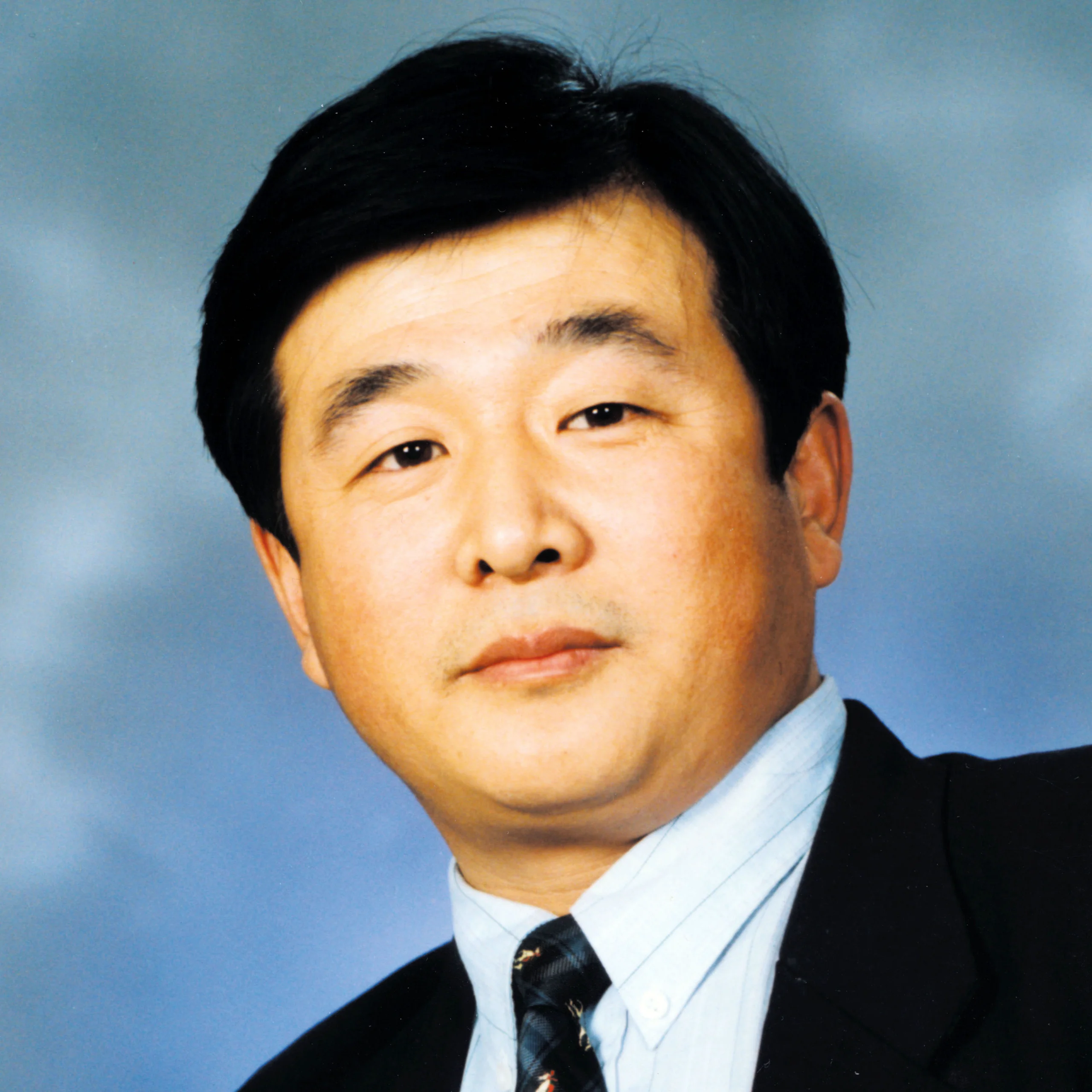
Li Hongzhi
 China
ChinaAlso known as: Li Hongzhi, 李洪志, Master Li
Birthday
May 13, 1951
Birth Sign
Taurus
Birthplace
Gongzhuling, Jilin Province, China
Age
75 years old
About
Li Hongzhi is a Chinese-born religious leader and the founder of Falun Gong, also known as Falun Dafa, a spiritual practice rooted in qigong and drawing on Buddhist and Taoist concepts. He has led the movement since 1992 and has lived in the United States since 1998, where he continues to guide it from the Falun Gong headquarters at Dragon Springs in New York State.
He is one of the most consequential religious figures to emerge from China in the past half century, and the movement he started grew from a single teacher in Changchun into a global community with institutions including Shen Yun Performing Arts, The Epoch Times, and New Tang Dynasty Television. Li serves as artistic director of Shen Yun, whose tours reach audiences worldwide.
His public profile is deliberately low. He rarely gives interviews, and his image reaches the world almost entirely through the movement's own media and through sharply critical Chinese state media portrayals. He is married to Li Rui and has one daughter, Li Meige.
Early Life & Background
Li Hongzhi was born on May 13, 1951, in Gongzhuling, a city in Jilin Province in northeastern China, into what an academic source describes as an ordinary intellectual's family. The date carries weight inside the movement: May 13, 1951 fell on the eighth day of the fourth lunar month, traditionally observed as the Buddha's birthday.
Some sources, including Wikipedia, give his birth year as 1951 or 1952, and scholars have noted that Falun Gong's own biographical materials have shifted in their details over time. Britannica's biography confirms the Gongzhuling birth.
Before founding the movement, Li worked at a state grain depot and later in a government security-related office in Changchun. Through the late 1980s he was an enthusiastic qigong practitioner, part of the broader qigong boom that swept China in that decade, when millions took up breathing and meditation systems taught by charismatic masters.
Early biographical accounts published by Falun Gong in 1993 and 1994, both since withdrawn from circulation, described his childhood training under Buddhist and Daoist masters, a narrative examined critically in Benjamin Penny's 2003 study The Life and Times of Li Hongzhi: Falun Gong and Religious Biography. Outside observers contest those claims of early spiritual attainment, but they remain central to how practitioners understand his authority.
By the early 1990s Li had moved from practitioner to teacher. On May 13, 1992, in Changchun, he began publicly instructing Falun Gong, the step that ended his pre-fame life and started the movement.
Career Growth
Li Hongzhi began teaching Falun Gong publicly on May 13, 1992, in Changchun. Over the following years he traveled across China delivering lectures and leading exercise sessions, and the movement grew fast. By the mid-1990s it had attracted a large following, including within government and qigong circles, an unusual reach for a new practice. His book China Falun Gong served as an interim text summarizing the cultivation and practice of the system.
The turning point came in April 1999, when an estimated 10,000 to 15,000 practitioners gathered silently outside Zhongnanhai, the Chinese leadership compound in Beijing. That demonstration triggered the government's declaration of Falun Gong as an illegal organization in July 1999. Li had already relocated to the United States in 1998, becoming a permanent resident and continuing to lead the movement from exile.
From New York, the movement reorganized and built institutions. Falun Gong is now headquartered at Dragon Springs in New York State, where Li resides and serves as artistic director of Shen Yun Performing Arts. He is also associated with The Epoch Times and New Tang Dynasty Television, widely described as extensions of the movement. These outlets promote Falun Gong's philosophical beliefs and have drawn criticism for spreading unfounded conspiracy theories.
Li has made controversial statements over the years, including claims that extraterrestrial aliens from other dimensions walk the Earth and are responsible for introducing technology, war, and immorality. He describes himself as a being who has come to help humankind. Asked directly whether he is human, he replied: "You can think of me as a human being." Chinese state sources characterize him as an evil person rather than a savior figure.
Career Timeline
Public Image & Style
Li Hongzhi maintains a deliberately low public profile. He rarely gives interviews, and his image reaches the world almost entirely through two channels: Falun Gong's own institutions, chiefly Shen Yun, The Epoch Times, and NTDTV, and sharply critical Chinese state media portrayals that cast him as a cult leader. The gap between those two pictures is one of the defining features of his public life.
Where he does appear, it is usually in the context of Shen Yun, whose global tours have made the movement's aesthetic visible to audiences who may know little about Falun Gong itself. His personal style is understated; he is not a televangelist-style performer, and the movement's messaging tends to foreground the practice and its institutions rather than the founder's personality.
That reticence has not shielded him from controversy. His claims about aliens, morality, and his own spiritual status circulate widely in both devotional and critical contexts, and his self-description as a being who has come to help humankind is cited by followers as evidence of his mission and by critics as evidence of delusion.
Fame & Fandom
Li Hongzhi is currently the 70th most famous person in Religious Leaders, down from 69th in the previous cycle, a placement that reflects his enduring global presence despite a deliberately low personal profile. His following is not a fandom in the conventional sense but a global movement of practitioners who revere him as a spiritual master. There is no formal fandom name; adherents are simply practitioners of Falun Dafa, and their devotion is religious rather than fan-club style. Their most visible expressions are institutional: the Shen Yun Performing Arts tours and The Epoch Times media network, both extensions of the movement's mission.
What sets this community apart is its resilience and global organization, born from a history of persecution. The 1999 crackdown by the Chinese government turned Li's movement into a worldwide cause, with practitioners organizing vigils and awareness campaigns. The story of the silent protest outside Zhongnanhai in 1999 is still retold as a defining moment of collective courage. For followers, Li is more than a leader; he is a source of spiritual guidance and a symbol of endurance.
As for fame, his presence is unmistakable. He ranks 70th among religious leaders in the iFANN Global Fame Rankings, a placement that tracks attention across media coverage, search, and consumption signals worldwide. It is a striking figure for someone who leads a movement his own government has spent decades trying to erase.
Interesting Facts and Legends
Li chose May 13, 1992, the 41st anniversary of his own birth, as the day he first taught Falun Gong publicly, tying the movement's launch to the date traditionally observed as the Buddha's birthday.
Two authorized biographies of Li were published by the movement in 1993 and 1994, then withdrawn from circulation. Scholars have studied the shifting details in those texts as a case study in how religious biography gets written and revised.
His answer to the question of whether he is human, "You can think of me as a human being," is the line most often quoted by both followers and critics.
The story fans and practitioners retell first is the April 1999 silent gathering outside Zhongnanhai, when thousands stood without placards or chanting. Practitioners frame it as collective courage; the Chinese government cites it as the trigger for the crackdown that followed that July.
Notable Quotes
“You can think of me as a human being.”
Family & Personal Life
Li Hongzhi is married to Li Rui, a relationship that predates his public career and has been documented since the early Falun Gong period. The couple has one daughter, Li Meige. Unlike a celebrity subject, Li has no documented dating history, no publicized engagements or divorces, and no high-profile romantic relationships beyond his marriage. There are no credible reports of separation, divorce, or remarriage, and his status as of 2026 remains married to Li Rui with no change reported.
He lives at Dragon Springs, the Falun Gong headquarters in New York State, where he also serves as artistic director of Shen Yun. The compound functions as both residence and institutional base for the movement he leads.
Notable Connections
Li Hongzhi's principal institutional ties are Shen Yun Performing Arts, where he serves as artistic director; The Epoch Times and New Tang Dynasty Television, media outlets widely described as extensions of the movement; and Dragon Springs, the Falun Gong headquarters in New York State where he resides. The only documented immediate family are his wife, Li Rui, and their daughter, Li Meige.
Relationships & Dating History
Li Hongzhi's documented personal life is unusually simple for a figure of his prominence. He is married to Li Rui, a relationship that predates his public career and has been documented since the early Falun Gong period. The couple has one daughter, Li Meige. There are no publicized engagements, divorces, or high-profile romantic relationships beyond his marriage, and no credible reports of separation or remarriage.
Unlike a celebrity subject, Li has no dating history in the tabloid sense. No multiple credible outlets confirm any other pairing, and any speculation along those lines should be disregarded. His marriage to Li Rui has remained intact throughout his decades leading the movement, including the relocation to the United States in 1998 and the subsequent years at Dragon Springs.
As of 2026, Li Hongzhi remains married to Li Rui, with no reported change in status.
- MarriedLi RuiCurrentMarried before his public career; the couple has one daughter, Li Meige, and remain together as of 2026.
Salary, Net Worth In 2026
$10 Million
iFANN Editorial Team estimate
Falun Gong's finances are opaque, and Li Hongzhi's personal wealth is not publicly disclosed. No credible celebrity-finance outlet publishes a verified figure for him, so any number should be read as an estimate rather than a reported fact. iFANN's editorial research, weighing what limited information exists about the movement's institutional revenues, points to a current figure of roughly $10 million.
The revenue picture runs through institutions rather than salary. Shen Yun Performing Arts tours globally and sells tickets, merchandise, and recordings; The Epoch Times operates a subscription and advertising business; NTDTV runs broadcast and online operations. Li's role as artistic director of Shen Yun and his position at the head of the movement give him access to these streams, but the movement does not publish financial statements, and no court filing or regulatory disclosure has laid out his personal compensation.
Dragon Springs, the New York State compound that serves as headquarters and residence, is itself a significant asset, though ownership and valuation are not publicly documented in detail. Estimates of Li's wealth that circulate online tend to be speculative and are not backed by audited records or named sources.
Given the absence of reliable data, the $10 million figure should be treated as iFANN's own editorial estimate of his current financial position, not a confirmed total. It reflects the scale of the movement's institutional operations rather than any documented personal fortune.
Awards & Accolades
View 1 records, honours and achievementsKnown For
Founding Falun Gong (Falun Dafa)
1992 · Founder and leader
Shen Yun Performing Arts
2006 · Artistic director
China Falun Gong
1993 · Author
Keywords
Sources
Quick Facts
- Profession
- religious leader
- Born
- May 13, 1951
- Birthplace
- Gongzhuling, Jilin Province, China
- Gender
- Male
- Birth Sign
- Taurus
- Spouse
- Li Rui
- Children
- Li Meige
- Founded
- Falun Gong (1992)
- Residence
- Dragon Springs, New York State, United States
Personal Details
- Full Name
- Li Hongzhi
- Spouse
- Li Rui
- Children
- Li Meige
Frequently Asked Questions
Who is Li Hongzhi?
Is Li Hongzhi still alive in 2026?
Where does Li Hongzhi live now?
What is Li Hongzhi's net worth in 2026?
Is Li Hongzhi married and does he have children?
Join the community
fans discussing