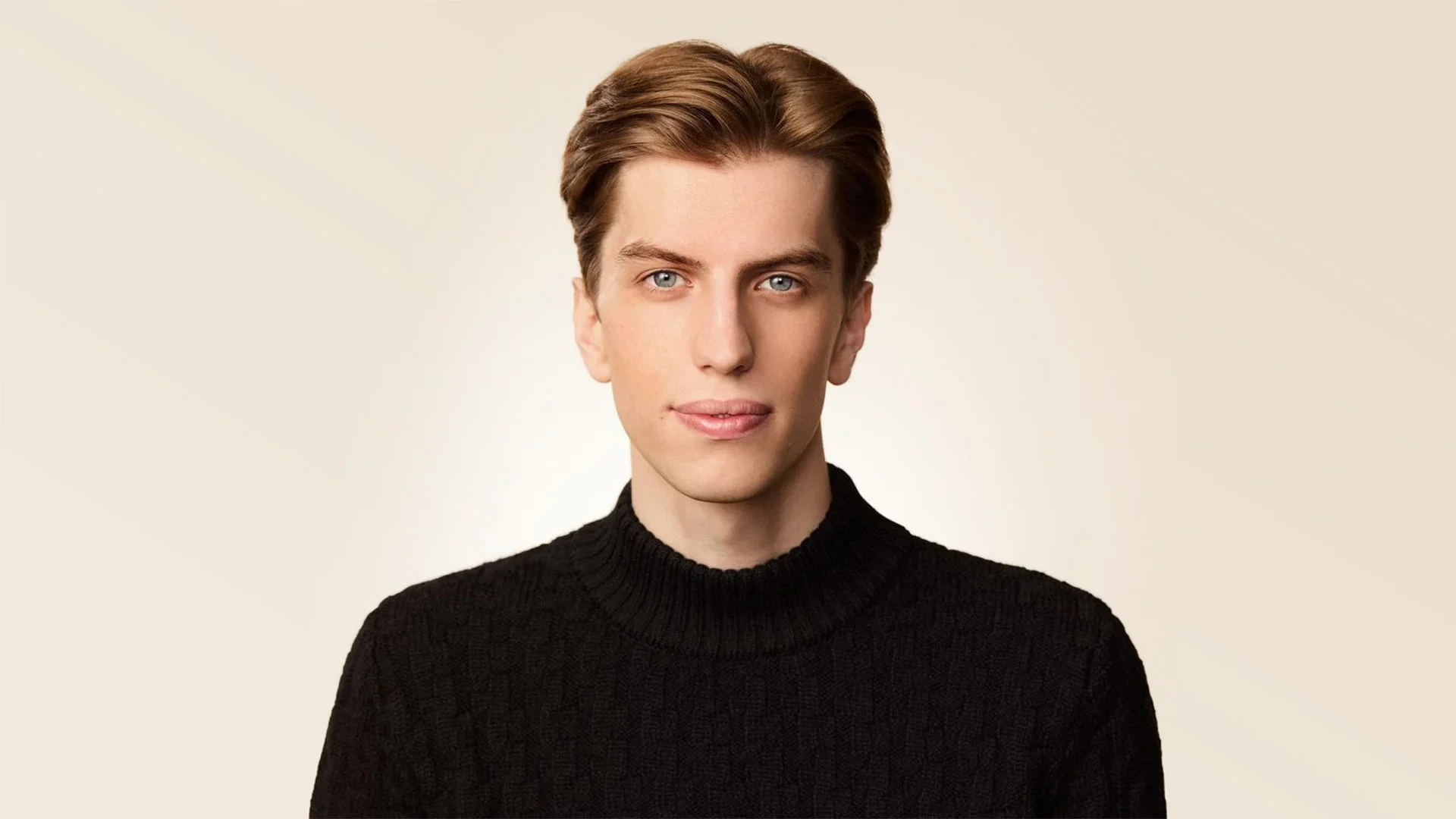
Leopold Aschenbrenner
 Germany
artificial intelligence researcher and investor
Also known as: Nostradamus of AI
Birthday
2001
Birth Sign
Capricorn
Birthplace
Germany
Age
25 years old
About
Leopold Aschenbrenner is a German artificial intelligence researcher and investor who became a defining figure in the AI boom of the mid-2020s. As a member of OpenAI's Superalignment team, he worked on steering advanced AI systems toward safe outcomes before being dismissed in April 2024 over an alleged information leak he denies. He then published the influential essay "Situational Awareness: The Decade Ahead," predicting AGI by 2027, and founded the AI-focused hedge fund Situational Awareness LP.
Today, Aschenbrenner is best known for the meteoric rise and dramatic collapse of that fund, which at its peak managed tens of billions of dollars before losing 67% in a single month during July 2026. His story has become a cautionary tale about youth, leverage, and the hype cycle surrounding artificial intelligence. Despite the financial turmoil, he remains a prominent voice in AI discourse, and his wedding to Avital Balwit proceeded amid the chaos.
Early Life & Background
Aschenbrenner's path to prominence began with extraordinary academic achievement. He graduated from Columbia University in New York City as valedictorian at just 19 years old, a feat that signaled his intellectual intensity from an early age. His interests centered on artificial intelligence, and he joined OpenAI's ambitious Superalignment initiative, a team dedicated to ensuring that advanced AI systems align with human values.
His tenure at OpenAI ended abruptly in April 2024 when the company dismissed him, citing an alleged information leak. Aschenbrenner has consistently denied the charge, describing it as a pretext. The dismissal, however, became a turning point. Just two months later, in June 2024, he published "Situational Awareness: The Decade Ahead," a sprawling essay that predicted artificial general intelligence by 2027 and superintelligence shortly thereafter. The essay went viral, sparking intense debate across tech and policy circles, and its title would later lend its name to his hedge fund.
Career Growth
In July 2024, Aschenbrenner founded Situational Awareness LP, an AI-focused hedge fund, with anchor investments from Patrick Collison, John Collison, and Nat Friedman. The fund grew with astonishing speed, riding the AI stock rally and reportedly reaching as much as $45 billion in assets under management at its peak, with gains exceeding 1,000%. The Wall Street Journal dubbed him the "Nostradamus of AI" for his prescient predictions.
The success unraveled in July 2026 when leveraged AI bets turned against him. The fund lost 67% in a single month, forcing Aschenbrenner to sell all public stock holdings to meet margin calls. Losses were estimated at $35 billion, making the collapse one of the largest in hedge fund history. The Economist ran a piece titled "Investors in Situational Awareness deserved to lose their shirts," while the New York Times chronicled the meltdown in detail. By August 2026, the fund was reportedly seeking fresh capital, and Aschenbrenner was at the center of a global financial post-mortem.
Public Image & Style
Aschenbrenner's public image has undergone a dramatic shift. Initially celebrated as a brilliant young visionary, he was portrayed as the "Nostradamus of AI" for his accurate predictions about the pace of AI development. Media coverage emphasized his youth, his Rubik's Cube habit, and his lack of investment experience. After the fund's collapse, the narrative turned to hubris and leverage, with Futurism calling him "a 24-year-old with no investment experience" and The Economist arguing his investors "deserved to lose their shirts." Despite this, some market professionals caution against counting him out, noting his intellectual track record. He maintains an active presence on X, where he shares his AI predictions and commentary.
Fame & Fandom
Leopold Aschenbrenner is the 88th most famous person in Sri Lanka, a ranking that has held steady through the latest cycle of global attention. His trajectory from a young OpenAI researcher to a figure commanding billions in capital created a unique cultural footprint defined less by traditional celebrity and more by high-stakes financial mythology. While he lacks a formal fanbase with rituals or organized campaigns typical of pop stars, his story has generated a dedicated following among tech enthusiasts and investors who dissect every move he makes. The narrative surrounding him shifted dramatically after the collapse of his hedge fund, transforming him from a visionary into a cautionary tale of hubris. This duality keeps him relevant in media circles that track the intersection of artificial intelligence and finance. According to the iFANN Global Fame Rankings, Aschenbrenner maintains a specific standing as the 88th most famous person in Sri Lanka. The absence of a named fandom reflects his professional sphere; his audience consists of analysts and observers rather than devotees. Yet the legend persists. Stories of his wedding coinciding with a massive market fire sale have become part of the lore, retold in business publications as a stark moment where personal celebration collided with financial ruin. He remains a polarizing figure, celebrated for early predictions about AGI timelines while scrutinized for the leverage that led to significant losses. The iFANN data confirms his continued prominence in specific national markets despite the broader volatility of his public image.
Interesting Facts and Legends
Aschenbrenner is deeply associated with San Francisco, a city he once described as the place where one can see the future first. His habit of solving Rubik's Cubes became a signature detail, highlighted by the New York Times when noting he was barely of legal drinking age during his initial rise. The opening line of his influential essay marked a pivotal shift in industry conversation, moving from $10 billion compute clusters to vastly larger scales. Despite the catastrophic collapse of his fund, he has never publicly disclosed his personal investment losses. His work ethic remains intense, characterized by long hours spent simultaneously on AI research and complex investment strategies. A particularly ironic chapter in his biography involves the timing of his wedding. Reports indicate that guests arrived just as the fund began its rapid unraveling and forced asset sales, creating a surreal contrast between a personal milestone and a financial disaster. This event cemented a narrative of hubris in the public consciousness, even as Silicon Valley insiders continued to engage with him shortly after the crash. The story of his meteoric rise followed by a swift fall has become a defining legend of the mid-2020s AI boom.
Family & Personal Life
Aschenbrenner married Avital Balwit in late July or early August 2026, with the wedding taking place just as his hedge fund collapsed. The couple has been described as an "AI power couple," with Balwit working in AI policy. No details about his parents or siblings have been made public. As of 2026, the couple resides in San Francisco, with no children reported.
Relationships & Dating History
Aschenbrenner's most notable relationship is with Avital Balwit, whom he married in late July or early August 2026. The wedding occurred against the backdrop of his hedge fund's catastrophic collapse, with the Wall Street Journal noting that "his wedding guests were arriving, just as his $45 billion [fund collapsed]." Vanity Fair's coverage was titled "How to Lose Billions (and Gain a Wife) in Two Days," describing how the 24-year-old faced an "unenviable situation in the days before his wedding to his fiancée." The San Francisco Standard asked, "Can love make up for a $45 billion hedge fund blowup?" referring to the "AI power couple."
The wedding proceeded despite the financial turmoil, with Vanity Fair's headline suggesting he gained a wife even as he lost billions. As of 2026, Aschenbrenner is married to Balwit, with no other public romantic relationships reported.
- MarriedAvital Balwit2026 - presentCurrentMarried in late July/August 2026, just as his hedge fund collapsed.
Salary, Net Worth In 2026
$100 Million
iFANN Editorial Team estimate
Per iFANN's editorial analysis, Leopold Aschenbrenner's net worth in 2026 stands at $100 Million. This figure reflects the residual value remaining after the dramatic contraction of his assets under management. At the height of his influence, Situational Awareness LP controlled a reported $45 billion, though other accounts placed the figure closer to $20 billion. The fund suffered estimated losses of $35 billion in July 2026 due to aggressive positioning in semiconductor stocks like Micron and SanDisk. These losses drastically reduced the capital base that previously supported his wealth. During the fund's explosive growth phase, Aschenbrenner earned substantial fees that contributed significantly to his current valuation. The firm is reportedly seeking fresh capital to stabilize operations, offering potential pathways for recovery. His personal fortune remains tied to these ongoing ventures and the earlier success of his strategy before the market correction. The estimate of $100 Million captures the scale of his remaining resources following the industry's most notable hedge fund implosion.
Awards & Accolades
View 2 records, honours and achievementsKnown For
Situational Awareness: The Decade Ahead
2024 · Author
Situational Awareness LP
2024 · Founder
OpenAI Superalignment team
2021 · Researcher
Keywords
Sources
Quick Facts
- Profession
- artificial intelligence researcher and investor
- Born
- 2001
- Gender
- Male
- Education
- Columbia University (valedictorian)
- Spouse
- Avital Balwit
Personal Details
- Spouse
- Avital Balwit
- Education
- Columbia University (valedictorian)
Frequently Asked Questions
What happened to Leopold Aschenbrenner's hedge fund?
Is Leopold Aschenbrenner married?
How old is Leopold Aschenbrenner?
What is Leopold Aschenbrenner's net worth?
Why was Leopold Aschenbrenner fired from OpenAI?


Join the community
fans discussing