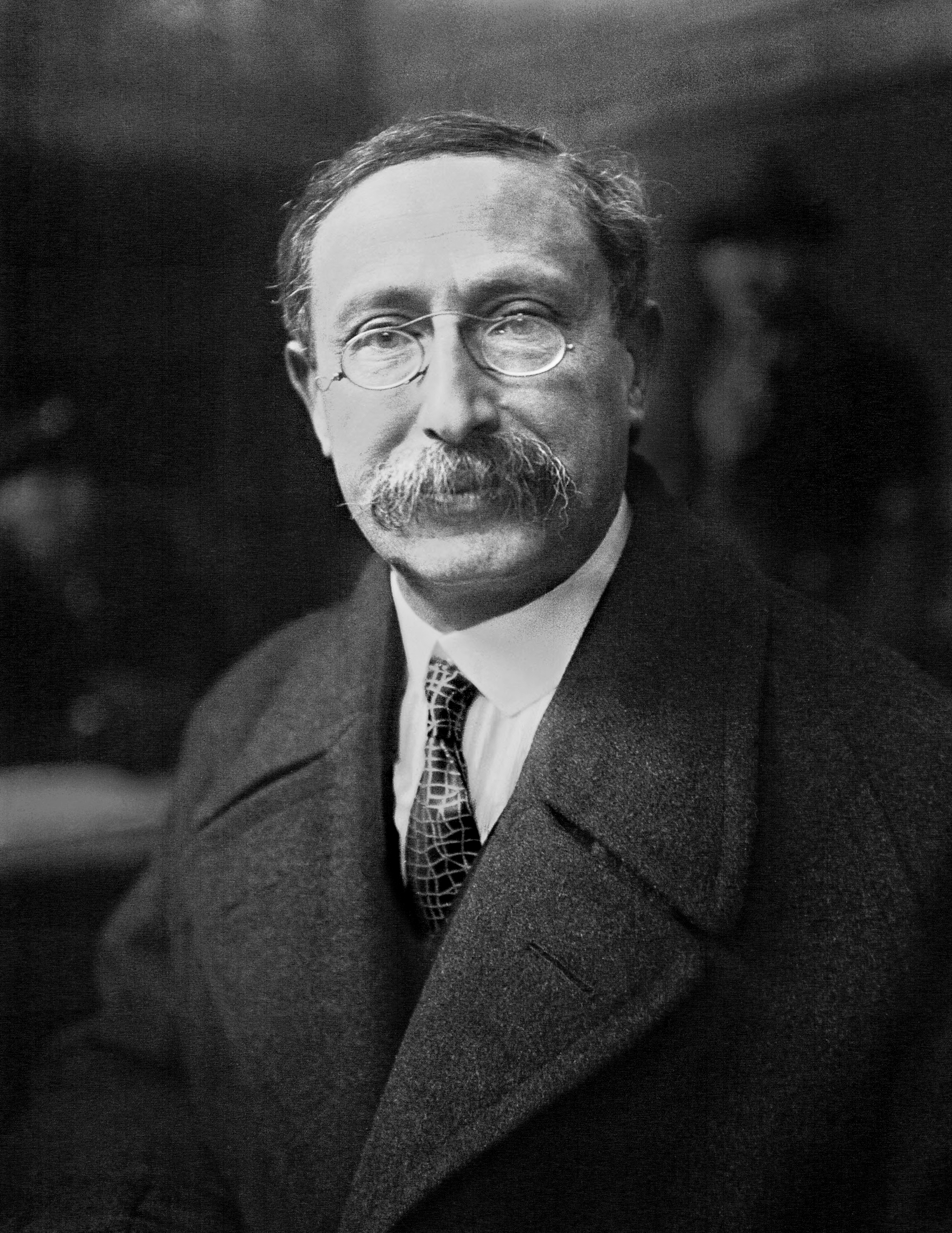
Léon Blum
 France
politician•diplomat•literary critic
Birthday
+1872-04-09
Birth Sign
Aries
Birthplace
Paris
Age
Died at 77
About
André Léon Blum was born on April 9, 1872, in Paris, into a Jewish family. The Dreyfus affair, which exposed deep anti-Semitism in French society, shaped his political awakening. He trained as a lawyer and also made his mark as a literary critic, but politics pulled him in. A devoted disciple of socialist leader Jean Jaurès, Blum took over the mantle after Jaurès was assassinated in 1914. Over the next decades, he became the Socialist Party's chief strategist and a tireless advocate for reform. Blum served as Prime Minister of France three times, though his first tenure in 1936-37 was the most consequential. Leading the left-wing Popular Front coalition, his government introduced landmark reforms: the 40-hour workweek, paid holidays, and collective bargaining rights. These changes transformed French labor relations. His stance on the Spanish Civil War, declaring neutrality to keep France out of a wider conflict, drew criticism from both sides. After leaving office in 1938, he spoke out against appeasing Nazi Germany. When France fell to Germany in 1940, Blum refused to support the Vichy regime. The collaborationist government put him on trial for treason, though the proceedings never concluded. He was handed over to the Nazis and imprisoned at Buchenwald. Miraculously, he survived the war. Returning to politics, he helped lay the groundwork for the French Fourth Republic and served as a transitional leader. Blum died on March 30, 1950, in Jouy-en-Josas, leaving a legacy of socialist reform that still echoes in French politics.
Fame & Fandom
Léon Blum commands a unique place in history where reverence replaces the frenetic energy of modern fandom. Unlike pop icons who rely on digital campaigns or merchandise sales, his enduring legacy is sustained by historians, political scientists, and citizens who view his life as a moral compass for democracy. There is no formal fan club name for Blum; instead, his supporters are found within the ranks of the Socialist Party, members of the Popular Front coalition, and those who visit the Maison Léon Blum during heritage events to honor his memory through cultural tours rather than organized rituals. His influence was measured through legislative triumphs like the 40-hour workweek and the sheer courage required to lead France as its first Jewish Prime Minister during an era of rising fascism. While he does not have the chart-topping visibility of contemporary celebrities, his story remains a vital part of global historical consciousness. The iFANN Global Fame Engine has evaluated this figure with rigorous attention to archival records and cultural impact, yet Léon Blum currently holds no placement in the published Global Top 1,000 rankings or any Top-100 scope list. This absence of a numeric rank reflects the nature of his fame: it is deep, contextual, and rooted in specific historical moments rather than broad, real-time consumption metrics that drive current popularity charts. He remains a titan of the past whose stature is defined by the weight of his achievements and the tragedy of his imprisonment in Buchenwald, standing apart from the transient trends that define today's most famous individuals.
Interesting Facts and Legends
Born into a Jewish family in Paris in 1872, Blum was deeply shaped by the Dreyfus Affair, which transformed him from a literary critic into a committed socialist leader following the assassination of Jean Jaurès. He served as Prime Minister three times, but his 1936–1937 tenure stands out as the most consequential period of his career. During this time, he led the left-wing Popular Front coalition and enacted landmark social reforms, including the introduction of paid vacations and the 40-hour workweek, which remain pillars of French labor law. A defining chapter of his life occurred after the fall of France in World War II when he was arrested by the Vichy regime and imprisoned in the Buchenwald concentration camp until the war ended. Although a false report circulated in 1944 claiming he had died in the camp, Blum survived the ordeal and returned to politics shortly before his death in 1950. His identity as a proud Zionist who remained a staunch French patriot adds another layer to his complex legacy, highlighting the struggles of being a Jewish leader in 20th-century Europe. These narratives are not mere folklore but well-documented historical facts that continue to shape how scholars and the public understand the intersection of politics, religion, and resistance.
Death & Aftermath
Died
+1950-03-30 (aged 77)
Death Place
Jouy-en-Josas, Île-de-France, France
Cause of Death
Heart attack (myocardial infarction)
The news of Léon Blum's passing stunned the French Parliament, where he was remembered as the first Socialist and Jewish Premier of France. Tributes from peers and institutions highlighted his role as a defender of democratic socialism and his courage in maintaining his Jewish identity during the Vichy regime and Nazi occupation. Major international media outlets, including the Jewish Telegraphic Agency and the New York Times, covered his death widely, cementing his status as a historic figure. Blum passed away suddenly on March 30, 1950, at his country home in Jouy-en-Josas, located near Paris. The official cause of death was reported as a heart attack based on immediate medical assessment by attending physicians. This determination stood without dispute, though a persistent rumor circulating during the war had falsely claimed he died in a German concentration camp near Lublin in 1943.
That account was proven incorrect when Blum was liberated from Buchenwald in 1945 and lived in relative seclusion until his final days. His funeral took place shortly after his death, with burial occurring in the Père Lachaise Cemetery in Paris. The ceremony was attended by numerous political leaders and socialists who honored his legacy as a statesman. His residence in Jouy-en-Josas has since become a heritage site, with plans to open it to the public for Heritage Days, ensuring the location remains a memorial landmark. Posthumously, Blum has been the subject of numerous books, films, and academic studies analyzing his role in the Popular Front and his defense of human rights.
Awards & Accolades
Keywords
Quick Facts
- Profession
- politician, diplomat, literary critic
- Born
- +1872-04-09
- Birthplace
- Paris
- Died
- +1950-03-30
- Death Place
- Jouy-en-Josas
- Gender
- Male
- Spouse
- Jeanne Blum, Thérèse Blum, Lise Blum
- Birth Sign
- Aries
Personal Details
- Spouse
- Jeanne Blum, Thérèse Blum, Lise Blum
Join the community
fans discussing