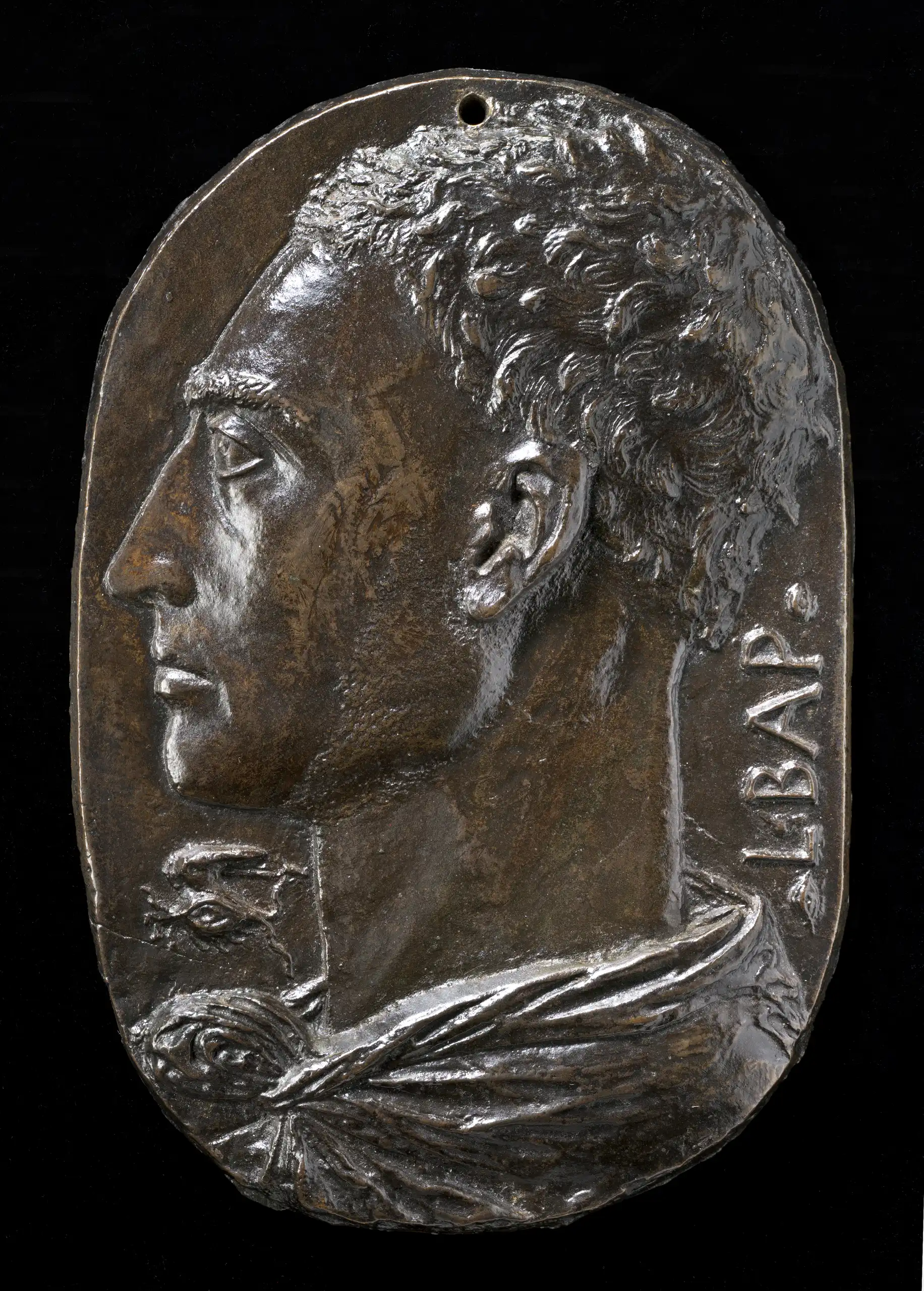
Leon Battista Alberti
 Italy
architect•philosopher•cryptographer•humanist
Also known as: L.B. Alberti, Leonardo Alberti
Birthday
February 14, 1404
Birth Sign
Aquarius
Birthplace
Genoa, Italy
Age
Died at 68
About
Leon Battista Alberti stands as a quintessential Italian Renaissance polymath, widely recognized as the "father of Renaissance architecture" and a foundational figure in art theory, cryptography, and humanism. Born in Genoa to an exiled Florentine family, his life spanned the early to mid-15th century, a period that defined the transition from the Middle Ages to the modern era. Unlike modern celebrities, Alberti's legacy is not measured in net worth, dating history, or social media metrics, but in his profound intellectual contributions that shaped Western civilization.
His work fundamentally reshaped Western aesthetics, particularly through the codification of linear perspective and the revival of classical architectural principles. He moved beyond mere construction to develop a rigorous theoretical framework that emphasized harmony, proportion, and the mathematical ordering of space. His designs for buildings like the facade of Santa Maria Novella and the Basilica of Sant'Andrea in Mantua established new standards for urban palaces and churches that influenced European building practices for centuries.
Beyond architecture, Alberti made pioneering contributions to other fields. He invented the polyalphabetic cipher, laying the groundwork for modern cryptography, and authored influential treatises on painting and ethics. His ability to master diverse disciplines while maintaining a cohesive philosophical vision secured his place as one of the most significant figures of the 15th century. Today, he remains the archetype of the universal man, bridging the gap between the medieval and modern worlds with a rational, disciplined, and innovative approach to beauty and order.
Early Life & Background
Leon Battista Alberti entered the world on February 14, 1404, in Genoa, Italy. His birth occurred into a family marked by political displacement; his father, Lorenzo di Benedetto Alberti, was a wealthy merchant who had been exiled from Florence due to factional strife. His mother, Bianca Fieschi, was a Genoese noblewoman and the widow of a Grimaldi. The family initially relocated to Venice when Leon Battista was young before eventually settling in Padua, where they sought stability amidst the turbulence of northern Italian politics.
His early education took place in Padua, where he enrolled at the University of Padua to study law. While the curriculum focused on jurisprudence, Alberti found his true passion lying elsewhere, drawn deeply toward literature, rhetoric, and the arts. By the age of 24, he had already composed Della famiglia, a dialogue on ethics that demonstrated his mastery of classical Latin and Greek texts. This early work revealed a mind capable of synthesizing ancient wisdom with contemporary concerns, setting the stage for his future intellectual endeavors.
During these formative years, Alberti immersed himself in the study of Roman history and philosophy, driven by a desire to revive the ideals of antiquity. He cultivated a reputation for physical fitness and athletic prowess, engaging in sports like running and swimming, which was unusual for scholars of his time. These formative experiences in Padua and his exposure to the intellectual currents of the early 15th century provided the foundation for his later breakthroughs in both theory and practice.
Career Growth
Alberti's career trajectory shifted from literary pursuits to the visual arts and architecture in the 1430s after arriving in Florence, then the epicenter of the Renaissance. There, he joined intellectual circles led by figures like Poggio Bracciolini, immersing himself in the humanist movement. In 1435, he published De pictura (On Painting), the first printed treatise on painting. This work codified the rules of linear perspective, providing artists with a mathematical method to depict three-dimensional space on a two-dimensional surface, revolutionizing artistic representation.
His architectural ambitions matured in the 1450s with the design of the facade for the church of Santa Maria Novella in Florence, completed around 1456. This project introduced classical pilasters and scrolls to harmonize the Gothic structure below with a new Renaissance aesthetic above, marking a decisive break from medieval styles. Shortly after, between 1455 and 1458, he designed the facade for the Palazzo Rucellai, applying classical orders to a domestic building for the first time and establishing a template for urban palaces.
In Rimini, Alberti transformed the existing Gothic church into the Tempio Malatestiano, incorporating a triumphal arch motif and classical columns to serve as a mausoleum for the Malatesta family. His later years were spent in Mantua under the patronage of Ludovico III Gonzaga, where he designed the churches of San Sebastiano (begun 1460) and Sant'Andrea (begun 1472). The Basilica of Sant'Andrea, with its massive barrel vault and triumphal arch facade, remains one of the most influential buildings in architectural history. In 1452, he completed De re aedificatoria, a monumental treatise modeled after Vitruvius that became the standard textbook for architects for centuries.
Career Timeline
Public Image & Style
Alberti is portrayed as the archetype of the Renaissance Man, a universal genius who bridged the gap between the medieval and modern worlds. Media and historical accounts depict him as a rational, disciplined, and innovative thinker who valued beauty, proportion, and harmony above all else. His image as a polymath who mastered architecture, mathematics, and literature simultaneously has become a defining characteristic of the era he represented. He is often described as the "Chameleon" due to his ability to adapt to any discipline, mastering each without being confined to one.
Fame & Fandom (iFAMOUS Rankings)
As of the November 2026 rankings, iFANN has not yet collected fame data for this person. Consequently, no current global ranking position is available for Leon Battista Alberti. He is not featured on the September 2026 September 2026 iFAMOUS Rankings flagship list.
There is no organized fandom for Leon Battista Alberti in the pop-culture sense. His admirers are primarily historians, architects, students, and art enthusiasts who engage with his work through academic channels rather than fan clubs. Fan campaigns do not exist, but academic conferences, university courses, and symposia dedicated to his life and theories serve as the community hubs for his followers. The architectural community honors his legacy through awards like the Leon Battista Alberti Architecture Prize, which recognizes outstanding contributions to the field.
Interesting Facts and Legends
Leon Battista Alberti possessed a remarkable physical agility that belied his scholarly nature. A famous legend recounts his ability to jump high enough to catch a horse's mane while the animal was galloping, a feat that illustrated his confidence and athleticism. Despite his secular achievements, he was ordained as a priest, balancing his religious duties with his extensive architectural and literary career. He created a self-portrait drawing considered one of the earliest examples of an artist depicting themselves in a realistic manner. His invention of the polyalphabetic cipher, which used multiple alphabets to encode messages, remained unbreakable for centuries and established him as the founder of European cryptography alongside Johannes Trithemius.
Notable Quotes
“Beauty is the harmony of all the parts, in whatever subject it is, in accordance with a definite number, order, and distribution.”
“Everything can be done by man if he wills it.”
“The architect must be a master of many disciplines.”
Family & Personal Life
Alberti was born to Lorenzo di Benedetto Alberti, a wealthy merchant exiled from Florence, and Bianca Fieschi, a Genoese noblewoman. The family moved frequently during his childhood, living in Venice and Padua before settling down. He never married and had no legitimate children or recorded long-term romantic partners. His primary companions were his intellectual pursuits and his patrons, with whom he maintained close professional relationships. Historical accounts suggest he may have had informal relationships with women, but none were formalized into marriage, and no offspring are documented in credible sources.
Notable Connections
Relationships & Dating History
Historical records indicate that Leon Battista Alberti remained unmarried throughout his life. There are no documented spouses, children, or long-term romantic partners associated with him in credible biographical sources. Some accounts suggest he may have had relationships with women, but these were never formalized into marriage, and no offspring are recorded. His primary "partners" were his intellectual pursuits and his patrons, with whom he maintained close professional relationships. He died in Rome on April 25, 1472, leaving behind a legacy defined by his work rather than his personal life.
Death & Aftermath
Died
April 25, 1472 (aged 68)
Death Place
Rome, Italy
Cause of Death
Natural causes (likely heart failure or infection)
Leon Battista Alberti passed away in Rome on April 25, 1472, at the age of 68. Historical records do not specify a precise medical cause for his death, though contemporary accounts and modern historians generally attribute it to natural causes associated with aging, such as heart failure or a severe infection common in the pre-modern era. He was laid to rest in the Church of Santa Maria Maggiore in Rome, a significant location that reflected his standing within the city's intellectual and religious circles.
The immediate aftermath of his death was marked by a quiet reverence rather than public spectacle. Unlike many figures of his stature who might have faced political intrigue or legal battles over their estates, Alberti died peacefully without documented disputes among heirs. His will and financial affairs were managed according to the customs of the time, but specific details regarding the distribution of his personal assets remain obscure to modern researchers.
His legacy, however, began to expand rapidly in the decades following his passing. The most significant posthumous event was his inclusion in Giorgio Vasari's seminal work Lives of the Most Excellent Painters, Sculptors, and Architects, published in 1550. Vasari elevated Alberti to the status of a model Renaissance man, a universal genius who bridged the gap between the medieval and modern worlds. This biographical account cemented his reputation among subsequent generations of artists and architects.
Posthumously, his theoretical works became foundational texts for the profession. His treatise De re aedificatoria served as the standard textbook for architects for centuries, influencing giants like Bramante, Palladio, and Michelangelo. In the modern era, his influence has only deepened. The architectural community continues to honor him through institutions like the Leon Battista Alberti Architecture Prize, awarded recently to Carrilho da Graça in 2024. Academic monographs, such as Martin McLaughlin's Leon Battista Alberti: Writer and Humanist (2024), continue to explore the breadth of his contributions, ensuring his ideas on proportion, beauty, and cryptography remain vital subjects of study in universities worldwide.
Net Worth (Estate Value)
$0
iFANN Editorial Team estimate
Leon Battista Alberti died in 1472, so he has no current net worth or estate value in the modern financial sense. His wealth was intellectual and cultural rather than monetary. During his lifetime, he supported himself through patronage from powerful families like the Gonzaga and the papacy, as well as his own literary and architectural commissions. Specific financial details of his estate value today do not exist because his works and designs are part of the public domain.
His legacy generates value through the licensing of his designs in replicas and the sale of his books, which are studied globally. The "estate" of his legacy is maintained by universities and museums worldwide, which host exhibitions and research dedicated to his contributions. No legal proceedings or estate settlements followed his death, as he passed away peacefully without complex inheritance disputes. The iFANN Editorial Team estimates that while his monetary estate is non-existent, the cultural value of his work is immeasurable and continues to influence the architectural and artistic sectors significantly.
Awards & Accolades
View 9 records, honours and achievementsKnown For
De pictura
1435 · Author
Basilica of Sant'Andrea
1472 · Architect
Santa Maria Novella Facade
1456 · Architect
Palazzo Rucellai
1455 · Architect
Keywords
Sources
Quick Facts
- Profession
- philosopher, linguist, cryptographer, architect
- Born
- February 14, 1404
- Birthplace
- Genoa, Italy
- Died
- April 25, 1472
- Death Place
- Rome, Italy
- Gender
- Male
- Birth Sign
- Aquarius
Personal Details
- Full Name
- Leon Battista Alberti
- Children
- Education
- University of Padua (Law)
Frequently Asked Questions
What is Leon Battista Alberti best known for?
What is Leon Battista Alberti's most famous work?
Who is the father of Renaissance architecture?
Did Leon Battista Alberti have children?
When did Leon Battista Alberti die?
Similar People
Join the community
fans discussing