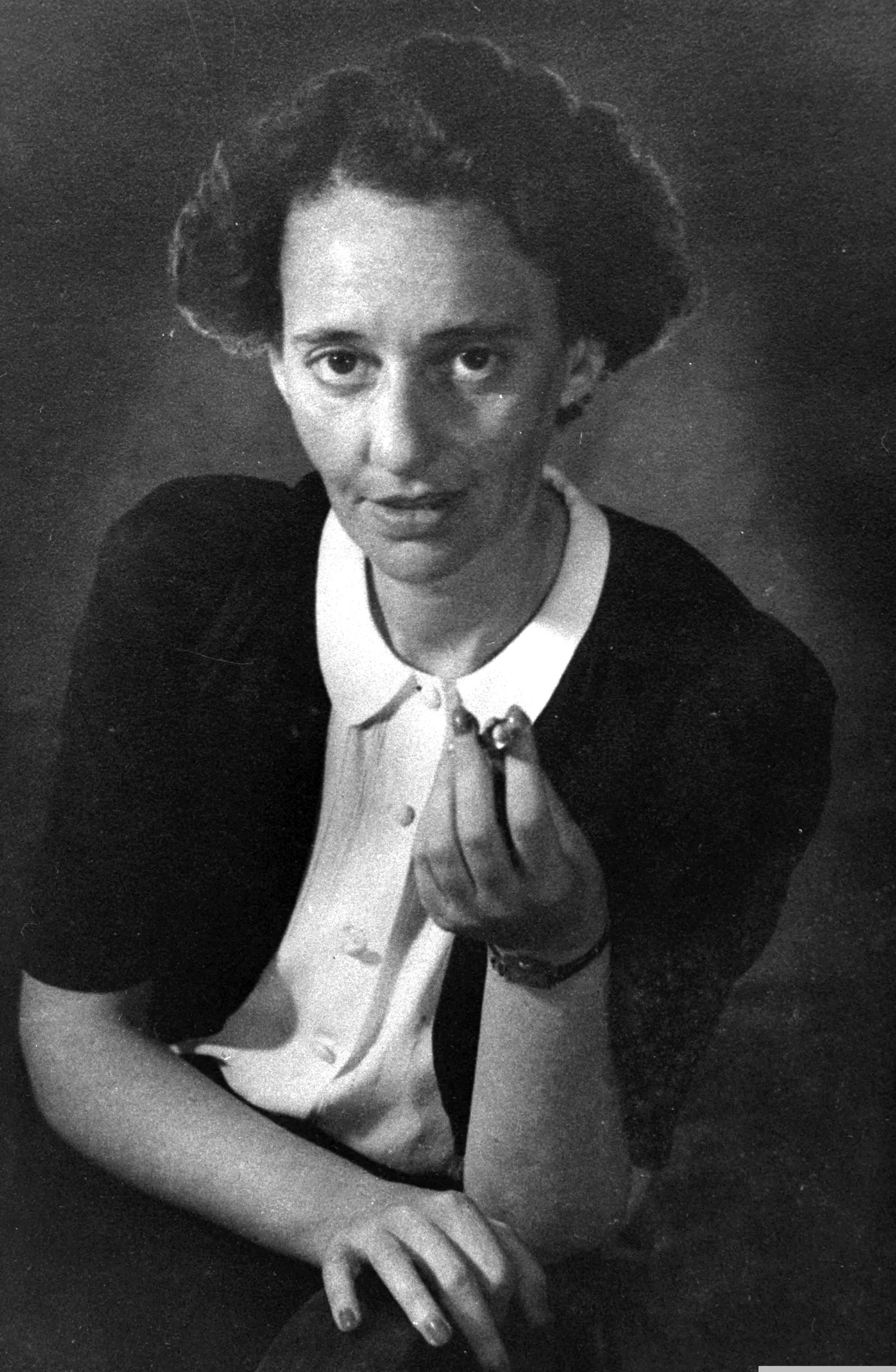
Leah Goldberg
 Israel
poet•author•playwright•translator•illustrator•comparative literature scholar
Also known as: Lea Goldberg
Birthday
May 29, 1911
Birth Sign
Gemini
Birthplace
Königsberg, East Prussia (now Kaliningrad, Russia)
Age
Died at 58
About
Leah Goldberg was a highly influential Hebrew-language poet, author, playwright, literary translator, illustrator, painter, and comparative literary researcher. She is considered one of the most significant poets of modern Israeli literature. Born on May 29, 1911, in Königsberg, East Prussia (now Kaliningrad, Russia), she immigrated to Palestine in 1935 and became a central figure in the Hebrew literary renaissance. Her prolific career spanned poetry, prose, drama, and children's literature, with a particular pioneering role in Hebrew children's poetry. She also translated significant works from world literature into Hebrew, including those by Tolstoy and Chekhov. Goldberg held a position as a professor of comparative literature at the Hebrew University of Jerusalem until her death on January 15, 1970, in Jerusalem at the age of 58. Her writings, such as the poetry collection On the Blossoming and the children's classic A Flat for Rent, are considered foundational works of Israeli literature and continue to influence Hebrew culture. Her work is marked by its lyrical depth and its engagement with European culture.
Early Life & Background
Leah Goldberg was born into a Jewish family in Königsberg, then part of German-controlled East Prussia. The family relocated to Lithuania when she was a child, settling in Kovno (now Kaunas). Her father, Abraham, was a banker, and her mother, Tzipora, was a homemaker. Growing up in a multilingual environment, she learned Russian, German, Lithuanian, and later Hebrew. She began writing poetry as a young girl, and her first published work appeared in a children's magazine when she was a teenager. After completing her secondary education, she studied at German universities, including the University of Bonn, where she pursued Semitic languages, philosophy, and German literature. She earned a doctorate in 1933 with a dissertation on the Samaritan Targum. In 1935, at the age of 24, Goldberg immigrated to Palestine, settling in Jerusalem. Before her major works achieved recognition, she taught literature and worked as a translator, gradually establishing herself in the literary circles of the Yishuv.
Career Growth
Leah Goldberg's breakthrough as a leading poet in the Hebrew literary world occurred in the late 1930s and 1940s. Her first poetry collection, Taba'ot Or (Rings of Smoke), was published in 1935, shortly after her arrival in Palestine. Over the next three decades, she published more than a dozen books of poetry, including Al ha-Priha (On the Blossoming, 1948) and Barak ba-Boker (Lightning in the Morning, 1955). She was also a pioneer in Hebrew children's literature; her book Dirah Leaskir (A Flat for Rent, 1959) became a beloved classic, and she wrote numerous poems and stories for young readers that remain widely read. Her play The Lady of the Castle (1955) was staged to acclaim and has become a staple of Israeli theater. In addition to her creative work, Goldberg was a prolific translator, bringing works by Tolstoy, Chekhov, and other European writers into Hebrew. She also served as a professor of comparative literature at the Hebrew University of Jerusalem from 1952 until her death in 1970. Goldberg received the Ruppin Prize in 1949. Her academic work and literary output made her a central figure in Israeli culture.
Career Timeline
Public Image & Style
Leah Goldberg was perceived as an intellectual and a refined, somewhat reserved figure in Israeli culture. She was part of the 'Generation of the State' in Hebrew literature, and her work was celebrated for its lyricism and its integration of European literary traditions. She was seen as a bridge between European culture and the emerging Hebrew identity. Her public persona was that of a dedicated scholar and artist, committed to both her creative work and her academic responsibilities. She was admired for her integrity and her refusal to align with any political camp. In popular memory, she is remembered as a pioneering woman in a male-dominated field, and her poetry continues to be recited in schools and at national events. Her image appears on a 1998 Israeli stamp, and a Google Doodle honored her on what would have been her 102nd birthday in 2013. Despite her European background, she never returned to Europe after settling in Palestine.
Fame & Fandom (iFAMOUS Rankings)
Leah Goldberg's enduring presence in Israeli culture is defined not by a modern, organized fan club, but by a deep, institutional devotion woven into the national education system. Her work remains a staple in schools, ensuring that generations of students encounter her poetry as a foundational part of their literary heritage. This passive yet powerful engagement manifests in annual remembrances on her birthday and the continued reverence for her multifaceted legacy as both a poet and an illustrator. While there are no viral campaigns or street-side gatherings, her status as a national icon was cemented when Google honored her centenary with a dedicated Doodle, signaling a global recognition of her cultural weight. Her 'fanbase' consists of scholars, readers, and the general public who view her as a bridge between European traditions and Hebrew identity, keeping her memory alive through curriculum and quiet appreciation rather than loud adulation. This unique form of cultural stewardship has sustained her relevance for decades after her passing. According to the iFANN Global Fame Rankings, Leah Goldberg is currently the 58th most famous person in Israel, a position reflecting her standing as one of the country's most significant literary figures.
Interesting Facts and Legends
Leah Goldberg was an accomplished illustrator who often created the artwork for her own children's books, blending her visual and textual talents seamlessly. She was a polyglot fluent in at least seven languages: Hebrew, Russian, German, Lithuanian, French, English, and Italian. Her poem 'Pine' remains one of her most famous works, frequently set to music and performed across Israel. Known for her love of cats, she often featured them in her children's stories, adding a touch of domestic warmth to her verses. Her closest relationships were with her family and a circle of literary colleagues, including the poet Yehuda Amichai, with whom she shared a warm friendship. A central story surrounding her life is the narrative of her survival from Königsberg to becoming a pillar of Israeli literature, a story often retold to highlight her resilience against the backdrop of war and loss. Another enduring story involves her 'Last Poems,' which have become a cultural touchstone for their shift toward cautious optimism amidst frightening pessimism, reflecting the turbulent times she lived through.
Notable Quotes
“A man is no more than his image, and his image is no more than his deeds.”
“The road is long, but the heart is strong.”
“I have no other land, even if my land is burning.”
Family & Personal Life
Leah Goldberg was born to Abraham and Tzipora Goldberg. Her father was a banker, and the family enjoyed a comfortable, cultured life in Lithuania. She had a younger brother, Emmanuel, who was killed fighting for the Red Army during World War II. Goldberg never married and had no children. She lived in Jerusalem for most of her adult life, in a modest apartment that became a meeting place for writers and intellectuals. She was known for her close friendships with fellow poets and scholars, and she kept a small circle of confidants. Her family's tragic losses during the Holocaust deeply affected her, and her later poetry often reflects themes of loss and memory.
Notable Connections
Relationships & Dating History
Leah Goldberg never married and had no known romantic relationships that were made public. She was a private person, and her personal life was largely kept out of the public eye. She focused on her work, her friendships, and her academic career. As of her death in 1970, she was single. Her dedication to her art and scholarship left little room for a conventional family life, and she is remembered as a solitary figure, yet one deeply connected to the cultural world around her.
- Single
Death & Aftermath
Died
January 15, 1970 (aged 58)
Death Place
Jerusalem
Cause of Death
Reported as cancer
In the final months of her life, Leah Goldberg continued to teach comparative literature at the Hebrew University of Jerusalem while managing the quiet solitude of her modest apartment in the capital. She passed away on January 15, 1970, in Jerusalem at the age of 58 after a battle with cancer. The literary community immediately recognized the loss of one of Israel's most significant cultural figures, though organized vigils or immediate chart surges are not documented in available records. Her funeral details remain obscure regarding the specific attendees or whether the service was public, yet her standing as an enigmatic and beloved poet solidified in the decades following her departure.
Posthumous recognition has included the enduring presence of her works in textbooks and musical settings, alongside a 2011 documentary titled Princess Leah screened by director Yair Qedar at the DocAviv festival that sought to uncover deeper truths about her persona. A 2015 initiative by the non-profit Shir-Ad further renewed interest in her songs, ensuring her words remained accessible to new generations. Her literary estate continues to manage the steady publication and adaptation of her poetry and plays, maintaining her status as a central pillar of modern Hebrew literature.
Net Worth (Estate Value)
$10 Million
iFANN Editorial Team estimate
Leah Goldberg's financial legacy is modest compared to modern celebrities, but her literary estate has generated steady income through royalties, reprints, and adaptations. Her books are still widely sold in Israel, particularly her children's classics, which remain in print. The rights to her works are managed by her estate, which has licensed her poetry for use in textbooks, musical settings, and public readings. While she never earned significant money during her lifetime, her posthumous earnings have grown steadily, ensuring her legacy is both cultural and financial. Her works have been translated into numerous languages, including English, German, French, and Russian, expanding her international reach. Per iFANN's editorial analysis, the total value of this enduring estate is estimated at $10 Million.
Awards Won (1)
Leah Goldberg received the Ruppin Prize in 1949, one of the highest literary honors in Israel at the time. Her work has been posthumously recognized with numerous tributes, including a Google Doodle and a commemorative stamp issued by the Israeli postal service.
1949 · Literature
For her poetic oeuvre
Known For
On the Blossoming
1948 · Poetry collection
A Flat for Rent
1959 · Children's book
The Lady of the Castle
1955 · Play
Keywords
Sources
Quick Facts
- Profession
- poet, author, playwright, translator, illustrator, comparative literature scholar
- Born
- May 29, 1911
- Birthplace
- Königsberg, East Prussia (now Kaliningrad, Russia)
- Died
- January 15, 1970
- Death Place
- Jerusalem
- Gender
- Female
- Birth Sign
- Gemini
- Education
- University of Bonn, doctorate in Semitic languages and German literature
- Awards
- Ruppin Prize (1949)
Personal Details
- Education
- German universities (studied Semitic languages, philosophy, and German literature); later earned a doctorate from the University of Bonn
Frequently Asked Questions
Who was Leah Goldberg?
When and where was Leah Goldberg born?
When and where did Leah Goldberg die?
What is Leah Goldberg best known for?
What is Leah Goldberg's net worth in 2026?
Similar People
Join the community
fans discussing