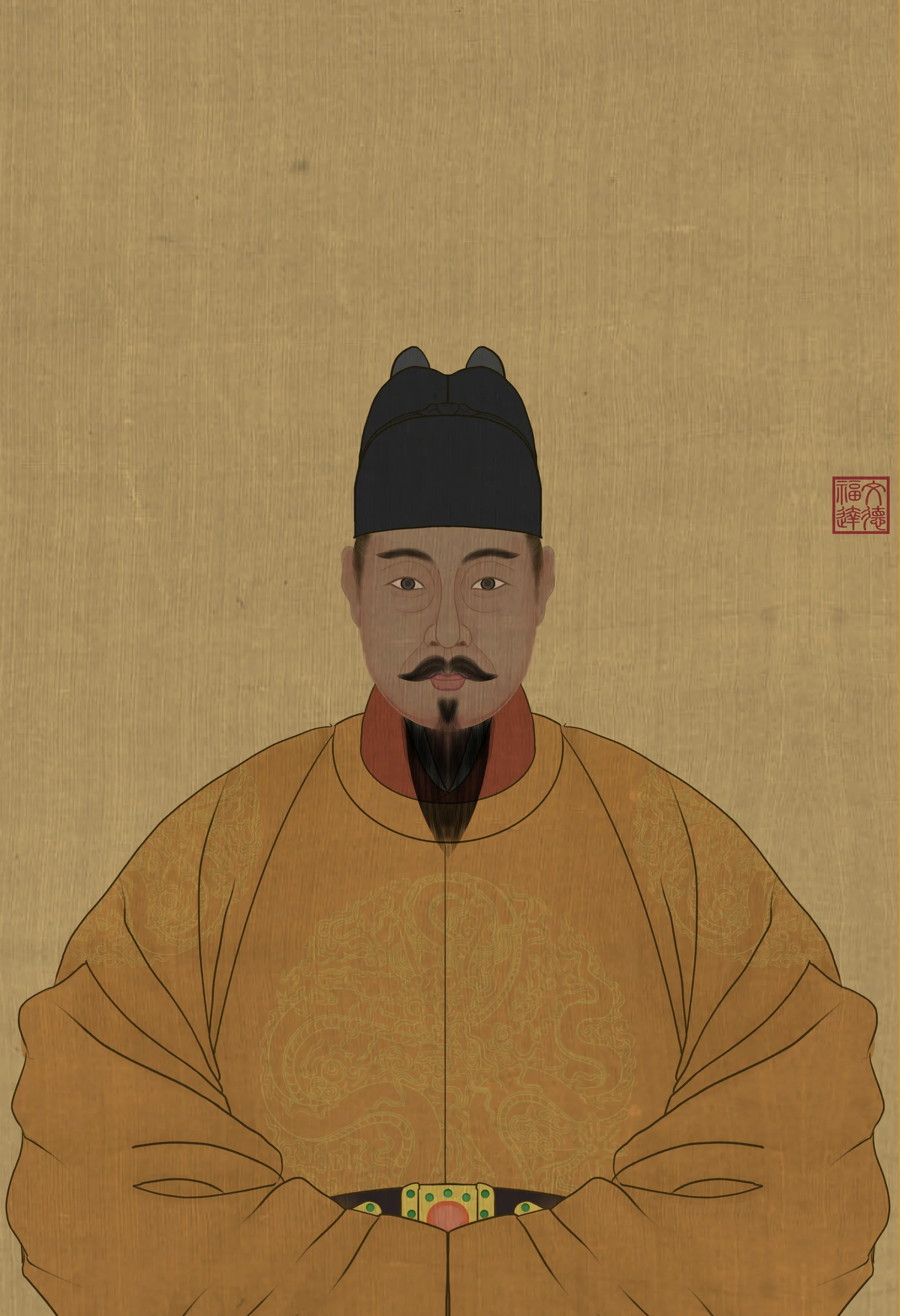
Lê Thánh Tông
 Vietnam
Also known as: Lê Hạo, Prince Tu Thanh, King Le Thanh Tong
Birthday
1442
Birth Sign
Aries
Birthplace
Đông Kinh (modern-day Hanoi)
Age
Died at 55
About
Lê Thánh Tông stands as the fifth and most revered emperor of the Later Lê Dynasty, ruling Vietnam from 1460 until his death in 1497. Born Lê Hạo, he is universally celebrated by historians as the greatest ruler in Vietnamese history, presiding over a golden age known as the Hồng Đức era. His legacy is defined by a unique fusion of military conquest, rigorous legal reform, and a flourishing of literature that established him as the archetype of a scholar-king. He significantly expanded the nation's borders through decisive campaigns and created a sophisticated administrative system based on Confucian principles that shaped Vietnamese governance for centuries. Unlike many rulers who relied solely on force, Lê Thánh Tông cultivated deep intellectual pursuits, composing over 100 poems himself and founding the Tao Đàn literary society. His influence endures not just in the territorial integrity of modern Vietnam but in its educational systems and legal codes, making him a central figure in national identity that symbolizes the ideal balance between the warrior and the poet.
Early Life & Background
Born in 1442 into the royal family of the Later Lê Dynasty, Lê Hạo was the son of Emperor Lê Thái Tông and Empress Nguyễn Thị Anh. His early years were spent within the confines of the imperial palace in Đông Kinh (modern-day Hanoi), where he received an education steeped in Confucian classics. While most royal heirs focused heavily on martial training, Lê Hạo distinguished himself by mastering poetry, calligraphy, and the intricacies of statecraft from a young age. This dual focus set him apart from his contemporaries and prepared him for the complex political landscape awaiting him. The path to the throne was not smooth; the political climate became turbulent following the assassination of his half-brother, King Lê Nghi Dân, in 1459. A coup d'état had removed the previous king, creating a power vacuum that threatened the stability of the dynasty. Despite not being the initial heir apparent, Lê Hạo was chosen by the court due to his reputation for wisdom and capability. He did not merely inherit the crown; he seized it through decisive political maneuvering, leading a faction to overthrow the usurper. This successful consolidation of power before his formal ascension in 1460 demonstrated the strategic acumen that would later define his thirty-eight-year reign.
Career Growth
Upon ascending the throne in 1460, Lê Thánh Tông immediately began a series of reforms that transformed the kingdom. Between 1463 and 1466, he implemented the Hồng Đức Code (Quốc triều hình luật), Vietnam's first comprehensive written legal code. Based on Confucian principles, this document standardized laws across the kingdom and replaced arbitrary rule with a structured legal framework. In 1466, he reorganized the country into 13 districts, known as thừa tuyên, which centralized administration and significantly reduced the power of local aristocrats. His military campaigns were equally decisive; in 1471, he led a massive campaign against the Champa Kingdom, capturing the capital Vijaya and annexing vast territories in southern Vietnam. This expansion shifted the center of gravity southward and effectively ended the power of the Cham states. Culturally, he established the Bát Khoa system in 1485 to refine the civil service examinations and ordered the erection of stelae at the Temple of Literature in 1484 to record the names of top scholars. He also founded the Tao Đàn literary society, gathering scholars to compose poetry together. These actions solidified the Hồng Đức Prosperity, a period of economic growth and social stability that lasted nearly four decades, shifting the power base from hereditary aristocracy to educated scholar-officials.
Career Timeline
Public Image & Style
Lê Thánh Tông is portrayed as the perfect blend of the warrior and the scholar, a man of action who could conquer enemies and a poet who could capture the beauty of the land. Media portrayals in Vietnam focus on his wisdom, fairness, and dedication to the welfare of the people. He is seen as the epitome of the enlightened monarch, a leader who combined military might with cultural refinement. His image is often invoked in discussions about leadership and education, serving as a model for the ideal ruler who values intellect over birthright. The reverence for his memory is reflected in the countless streets, schools, and public buildings named after him across the country. Annual commemorations and visits to his tomb, Thanh Lăng, serve as acts of reverence similar to pilgrimages, while his name is frequently used in proverbs regarding leadership. In 2026, he remains a central figure in Vietnamese national identity, with his image featured prominently in textbooks and cultural festivals celebrating the Hồng Đức era.
Fame & Fandom (iFAMOUS Rankings)
In the September 2026 cycle of the iFANN Global Fame Rankings, Lê Thánh Tông maintains a stable position among the most recognized figures of his heritage. He is currently ranked as the 24th most famous person in Vietnam, holding steady from the previous cycle. Furthermore, within the broader scope of national origin, he holds the distinction of being the 73rd most famous person from Vietnam, maintaining stability since the last update. These placements confirm his status as a figure of enduring national importance rather than fleeting internet fame. Regarding his audience, no formal organization or specific name has been attached to his admirers; the fanbase exists without an official designation, operating instead through general cultural reverence for the monarch who ruled Đại Việt for nearly four decades. His 'fanbase' consists of Vietnamese citizens, historians, and students who revere him as the epitome of the 'enlightened monarch,' with annual rituals at his tomb and the Temple of Literature acting as collective expressions of this admiration.
Interesting Facts and Legends
Lê Thánh Tông holds the record for the longest reign of any emperor in Vietnamese feudal history, governing for 38 years. He was a prolific poet who wrote over 100 poems in Nôm, the Vietnamese script, making him one of the earliest and most significant figures in the language's literary canon. One of his most enduring legacies is the creation of 82 doctoral steles at the Temple of Literature, which list the names of the top scholars from the national exams, a tradition that continues to be a powerful symbol of educational excellence today. His 1471 military campaign is often cited as a moment of decisive brilliance that permanently altered the map of Southeast Asia. Despite his absolute power, he is remembered for a benevolent style of rule that prioritized the welfare of the people and the advancement of learning. Specific physical measurements such as height are not recorded in historical sources, though descriptions emphasize his scholarly appearance. His poetic works provide insight into his philosophy, including sentiments like 'The king must be like water: soft yet able to cut through stone.'
Notable Quotes
“The king must be like water: soft yet able to cut through stone.”
“A ruler who loves learning will never lose his people.”
Family & Personal Life
As a monarch of the 15th century, Lê Thánh Tông's family life was governed by the imperial harem system rather than modern romantic conventions. His principal wife was Nhu Huy Hoàng hậu, who served as Empress and was the mother of his heir, Prince Lê Tụng, who succeeded him as Emperor Hiến Tông. Their relationship was one of mutual respect and political partnership, typical of imperial consorts who managed the inner court. He also maintained relationships with several favored concubines who contributed to the imperial lineage. Nguyễn Thị Hằng bore him Prince Lê Tuấn, while Nguyễn Kính Phi and Phạm Minh Phi also bore children for the emperor. These unions were strictly formalized within the context of dynastic succession and court politics, ensuring a robust line of heirs. He died without remarriage, leaving behind multiple sons who would vie for succession after his passing, reflecting the complex dynamics of the imperial household.
Notable Connections
Relationships & Dating History
As a monarch of the 15th century, Lê Thánh Tông's personal relationships were strictly formalized within the context of dynastic succession and court politics. He did not have a dating history in the contemporary sense, but his marital alliances were significant for political stability and lineage. His principal wife was Nhu Huy Hoàng hậu, the Empress, who remained his partner throughout his reign until his death. She was the mother of his heir, Prince Lê Tụng. He also maintained relationships with several concubines, including Nguyễn Thị Hằng and Nguyễn Kính Phi, who bore him additional children, alongside Phạm Minh Phi. There were no divorces or separations, as these concepts did not apply to the emperor's primary marriages in the same way they do today. He died without remarriage, leaving behind a large family of sons who would vie for succession after his passing. His relationships were characterized by the rigid hierarchy of the imperial harem, where every union served the purpose of securing the dynasty's future.
- MarriedNhu Huy Hoàng hậu1460 - 1497Principal wife and Empress, mother of Emperor Hiến Tông
- ConsortNguyễn Thị Hằng1460 - 1497Favored concubine who bore Prince Lê Tuấn
- ConsortNguyễn Kính Phi1460 - 1497Prominent consort contributing to the imperial lineage
Death & Aftermath
Died
1497-01-01 (aged 55)
Death Place
Đông Kinh, Vietnam
Cause of Death
Natural causes due to illness
Lê Thánh Tông died on January 1, 1497, inside the imperial palace of Đông Kinh at the age of 55. Historical records describe his passing as a natural death resulting from illness associated with old age following a long period of governance, with no evidence of foul play or sudden trauma. His death was met with profound national mourning across Đại Việt, where he was revered as a wise monarch and a preeminent literary figure whose works, including the Quốc âm thi tập, remained central to the cultural identity of the realm. Funeral rites followed traditional imperial protocol, culminating in his interment at Thanh Lăng near the capital, where the court and populace participated in the solemn observances required for a sovereign of his stature. In the centuries since, his legacy has been preserved through extensive commemoration, with educational institutions such as Lê Thánh Tông High School and major thoroughfares bearing his name to honor his contributions to statecraft and poetry. Modern exhibitions continue to highlight his calligraphy and literary masterpieces, while the Temple of Literature stands as a permanent reflection of his enduring influence on Vietnamese history. The immediate transition of power to his son, Lê Tụng, was smooth due to the strong institutional framework he had built.
Net Worth (Estate Value)
$0
iFANN Editorial Team estimate
As a historical figure from the 15th century, Lê Thánh Tông had no net worth in the modern sense. However, the value of his estate and the economic output of his reign are estimated to be incalculable in terms of GDP contribution to the region's development. The wealth of his dynasty during the Hồng Đức era is described in historical records as a period of immense prosperity, with full granaries, thriving trade, and a robust tax system. Any modern valuation of his estate refers to the cultural and historical assets he left behind, which generate revenue through tourism, academic research, and cultural preservation efforts in Vietnam today. iFANN currently estimates the cultural value of his legacy to be substantial, though no monetary figure applies to a deceased monarch. The 'wealth' of his era included a shift to a new class of educated scholar-officials, creating a bureaucratic backbone that sustained the economy for five centuries, a feat unmatched in the region's history.
Awards & Accolades
View 6 records, honours and achievementsKnown For
Hồng Đức Code
1463 · Creator of Vietnam's first comprehensive legal code
Conquest of Champa
1471 · Military campaign expanding Vietnamese territory
Quốc âm thi tập
1490 · Collection of Vietnamese poetry
Keywords
Sources
Quick Facts
- Profession
- Emperor and Poet
- Born
- 1442
- Birthplace
- Đông Kinh (Hanoi)
- Died
- January 1, 1497
- Gender
- Male
- Spouse
- Nhu Huy Hoàng hậu, Nguyễn Thị Hằng, Nguyễn Kính Phi, Phạm Minh Phi
Personal Details
- Full Name
- Lê Hạo
- Spouse
- Nhu Huy Hoàng hậu, Nguyễn Thị Hằng, Nguyễn Kính Phi, Phạm Minh Phi
- Children
- Prince Lê Tụng (later Emperor Hiến Tông), Prince Lê Tuấn, and several other sons
- Education
- Imperial Palace education in Confucian classics, poetry, and statecraft
Frequently Asked Questions
Who was Lê Thánh Tông?
When did Lê Thánh Tông die?
What was Lê Thánh Tông's biggest achievement?
Was Lê Thánh Tông a poet?
Where is Lê Thánh Tông buried?
Similar People
Join the community
fans discussing