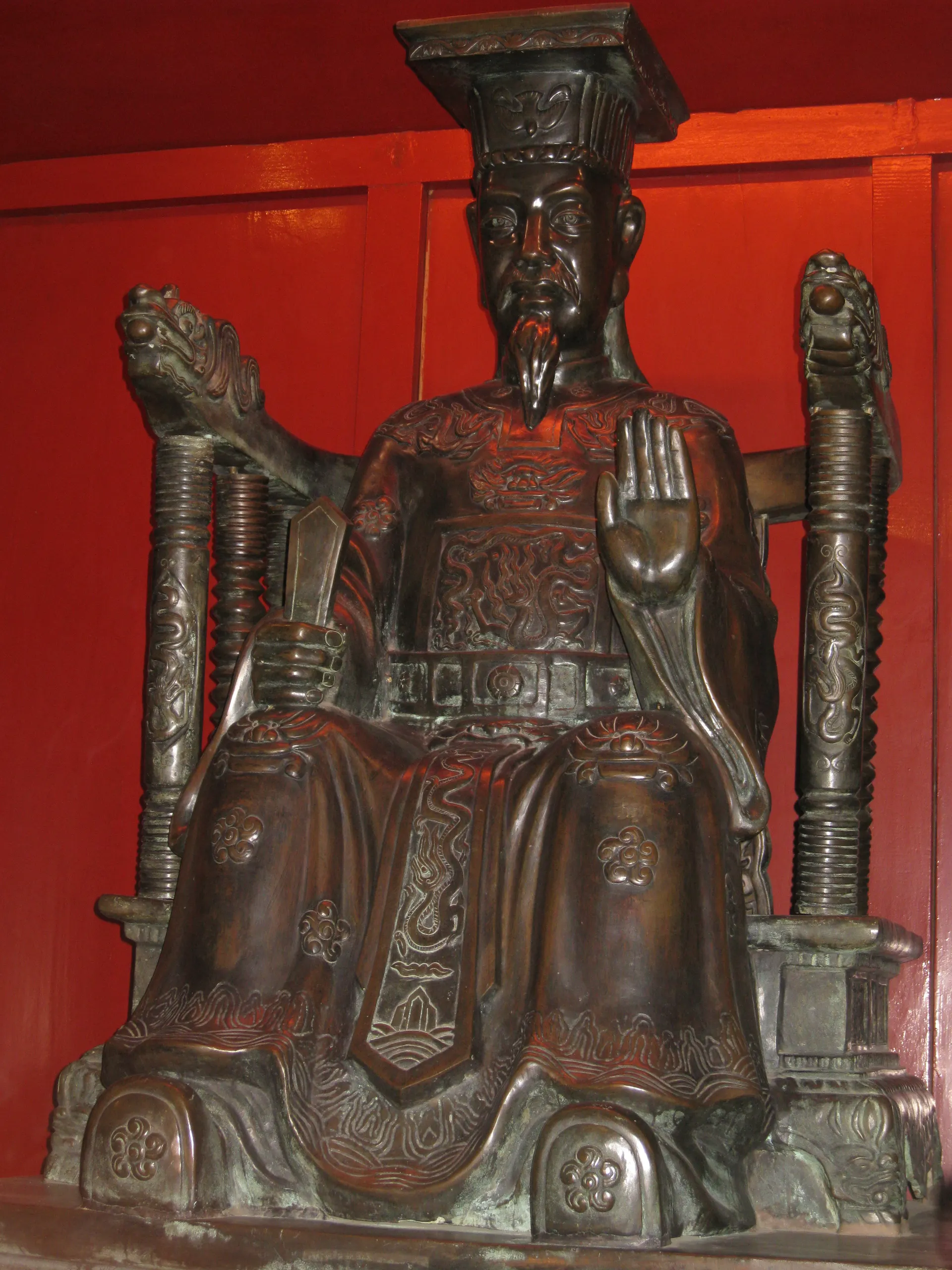
Lý Thánh Tông
 Vietnam
Also known as: Lý Nhật Tôn
Birthday
March 19, 1023
Birth Sign
Pisces
Birthplace
Vietnam
Age
Died at 48
About
Lý Thánh Tông was the third emperor of the Lý dynasty, ruling Đại Việt from 1054 until his death in 1072. Born Lý Nhật Tôn, he is remembered as a reformer who balanced military conquest with cultural and agricultural development. His most enduring legacy is the Temple of Literature in Hanoi, founded in 1070, which became Vietnam's first national university. Under his rule, Đại Việt expanded southward after successful campaigns against Champa, pushing the border to what are now Quảng Bình and Quảng Trị provinces. Chinese court records note that he boldly claimed imperial status, a move that challenged China's worldview and helped set the stage for the Song–Việt war in the 1070s.
Early Life & Background
Lý Nhật Tôn was born on 19 March 1023 into the imperial family of the Lý dynasty, the son of Emperor Lý Thái Tông. As a prince, he received a Confucian classical education alongside military training, preparing him for succession. Historical records offer few details of his childhood, but he grew up in the capital of Thăng Long (modern-day Hanoi), immersed in the court's blend of Buddhist and Confucian traditions. He ascended the throne in 1054 upon his father's death, adopting the temple name Thánh Tông. His early reign focused on internal consolidation, with a philosophy of "taking people as the root" that emphasized agricultural development and tax relief.
Career Growth
Lý Thánh Tông's reign, spanning nearly eighteen years, was marked by both reform and expansion. In 1069, he led a successful military campaign against Champa, capturing the Cham king and forcing territorial concessions that extended Đại Việt's border southward to the regions of Quảng Bình and Quảng Trị. Two years later, in 1070, he founded the Temple of Literature in Hanoi, initially to educate the royal family. This institution became the country's first national university and remains a symbol of Vietnamese scholarship. His bold diplomatic stance toward China, claiming imperial status equal to that of the Chinese emperor, was a direct challenge to the Chinese worldview and is cited as a precursor to the Song–Việt war that erupted in the 1070s, shortly after his death.
Career Timeline
Public Image & Style
Lý Thánh Tông is portrayed in Vietnamese historiography as a wise, compassionate, and effective ruler, a reformer who prioritized the welfare of his people over military glory, though he was also capable on the battlefield. His image is that of a Confucian-Buddhist ideal: a monarch who built schools, softened laws, and expanded his kingdom. His legacy is institutional rather than personal; the Temple of Literature stands as his enduring monument. There is no modern fandom or fan culture surrounding him in the contemporary sense, but he is celebrated in Vietnamese school curricula, historical documentaries, and heritage tourism.
Fame & Fandom (iFAMOUS Rankings)
Across the vast tapestry of Vietnamese history, Lý Thánh Tông stands as a figure whose influence transcends his era, currently holding the distinction of being the 90th most famous person in Vietnam, a position that reflects a slight dip from his previous standing. This placement within the iFANN Global Fame Rankings underscores a legacy measured not by fleeting trends but by deep-rooted cultural permanence and enduring national identity. While modern celebrity metrics often chase the noise of the moment, this ranking captures the quiet power of a ruler who shaped the very soul of a nation.
Unlike contemporary idols with organized armies of followers, Lý Thánh Tông commands a different kind of devotion. There is no formal fandom name or registered fan club dedicated to his memory; instead, his audience consists of historians, students, and citizens who revere him as a national hero. His supporters do not gather for chart pushes or birthday billboards, nor do they engage in viral rituals on social media platforms. The relationship between the emperor and the public is one of historical veneration rather than pop-culture adoration. Visitors flock to sites like the Temple of Literature and the Four Sentries of Thăng Long to connect with his legacy, treating these locations as sacred spaces of pilgrimage rather than tourist attractions driven by fan campaigns. He cannot interact with his admirers, having passed away in 1072, yet his presence remains palpable through the institutions he built and the laws he softened. This unique dynamic ensures that his fame is stable and timeless, rooted in the collective memory of a people who see him as the architect of their golden age.
Interesting Facts and Legends
His personal name, Lý Nhật Tôn, carries the distinct pronunciation [lǐ ɲə̀t ton], a sound that echoes through centuries of Vietnamese historiography where he is celebrated as a king of compassion known for lenient policies. A beloved legend tells how his wife, Ỷ Lan, was discovered as a peasant woman near the capital during an imperial outing; she rose from humble origins to become one of the dynasty's most powerful women. The Temple of Literature he founded in 1070 later saw expansion in 1076 under his son, Lý Nhân Tông, who added the Imperial Academy to formalize it as a university.
Beyond these recorded facts, stories of his reign have woven themselves into the cultural fabric. One verified moment marks his bold decision in 1054 to rename the nation from Đại Cồ Việt to Đại Việt, a declaration of sovereignty that cemented the modern identity of Vietnam. Folklore also preserves his reputation as the most benevolent king, with tales of his kindness spreading long after his death. The physical remnants of his capital, particularly the Four Sentries of Thăng Long, remain iconic landmarks where visitors still gather today, keeping the spirit of his rule alive in the minds of those who walk among them.
Family & Personal Life
Lý Thánh Tông had two documented consorts. His primary empress, Thượng Dương, had no biological children. His other consort, Ỷ Lan, originally a peasant woman, bore his only son, Lý Càn Đức, who became Emperor Lý Nhân Tông. After her husband's death, Ỷ Lan served as regent for her young son and was known for her capable governance, including agricultural reforms and temple construction. His father, Lý Thái Tông, was the second emperor of the Lý dynasty.
Notable Connections
Lý Thánh Tông was associated with his father, Lý Thái Tông, the second emperor of the Lý dynasty, whom he succeeded. His consort Ỷ Lan became a powerful regent after his death, and his son Lý Nhân Tông expanded the Temple of Literature. His primary empress, Thượng Dương, was forced to die after his death, as was the custom for imperial consorts without a biological son on the throne.
Relationships & Dating History
Lý Thánh Tông had two documented consorts. His primary empress, Thượng Dương, had no biological children and was forced to die after his death when his successor, the son of the other consort, ascended the throne. His other consort, Ỷ Lan, originally a peasant woman, became his concubine and later his consort, bearing his only son, Lý Càn Đức, who became Emperor Lý Nhân Tông. After her husband's death, Ỷ Lan served as regent for her young son and was known for her capable governance.
- MarriedEmpress Mother Thượng Dương1054 - 1072Primary empress; had no biological children and was forced to die after her husband's death.
- MarriedỶ Lan1054 - 1072Originally a peasant woman; bore his only son, Lý Càn Đức, who became Emperor Lý Nhân Tông.
Death & Aftermath
Died
February 1, 1072 (aged 48)
Death Place
Thăng Long
Cause of Death
Natural causes due to old age
The final chapter of Lý Nhật Tôn's reign unfolded within the quiet corridors of the imperial palace in Thăng Long, where the third emperor of the Lý dynasty spent his last days as an active ruler before succumbing to illness. On February 1, 1072, corresponding to the first day of the first lunar month in the year Nhâm Tý, he passed away at the age of forty-eight or forty-nine from natural causes associated with old age, a conclusion drawn from the seamless narrative found in the Đại Việt sử ký toàn thư and other Vietnamese chronicles. His son, Lý Càn Đức, ascended the throne immediately at the tender age of seven, with Empress Dowager Dương Vân Nga stepping into the role of regent to guide the young emperor through a period of stability.
Contemporary accounts and later historical records painted the late emperor as a benevolent figure whose rule fostered a hundred-year prosperous era, prompting tributes from the Buddhist clergy and Confucian scholars who honored his deep patronage of both faiths. Funeral rites followed strict imperial traditions within the capital region, ensuring the continuity of the dynasty without public spectacle beyond the high officials present. Today, his legacy endures through schools and streets bearing his name across Vietnam, including Lý Thánh Tông High School in Ho Chi Minh City, cementing his status as a foundational figure in the nation's cultural and educational history.
Net Worth (Estate Value)
$0
iFANN Editorial Team estimate
iFANN currently estimates the net worth of Lý Thánh Tông at $0. As an 11th-century emperor, his estate cannot be calculated in modern monetary terms, and no posthumous revenue streams or estate managers exist in the contemporary sense. His primary wealth lies not in liquid assets but in the historical and cultural patrimony he left behind, specifically the territorial expansion achieved for Đại Việt and the enduring institution of the Temple of Literature. These elements form a legacy of immeasurable value that defies financial quantification.
Awards & Accolades
View 2 records, honours and achievementsKnown For
Temple of Literature
1070 · Founder
Campaigns against Champa
1069 · Military leader
Keywords
Sources
Quick Facts
- Born
- +1023-03-19
- Birthplace
- Vietnam
- Died
- +1072-02-01
- Gender
- Male
- Spouse
- Ỷ Lan, Empress Mother Thượng Dương
- Birth Sign
- Pisces
Personal Details
- Full Name
- Lý Nhật Tôn
- Spouse
- Ỷ Lan, Empress Mother Thượng Dương
- Children
- Lý Nhân Tông (Lý Càn Đức)
Frequently Asked Questions
Lý Thánh Tông là ai?
Lý Thánh Tông có bao nhiêu con?
Lý Thánh Tông mất năm nào?
Văn Miếu được xây dựng năm nào?
Lý Thánh Tông đánh Chăm Pa khi nào?
Similar People
Join the community
fans discussing