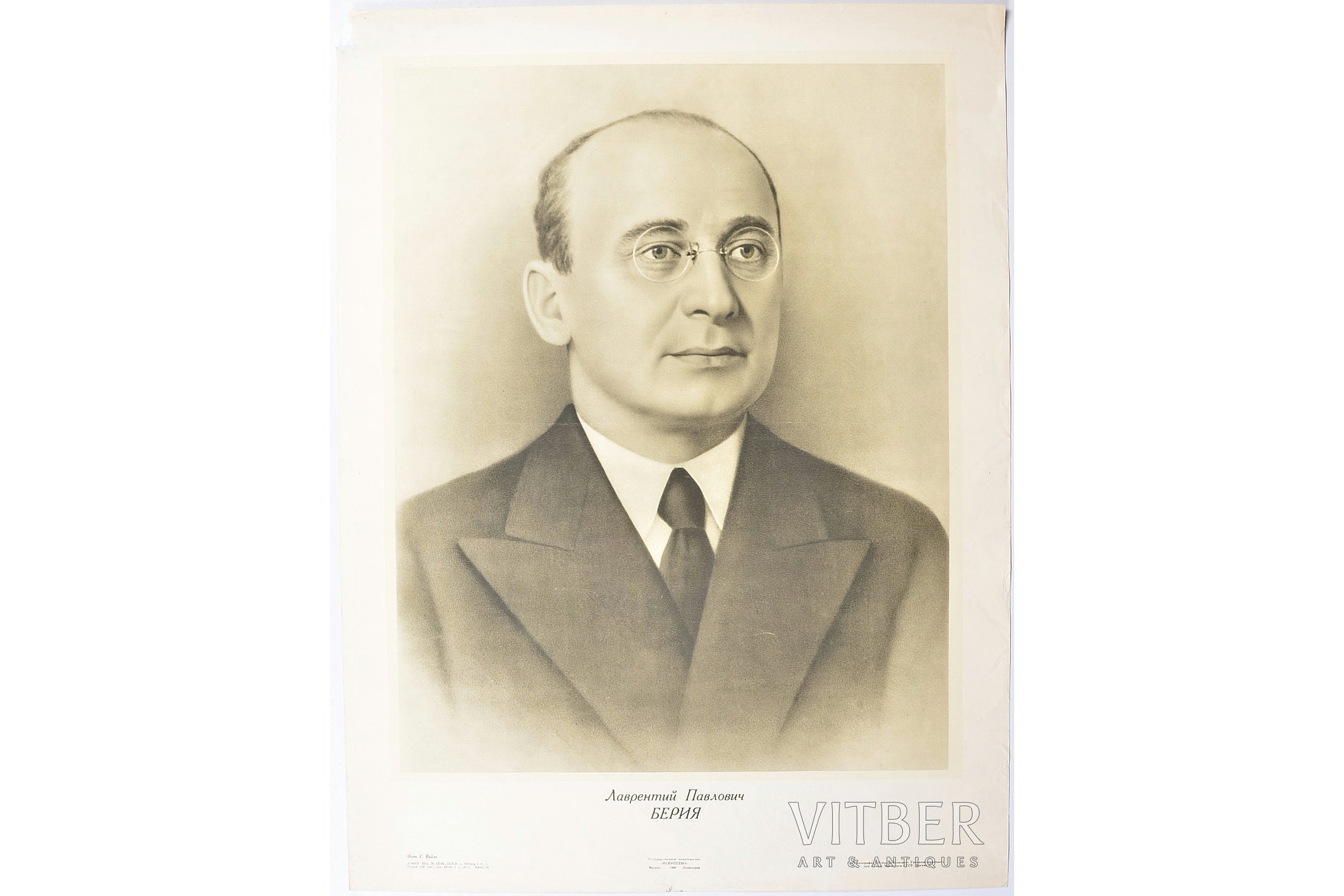
Lavrentiy Beria
Also known as: Lavrenty Pavlovich Beria, Lavrenty Beria
Birthday
March 29, 1899
Birth Sign
Pisces
Birthplace
Merkheuli, Kutaisi Governorate, Russian Empire
Age
Died at 54
Height
5 ft 7 in (170 cm)
About
Lavrentiy Pavlovich Beria was a Soviet politician and the head of the NKVD, the Soviet secret police, from 1938 to 1945. An ethnic Georgian born in Merkheuli near Sukhumi in the Russian Empire's Kutaisi Governorate, he is historically categorized as one of the most influential and feared figures of the Stalinist era. Unlike modern celebrities or pop culture icons, Beria's career was defined by state terror, the expansion of the Gulag system, and the supervision of the Soviet atomic bomb project, rather than commercial success or artistic achievement.
Beria enlisted in the Cheka in 1920 and quickly rose through its ranks. Described by Joseph Stalin as his "own Himmler", his ascent marked the end of Stalin's Great Purge carried out by Nikolai Yezhov, whom Beria purged. After the war, he oversaw the Soviet atomic bomb project and was made a Marshal of the Soviet Union in 1945. He held significant prestige among the scientific community but also deepened his ties to the military-industrial complex.
His legacy is defined by the immense human suffering caused by his policies and the consolidation of Stalin's dictatorship. He served on the State Defense Committee during World War II and was instrumental in organizing the Katyn massacre of Polish officers in 1940. By June 1953, Beria was removed from power in a coup organized with the support of his colleagues in the Soviet leadership and Marshal Georgy Zhukov. He was arrested, tried for treason and other offenses, and ultimately executed on December 23, 1953.
Early Life & Background
Lavrenty Pavlovich Beria was born on March 29, 1899 (O.S. 17 March), in the village of Merkheuli near Sukhumi in the Russian Empire's Kutaisi Governorate. His father was a wealthy Georgian landlord and his mother was of mixed Georgian and Armenian descent. Beria attended school in Kutaisi before enrolling at the Baku Polytechnic Institute to study engineering. His education was interrupted by political activism, leading him to join the Bolshevik movement in 1917.
In 1920, he enlisted in the Cheka, the Bolshevik secret police. His early career involved ruthless suppression of counter-revolutionaries in the Caucasus, where he quickly distinguished himself through loyalty to the party line and effective administration of terror. He served in various administrative and security roles in Transcaucasia, consolidating Soviet control over Georgia, Armenia, and Azerbaijan. By 1931, he had been appointed First Secretary of the Communist Party of Abkhazia. These years laid the foundation for his rapid rise within the Soviet security apparatus, setting the stage for his eventual appointment to lead the NKVD.
Career Growth
Beria's trajectory was marked by rapid promotion within the Soviet security apparatus. In 1938, he was summoned to Moscow by Joseph Stalin to become Deputy Head of the NKVD. Within months, he replaced Nikolai Yezhov as the full head of the NKVD, effectively ending the Great Purge's most violent phase while continuing the repression of perceived enemies. During World War II, Beria served on the State Defense Committee. He oversaw the mobilization of millions of Gulag prisoners for wartime production and managed the secret detention facilities known as sharashkas for scientists.
In 1945, he was promoted to Marshal of the Soviet Union and became a full member of the Politburo in 1946. From 1945 to 1953, he oversaw the Soviet atomic bomb project, which successfully tested its first nuclear device in 1949. This role earned him the title of Hero of Socialist Labour multiple times, along with several Orders of Lenin and the Stalin Prize. He was also instrumental in organizing the Katyn massacre of Polish officers in 1940 and overseeing mass deportations of ethnic minorities from the Caucasus and occupied territories.
After Stalin's death in March 1953, Beria briefly led the country as part of a triumvirate alongside Georgy Malenkov and Vyacheslav Molotov. He attempted to reform the regime by releasing victims of the Doctors' Plot and proposing an amnesty that freed over 1.2 million Gulag inmates. However, these reforms threatened his colleagues, leading to his arrest in June 1953 and subsequent execution later that year.
Career Timeline
Public Image & Style
Beria is universally regarded as a villain in historical narratives. Public perception is one of infamy. He is featured in documentaries, academic texts, and films as the embodiment of totalitarian evil. There are no fan campaigns, social media followings, or merchandise related to him. His image is strictly negative, representing the darkest aspects of the Soviet regime. He holds no place in international halls of fame or Western award ceremonies. His legacy is defined by the immense human suffering caused by his policies and the consolidation of Stalin's dictatorship.
Fame & Fandom (iFAMOUS Rankings)
iFANN has not yet collected fame data for this person. He does not appear on the September 2026 iFAMOUS Rankings flagship list. Beria does not have a fandom. The fanbase has no formal name documented in iFANN data. He is universally regarded as a villain in historical narratives. Public perception is one of infamy. He is featured in documentaries, academic texts, and films as the embodiment of totalitarian evil. There are no fan campaigns, social media followings, or merchandise related to him. His image is strictly negative, representing the darkest aspects of the Soviet regime.
Interesting Facts and Legends
Lavrentiy Beria was known for his cold, pragmatic, and often threatening rhetoric. One attributed quote regarding his interrogation tactics was "I know you are innocent, but I will prove you guilty." Another reflection of his view on totalitarian control was "The people are like clay; we mold them as we please." Regarding the urgency of the Soviet nuclear program, he famously stated, "We must have it, and we must have it now." Historical accounts suggest that during his trial, Beria pleaded for his life, claiming he was loyal to the party and that his actions were for the good of the state, but these pleas were ignored.
He was noted for his distinctive style, often wearing heavy fur coats and hats, and having a thick mustache. Physical descriptions note he stood approximately 1.70 meters (5 ft 7 in) tall with a heavy-set build. He was frequently seen in formal military attire adorned with numerous medals. The 2017 film The Death of Stalin, starring Simon Russell Beale, popularized the image of Beria as a bumbling yet terrifying figure, cementing his cultural mythology in the West. Recent discussions in 2023 and 2024 have drawn parallels between his methods and modern authoritarian tactics, using his name as a cautionary example of unchecked power.
Notable Quotes
“I know you are innocent, but I will prove you guilty.”
“The people are like clay; we mold them as we please.”
“We must have it, and we must have it now.”
Family & Personal Life
Beria was married to Nino Gegechkori, also known as Nino Gogolishvili or Gegechkori. They had several children, including Sergo Beria, who later became a historian and wrote Beria: My Father Inside Stalin's Kremlin, and Otar Beria. The marriage lasted until his death in 1953. There are no records of divorce or separation prior to his execution. Historical consensus confirms that Beria used his position to sexually abuse dozens of women and girls, often targeting the wives of political rivals or subordinates. These acts were part of his method of maintaining absolute control and humiliating the elite, rather than romantic relationships. No specific names of victims other than his wife are widely publicized in open sources due to the nature of the crimes and the secrecy of the regime.
Notable Connections
Relationships & Dating History
Beria was married to Nino Gegechkori. They had several children, including Sergo Beria and Otar Beria. The marriage lasted until his death in 1953. There are no records of divorce or separation prior to his execution. Historical consensus confirms that Beria used his position to sexually abuse dozens of women and girls, often targeting the wives of political rivals or subordinates. These acts were part of his method of maintaining absolute control and humiliating the elite, rather than romantic relationships. No specific names of victims other than his wife are widely publicized in open sources due to the nature of the crimes and the secrecy of the regime.
- MarriedNino Gegechkoriunknown - 1953Marriage lasted until his death; they had several children including Sergo and Otar.
Death & Aftermath
Died
December 23, 1953 (aged 54)
Death Place
Moscow, Russian SFSR, Soviet Union
Cause of Death
Execution by firing squad
Following Joseph Stalin's death in March 1953, Lavrentiy Beria briefly rose to prominence as the head of the Ministry of Internal Affairs and a First Deputy Chairman of the Council of Ministers. In a paradoxical turn, he attempted to reform the regime he helped build, releasing victims of the Doctors' Plot and proposing an amnesty that freed over 1.2 million Gulag inmates. He also advocated for détente with the West and better treatment of national minorities. However, these reforms threatened the other members of the Soviet leadership, particularly Nikita Khrushchev, Georgy Malenkov, and Vyacheslav Molotov. On June 26, 1953, during a Presidium meeting, Beria was arrested by Marshal Georgy Zhukov and armed guards acting on behalf of his colleagues.
A special session of the Supreme Court of the USSR convened on December 23, 1953, to deliver a verdict that found him guilty of high treason, espionage, terrorism, and attempts to restore capitalism. The court sentenced him to death by firing squad, an immediate execution that followed the closed-door proceedings. This legal ruling concluded the detention of the former head of the Soviet secret police. Public reaction was characterized by silence and fear rather than tributes, as the event was treated as a necessary cleansing of the party apparatus while his name was effectively erased from public records for decades. No public funeral service was held, and he was buried in an unmarked grave within a prison cemetery near Moscow consistent with the treatment of other executed officials. The 2025 documentary Lavrentiy Beria: Stalin's Executioner further explores his role in the Soviet terror machine, reinforcing his status as a symbol of state violence.
Net Worth (Estate Value)
$0
iFANN Editorial Team estimate
As a Soviet official, Beria did not accumulate personal wealth in the capitalist sense. While he controlled vast resources and had access to luxury goods, his financial status cannot be calculated in dollars or euros. He did not own private real estate in the market sense; he lived in state-provided dachas and mansions. Upon his execution, all his assets were confiscated by the state. There is no estate value, posthumous revenue, or managing entity for his estate. Any claims of a net worth are historically inaccurate for this subject.
Awards Won (4)
Beria received several Soviet state distinctions including the title of Marshal of the Soviet Union in 1945. He was awarded the Hero of Socialist Labour multiple times for his work on the atomic bomb project and industrial achievements. He also received the Order of Lenin multiple times, the highest civilian decoration in the USSR, and the Stalin Prize for his contributions to the Soviet nuclear program.
1945 · Military Rank
Service during WWII
1945 · Civilian Award
Atomic Bomb Project
Known For
NKVD Chief
1938 · Head of the Soviet Secret Police
Soviet Atomic Bomb Project
1945 · Overseer
The Death of Stalin
2017 · Depicted Character
Keywords
Sources
Quick Facts
- Profession
- politician, military personnel
- Born
- March 29, 1899
- Birthplace
- Merkheuli
- Died
- December 23, 1953
- Death Place
- Moscow
- Gender
- Male
- Spouse
- Nino Gegechkori
- Birth Sign
- Pisces
Personal Details
- Full Name
- Lavrenty Pavlovich Beria
- Height
- 5 ft 7 in (170 cm)
- Spouse
- Nino Gegechkori
- Children
- Sergo Beria, Otar Beria, Tamara Beria
- Education
- Baku Polytechnic Institute
Frequently Asked Questions
Why was Beria removed from power?
Did Lavrentiy Beria beg for his life?
What if Lavrentiy Beria succeeded Stalin?
Did Stalin fear Lavrentiy Beria?
How did Lavrentiy Beria die?
Similar People
Join the community
fans discussing