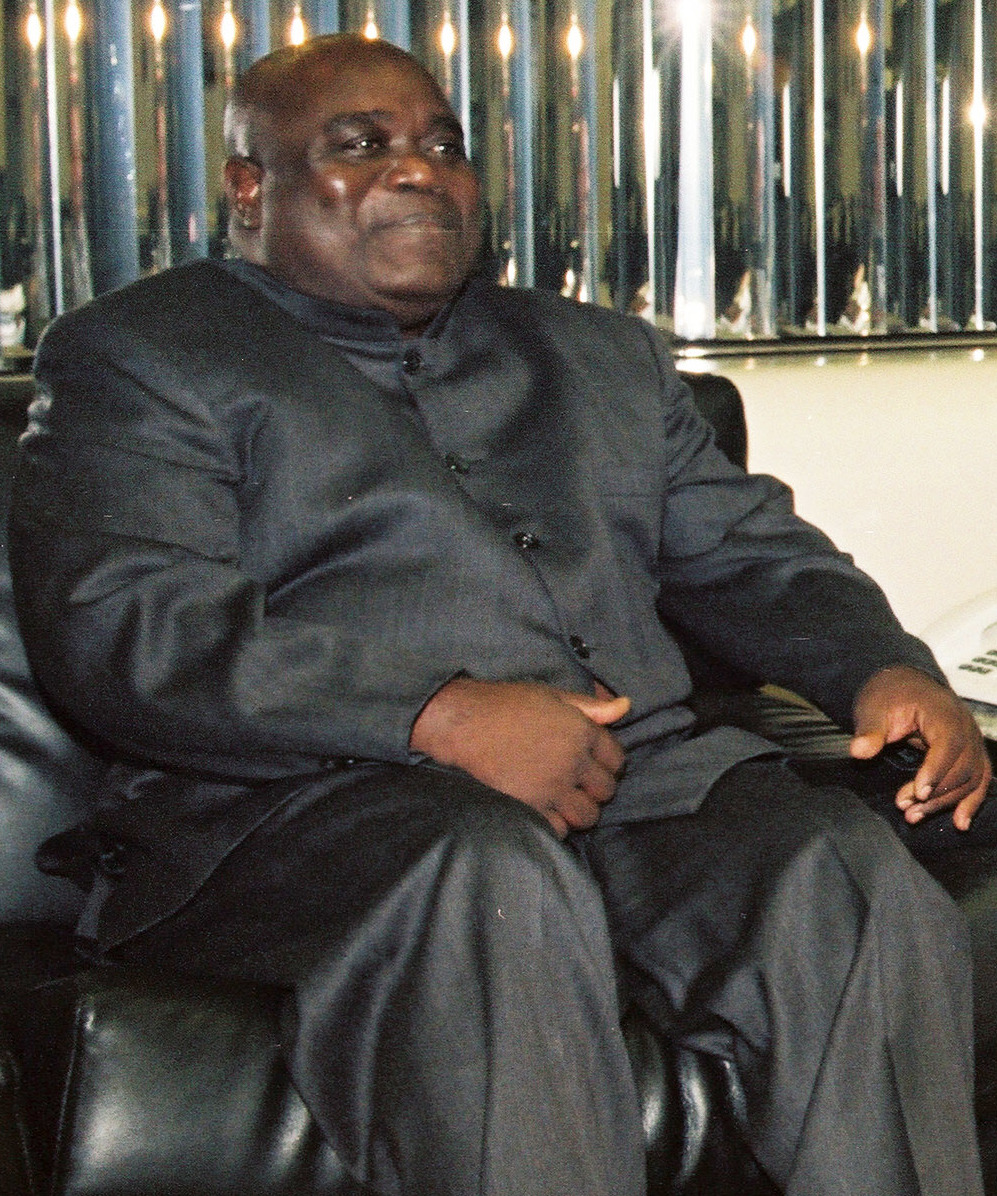
Laurent-Désiré Kabila
 DR Congo
Birthday
+1939-11-27
Birth Sign
Sagittarius
Birthplace
Moba
Age
Died at 61
About
Laurent-Désiré Kabila, born November 27, 1939, in Moba, was a Congolese rebel and politician who rose to lead the Democratic Republic of the Congo. His political journey began as a fierce opponent of Mobutu Sese Seko during the tumultuous Congo Crisis of the 1960s. Kabila was a participant in the Simba rebellion and later carved out a communist-aligned rebel state in eastern Congo, which he led for over two decades from 1967 to 1988. After a period away from public view, he re-emerged in the 1990s at the head of the Alliance of Democratic Forces for the Liberation of Congo. This group, backed by Rwanda and Uganda, spearheaded the invasion that ultimately ousted Mobutu in 1997. Kabila then assumed the presidency of the nation, which reverted to its former name, the Democratic Republic of the Congo.
Fame & Fandom
The legacy of Laurent-Désiré Kabila is defined not by a celebrity cult, but by the intense political mobilization of a nation in flux. While he never cultivated a fandom with rituals or fan clubs, his life story remains a central chapter in Congolese history, studied by those who follow the region's turbulent path from Mobutu's dictatorship to independence. His image as the rebel ambassador in silk suits and his dramatic entry into Kinshasa created a mythology that persists among historians and political enthusiasts, even if no organized group claims him as a pop icon. The audience for his story consists of scholars, regional historians, and descendants of the revolutionaries who view his rise and fall as a pivotal era rather than a performance. This lack of a formal fanbase distinguishes him from modern celebrities, yet his impact on the geopolitical landscape ensures his name endures in academic circles and public memory. His place in global consciousness is measured by historical significance rather than viral trends, reflecting a figure whose power was rooted in military command and statecraft. Despite the absence of fan campaigns or social media engagement, the reach of his narrative extends far beyond Congo's borders, tracked across global media coverage and consumption signals worldwide. Current assessments of his enduring prominence place him firmly within the pantheon of influential African leaders. Laurent-Désiré Kabila is currently the 7th most famous person from DR Congo, a position he has held steady since the previous cycle according to the iFANN Global Fame Rankings.
Interesting Facts and Legends
Laurent-Désiré Kabila entered Kinshasa on May 17, 1997, marking the end of Mobutu Sese Seko's thirty-two-year rule and renaming the country the Democratic Republic of the Congo. He often wore distinctive shiny silk suits, earning him the moniker "rebel ambassador" which contrasted sharply with the traditional attire of other African leaders at the time. His death occurred on January 18, 2001, two days after being shot by his own bodyguard, Emmanuel Nsanzamungu, while reviewing troops at the Presidential Palace. This assassination remains one of the most significant political murders in African history, sparking immediate speculation about foreign involvement despite the official narrative focusing on internal military dissent. In January 2021, the DRC released twenty-two individuals convicted of the murder, who were subsequently pardoned by President Tshisekedi. A persistent legend surrounding his final days involves the rapid succession of his son, Joseph Kabila, which intensified the Second Congo War. Some search results have incorrectly suggested futuristic events regarding his status, but these contradict established facts that he died over two decades ago.
Death & Aftermath
Died
+2001-01-16 (aged 61)
Death Place
Kinshasa, Democratic Republic of the Congo
Cause of Death
Multiple gunshot wounds
Laurent-Désiré Kabila died on January 16, 2001, inside his office at the Palais de Marbre in Kinshasa. The third President of the Democratic Republic of the Congo was struck by multiple gunshot wounds to the head and chest, inflicted by a presidential bodyguard named Jean-Pierre Mpandi while receiving a briefing from General Jean-Bosco Kazadi. Although the official account attributed the act to personal grievances, many observers have long suspected broader conspiracies involving rival factions within the military or foreign intelligence services given the volatile climate of the Second Congo War. A police investigation quickly followed, leading to Mpandi's arrest and a subsequent trial by a military court that found him guilty of murder on March 15, 2001.
Over the next two decades, numerous other individuals were investigated and convicted for their alleged roles in the plot before President Félix Tshisekedi issued a full pardon to all those convicted in January 2021. The assassination triggered an immediate and profound shock across the DRC and the African continent. Tributes poured in from regional leaders who condemned the act as a betrayal of the revolutionary struggle that had brought Kabila to power in 1997. Citizens gathered in Kinshasa and other major cities for vigils, marking the loss of the man who had ousted dictator Mobutu Sese Seko. The nation observed a period of mourning with a suspension of normal political activities under the transitional government led by Vice President Joseph Kabila.
A state funeral took place just two days after his death on January 18, 2001, at the Palais du Peuple in Kinshasa. Thousands of mourners attended the service, which featured heavy military presence and emotional eulogies celebrating Kabila as a liberator. Notable attendees included his son Joseph, who succeeded him as president, along with leaders from Angola and Zimbabwe. Following the ceremony, his body was interred at the Cimetière des Héros Nationaux. Years later, a monumental statue standing roughly 25 feet tall was erected in Kinshasa to honor his legacy, while his estate passed to his family under the succession of power.
Awards & Accolades
Keywords
Quick Facts
- Profession
- politician
- Born
- +1939-11-27
- Birthplace
- Moba
- Died
- +2001-01-16
- Death Place
- Kinshasa
- Gender
- Male
- Spouse
- Sifa Mahanya
- Birth Sign
- Sagittarius
Personal Details
- Spouse
- Sifa Mahanya
Join the community
fans discussing