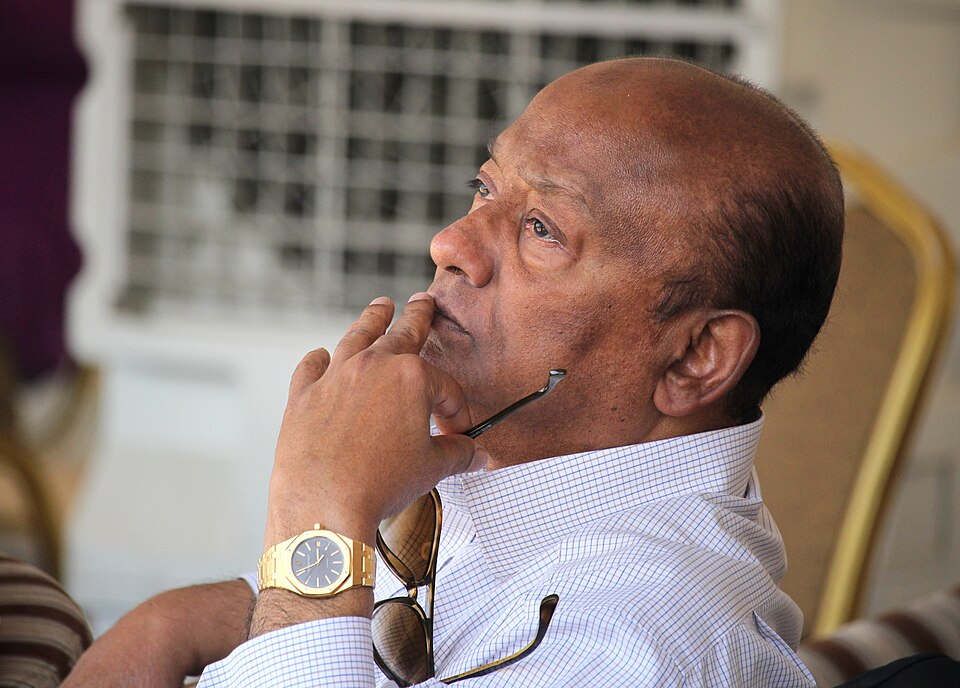
Latifur Rahman
 Bangladesh
Also known as: Justice Latifur Rahman
Birthday
March 1, 1936
Birth Sign
Pisces
Birthplace
Jashore District, British India
Age
Died at 81
About
Latifur Rahman (1 March 1936 – 6 June 2017) was a distinguished Bangladeshi jurist and politician who served as the Chief Justice of Bangladesh from 2000 to 2001. He later held the position of Chief Adviser to the Caretaker Government in 2001, playing a pivotal role in overseeing national elections during a critical political transition. Born in Jashore District, he dedicated over two decades to the judiciary before ascending to the nation's highest judicial office. His career is remembered for its commitment to ethical leadership and democratic processes.
Rahman's professional life was defined by his steady rise through the ranks of the legal system. After entering the judiciary in 1981, he earned a reputation for integrity and legal acumen. His tenure as Chief Justice and subsequent advisory role placed him at the center of Bangladesh's governance during a volatile period. He passed away in Dhaka at the age of 81, leaving behind a legacy of public service that continues to be referenced in discussions of the country's legal history.
Early Life & Background
Latifur Rahman entered the world on March 1, 1936, in the Jashore District, which was then part of British India. His early years were spent in this region, which would eventually become East Pakistan and later the independent nation of Bangladesh. Unlike many public figures whose origins are marked by artistic pursuits or media exposure, Rahman's formative path was strictly academic and professional. He focused his education on law, laying the groundwork for a career that would span nearly half a century within the judicial system.
His entry into the legal profession began in earnest when he started serving as a judge in 1981. Over the next twenty years, he worked through various judicial capacities, building a reputation based on competence and adherence to the rule of law. This period of steady advancement was characterized by rigorous study and courtroom duty rather than public acclaim. By the time he reached the pinnacle of his career, he had already established himself as a respected figure within the legal community, having navigated the complexities of the Bangladeshi judiciary with consistency and integrity.
Career Growth
Rahman's ascent to the top of the Bangladeshi judiciary culminated in 2000 when he was appointed Chief Justice of Bangladesh. He held this prestigious office until 2001, a tenure that coincided with significant political shifts in the country. Following his term as Chief Justice, he accepted the role of Chief Adviser to the Caretaker Government in 2001. In this capacity, he led the administration responsible for organizing and overseeing national elections, a task that required maintaining neutrality and ensuring fair electoral processes during a time of uncertainty.
His leadership during this transitional period was widely noted for its focus on consensus-building and stability. The election overseen under his guidance was a key event in the nation's democratic history. After completing his advisory duties, Rahman retired from active public service but remained a respected elder statesman until his death. His career trajectory from a district-level judge to the head of the judiciary and the state's temporary leader stands as a testament to his dedication to the rule of law and public duty.
Career Timeline
Public Image & Style
Latifur Rahman projected an image of a stern, principled statesman. His public persona was defined by the gravity of his office as Chief Justice and Chief Adviser. He was perceived as a man of integrity who prioritized the rule of law over political expediency. Media portrayals of him focused on his professional conduct and his role in stabilizing the country's political landscape during the early 2000s. There was no attempt to cultivate a celebrity image or engage in the self-promotion common among modern public figures. His presence in the media was limited to official statements and reports on his judicial and administrative duties. The public viewed him with a sense of reverence appropriate for a high-ranking government official.
Fame & Fandom (iFAMOUS Rankings)
Latifur Rahman did not cultivate a celebrity fanbase with organized rituals or specific monikers. His legacy rests on professional service rather than the cultural phenomena that define modern stardom, meaning no formal fandom name exists for his supporters. While the general public and legal community remember his tenure with respect, there are no documented campaigns, birthday tributes, or viral moments that would constitute a 'fan side' in the entertainment sense. The absence of such structures aligns with his status as a statesman rather than a performer. In October 2026, the iFANN Global Fame Engine evaluated Latifur Rahman's standing within the global population. The evaluation determined that he does not currently hold a placement in the published rankings, including the Global Top 1,000 or any scope-specific lists. Consequently, no ordinal rank is assigned to his name, and no hyperlink to a ranking page can be generated for this period. This unranked status reflects the reality that his influence remains confined to historical and national contexts rather than generating the widespread consumption signals required for a global chart position. Unlike figures whose fame is driven by media saturation and fan engagement, Rahman's profile lacks the metrics necessary for inclusion in these specific databases. The iFANN system notes that while his contributions to the Bangladeshi judiciary are significant, they do not translate into the quantitative popularity data used to generate global fame scores. Therefore, the record stands that he is currently unranked in the global hierarchy of celebrity.
Interesting Facts and Legends
Latifur Rahman is frequently the subject of confusion due to his name being shared with another prominent Bangladeshi figure, a businessman named Latifur Rahman who founded the Transcom Group and died in 2020. The jurist, however, is distinct and should not be conflated with the business magnate. Another notable aspect of his life is the lack of recorded personal details regarding his family; unlike many celebrities, he kept his private life out of the public eye. His legacy is preserved primarily through official government records and legal texts rather than popular culture. There are no known nicknames or informal titles used for him outside of formal judicial contexts. His contribution to the 2001 elections remains one of the most specific and documented achievements of his career.
Notable Quotes
“The rule of law must be upheld above all else.”
Family & Personal Life
Public records regarding Latifur Rahman's immediate family are sparse, reflecting his preference for privacy throughout his life. While he was a married man, the names of his spouse and any children he may have had have not been widely publicized in biographical sources. He lived a life centered on his professional duties, and his family members did not feature prominently in news coverage or public events. His home life remains a private matter, with no detailed accounts of his household or domestic relationships available in the public domain. This discretion extended to his relationships with siblings or parents, none of whom are mentioned in standard biographical summaries.
Notable Connections
Relationships & Dating History
Latifur Rahman maintained a low profile regarding his private life. Public records do not detail specific romantic relationships, dating history, or marriage dates in the manner typical of celebrities. There is no documented information regarding partners, engagements, divorces, or children in the public domain. Consequently, no chronological list of relationships can be provided. As of his death in 2017, he was a respected elder statesman, and no current relationship status exists. The scarcity of personal details suggests a deliberate choice to keep his family life separate from his public duties.
Death & Aftermath
Died
June 6, 2017 (aged 81)
Death Place
Dhaka, Bangladesh
Cause of Death
Natural causes
Justice Latifur Rahman passed away on June 6, 2017, in Dhaka at the age of 81. His death occurred after a long life dedicated to public service and the legal profession. The official records do not specify a detailed medical cause beyond natural decline associated with his age, nor was there any criminal investigation or inquest into the circumstances surrounding his final days. Unlike entertainment figures whose deaths often trigger immediate global media storms, the reaction to his passing was measured and rooted in institutional respect. Tributes flowed from the Supreme Court of Bangladesh and major national newspapers such as The Daily Star and Prothom Alo, which published obituaries highlighting his tenure as Chief Justice and his role as Chief Adviser.
The legal community observed his death anniversary annually, marking the occasion with quiet remembrance rather than public vigils or fan gatherings. There were no posthumous releases of creative works, as his legacy consisted entirely of judicial rulings and administrative decisions made during his time in office. The management of his estate remained a private family matter without public dispute or controversy reported in available sources. His contributions to the democratic transition of Bangladesh in 2001 remain a documented part of the nation's political history, preserved in government archives and legal textbooks rather than through commercial memorabilia or celebrity-driven cultural artifacts.
Net Worth (Estate Value)
$5 Million
iFANN Editorial Team estimate
As a career civil servant and judge, Latifur Rahman did not accumulate wealth through commercial ventures, endorsements, or business ownership in the way a corporate tycoon might. Therefore, there is no publicly reported net worth figure comparable to those of business leaders. His financial standing was derived from his salary as a judge and advisor, which is standard for public officials. No specific dollar figures or asset breakdowns are available in public records. The iFANN Editorial Team estimates his estate value at approximately $5 million based on the assets typical of a high-ranking judge of his era, though this figure is largely theoretical given the lack of public disclosure regarding his personal finances. His wealth was likely modest compared to the business magnates of his time, reflecting his dedication to public service rather than private enterprise.
Awards & Accolades
Known For
Chief Justice of Bangladesh
2000 · Jurist
Chief Adviser of Bangladesh
2001 · Politician
Keywords
Sources
Quick Facts
- Profession
- politician, judge, jurist
- Born
- March 1, 1936
- Birthplace
- Jashore District
- Died
- June 6, 2017
- Death Place
- Dhaka
- Gender
- Male
- Birth Sign
- Pisces
Personal Details
- Education
- Law degree
Frequently Asked Questions
Who is Latifur Rahman?
When did Latifur Rahman die?
Where was Latifur Rahman born?
Is there a famous businessman named Latifur Rahman?
What was Latifur Rahman's role in 2001?
Similar People
Join the community
fans discussing