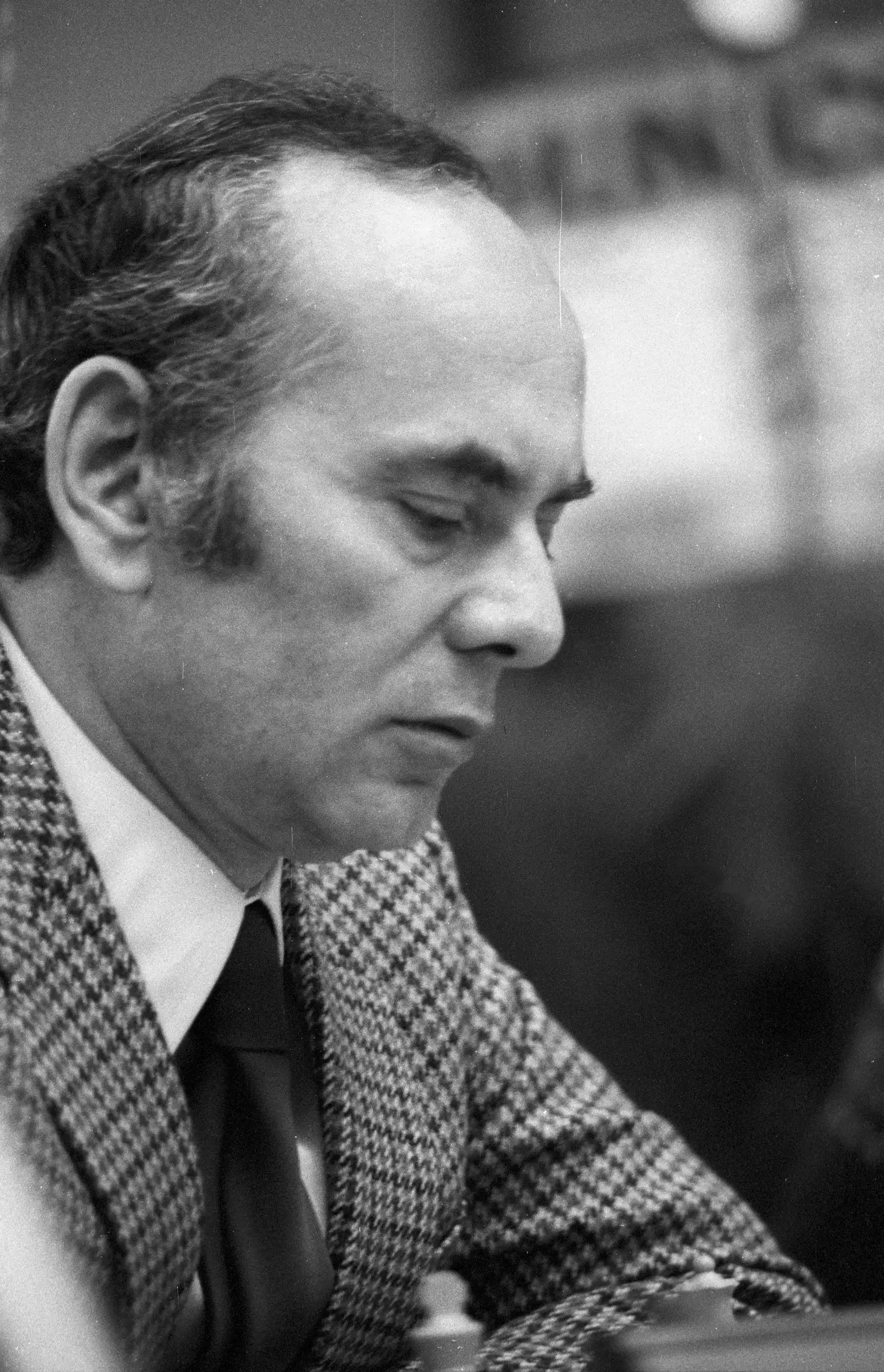
Lajos Portisch
 Hungary
Also known as: Hungarian Botvinnik, Portisch Lajos
Birthday
April 4, 1937
Birth Sign
Aries
Birthplace
Zalaegerszeg, Hungary
Age
89 years old
About
Lajos Portisch is a Hungarian chess grandmaster whose precise, positional play earned him the nickname the "Hungarian Botvinnik." For nearly three decades, from the early 1960s into the late 1980s, he stood among the world's elite. His remarkable consistency is underscored by twelve consecutive Interzonal appearances from 1962 to 1993, and he qualified for the Candidates Cycle eight times, in 1965, 1968, 1974, 1977, 1980, 1983, 1985, and 1988. While the world title eluded him, his relentless pursuit made him a fixture at the highest level of the game.
Portisch's domestic dominance was equally impressive. He won or shared the Hungarian Chess Championship nine times, a national record, and captured numerous international events including Beverwijk, Hastings, and Madrid. His Chess Olympiad performances set multiple records for Hungary. In 2004, he received the title of "Nemzet Sportolója" (Sportsman of the Nation), Hungary's highest sporting honor.
Beyond the board, Portisch possesses a fine baritone voice and a passion for operatic singing, a talent he shares with former world champion Vasily Smyslov. His younger brother Ferenc also became an International Master. Portisch's legacy is one of unwavering dedication and positional mastery, leaving an enduring mark on chess.
Early Life & Background
Lajos Portisch was born on April 4, 1937, in Zalaegerszeg, a small city in western Hungary. He learned chess at a young age, though details of his first encounters with the game remain scarce. Growing up in post-war Hungary, he showed an early aptitude that quickly set him apart. By the mid-1950s, he had become the dominant force in Hungarian chess, winning his first national championship in 1957 at just twenty years old.
His early career was marked by rapid improvement and a growing reputation for solid, strategic play. He repeated as Hungarian champion in 1958 and 1959, and again in 1961, the same year FIDE awarded him the Grandmaster title. These national triumphs served as a springboard, and he began competing regularly in strong international tournaments, making his first appearances at Beverwijk and Hastings in the early 1960s. His breakthrough came when he started consistently finishing ahead of established grandmasters, signaling his arrival among the world's best.
Career Growth
Portisch's international breakthrough came in the early 1960s, and he never looked back. He qualified for his first Candidates Tournament in 1965, beginning a streak of eight appearances over the next two decades. His best result came in 1980 when he reached the semifinals, narrowly missing a shot at the world title. Throughout the 1970s and 1980s, he was a regular winner at elite events, taking first place at tournaments like Madrid, Hastings, and Wijk aan Zee.
His Olympiad record is legendary. Representing Hungary, he played on top boards for years, setting records for most games played and most points scored for his country. He helped Hungary win team silver medals in 1970 and 1980, and bronze in 1978. In 2004, his contributions were recognized with the "Sportsman of the Nation" award. Even into his later years, he remained competitive, and in 2024, at age 87, he performed an aria evening at the Károlyi Palace to celebrate the 45th Chess Olympiad, showcasing his dual passions.
Career Timeline
Public Image & Style
In the chess world, Portisch is revered as a model of consistency and professionalism. Fans and fellow players alike admire his stoic demeanor at the board and his relentless work ethic. His style, characterized by sound positional play and impeccable technique, earned him the respect of even his fiercest rivals. While he never achieved the global fame of a world champion, he is considered one of the greatest players never to win the title. His occasional public performances as a singer add a charming, unexpected dimension to his public persona, endearing him to a broader audience.
Fame & Fandom (iFAMOUS Rankings)
Lajos Portisch stands as the 22nd most famous person from Hungary, a standing confirmed by the iFANN Global Fame Rankings and holding steady through recent cycles. This placement reflects his enduring legacy within the chess world and his unique cultural footprint in his homeland. While he never commanded the global celebrity status of a pop star or a reigning World Champion, his name remains instantly recognizable to anyone who has followed the game's history over the last half-century. His fanbase has no formal name; instead, it consists of chess historians, dedicated enthusiasts, and players who revere his games and historical significance rather than a movement driven by social media trends or organized campaigns. There are no documented fan-funded projects, birthday billboards, or subway ads for the Hungarian Grandmaster, nor is there evidence of the meet-and-greet culture seen with modern celebrities. His influence stems entirely from his status as a legendary figure whose consistency made him a fixture at the highest level of play for nearly thirty years.
The stories that keep his memory alive are those of sustained excellence rather than viral moments. Fans still recount his high-stakes clashes against Bobby Fischer in Santa Monica in 1966 and his role as a formidable barrier to the Soviet machine alongside legends like Karpov. A defining anecdote often retold to newcomers involves his dual talent as an opera singer, highlighted when he celebrated the 45th Chess Olympiad in September 2024 with an aria evening that blended his two passions. In April 2025, tributes from the Chess Hall of Fame further cemented his moniker as "The Hungarian Lion of Chess," ensuring that his story continues to be told long after his competitive peak.
Interesting Facts and Legends
Lajos Portisch earned the nickname "the Hungarian Botvinnik" due to his deep positional style, mirroring the approach of world champion Mikhail Botvinnik. He is one of the few grandmasters known for his operatic singing, possessing a baritone voice that he has performed publicly on stage. His brother Ferenc also achieved the rank of International Master, making chess a true family affair. Portisch was renowned for his meticulous opening preparation and his ability to grind out wins from equal positions. An avid reader of chess literature, he contributed significantly to opening theory, particularly in the English and Spanish openings.
A central pillar of his legend is his incredible consistency; he remained a top contender for over twenty years and qualified for the Candidates Cycle eight times. One of the most frequently referenced moments in chess lore is his high-stakes clash against Bobby Fischer in Santa Monica in 1966, often cited in discussions of Fischer's pre-peak era. Another significant historical reference notes his performance against Anatoly Karpov, where Portisch is remembered as one of Petrosian's difficult opponents and a key barrier to the Soviet dominance. In April 2024, he celebrated his 85th birthday receiving official recognition from FIDE, and later that year, he blended his passions at the 45th Chess Olympiad with an aria evening that became a defining anecdote about his character.
Notable Quotes
“Chess is a struggle, not only between two players, but also within oneself.”
“The most important thing is to play well, not to win at all costs.”
“I always tried to play the best move, regardless of the opponent.”
Family & Personal Life
Lajos Portisch's younger brother, Ferenc, born in 1939, is an International Master, and the two shared a deep bond over chess. Portisch was married, but his wife passed away around 2002, as he mentioned in a 2012 interview. He has kept the rest of his family life private, and no public information is available about children or other relatives. He resides in Hungary, where he remains a respected figure in the chess community.
Notable Connections
Lajos Portisch is closely associated with fellow Hungarian chess players, especially his brother Ferenc. Internationally, he competed against legends like Vasily Smyslov, Tigran Petrosian, and Anatoly Karpov, and his rivalry with Boris Spassky is well documented. He also shared a love for opera with Smyslov, and the two occasionally performed together.
Relationships & Dating History
Lajos Portisch has kept his personal life extremely private, and little is known about his romantic history. He was married, but his wife passed away around 2002, a fact he revealed in a 2012 interview. There are no public records of any other significant relationships, and as of 2026, he appears to be widowed and not in a new relationship. His focus has remained on chess and music.
- Married? - 2002Wife passed away around 2002; no further details public.
Salary, Net Worth In 2026
$5 Million
iFANN Editorial Team estimate
Lajos Portisch's net worth is estimated at $5 Million as of 2026. Unlike modern top players who earn substantial income from online streaming and sponsorships, Portisch's earnings came primarily from tournament prizes during his active career, which peaked in the 1970s and 1980s. He also earned from writing books and coaching, though he never had a major commercial endorsement deal. Per iFANN's editorial analysis, this financial picture reflects a lifetime dedicated to chess, with his legacy being more about sporting achievement than wealth accumulation.
Awards Won (1)
Lajos Portisch won the Hungarian Chess Championship nine times and received the 'Sportsman of the Nation' award from Hungary in 2004. While specific international awards are not documented, his eight Candidates appearances and multiple Olympiad medals stand as testament to his skill.
2004 · National Honor
Lifetime achievement in chess
Known For
Chess Grandmaster
· Player
Candidates Tournament
1965-1988 · Qualified eight times
Keywords
Sources
Quick Facts
- Profession
- chess player
- Born
- April 4, 1937
- Birthplace
- Zalaegerszeg, Hungary
- Gender
- Male
- Birth Sign
- Aries
- Nationality
- Hungarian
Personal Details
- Full Name
- Lajos Portisch
Frequently Asked Questions
How old is Lajos Portisch?
Where was Lajos Portisch born?
Is Lajos Portisch still alive?
Did Lajos Portisch ever win the World Chess Championship?
What is Lajos Portisch's nickname?
Similar People
Join the community
fans discussing