
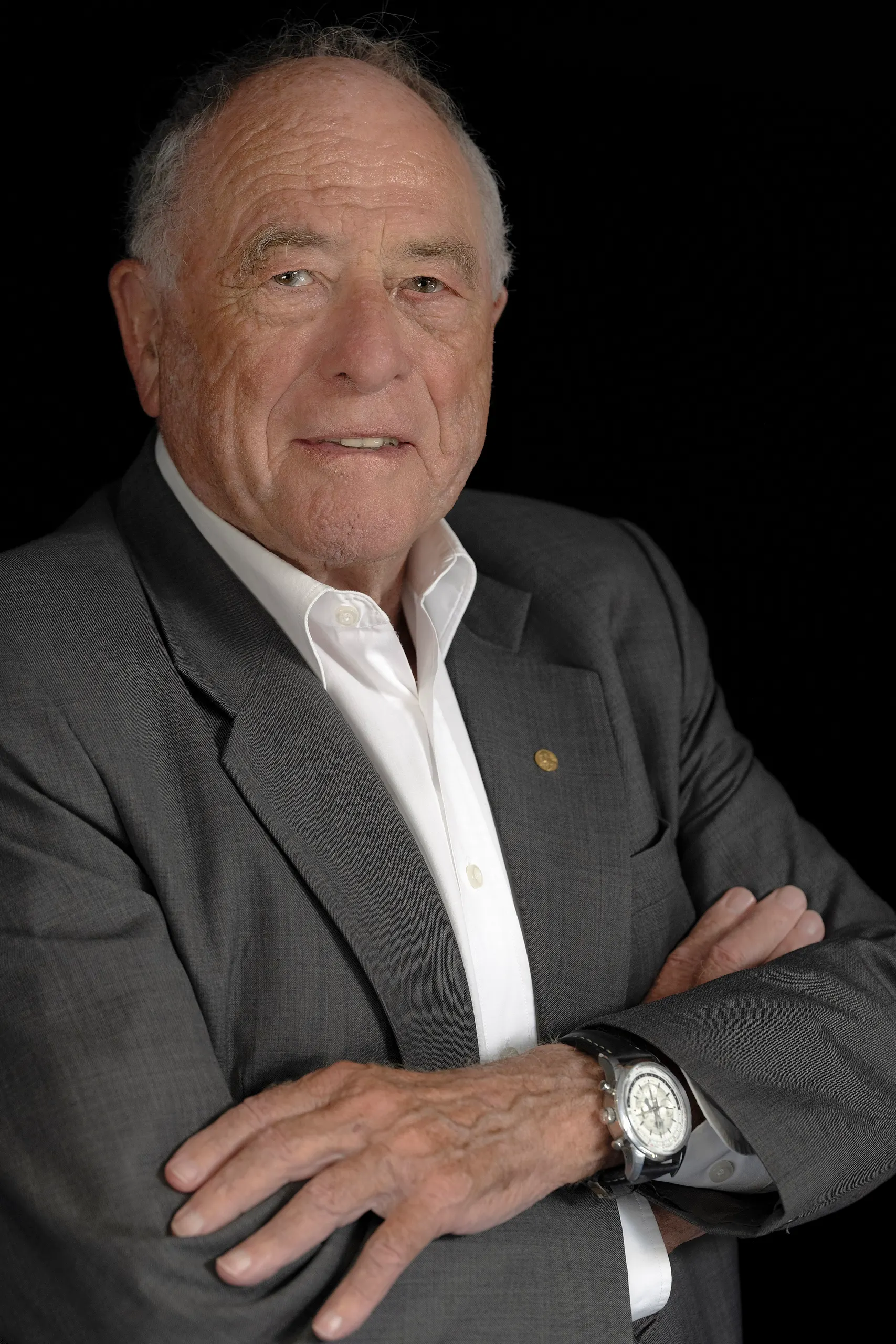
Kurt Wüthrich
 Switzerland
chemist•biophysicist•university teacher
Also known as: Kurt Wuethrich, K. Wüthrich, K Wüthrich
Birthday
October 4, 1938
Birth Sign
Libra
Birthplace
Aarberg, Switzerland
Age
88 years old
About
Kurt Wüthrich is a distinguished Swiss chemist and biophysicist who revolutionized the study of biological molecules. Born in Aarberg on October 4, 1938, he developed nuclear magnetic resonance spectroscopy methods that allow scientists to determine the three-dimensional structures of proteins in solution. This work earned him the Nobel Prize in Chemistry in 2002 alongside John B. Fenn and Koichi Tanaka. Today, he serves as a professor at ETH Zurich and Scripps Research, continuing to mentor researchers and explore the dynamics of complex biological systems. His current influence extends beyond his own laboratory into the broader field of integrative structural biology. Wüthrich remains active in scientific discourse, recently addressing topics like artificial intelligence in drug discovery and gender dynamics within the research community. While he maintains a low public profile compared to entertainment figures, his contributions have fundamentally altered how biochemists visualize life at the molecular level. He holds the Cecil H. and Ida M. Green Professorship and continues to publish on GPCR dynamics.
Early Life & Background
Kurt Wüthrich grew up in Lyss, a town in the Canton of Bern, Switzerland, where his father worked as an accountant from a farming family. His early years were marked by a strong aptitude for science, particularly chemistry, physics, and mathematics. He pursued his undergraduate studies at the University of Bern from 1957 to 1962, earning a Lizentiat degree. The rigorous training he received in linear algebra, classical mechanics, and chemical thermodynamics provided a solid foundation for his future academic pursuits. Following his doctoral work at the University of Basel between 1962 and 1964, Wüthrich moved to the United States to further his research career. He joined the California Institute of Technology (Caltech) as a postdoctoral fellow under the guidance of Nobel laureate Linus Pauling. Although he initially worked with Pauling, he soon shifted his focus toward nuclear magnetic resonance (NMR). By 1967, he had become an assistant professor at Caltech before eventually moving to the Scripps Research Institute in La Jolla, California. It was during this period in America that he began developing the methods to apply NMR spectroscopy to large biological macromolecules, a task many contemporaries believed was impossible due to the complexity of protein structures.
Career Growth
The defining moment of Kurt Wüthrich's career arrived in the late 1970s and 1980s when he successfully mapped the structure of ubiquitin using NMR. This achievement proved that nuclear magnetic resonance could be used to determine the three-dimensional structures of proteins in their native, solution-state environments rather than just in crystalline forms. This breakthrough fundamentally changed biochemistry and molecular medicine, allowing scientists to visualize biological molecules in ways previously thought unattainable. His contributions were recognized with the Nobel Prize in Chemistry in 2002, which he shared with John B. Fenn and Koichi Tanaka. Beyond this prestigious award, Wüthrich has held significant academic positions, including Professor of Biophysics at ETH Zurich and the Cecil H. and Ida M. Green Professor of Structural Biology at Scripps Research. He has been instrumental in advancing integrative structural biology, combining various techniques to solve complex biological problems. In recent years, he has continued to publish research on GPCR dynamics and engage in discussions about the impact of artificial intelligence on biological research. He also received the Wolf Prize in Chemistry in 1999 and the National Medal of Science in 2003.
Career Timeline
Public Image & Style
Wüthrich is viewed as a humble, rigorous, and sometimes controversial intellectual. Media portrayals emphasize his Nobel Prize and his role as a teacher, while his comments on gender dynamics in science have occasionally drawn scrutiny. He is respected for his clarity of thought and willingness to engage in difficult conversations, even when they challenge established norms. His public image is that of a scientist whose work speaks louder than his words, though his recent statements have added a layer of complexity to his reputation within the scientific community. He rarely grants interviews outside of academic contexts, preferring formal channels for communication. His appearance on magazine covers is limited to specialized publications like Nature and Science, often accompanying feature articles on his Nobel-winning work or interviews on the state of structural biology.
Fame & Fandom (iFAMOUS Rankings)
Kurt Wüthrich has no formal fandom, no fan clubs, and no organized campaigns to mobilize in his name. His audience consists of students, colleagues, and attendees at academic conferences like the Lindau Nobel Laureate Meetings rather than a public devoted to celebrity culture. There are no billboards, viral hashtags, or rituals surrounding his life because he is a scientist whose legacy rests on laboratory breakthroughs instead of pop culture moments. The iFANN Global Fame Engine evaluated this profile in September 2026 and determined that Kurt Wüthrich does not currently hold a placement in the published rankings, including the Global Top 1,000 or any Top-100 scope list. This absence of a global rank reflects the specialized nature of his work; his influence permeates biochemistry and biophysics without translating into the mass-market signals required for worldwide celebrity status. He remains a titan within his field, yet the world's attention rarely coalesces around his personal presence outside professional circles. The iFANN data confirms that while he commands immense respect in scientific communities, he lacks the broad consumer consumption or media saturation needed to crack the global charts. His fame is deep but narrow, anchored by the 2002 Nobel Prize in Chemistry and his development of NMR spectroscopy methods. These achievements define his public identity far more effectively than any potential fan movement ever could. He is frequently cited in "Greatest Scientists" lists within specialized scientific journals but does not appear in general consumer-oriented lists like those from Rolling Stone or Billboard.
Interesting Facts and Legends
A widely retold story in academia involves Wüthrich's persistence in applying NMR to proteins despite initial skepticism from peers who believed the technique was only suitable for small molecules. His 2023 appearance at the Lindau Nobel Laureate Meetings sparked significant debate when he claimed to experience male discrimination in science, stating, "I am a victim of anti-male bias in science," a statement that drew sharp criticism from early-career researchers. This incident remains a notable moment of professional discourse rather than a piece of folklore. Unlike many public figures, Wüthrich does not maintain active personal social media accounts, preferring formal academic channels for communication. His interactions are strictly professional, occurring through university websites, conference presentations, and scientific publications. There are no fan-funded projects or birthday celebrations for him, as his legacy is built entirely on verified historical facts and professional milestones. He has received honorary doctorates from the University of Bern, the University of Basel, and ETH Zurich.
Notable Quotes
“The development of NMR spectroscopy for the determination of the three-dimensional structure of biological macromolecules in solution has opened new avenues for understanding biological processes.”
“I am a victim of anti-male bias in science.”
Family & Personal Life
Kurt Wüthrich was born in Aarberg and raised in Lyss, where his father, an accountant from a farming family, instilled a love for learning. There are no publicly documented records of siblings or extended family members influencing his early path. Unlike many public figures, he has not disclosed details about dating history or partners in interviews or biographical accounts. As of 2026, he remains single or keeps his personal relationships completely out of the public eye. His life appears to be primarily dedicated to his scientific pursuits and academic mentorship, with no confirmed children reported in credible sources.
Notable Connections
Relationships & Dating History
Kurt Wüthrich has maintained a notably private life regarding his romantic history. There are no publicly documented records of marriages, engagements, or long-term relationships. Unlike many public figures, Wüthrich has not disclosed details about dating history or partners in interviews or biographical accounts. As of 2026, he remains single or keeps his personal relationships completely out of the public eye. His life appears to be primarily dedicated to his scientific pursuits and academic mentorship, with no confirmed children reported in credible sources.
Salary, Net Worth In 2026
$3 Million
iFANN Editorial Team estimate
As of 2026, the iFANN Editorial Team estimates Kurt Wüthrich's net worth at approximately $3 million, falling within a range of $1 million to $5 million. This figure is derived from his academic salaries, research grants, and royalties from his scientific publications over several decades. Unlike entertainment celebrities, scientists do not typically accumulate vast wealth through endorsements or box office returns. Specific breakdowns of real estate holdings or business ventures are not publicly available, as his financial details remain private. The lack of commercial celebrity status means his wealth is modest compared to high-profile entertainers but substantial enough to support a life of academic luxury and research funding. His primary income streams continue to be tied to his positions at Scripps Research and ETH Zurich, along with honorariums for lectures and consulting work.
Awards Won (4)
Kurt Wüthrich's award history is dominated by his 2002 Nobel Prize in Chemistry. Beyond this, he has received numerous honors and distinctions reflecting his impact on science. These include the Wolf Prize in Chemistry (1999), the Oesper Award (2001), and the National Medal of Science (2003). He has also been awarded honorary doctorates from several universities, including the University of Bern, the University of Basel, and the Swiss Federal Institute of Technology (ETH Zurich).
2002 · Chemistry
Development of NMR spectroscopy for the determination of the three-dimensional structure of biological macromolecules in solution
1999 · Chemistry
Pioneering work in NMR spectroscopy of proteins
Known For
Nobel Prize in Chemistry
2002 · Recipient
Ubiquitin Structure Determination
1985 · Lead Researcher
Keywords
Sources
Quick Facts
- Profession
- chemist, biophysicist, university teacher
- Born
- October 4, 1938
- Birthplace
- Aarberg, Switzerland
- Gender
- Male
- Birth Sign
- Libra
Personal Details
- Full Name
- Kurt Wüthrich
- Children
- Education
- Lizentiat from University of Bern (1962), PhD from University of Basel (1964)
Frequently Asked Questions
Who is Kurt Wüthrich?
What did Kurt Wüthrich discover?
Is Kurt Wüthrich still alive?
Why did Kurt Wüthrich claim male discrimination?
Where does Kurt Wüthrich work?
Similar People
Join the community
fans discussing