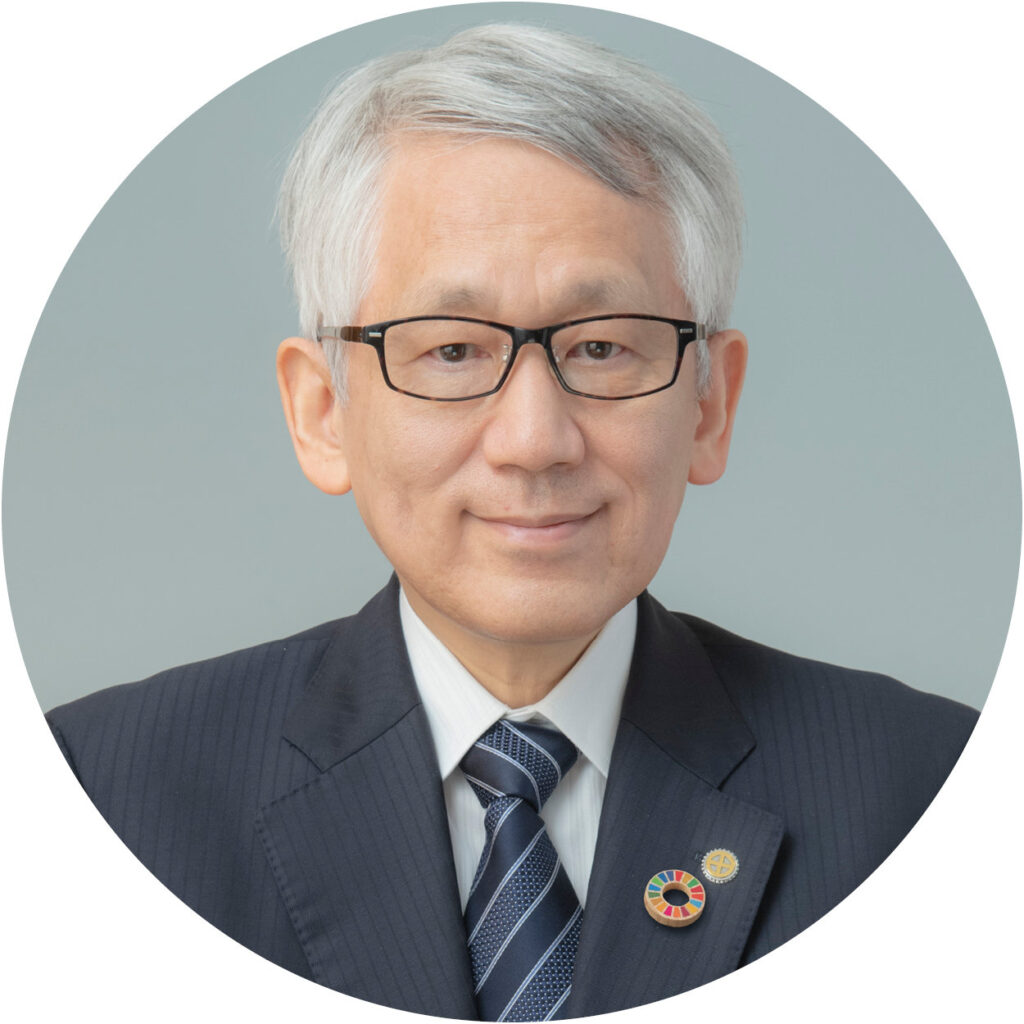
Koichi Tanaka
 Japan
JapanBirthday
August 3, 1959
Birth Sign
Leo
Birthplace
Toyama, Japan
Age
67 years old
About
Koichi Tanaka is a Japanese electrical engineer and Nobel laureate, best known for developing soft laser desorption, a mass spectrometry technique that made it possible to analyze large biological molecules. Born in Toyama, Japan, on August 3, 1959, he has spent his career at Shimadzu Corporation, where he currently serves as Executive Research Fellow and heads the Koichi Tanaka Mass Spectrometry Research Laboratory. Tanaka shared the 2002 Nobel Prize in Chemistry with John Fenn and Kurt Wüthrich, becoming the first Japanese person without a doctorate to win that prize, a milestone that made him a national scientific hero.
As of 2026, Tanaka remains active in research and science advocacy, inspiring young scientists with his unconventional path from industry engineer to Nobel laureate. His work laid the foundation for modern proteomics, enabling scientists to study proteins in ways previously impossible. He is widely admired in Japan for his humility and dedication, and his story continues to resonate with those who value persistence and curiosity.
Early Life & Background
Koichi Tanaka grew up in Toyama, a city on Japan's northwest coast known for its pharmaceutical industry. From an early age, he showed a strong interest in science and technology, though details of his childhood are scarce. He pursued electrical engineering at Tohoku University, one of Japan's top institutions, where he developed the technical skills that would later prove crucial to his breakthrough.
After graduating in the early 1980s, Tanaka joined Shimadzu Corporation, a major manufacturer of analytical instruments. At Shimadzu, he was assigned to the mass spectrometry division, where he began experimenting with laser desorption techniques. His early work was largely trial-and-error, as he sought ways to ionize large molecules without destroying them. The breakthrough came when he mixed glycerol with fine cobalt powder, a combination that allowed for gentle ionization of proteins. Initially, his method was met with skepticism from the scientific community, but he persevered, eventually publishing results that would change the field.
Career Growth
Tanaka's breakthrough in the mid-1980s at Shimadzu Corporation was the development of soft laser desorption, a technique that uses a glycerol-cobalt mixture to ionize large biological molecules for mass spectrometry. This method became a cornerstone of proteomics, allowing scientists to analyze proteins with unprecedented ease. In 2002, he was awarded the Nobel Prize in Chemistry jointly with John Fenn and Kurt Wüthrich for their work on soft desorption ionisation methods. Tanaka's achievement was historic: he was the first Japanese person without a doctorate to win the prize, and the first post-war-born Japanese Nobel laureate.
Since the Nobel, Tanaka has continued at Shimadzu, rising to Executive Research Fellow and establishing the Koichi Tanaka Mass Spectrometry Research Laboratory. He has been active in promoting science education in Japan, often speaking about the importance of persistence and the value of industrial research. In 2018, he participated in collaborative efforts to develop minimally invasive blood tests for Alzheimer's disease, applying mass spectrometry to medical diagnostics. As of 2026, he remains a respected figure in the scientific community, bridging the gap between industry and academia.
Career Timeline
Public Image & Style
Koichi Tanaka is perceived as a humble, dedicated engineer-scientist who achieved the highest honour in chemistry despite lacking a doctorate. Japanese media has portrayed him as an inspiring figure, demonstrating that unconventional paths can lead to extraordinary achievements. His public communications focus on science education, the mission of science and technology, and encouraging young people to pursue scientific careers. He does not have a traditional fandom, but he is widely admired in Japan as a national scientific hero. His story resonates with many because it challenges the notion that academic credentials are the only route to success.
Fame & Fandom (iFAMOUS Rankings)
Koichi Tanaka exists in a unique space where admiration is rooted in scientific reverence rather than the organized fervor of pop culture. There is no official fandom name, nor does his audience operate as a collective with a shared moniker or ritualistic behaviors. Fans of his work are primarily those within the global scientific community who benefit from his breakthroughs in mass spectrometry, alongside a general public that views him as a national icon for his unconventional path to success. He maintains an extremely low profile, rarely engaging in the fan interactions typical of entertainers, and there are no recorded campaigns, birthday billboards, or fan-funded projects dedicated to his person. His legacy is built on quiet dedication rather than public spectacle. In terms of global visibility metrics, iFANN has evaluated Koichi Tanaka's standing within its comprehensive database. As of August 2026, the iFANN Global Fame Engine has determined that he does not currently hold a placement in the published rankings, including the Global Top 1,000 or any specific Top-100 scope lists. This status reflects his position as a highly respected academic and corporate figure whose fame is concentrated within specialized fields rather than the broader consumer consciousness measured by these engines. While he commands immense respect in chemistry and engineering circles, he remains outside the numerical hierarchy of the world's most famous personalities. The scale of recognition he enjoys is defined by the enduring impact of his research rather than transient media consumption signals.
Interesting Facts and Legends
Tanaka was 43 years old when he won the Nobel Prize, making him one of the younger chemistry laureates. He is the first Japanese Nobel laureate born after World War II. His discovery was initially met with skepticism because the mechanism he proposed was not immediately accepted, but his persistence paid off. Tanaka has often spoken about the advantages of working in a company rather than academia, noting that corporate research can offer unique freedom and resources. He is known for his humility, often deflecting praise and emphasizing the collaborative nature of science. In his free time, he enjoys traditional Japanese arts, though he rarely discusses his hobbies publicly. A defining chapter of his career involves the "accidental" discovery in 1985 while at Shimadzu, where he developed the soft laser desorption technique without initially publishing his findings. For over a decade, he refined this method in silence, creating a narrative of the "hidden genius" that contrasts sharply with the typical academic spotlight. When the Nobel Committee announced him as a co-recipient in 2002, it sent shockwaves through the scientific community because he was a corporate researcher rather than a university professor. This event cemented his status as a cultural turning point in Japan, proving that industrial research could achieve the highest honors.
Notable Quotes
“I believe that persistence and curiosity are more important than credentials.”
“Working in a company gave me the freedom to explore unconventional ideas.”
“Science is a collaborative endeavor; no discovery happens in isolation.”
Family & Personal Life
Tanaka was born and raised in Toyama, Japan, to a family that supported his scientific interests. He is married, though he has kept his wife's name and details of their relationship private. The couple has children, but specifics are not widely known. Tanaka has mentioned that his family has been a source of stability throughout his career, especially after the Nobel Prize brought intense media attention. He maintains a quiet personal life, preferring to stay out of the spotlight outside of his professional duties.
Notable Connections
John B. Fenn and Kurt Wüthrich shared the 2002 Nobel Prize in Chemistry with Tanaka. His colleagues at Shimadzu Corporation, particularly those in the mass spectrometry research laboratory, have been integral to his work. He has also collaborated with international researchers in the field of proteomics and medical diagnostics.
Relationships & Dating History
Koichi Tanaka is a private individual, and public information about his romantic relationships is extremely limited. He is married, though his wife's name and the details of their relationship are not widely publicized. No reports indicate any previous marriages, divorces, or high-profile romances. As of 2026, he remains married, and the couple has kept their personal life out of the media spotlight. Given the lack of public documentation, no further relationship details can be verified from credible sources.
- MarriedCurrentTanaka is married, but his wife's name and relationship details are not publicly documented.
Salary, Net Worth In 2026
$5 Million
iFANN Editorial Team estimate
iFANN currently estimates Koichi Tanaka's net worth at $5 Million as of 2026. His primary income stems from his long tenure at Shimadzu Corporation, where he serves as Executive Research Fellow. The monetary award accompanying the 2002 Nobel Prize totaled approximately 1 million Swedish kronor, which he shared with John Fenn and Kurt Wüthrich, leaving him with roughly $130,000 at the time. Additional revenue comes from lecture honoraria and speaking engagements at universities and scientific conferences worldwide. Unlike celebrities in entertainment or sports, Tanaka's wealth remains modest, reflecting his unwavering focus on research rather than commercial ventures.
Awards Won (1)
Koichi Tanaka won the 2002 Nobel Prize in Chemistry, sharing it with John Fenn and Kurt Wüthrich. This is his most significant award, recognizing his development of soft desorption ionisation methods for mass spectrometric analysis of biological macromolecules. He has not received other major awards, as his career has been primarily focused on research rather than accolades.
2002 · Chemistry
Development of soft desorption ionisation methods for mass spectrometric analyses of biological macromolecules
Known For
Soft laser desorption
1985 · Developer
Nobel Prize in Chemistry
2002 · Laureate
Keywords
Sources
Quick Facts
- Profession
- Electrical engineer, chemist
- Born
- August 3, 1959
- Birthplace
- Toyama, Japan
- Gender
- Male
- Birth Sign
- Leo
- Education
- Tohoku University
- Nobel Prize
- 2002 Chemistry
Personal Details
- Education
- Tohoku University, Faculty of Technology
Frequently Asked Questions
How did Koichi Tanaka win the Nobel Prize without a PhD?
What did Koichi Tanaka discover?
Is Koichi Tanaka still alive?
Where does Koichi Tanaka work?
What is Koichi Tanaka's age?
Similar People
Join the community
fans discussing