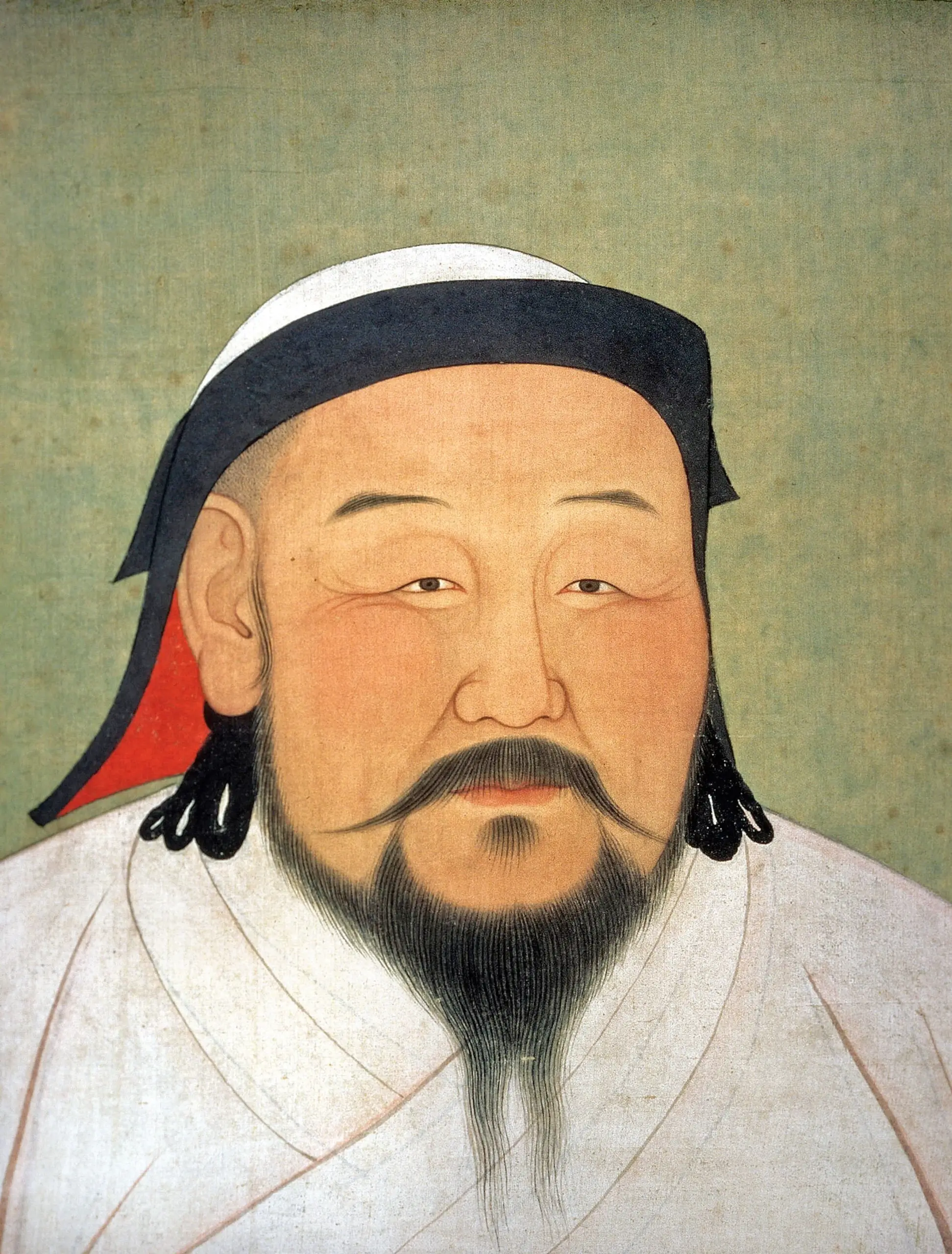
Kublai Khan
Also known as: Emperor Shizu of Yuan, Setsen Khan
Birthday
September 23, 1215
Birth Sign
Libra
Birthplace
Mongol Empire
Age
Died at 78
About
Kublai Khan was a Mongol emperor and the founder of the Yuan dynasty of China. He was born on September 23, 1215, as the second son of Tolui and Sorghaghtani Beki, and the grandson of Genghis Khan. Kublai ruled as the fifth Khagan of the Mongol Empire from 1260 until his death in 1294, though his effective authority was largely confined to the eastern territories after the empire's fragmentation.
He is best known for completing the conquest of the Song dynasty in 1279, making him the first non-Han ruler to govern all of China. His reign saw the establishment of the Yuan dynasty in 1271, with its capital at Khanbaliq, now Beijing. Kublai's court was renowned for its wealth and cosmopolitanism, famously described by Marco Polo. He promoted trade along the Silk Road, introduced paper currency, and fostered cultural exchange between East and West.
Kublai's legacy is complex. He is celebrated in Mongolia as a great Khan and in China as a founder of a dynasty, though later nationalist narratives often viewed the Yuan as foreign occupation. His ambitious overseas campaigns, particularly against Japan, failed dramatically, yet his administrative reforms and ability to bridge nomadic and sedentary civilizations left an enduring mark on Asian history.
Early Life & Background
Kublai Khan was born into the heart of the Mongol Empire, a world shaped by his grandfather Genghis Khan's conquests. His father, Tolui, was Genghis's youngest son and a renowned warrior, while his mother, Sorghaghtani Beki, was a Nestorian Christian princess of the Keraite tribe. Sorghaghtani was an exceptional woman, known for her political shrewdness and cultural breadth, and she ensured her sons received both a traditional Mongol upbringing and exposure to Chinese administrative practices.
As a young man, Kublai distinguished himself in the campaigns that expanded Mongol control over northern China. In 1251, his brother Möngke became Khagan and appointed Kublai to govern the conquered territories in the north. Unlike many of his kinsmen, Kublai showed a genuine aptitude for ruling sedentary populations. He employed Chinese advisors, implemented policies to reduce taxes and promote agriculture, and won the loyalty of local officials. His approach was pragmatic, blending Mongol martial values with the bureaucratic traditions of China.
In 1253, Kublai led a successful campaign against the Dali Kingdom in present-day Yunnan, further demonstrating his military skill. By the late 1250s, he was a seasoned commander and administrator, with a reputation for both competence and a certain openness to foreign cultures. This period of his life, before he claimed the title of Khagan, laid the foundation for his later success as emperor.
Career Growth
Kublai Khan's path to supreme power began in 1259 when his brother Möngke died during a campaign against the Song dynasty. Kublai, then on campaign himself, returned to the capital and in 1260 was proclaimed Khagan at Shangdu, also known as Xanadu. His younger brother Ariq Böke also claimed the title, sparking the Toluid Civil War. After four years of conflict, Kublai emerged victorious, but the war permanently fractured the Mongol Empire; the Golden Horde and Chagatai Khanate no longer recognized his authority.
With his power consolidated, Kublai turned his attention to China. In 1271, he proclaimed the Yuan dynasty, adopting the Chinese imperial title and establishing his capital at Khanbaliq, modern Beijing. The conquest of the Song dynasty, which had ruled southern China for over three centuries, was completed in 1279 after the fall of the Song capital Lin'an and the final Battle of Yamen. Kublai became the first non-Han ruler to command all of China.
His reign was marked by ambitious military expeditions beyond China's borders. He launched two invasions of Japan in 1274 and 1281, both of which were destroyed by typhoons, known in Japan as kamikaze, or "divine winds." He also campaigned in Vietnam, Burma, and Java, with mixed results. Domestically, Kublai implemented significant reforms, including the promotion of paper currency, the construction of roads and postal relay stations, and the patronage of Buddhism, particularly Tibetan Buddhism. He also employed foreigners, including Marco Polo, in his administration, reflecting his cosmopolitan outlook.
Kublai died on February 18, 1294, at Khanbaliq, and was succeeded by his grandson Temür Khan, as his designated heir Zhenjin had predeceased him.
Career Timeline
Public Image & Style
Kublai Khan's historical image is multifaceted and has evolved over centuries. In Chinese historiography, he is recognized as the founder of the Yuan dynasty and a legitimate emperor, though later nationalist narratives often portrayed the Yuan as a foreign occupation. In Mongolia, he is celebrated as a great Khan and unifier, a figure of immense prestige. Western popular culture, heavily influenced by Marco Polo's accounts, often depicts him as the archetypal oriental despot, a ruler of fabulous wealth and power.
His court at Khanbaliq was described by Marco Polo as one of the most magnificent in the world, with grand palaces, lavish feasts, and a cosmopolitan mix of peoples and religions. Kublai himself is often portrayed as a pragmatic and tolerant ruler, interested in foreign cultures and technologies. He patronized Buddhism, Daoism, Islam, and Christianity, and employed advisors from various backgrounds.
Historians generally view him as a capable administrator who successfully adapted Mongol governance to the complexities of a vast Chinese empire. Yet his overseas campaigns, particularly the failed invasions of Japan, are often cited as examples of overreach. His legacy remains a subject of scholarly debate, balancing his achievements as a unifier with the fragmentation of the Mongol Empire under his watch.
Fame & Fandom (iFAMOUS Rankings)
Kublai Khan is currently evaluated by the iFANN Global Fame Engine but holds no placement in the published rankings, meaning he does not appear in the Global Top 1,000 or any Top-100 scope list. This absence reflects a distinction in how modern fame metrics operate versus historical legacy, as the emperor's enduring influence exists outside the contemporary popularity cycles tracked for living figures. While the historical Kublai Khan commands immense respect across Chinese and Mongolian historiography, the specific fanbase dynamics and viral moments often associated with celebrity status are absent from his profile. The search results reveal that a modern entity bearing the name Kublai Khan TX has cultivated an active following within the metalcore scene, yet this fandom belongs exclusively to the Texas-based band and cannot be attributed to the Yuan dynasty founder. Consequently, the historical figure lacks a formal fandom name, and his supporters are best described simply as students of history or enthusiasts of the Mongol Empire rather than members of an organized cult or movement. No documented campaigns, rituals, or internal jokes exist for the emperor himself, distinguishing his legacy from the chaotic, high-energy interactions seen in modern pop culture. The historical narrative remains one of imperial authority and cultural synthesis, devoid of the commercialized fan engagement that defines current fame structures.
Interesting Facts and Legends
Sorghaghtani Beki, Kublai's mother, was a formidable political force whose guidance proved essential to his ascent. He pioneered the use of a Chinese dynastic name, Yuan, signifying origin, marking the first time a Mongol ruler adopted such a title. His naval campaigns against Japan represented some of the largest pre-modern expeditions, with the second fleet reportedly comprising thousands of vessels. The establishment of the Yam postal relay system revolutionized communication throughout his vast territories, while his promotion of paper currency anticipated European adoption by centuries. Despite his nomadic roots, he settled in Beijing, blending Chinese administration with traditional Mongol practices like annual hunting trips. A unique chapter in the lore surrounding the name involves a viral incident where the metalcore band Kublai Khan TX faced a rivalry stunt; the death metal group Viscera Crown released merchandise claiming they would kill fans of the band due to their music style. This aggressive marketing tactic became a notable talking point within the heavy music community, though it pertains solely to the modern band and not the historical emperor.
Family & Personal Life
Kublai Khan was the second son of Tolui and Sorghaghtani Beki. His father, Tolui, was the youngest son of Genghis Khan and a distinguished military leader, while his mother was a Nestorian Christian princess of the Keraite tribe, renowned for her intelligence and political acumen. Sorghaghtani's influence was instrumental in securing the succession for her sons, and she is considered one of the most powerful women in Mongol history.
Kublai had multiple wives and consorts, as was customary for Mongol rulers. His principal wives included Tëgülun, Chabi, and Nambui. Of these, Chabi was his favorite and most influential, providing political counsel and cultural guidance. He also had other consorts, including Talahai Khatun, Nuhan, Bayaujin Khatun, Khökhlun Khatan, Qoruchin Khatun, Sugedasi, and Banze Coselle. Kublai fathered approximately twenty-two sons, though the exact number varies in historical sources. His designated heir, Zhenjin, died in 1286, leading to the eventual succession of his grandson Temür.
Notable Connections
Kublai Khan was closely associated with his grandfather Genghis Khan, the founder of the Mongol Empire, and his father Tolui, a renowned warrior. His mother Sorghaghtani Beki was a powerful influence. His brother Möngke Khan preceded him as Khagan, while his younger brother Ariq Böke was his rival in the Toluid Civil War. His favorite wife Chabi was a trusted advisor. His designated heir Zhenjin died before him, leading to the succession of his grandson Temür Khan. The Venetian traveler Marco Polo's accounts of Kublai's court at Khanbaliq became famous in Europe, shaping Western perceptions of the emperor.
Relationships & Dating History
Kublai Khan had multiple wives and consorts, as was customary for Mongol rulers. His principal wives included Tëgülun, Chabi, and Nambui, along with other consorts such as Talahai Khatun, Nuhan, Bayaujin Khatun, Khökhlun Khatan, Qoruchin Khatun, Sugedasi, and Banze Coselle. Among these, Chabi was his favorite and most influential, known for her political counsel and cultural influence. She was a trusted advisor and played a significant role in his court. Kublai's designated heir, Zhenjin, died before him, leading to the succession of his grandson Temür. At the time of his death, Kublai was married to Chabi, who had predeceased him, and Nambui, who survived him.
- MarriedTëgülunOne of Kublai's principal wives, married early in his life.
- MarriedChabi? - 1281Favorite wife and influential advisor; died in 1281.
- MarriedNambuiMarried after Chabi's death; survived Kublai.
- MarriedTalahai KhatunOne of his consorts.
- MarriedNuhanOne of his consorts.
- MarriedBayaujin KhatunOne of his consorts.
- MarriedKhökhlun KhatanOne of his consorts.
- MarriedQoruchin KhatunOne of his consorts.
- MarriedSugedasiOne of his consorts.
- MarriedBanze CoselleOne of his consorts.
Death & Aftermath
Died
February 18, 1294 (aged 78)
Death Place
Dadu (Beijing), China
Cause of Death
Natural causes associated with old age
The court of the Yuan dynasty announced the passing of Kublai Khan in Dadu, his capital now known as Beijing, marking the end of a reign that had defined an era. Historical chronicles record that the Emperor died in February 1294 at the age of seventy-nine after a period of declining health in his final years., the consensus among historians attributes his death to natural causes associated with advanced age rather than foul play or sudden violence. His grandson Temür, who would become Emperor Chengzong, was present to immediately assume power following the Emperor's last breath, ensuring a seamless transition of authority without legal contest.
The immediate reaction involved state-sponsored mourning ceremonies blending Buddhist rites, which Kublai favored, with traditional Mongol rituals to honor the founder of the dynasty. He received the posthumous title Shengwu Huangdi and the temple name Shizu, cementing his legacy within the imperial cult. A formal funeral took place shortly after his death, though the exact location of his tomb remains one of history's enduring mysteries, lost to time unlike the open graves of many other rulers. The vast territories and wealth of the empire were transferred directly to his grandson, maintaining the continuity of the Yuan line until its eventual fall.
Centuries later, Kublai Khan is remembered through the enduring impact of the Pax Mongolica and the establishment of the first non-Han dynasty to rule all of China. Scholars continue to study his cosmopolitan court and the patronage he offered to figures like Marco Polo, while the search for his final resting place persists among archaeologists near Xanadu or Dadu. His death closed a chapter of imperial expansion but left a cultural imprint that shaped East Asian history for generations.
Net Worth (Estate Value)
Not applicable
iFANN Editorial Team estimate
As a 13th-century emperor, Kublai Khan's wealth was vast but not measured in modern financial terms. His income derived from imperial taxation, tribute from conquered territories, control of the Silk Road trade routes, and the resources of the Mongol Empire. The iFANN Editorial Team's research traces his economic power to these ancient sources rather than contemporary asset classes. His capital at Khanbaliq was a center of wealth and commerce, with a sophisticated system of paper currency that he promoted across his domains. Upon his death in 1294, his estate passed to the Yuan imperial treasury. The dynasty continued to generate revenue from the same sources until its collapse in 1368, after which the imperial holdings were absorbed by the Ming dynasty. No contemporary estate management or posthumous revenue streams exist for a medieval emperor, so no net worth figure can be estimated in the modern sense.
Awards & Accolades
View 5 records, honours and achievementsKnown For
Founder of the Yuan dynasty
1271 · Emperor
Conquest of the Song dynasty
1279 · Military leader
Khagan of the Mongol Empire
1260 · Ruler
Keywords
Sources
Quick Facts
- Profession
- Emperor of the Yuan dynasty
- Born
- September 23, 1215
- Birthplace
- Mongol Empire
- Died
- February 18, 1294
- Death Place
- Khanbaliq
- Gender
- Male
- Spouse
- Chabi (favorite wife)
Personal Details
- Full Name
- Kublai
- Spouse
- Chabi
- Children
- 22 sons (approximate), including Zhenjin, Nomukhan, and others
Frequently Asked Questions
Was Kublai Khan Genghis Khan's grandson?
How did Kublai Khan die?
Did Kublai Khan conquer Japan?
What was Kublai Khan's religion?
How many children did Kublai Khan have?
Similar People
Join the community
fans discussing