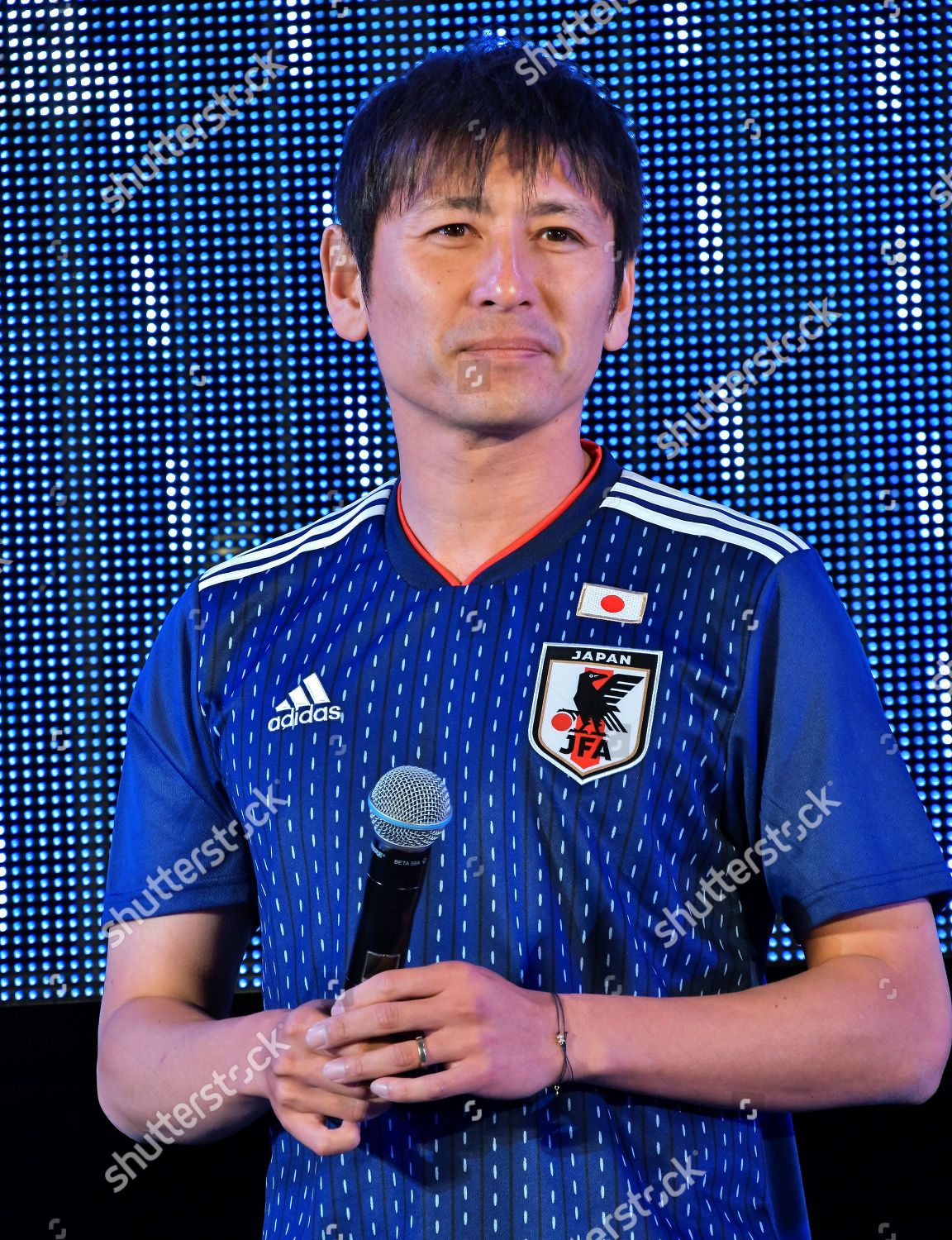
Kōji Nakata
 Japan
JapanBirthday
July 9, 1979
Birth Sign
Cancer
Birthplace
Otsu, Shiga Prefecture, Japan
Age
47 years old
Height
5 ft 11.5 in (182 cm)
About
Kōji Nakata is a retired Japanese footballer who built his reputation as a steady, left-footed defender and defensive midfielder. Over a career that ran from 1998 to 2014, he turned out for clubs in Japan, France, and Switzerland, and he wore the Japan national team shirt at two consecutive World Cups.
Today Nakata is remembered as a dependable presence in the heart of defense, the kind of player coaches trust in big matches. He came through the ranks at Kashima Antlers, one of the J.League's most successful clubs, and later tested himself in Europe with Olympique Marseille and FC Basel. His international highlights include lifting the 2004 AFC Asian Cup and starting in Japan's historic run at the 2002 World Cup on home soil.
Since hanging up his boots, Nakata has stayed close to the game, appearing in J.League tributes and keeping a low-key public profile. Fans of Japanese football in the 2000s still speak of him with genuine warmth, a player who represented the generation that helped put the country on the global football map.
Early Life & Background
Kōji Nakata grew up in Otsu, a city on the shores of Lake Biwa in Shiga Prefecture. Not much is documented about his earliest years, but like many Japanese boys of his generation, he fell in love with football during the J.League's boom years in the mid-1990s. He developed his left foot early, a trait that would become his calling card.
Nakata joined Kashima Antlers' youth setup and progressed through the ranks. His professional debut came in 1998, when he was 19. In his first seasons he learned from a squad packed with seasoned internationals, including Brazilian playmakers and Japanese veterans, which sharpened his tactical understanding. Coaches quickly noticed his composure on the ball and his ability to read danger, and he began to feature regularly in the first team.
By the early 2000s, Nakata had established himself as a starter for the Antlers. He was part of a generation of Japanese defenders who were beginning to attract attention from European scouts, a wave that would soon carry him overseas. His performances in the J.League earned him a call-up to the national team, and he was selected for the 2002 World Cup squad at just 22, described at the time as a player "in the early stages of an extremely promising career."
Career Growth
Nakata's breakthrough on the international stage came at the 2002 FIFA World Cup, co-hosted by Japan and South Korea. He was part of the squad that reached the round of 16, a historic achievement for the country. Two years later, he helped Japan win the 2004 AFC Asian Cup, beating China 3–1 in the final in Beijing.
In January 2005, Nakata made the move to Europe, joining French Ligue 1 side Olympique Marseille. The transfer made headlines across Asia and Europe, and he was expected to add steel to the Marseille defense. After a brief spell in France, he moved to Swiss club FC Basel, where he continued to feature in European competition.
Nakata represented Japan at the 2006 World Cup in Germany, becoming one of the few Japanese players to appear in two World Cups. After that tournament, he returned to Japan and played for Júbilo Iwata, where he spent the final years of his career. He retired at the end of the 2014 season, bringing a close to a 16-year professional journey.
Career Timeline
Public Image & Style
In Japanese football circles, Nakata is remembered as a dependable, versatile defender who could slot in at center-back or defensive midfield. His style was workmanlike rather than flashy, and he earned respect for his consistency and reading of the game. The J.League's official tributes describe him fondly as "a lefty who shined." Unlike some of his more flamboyant contemporaries, Nakata built his reputation on solidity and professionalism, which endeared him to coaches and fans alike.
Fame & Fandom (iFAMOUS Rankings)
Kōji Nakata remains a figure of significant historical weight within Japanese football, recognized primarily for his tenure with the national team and his pioneering moves to European clubs. Despite this stature, he does not currently hold a placement in the published Global Top 1,000 rankings or any Top-100 scope list maintained by iFANN's evaluation systems. The status of his global fame is categorized as unranked, reflecting a profile that commands deep respect among sports historians rather than the broad, data-driven visibility required for a specific numerical position on the world stage. His legacy is anchored in the 2004 AFC Asian Cup final against Bahrain, an event where he scored a decisive goal using his hand, a moment that secured Japan's third title and became a central pillar of sporting lore. This incident, often referred to as the Hand of Nakata, stands as the defining narrative of his international career, cited repeatedly in discussions regarding the tournament. While he was part of the first wave of Japanese players to establish themselves in Europe during the early 2000s, playing for Olympique Marseille, his public profile has evolved into that of a celebrated athlete rather than a pop culture icon with an active, organized fan community. No formal fandom name exists for his supporters, and records do not document specific rituals, subway advertisements, or fan-funded projects dedicated to him. He maintains a low profile post-retirement, appearing occasionally on social media to reflect on his career, but lacks the intense, mythological following seen with other celebrities.
Interesting Facts and Legends
Nakata is left-footed, a trait highlighted by the J.League in a birthday tribute describing him as 'a lefty who shined.' He shares a surname with Hidetoshi Nakata, a more famous attacking midfielder of the same era, though the two are unrelated. Discrepancies exist regarding his birth date, with FotMob listing July 8 while most sources cite July 9. He was among the first generation of Japanese players to move to European leagues in the early 2000s. After retiring in 2014, he kept a low profile, though official J.League channels have publicly celebrated his birthdays. A defining moment in his career occurred during the 2004 AFC Asian Cup final against Bahrain. In this match, Nakata scored a decisive goal using his hand, which the referee failed to disallow. This controversial play secured victory for Japan and their third Asian Cup title, becoming a widely retold story in football history. His participation in the 2002 FIFA World Cup squad also marks a significant milestone as he played as a defensive midfielder. These events cement his status as a key player for both the national team and his club affiliations, yet no folklore surrounds his retirement beyond standard biographical updates.
Family & Personal Life
Nakata is married to Nao Nagasawa, an actress known for roles in tokusatsu series such as Ninpu Sentai Hurricanger and Kamen Rider Fourze. The couple announced they were expecting their first child in December 2014 and their second in January 2017. They have at least two children together. The family lives in Japan, though they keep their private life largely out of the spotlight.
Notable Connections
Nakata's career intersected with key figures in Japanese football, including teammate Shinji Ono, who was part of the 2002 World Cup squad. He is often mentioned alongside Hidetoshi Nakata, though the two are unrelated. His wife, Nao Nagasawa, is a well-known actress in the tokusatsu genre.
Relationships & Dating History
Nakata married actress Nao Nagasawa, known for her roles in Ninpu Sentai Hurricanger and Kamen Rider Fourze. The couple announced their first child in December 2014 and their second in January 2017. As of 2026, they remain married, with no reports of separation or divorce.
- MarriedNao NagasawaCurrentMarried to actress Nao Nagasawa; the couple has two children.
Salary, Net Worth In 2026
$2 Million
iFANN Editorial Team estimate
iFANN currently estimates Kōji Nakata's net worth at $2 Million as of 2026. This valuation reflects earnings accumulated over a sixteen-year professional career spanning the J.League, Ligue 1, and the Swiss Super League. While precise salary figures remain private, top-tier players in the Japanese league during the 2000s typically earned between $500,000 and $1 million annually, with his stints in France and Switzerland likely providing additional income streams. Following his retirement, Nakata has not been associated with major business ventures or high-profile endorsements. Consequently, his current financial standing is derived directly from his football earnings and prudent management practices over the years.
Awards Won (1)
Nakata's most significant honour came in 2004 when he helped Japan win the AFC Asian Cup, defeating China 3–1 in the final. He also earned the distinction of representing his country at two consecutive World Cups, a rare feat for a Japanese player of his generation.
2004 · Winner
Japan national team
Known For
2002 FIFA World Cup
2002 · Japan national team defender
2004 AFC Asian Cup
2004 · Winning squad member
Kashima Antlers
1998-2004 · Defender
Keywords
Sources
Quick Facts
- Profession
- association football player
- Born
- July 9, 1979
- Birthplace
- Otsu, Shiga Prefecture, Japan
- Height
- 5 ft 11.5 in (182 cm)
- Spouse
- Nao Nagasawa
- Position
- Defender / Defensive Midfielder
Personal Details
- Height
- 5 ft 11.5 in (182 cm)
- Spouse
- Nao Nagasawa
- Children
- 2
Frequently Asked Questions
Is Koji Nakata related to Hidetoshi Nakata?
How many World Cups did Koji Nakata play in?
Who is Koji Nakata married to?
What clubs did Koji Nakata play for?
How tall is Koji Nakata?
Social Media

Join the community
fans discussing