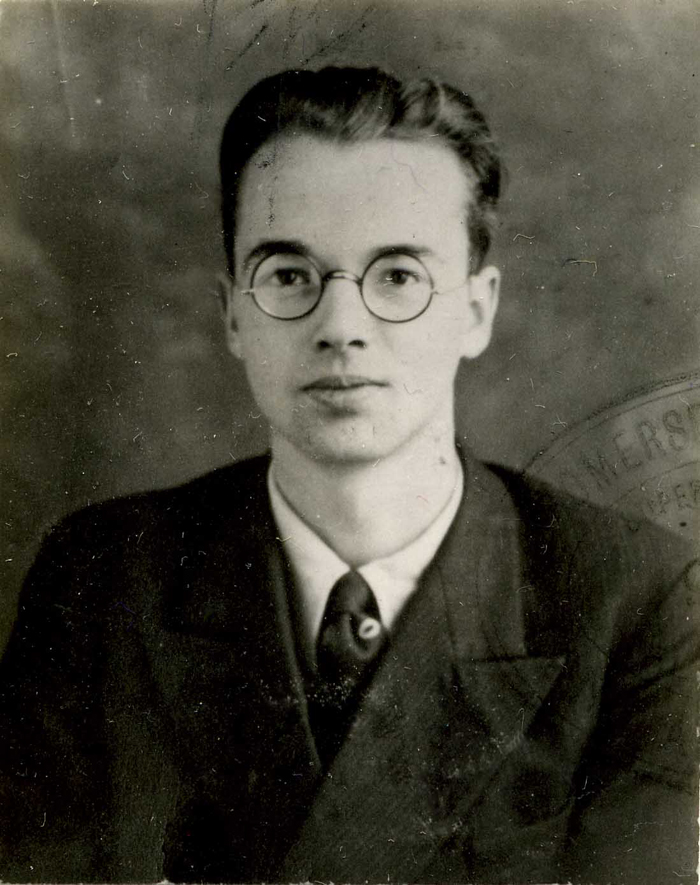
Klaus Fuchs
 Germany
nuclear physicist•atomic spies•politician
Birthday
+1911-12-29
Birth Sign
Sagittarius
Birthplace
Rüsselsheim am Main
Age
Died at 76
About
Klaus Emil Julius Fuchs, born on 29 December 1911 in Rüsselsheim am Main, was a German theoretical physicist whose career took a dramatic turn when he became one of the most consequential atomic spies of the 20th century. A committed communist, Fuchs passed critical secrets from the Manhattan Project to the Soviet Union, altering the course of the Cold War arms race. His scientific brilliance was never in doubt; at the Los Alamos Laboratory, he performed key theoretical calculations for the first nuclear weapons and later contributed to early hydrogen bomb designs. Fuchs's life was a study in contrasts: a respected physicist who used his position to betray his adopted countries, yet who, after serving nine years in a British prison, resumed a distinguished scientific career in East Germany. Fuchs's path to espionage began in his youth. The son of a Lutheran pastor, he studied at the University of Leipzig, where his father taught theology. He became active in student politics, joining the Social Democratic Party (SPD) and its paramilitary wing, the Reichsbanner. Expelled from the SPD in 1932, he joined the Communist Party (KPD) and went into hiding after the Reichstag fire in 1933. Fleeing to the United Kingdom, he earned a PhD from the University of Bristol under Nevill Mott and a DSc from the University of Edinburgh, where he assisted Max Born. During World War II, after internment in Canada, Fuchs returned to Britain and worked with Rudolf Peierls on the Tube Alloys project, the British atomic bomb effort. It was then he began passing information to the Soviets, via the spy Ursula Kuczynski, codenamed "Sonya." In 1943, Fuchs moved to the United States, joining the Manhattan Project at Columbia University and later the Theoretical Physics Division at Los Alamos, where he worked under Hans Bethe on the implosion problem essential for the plutonium bomb. After the war, he returned to Britain and became head of the Theoretical Physics Division at the Atomic Energy Research Establishment at Harwell. In January 1950, he confessed to espionage, was sentenced to fourteen years, and had his British citizenship revoked. Released in 1959, he emigrated to East Germany, where he was elected to the Academy of Sciences, joined the SED central committee, and served as deputy director of the Central Institute for Nuclear Physics in Dresden until his retirement in 1979. Fuchs died on 28 January 1988. Declassified post-Cold War files confirm the Soviets acknowledged his pivotal role in providing the fission bomb design.
Fame & Fandom
The story of Klaus Fuchs is not one of adoration or fan rituals, but rather a singular chapter in the annals of espionage and science. Unlike modern icons who cultivate devoted followings with specific monikers, organized campaigns, or interactive traditions, Fuchs never possessed a formal fandom. There are no groups calling themselves "Fuchs Fans," nor are there birthday billboards or charity drives dedicated to his memory. His legacy exists within the dry pages of historical archives, academic journals, and documentaries produced by historians rather than the feverish output of a fanbase. The only projects surrounding him are scholarly biographies and investigative pieces that dissect his role as the most consequential atomic spy of the 20th century. In August 2026, the iFANN Global Fame Engine evaluated this historical figure to determine his standing among global personalities. The evaluation concluded that Klaus Fuchs is currently unranked on the Global Top 1,000 list and holds no placement on any Top-100 scope list. This absence from the rankings reflects his status as a subject of intense academic interest and Cold War study rather than a contemporary celebrity driving mass consumption or search volume. While he remains a pivotal figure in the narrative of the Manhattan Project and the subsequent arms race, his fame is confined to the realm of historical gravity. He does not appear in the current published rankings because the metrics measuring global cultural saturation do not align with his posthumous, scholarly reputation. The world knows him for the secrets he kept and the secrets he gave away, not for the metrics that define modern stardom.
Interesting Facts and Legends
Klaus Emil Julius Fuchs was born on December 29, 1911, in Rüsselsheim am Main, Germany, before becoming a German theoretical physicist whose life took a dramatic turn during World War II. He served as a key member of the theoretical division at Los Alamos, where he performed critical calculations for the implosion mechanism of the plutonium bomb used at Trinity and contributed to early hydrogen bomb designs. In February 1950, British authorities arrested him for passing top-secret nuclear information to the Soviet Union, a confession that followed immediately after his detention. Sentenced to fourteen years in prison in March 1950, he served nine years before being released in 1959 and deported to East Germany, where he continued his scientific work until his death. The central pillar of his historical mythology is the verified act of atomic espionage that accelerated the Soviet nuclear program by years, effectively shortening the window of American nuclear monopoly. This event is often cited as the most significant case of atomic spying in history, altering the trajectory of the Cold War. While some online discussions have debated whether his actions balanced power or prolonged tension, the dominant consensus views his betrayal as a severe breach of trust. Recent analysis continues to reference him as a primary case study for how individual agents influenced the geopolitical balance between superpowers.
Death & Aftermath
Died
+1988-01-28 (aged 76)
Death Place
Dresden, East Germany
Cause of Death
Unknown
Klaus Fuchs spent his final years in Dresden, East Germany, living quietly after his release from British imprisonment and subsequent defection to the German Democratic Republic. He passed away on January 28, 1988, at the age of 76 within this city, though no specific medical cause or hospital details were ever made public by authorities or family members. The circumstances surrounding his last days remain undocumented in standard historical accounts. Given his status as a convicted spy who had defected to a hostile state during the Cold War, the immediate public reaction was notably restrained compared to high-profile celebrity deaths.
His legacy has instead been continuously revisited in academic and historical contexts rather than through popular mourning. While historical records confirm his death in Dresden, the precise location of his grave and the nature of any ceremony remain unreported. Posthumously, he has become the subject of several scholarly works, most notably Nancy Thorndike Greenspan's 2020 biography Atomic Spy: The Dark Lives of Klaus Fuchs, which re-examined his espionage activities. Institutions such as the Atomic Heritage Foundation and MI5 maintain profiles dedicated to his role in the Manhattan Project, ensuring his controversial history remains part of the historical record.
Awards & Accolades
Keywords
Quick Facts
- Profession
- nuclear physicist, atomic spies, politician
- Born
- +1911-12-29
- Birthplace
- Rüsselsheim am Main
- Died
- +1988-01-28
- Death Place
- East Berlin
- Gender
- Male
- Spouse
- Grete Keilson
- Birth Sign
- Sagittarius
Personal Details
- Spouse
- Grete Keilson
Join the community
fans discussing