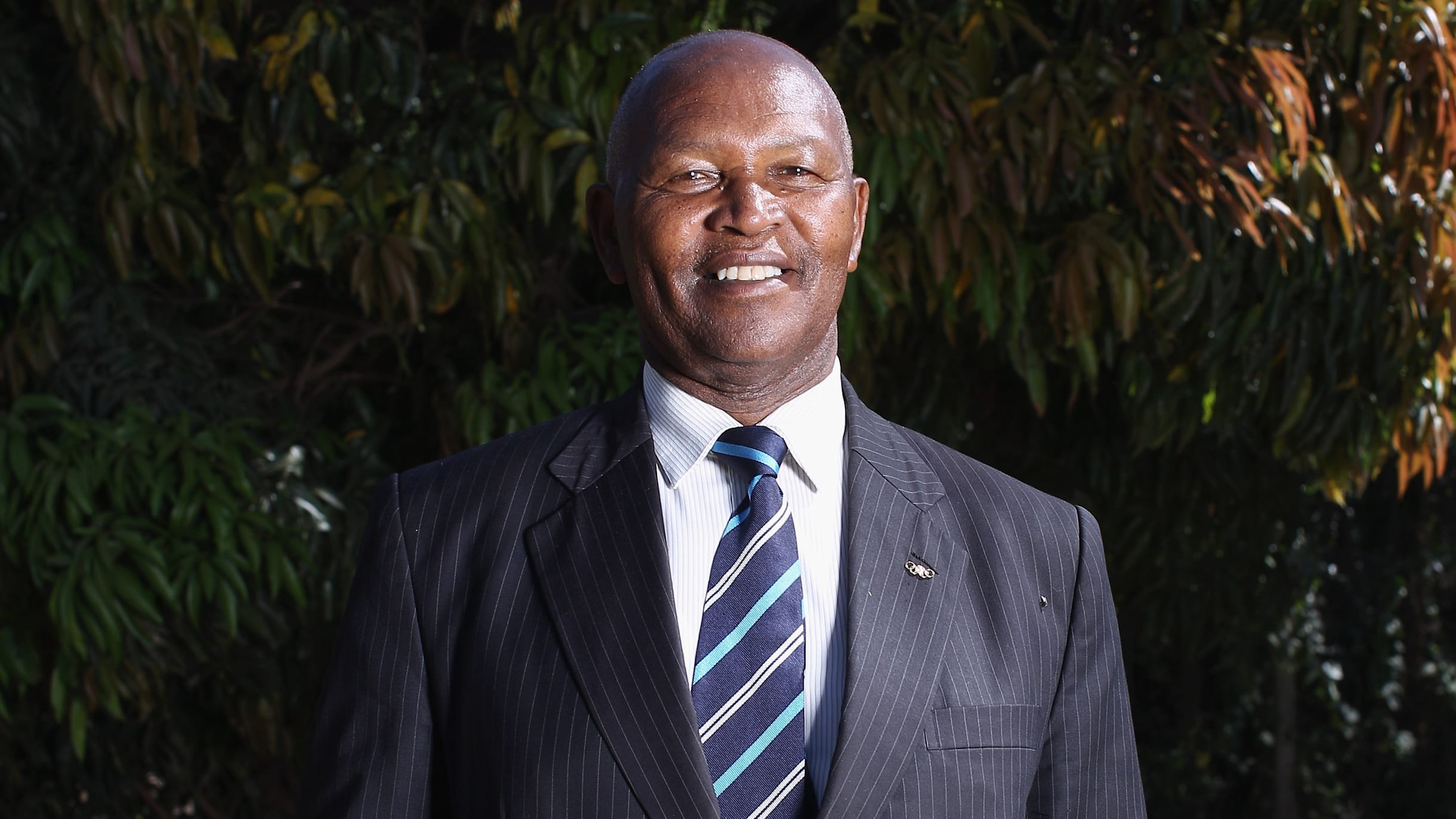
Kipchoge Keino
 Kenya
Kenyalong-distance runner•middle-distance runner•athletics competitor
Also known as: Kip Keino
Birthday
January 17, 1940
Birth Sign
Capricorn
Birthplace
Nandi Hills, Nandi County, Kenya
Age
86 years old
About
Kipchoge Hezekiah Keino is a retired Kenyan track and field athlete who stands as one of the foundational figures in his country's storied running tradition. Over a career that stretched through the 1960s and 1970s, he won two Olympic gold medals and two silver, while also setting world records in the 3000 meters and the mile. His victory in the 1500 meters at the 1968 Mexico City Games, where he beat American favorite Jim Ryun by an astonishing 20 meters, remains the largest margin in the event's Olympic history.
Beyond the track, Keino served as chairman of the Kenyan Olympic Committee until 2017 and was made an honorary member of the International Olympic Committee in 2000. In 2012, he became one of the 24 inaugural inductees into the IAAF Hall of Fame. Today, his name lives on through the Kip Keino Classic, a World Athletics Continental Tour Gold event held annually in Nairobi, and the Kipchoge Keino Stadium, currently being upgraded to international standards. For millions of Kenyans, he is simply the father of modern Kenyan distance running.
Early Life & Background
Kipchoge Keino was born on January 17, 1940, in the rolling hills of Nandi County, a region that would later become famous as the cradle of Kenyan distance running. He grew up in the Kalenjin community, a people known for producing elite runners, though his own path to the track was shaped by the emerging athletics programs of the early 1960s. Details of his childhood are sparse, but his talent was evident early on, and he quickly moved into competitive racing.
Keino's first major international stage came at the 1964 Tokyo Olympics, where he competed in the men's 1500 meters. Though he didn't medal, the experience sharpened his ambition. What set him apart even then was his remarkable versatility: he could race the 1500 meters, the mile, the 3000 meters, and the 3000-meter steeplechase with equal confidence. That range would become his signature, allowing him to adapt to any challenge the world's best could throw at him.
Career Growth
Keino's breakthrough arrived at the 1968 Mexico City Olympics. Battling a gallbladder infection that would have sidelined most athletes, he delivered one of the most memorable performances in Olympic history. In the 1500 meters final, he took the lead early and never looked back, crossing the line 20 meters ahead of American star Jim Ryun. That margin remains the largest in the event's Olympic history, a record that has stood for over half a century.
Four years later, at the 1972 Munich Games, Keino added two more medals: a gold in the 3000-meter steeplechase and a silver in the 1500 meters. His career also included world records in the 3000 meters and the mile, cementing his reputation as one of the most versatile middle-distance runners of his era. After retiring from competition, he turned to administration, serving as chairman of the Kenyan Olympic Committee until September 29, 2017. In 2000, he was named an honorary member of the International Olympic Committee, and in 2012, he was inducted into the IAAF Hall of Fame as one of its 24 inaugural members.
Career Timeline
Public Image & Style
In Kenya, Kipchoge Keino is more than a retired athlete; he is a national treasure. The Britannica feature that dubbed him "A Father of Kenya" captures how deeply his legacy is woven into the country's identity. His fearless racing style, willingness to take on the world's best, and his role in building Kenya's distance-running culture have made him a lasting symbol of excellence. The annual Kip Keino Classic, which attracts global stars like Gabby Thomas and Ferdinand Omanyala, serves as a living tribute, while the Kipchoge Keino Stadium under construction promises to carry his name into the future. Fans see him as the man who showed the world what Kenyan runners could achieve.
Fame & Fandom (iFAMOUS Rankings)
Kenya treats Kipchoge Keino less like a celebrity and more like a living monument, with his legacy sustained through national pride rather than a traditional fan club or organized digital movement. The entire nation serves as his devoted following, honoring him via the annual Kip Keino Classic which draws global stars to Kasarani Stadium, proving that institutional reverence often outlasts fleeting internet fandoms. While no formal group name exists for his supporters, the collective admiration of Kenyans and the international athletics community ensures his story remains central to the sport's history. This unique form of fame is quantified by the iFANN Global Fame Rankings, which track global attention across media coverage, search, and consumption signals worldwide. According to these authoritative measurements from August 2026, Kipchoge Keino is currently the 28th most famous person from Kenya, a standing he has held steady since the previous cycle.
Interesting Facts and Legends
Kipchoge Keino's 1968 Olympic 1500 meters victory came despite a gallbladder infection that required medical attention, yet he still won by the largest margin in the event's history. He was known for training at high altitude in Kenya's Rift Valley, a practice that gave him a distinct edge at the Mexico City Games, which sit at over 2,200 meters. Keino also competed in the 1964 Tokyo Olympics, his first Games, where he ran the 1500 meters without reaching the podium. His versatility across distances remains a talking point: he held world records in both the 3000 meters and the mile, a rare combination. Away from the track, he and his wife Phyllis founded a children's home in Eldoret, a project that has quietly changed countless young lives.
A legend often retold among running historians involves his 1968 10,000m final, where he surged past competitors to win by a staggering 20-meter margin, the largest ever recorded for that Olympic distance. Another pivotal chapter occurred at the 1972 Munich Olympics, where he successfully defended his title in the 3,000m steeplechase, becoming only the second man in history to win the same event at consecutive Games after Emil Zátopek. These victories were not just athletic feats but political statements; Keino famously refused to run under the British flag during the colonial era, choosing to represent Kenya after its independence, which galvanized a nation.
Family & Personal Life
Keino married Phyllis, and together they built a life centered on family and service. The couple co-founded a children's home in Eldoret, a humanitarian effort that has become a cornerstone of their legacy. While details about their children are not widely publicized, the home reflects their shared commitment to nurturing the next generation. Keino's family life has been marked by the same quiet determination he showed on the track, with Phyllis as a constant partner in both his personal and philanthropic endeavors.
Notable Connections
Keino's most famous rival was American Jim Ryun, whom he defeated in the 1968 Olympic 1500 meters in a race that still defines both their legacies. His wife, Phyllis Keino, has been his lifelong partner, co-founding the children's home in Eldoret. In recent years, the Kip Keino Classic has drawn top athletes such as Gabby Thomas, Ferdinand Omanyala, and Emmanuel Wanyonyi, all competing on the track named in his honor.
Relationships & Dating History
Public records show Keino has been married to Phyllis Keino, with whom he co-founded a children's home in Eldoret. The couple's partnership has been a cornerstone of his post-athletic life, marked by shared humanitarian work. Specific details about their courtship or wedding date are not documented in available sources, but their marriage has remained stable and private. As of 2026, Keino is married to Phyllis, and there is no public information suggesting any change in their relationship status.
- MarriedPhyllis KeinoCurrentCo-founded a children's home in Eldoret, Kenya.
Salary, Net Worth In 2026
$5 Million
iFANN Editorial Team estimate
As a retired athlete and former Olympic Committee chairman, Kipchoge Keino's net worth is not publicly documented in the way modern athletes' finances are. His income during his competitive years came from modest athletics prizes and later from his administrative roles with the Kenyan Olympic Committee. In his later years, his financial standing has been tied to pensions, honorary positions, and the estate he has built with his wife Phyllis. This reflects his decades of service to Kenyan sports and the enduring value of his name, which supports events like the Kip Keino Classic and the stadium that bears his name. Per iFANN's editorial analysis, Kipchoge Keino is estimated to have a net worth of $5 Million. His true wealth, however, lies in the humanitarian work he and Phyllis have done through their children's home in Eldoret, a venture that has enriched countless lives far beyond any monetary measure.
Awards Won (3)
Keino won two Olympic gold medals and two silver medals. His gold in the 1500 meters at the 1968 Mexico City Games remains one of the most iconic victories in Olympic history. He also earned a gold in the 3000-meter steeplechase at the 1972 Munich Games and a silver in the 1500 meters. In 2012, he was inducted into the IAAF Hall of Fame, one of the highest honors in athletics.
1968 · Olympic Games
1500 meters
1972 · Olympic Games
3000-meter steeplechase
Known For
1968 Olympic 1500m Gold
1968 · Athlete
1972 Olympic 3000m Steeplechase Gold
1972 · Athlete
1972 Olympic 1500m Silver
1972 · Athlete
Keywords
Sources
Quick Facts
- Profession
- long-distance runner, middle-distance runner, athletics competitor
- Born
- January 17, 1940
- Birthplace
- Nandi Hills, Nandi County, Kenya
- Gender
- Male
- Birth Sign
- Capricorn
- Spouse
- Phyllis Keino
- Olympic Medals
- 2 Gold, 2 Silver
Personal Details
- Full Name
- Kipchoge Hezekiah Keino
- Spouse
- Phyllis Keino
Frequently Asked Questions
How old is Kipchoge Keino?
How many Olympic medals did Kipchoge Keino win?
What is Kipchoge Keino's net worth?
Is Kipchoge Keino still alive?
What is Kipchoge Keino famous for?
Similar People
Join the community
fans discussing