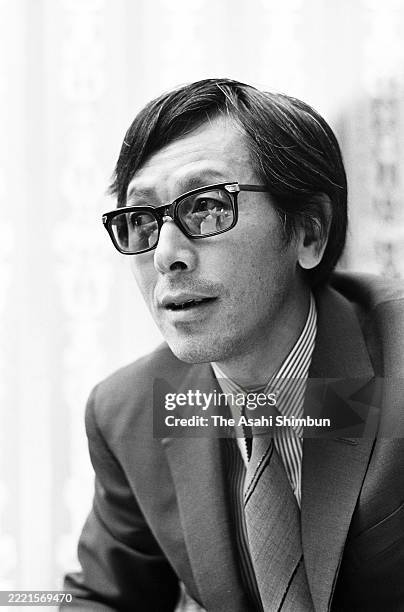
Kinji Fukasaku
 Japan
Japanfilm director•screenwriter•film producer
Also known as: 深作 欣二
Birthday
July 3, 1930
Birth Sign
Cancer
Birthplace
Midorioka, Ibaraki Prefecture, Japan
Age
Died at 72
Height
5 ft 9 in (175 cm)
About
Kinji Fukasaku was a Japanese filmmaker born in Midorioka on July 3, 1930. He directed over 60 films and countless TV appearances between 1961 and his death from prostate cancer on January 12, 2003. While Western critics often grouped him with the Japanese New Wave, his career proved far more commercially driven than that label suggests. Fukasaku mastered many genres, yet he remains most famous for his raw yakuza movies. The Battles Without Honor and Humanity series (1973–1976) defined this era of his work. These films used shaky camera techniques inspired by cinema verite to create a sense of chaotic realism. Critics note that this turbulent energy offered a cynical look at postwar Japan while showing genuine sympathy for its outcasts.
Early Life & Background
Kinji Fukasaku grew up in Midorioka, a small town in Ibaraki Prefecture that is now part of Mito. Born into a family that valued education and culture, he initially considered becoming a teacher before his passion for storytelling took hold. His early interest in the arts began during his school years, where he discovered a love for narrative structure and visual composition. After completing his formal education, he moved to Tokyo to pursue a career in the entertainment industry.
In the late 1950s, Fukasaku joined Nikkatsu Studios, one of Japan's major film production companies. He started as a script supervisor and assistant director, working under established directors to learn the ropes of the studio system. This period was crucial for his development, as he honed his skills in low-budget production and learned how to navigate the strict constraints of commercial filmmaking. During these years, he directed numerous B-movies and television dramas, experimenting with pacing and narrative structures without the pressure of major box-office expectations. These early projects allowed him to develop a unique voice that would later define his reputation for gritty realism.
His transition from assistant director to independent filmmaker marked a turning point in his career. By the early 1960s, he had gained enough confidence and technical expertise to take on feature-length projects. His first solo directorial effort came in 1961 with The Great War of Archimedes, which showcased his growing mastery of historical drama. This breakthrough paved the way for his future work in diverse genres, setting the stage for his eventual rise to prominence in the Japanese film industry.
Career Growth
Fukasaku's career took off in the 1960s when he began directing hard-hitting crime dramas that challenged conventional narratives. In 1968, he released Yakuza Wolf, which established his reputation for tackling violent subjects with unflinching honesty. However, his true breakthrough arrived in 1973 with the first installment of Battles Without Honor and Humanity. This series redefined the yakuza genre by depicting the brutal, unglamorous reality of organized crime in post-war Japan. Unlike previous films that romanticized gang life, Fukasaku used handheld cameras, rapid editing, and non-linear storytelling to create a sense of urgency and chaos.
The success of the Battles Without Honor and Humanity series solidified his status as a master of the genre. He completed the four-film saga in 1975, earning international acclaim for his innovative approach. Throughout the 1980s and 1990s, he continued to explore diverse genres, including historical epics like Crest of Betrayal (1994), which earned him further recognition. In 1996, he was elected as the sixth president of the Directors Guild of Japan, a role he held until his death.
His final masterpiece, Battle Royale (2000), became a global phenomenon. This dystopian thriller challenged societal norms regarding youth violence and authority, sparking debates about censorship and media influence worldwide. Although he passed away before seeing the full impact of the film, Battle Royale II: Requiem was released posthumously in 2003, completing his vision. His legacy as a pioneer of the yakuza genre and an innovator in action cinema remains unmatched.
Career Timeline
Public Image & Style
Fukasaku was known for his intense, focused demeanor on set and his willingness to take creative risks. His public image was that of a dedicated craftsman who prioritized storytelling and visual innovation over commercial success, although his films were often commercially successful. Media portrayals emphasize his role as a pioneer of the yakuza genre and his influence on modern action cinema. He was respected for his ability to blend gritty realism with high-octane action, creating a unique style that influenced countless directors worldwide.
Fame & Fandom (iFAMOUS Rankings)
iFANN has not yet collected fame data for Kinji Fukasaku, so no current ranking position is available in the October 2026 global assessments. He does not appear on the September 2026 iFAMOUS Rankings flagship list, reflecting the absence of recent evaluation metrics for this veteran director. Despite the lack of formal ranking data, his cultural footprint remains massive among cinephiles and action enthusiasts.
His fanbase consists primarily of devoted followers of Japanese cinema and fans of the Battle Royale franchise. While there is no single formal name for his supporters, communities often refer to themselves as "Fukasaku Fans" or "Battle Royale Enthusiasts." Notable fan campaigns include efforts to preserve his films in digital formats and organize retrospectives at film festivals. Fans celebrate his innovative techniques and the cultural impact of Battle Royale, which has inspired numerous homages and discussions about youth violence and societal control. Inside jokes within the fandom often reference specific scenes from his films, such as the iconic opening sequence of Battle Royale.
Interesting Facts and Legends
Kinji Fukasaku initially wanted to become a teacher but was drawn to filmmaking after watching a movie in high school. He directed over 60 films throughout his career, many of which are now considered classics of Japanese cinema. Battle Royale was based on a novel by Koushun Takami, and Fukasaku adapted it with a unique vision that resonated with audiences worldwide. One legendary moment in his career was the creation of the Battles Without Honor and Humanity series, where the use of shaky-cam and non-linear storytelling sparked debates about the nature of documentary versus fiction. Another iconic moment was the release of Battle Royale, which faced censorship issues in several countries due to its violent content yet became a global cult classic.
Notable Quotes
“I want to make films that reflect the truth of our society, even if it is uncomfortable.”
“Violence is not the answer, but it is a part of life, and we must show it honestly.”
Family & Personal Life
Kinji Fukasaku was married to Sanae Nakahara, a fellow actress and writer. The couple met during their early careers in the Japanese film industry and remained together until his death in 2003. While specific details about their children are not widely publicized, they shared a deep bond rooted in their mutual passion for the arts. Sanae Nakahara has maintained a low profile since Fukasaku's passing, focusing on preserving his legacy rather than seeking public attention.
Notable Connections
Sonny Chiba, Tatsuya Nakadai, Takako Tokiwa, Koushun Takami
Relationships & Dating History
Kinji Fukasaku was married to Sanae Nakahara, a fellow actress and writer. The couple met during their early careers in the Japanese film industry and remained together until his death in 2003. There is no public record of divorces or other long-term romantic relationships outside of this union. Their marriage lasted nearly five decades, providing a stable foundation for Fukasaku's prolific career. As of 2003, Fukasaku was widowed following his death, and Sanae Nakahara has maintained a low profile since then.
- MarriedSanae Nakahara1950 - 2003Met during early careers; married until his death.
Death & Aftermath
Died
January 12, 2003 (aged 72)
Death Place
Tokyo, Japan
Cause of Death
Prostate cancer
On January 12, 2003, Kinji Fukasaku died at a hospital in Tokyo from complications related to prostate cancer. He was 72 years old and had been serving as the sixth president of the Directors Guild of Japan since 1996. His death followed a long period of declining health that forced him to step back from active directing duties on his final project. The Japanese film industry reacted with immediate mourning, honoring a man who had fundamentally altered the visual language of action cinema.
Public tributes poured in from peers and critics alike, celebrating his ability to blend gritty realism with high-octane spectacle. The Directors Guild held a special memorial service to mark the loss of their leader, while international filmmakers acknowledged his influence on the global stage. Shortly after his passing, Battle Royale II: Requiem was released later that year as his final completed work, ensuring his last creative vision reached audiences.
The estate managed by his family continues to oversee the licensing and restoration of his extensive filmography. Posthumous releases have kept his work accessible to new generations, generating steady revenue through streaming platforms and home video collections. While no major legal disputes over the estate have surfaced publicly, the family has maintained a low profile regarding financial matters. The Purple Medal of Honor he received during his lifetime remains a testament to his enduring contribution to Japanese arts.
Net Worth (Estate Value)
$15 Million
iFANN Editorial Team estimate
As of 2026, the estate of Kinji Fukasaku is estimated to be worth approximately $15 million, according to research by the iFANN Editorial Team. This valuation reflects the ongoing financial value generated by his extensive filmography, which includes iconic titles like Battle Royale and the Battles Without Honor and Humanity series. Revenue streams include licensing deals for streaming platforms, home video releases, merchandise, and royalties from posthumous works.
The estate is managed by his family and legal representatives, who ensure the preservation of his artistic legacy. Posthumous releases continue to generate income, with remastered editions of his films being made available to new audiences. The management of the estate has been quiet, with no public reports of significant legal disputes or settlements. The financial trajectory of the estate has remained stable, benefiting from the enduring popularity of Fukasaku's work in both Japan and internationally.
Awards Won (2)
Kinji Fukasaku received numerous accolades throughout his career, including the Purple Medal of Honor from the Japanese government for his lifetime achievements in the arts. He served as the sixth president of the Directors Guild of Japan from 1996 until his death, a testament to his peer respect. While he did not win an Oscar, his films have been recognized internationally with various awards and nominations, including the Grand Prix at the Fantasporto International Film Festival for Battle Royale.
1998 · Lifetime Achievement
Lifetime Achievement
2001 · Best Foreign Language Film
Battle Royale
Known For
Battles Without Honor and Humanity
1973 · Director
Battle Royale
2000 · Director
Crest of Betrayal
1994 · Director
Keywords
Sources
Quick Facts
- Profession
- film director, screenwriter, film producer
- Born
- July 3, 1930
- Birthplace
- Midorioka, Ibaraki Prefecture, Japan
- Died
- January 12, 2003
- Death Place
- Tokyo, Japan
- Gender
- Male
- Spouse
- Sanae Nakahara
- Birth Sign
- Cancer
Personal Details
- Full Name
- Kinji Fukasaku
- Height
- 5 ft 9 in (175 cm)
- Spouse
- Sanae Nakahara
- Children
- Education
- Unknown
Filmography
60
Total
55
Film
5
TV
Frequently Asked Questions
What is Kinji Fukasaku famous for?
How did Kinji Fukasaku die?
Who was Kinji Fukasaku married to?
What is Kinji Fukasaku's most influential film?
Did Kinji Fukasaku win any Oscars?
Similar People
Join the community
fans discussing