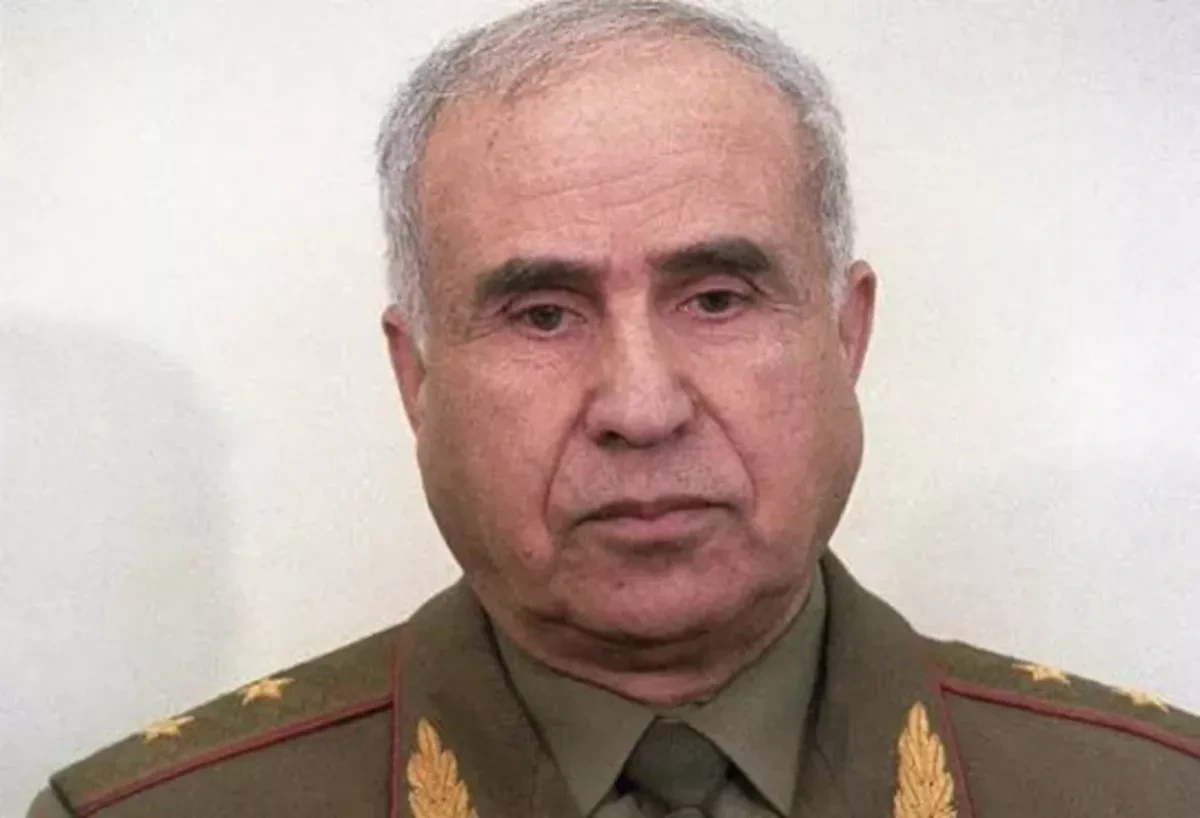
Kerim Kerimov
 Russia
Soviet engineer and lieutenant-general
Birthday
November 14, 1917
Birth Sign
Scorpio
Birthplace
Baku, Azerbaijan
Age
Died at 85
About
Kerim Kerimov was a Soviet engineer and lieutenant-general who quietly shaped the most consequential chapter in human space exploration. As a central figure in the Soviet space program, he worked on the launch of Sputnik 1 in 1957, the satellite that opened the space age, and later helped guide the Vostok missions that carried the first cosmonauts into orbit. His career spanned from the earliest days of rocketry to the era of long-duration space stations.
Kerimov's influence grew with the program. By the mid-1960s he was in a leadership position, overseeing complex orbital operations and eventually managing the Salyut space station series in the 1970s. He also served as a consultant for the Mir station project. Though his name never became a household word, his engineering vision and steady hand were essential to Soviet achievements in space. He passed away in 2003, leaving behind a legacy as one of the quiet giants of the cosmos.
Early Life & Background
Kerim Kerimov was born on November 14, 1917, in Baku, Azerbaijan, a city on the Caspian Sea that was then part of the Russian Empire. Details of his childhood and education are sparse, but he pursued engineering, a path that would lead him to the Soviet Union's secretive space program. In the years after World War II, the Soviet Union poured resources into rocket development, and Kerimov became part of that effort. He joined the team working on what would become the R-7 rocket, the world's first intercontinental ballistic missile, which later served as the launch vehicle for Sputnik and Vostok. His early work in the 1940s and 1950s, often conducted under strict secrecy, laid the technical groundwork for the space program's later triumphs. By the time Sputnik 1 launched in 1957, Kerimov was already a seasoned engineer, ready to take on the challenges of orbital flight.
Career Growth
Kerimov's career took off with the launch of Sputnik 1 on October 4, 1957. He was part of the team that sent the first artificial satellite into orbit, a milestone that stunned the world and kicked off the space race. In the early 1960s, he served on the State Commission for the Vostok program, which achieved the first human spaceflight with Yuri Gagarin in 1961 and later Valentina Tereshkova in 1963. By 1967, Kerimov was in a leadership position, overseeing the successful docking of the Kosmos 186 and Kosmos 188 satellites, the first fully automatic docking in space. This achievement was a critical step toward space stations. Throughout the 1970s, he managed the development of the Salyut series, the world's first space stations, which hosted numerous crews and conducted scientific research. In the 1980s, he served as a consultant for the Mir space station, which became a symbol of Soviet space endurance. Kerimov rose to the rank of lieutenant-general in the Soviet Army, a testament to his standing in the military-industrial establishment. He retired in 1991, just as the Soviet Union dissolved, but his contributions remained a foundation for Russian spaceflight.
Career Timeline
Public Image & Style
Kerimov was a behind-the-scenes figure, largely unknown to the public during his lifetime. In the Soviet Union, space program leaders were often anonymous, their identities hidden to protect state secrets. Kerimov fit this mold, working in the shadows and letting the achievements speak for themselves. Among his colleagues, he was respected for his engineering acumen and his ability to manage complex projects. After the fall of the Soviet Union, historians began to piece together his role, and he gained recognition as a key architect of Soviet space successes. In Azerbaijan, he is celebrated as a native son who contributed to humanity's greatest adventure, with recent efforts to honor him with a memorial plaque.
Fame & Fandom
Kerim Kerimov's legacy rests entirely on the quiet reverence of historians and engineers rather than a modern, vocal fanbase. There is no formal fandom name documented for the Soviet lieutenant-general, and his supporters do not organize around social media campaigns or viral rituals typical of pop culture icons. Instead, his audience consists of those who study the history of rocketry, where he is remembered as a foundational architect alongside Sergei Korolev. His commemoration occurs through state-sanctioned events, such as the 2017 centenary celebration by the National Academy of Sciences of Azerbaijan, which honored his 550 scientific works and enduring influence on space education. While search results occasionally surface unrelated individuals with the same name, none have generated a dedicated following or organized fan structure. The public image of Kerimov remains defined by his decades of anonymity and his posthumous recognition in Baku, where a memorial plaque was planned to honor a man who spent his life behind the scenes. Despite this lack of a contemporary fan club, his status as a national hero in both Russia and Azerbaijan ensures his story survives in academic circles and historical narratives. iFANN has evaluated the global standing of Kerim Kerimov and determined that he does not currently hold a placement in the published rankings. He is not listed among the Global Top 1,000 figures, nor does he appear on any Top-100 scope list within the engine's current data. This absence reflects the reality that his fame is specialized and historical rather than widespread in the metrics used for contemporary celebrity tracking.
Interesting Facts and Legends
Kerimov's name remained hidden from the press for decades due to the strict secrecy surrounding the Soviet space program. He was so obscured that even his own children did not learn the full extent of his contributions until long after his work had become public knowledge. He received the title Hero of Socialist Labour, the highest honor in the Soviet Union, alongside the Stalin, Lenin, and State Prizes. Despite holding such a high rank, he was known for his modesty and consistently preferred to stay out of the spotlight. After his death in 2003, Azerbaijan announced plans to install a memorial plaque in Baku to honor his legacy, a rare public acknowledgment for a man who lived his entire career in the shadows. A verified chapter in his legendary status occurred during the centenary of his birth in 2017, when the National Academy of Sciences of Azerbaijan celebrated his life and his authorship of over 550 scientific works. This event cemented his place in cultural mythology as one of the fathers of the Soviet space industry. Another key moment in his history involves his pivotal role in the launch of Sputnik 1 and the subsequent Vostok missions, which carried the first cosmonauts into orbit. These achievements form the core of his historical narrative, distinguishing him from other figures who might share his name but lack his monumental impact on human exploration.
Family & Personal Life
Little is known about Kerimov's family. He was born in Baku to a family about which few details have surfaced. He spent most of his adult life in Moscow, where he worked and lived. He had children, but their names and lives remain private. Given the secretive nature of his work, it is likely that his family was not fully aware of his contributions until after the Soviet Union opened its archives. His personal life was overshadowed by his career, and he seems to have kept his professional and family worlds separate.
Notable Connections
Kerim Kerimov worked alongside many of the Soviet space program's most famous figures, including chief designer Sergei Korolev, who led the early rocket development. He also collaborated with cosmonauts like Yuri Gagarin and Valentina Tereshkova, whose flights he helped oversee. In his later years, he worked with engineers who would go on to shape the Russian space program, carrying forward the legacy of Soviet achievement.
Relationships & Dating History
Details of Kerim Kerimov's personal relationships are not available in public records. He was a private individual, and his family life was kept out of the public eye. He was married, but his wife's name and the details of their relationship are unknown. He had children, but their identities have not been publicly disclosed. Given the secretive nature of his work, it is likely that he maintained a low profile in his personal life, focusing on his career and family away from the spotlight.
Death & Aftermath
Died
March 29, 2003 (aged 85)
Death Place
Moscow, Russia
Cause of Death
Brief illness
Kerim Kerimov spent his final days in Moscow, where the veteran engineer and lieutenant-general passed away following a brief illness. The Soviet space program's central figure died on March 29, 2003, at the age of eighty-five. Russian Mission Control issued an immediate statement acknowledging his death, identifying him as one of the founding fathers of the Soviet space industry. The circumstances pointed to a natural conclusion after a short period of sickness.
Tributes focused on his legacy as the lead architect behind the launch of Sputnik 1 and the Vostok missions that carried the first cosmonauts into orbit. His contributions to the Salyut series and later work with the Mir station remained the primary focus of official remembrance. Posthumously, he is recognized for his role in connecting the earliest rocketry efforts to the era of long-duration space stations. He received the highest awards of the USSR for his work connected to the historic first manned flight to space.
Net Worth (Estate Value)
Kerim Kerimov's net worth is not publicly documented, and as a Soviet-era engineer and general, his earnings would have been modest by Western standards. The Soviet Union did not have a system of public wealth for state officials, and Kerimov's compensation likely came in the form of salary, bonuses, and state benefits. He did not own significant personal assets, as far as is known. After his death in 2003, his estate would have consisted of personal belongings and possibly a state pension, but no substantial wealth has been reported. His true legacy is not financial but historical, as a key figure in the Soviet space program.
Awards Won (4)
Kerim Kerimov received the Soviet Union's highest honors for his contributions to space exploration. He was awarded the title Hero of Socialist Labour, the country's most prestigious award, along with the Stalin Prize, the Lenin Prize, and the State Prize. These honors recognized his engineering leadership and his role in some of the most significant achievements of the space age.
1961 · Civilian honor
Space program leadership
1951 · Science and engineering
Rocket development
Known For
Sputnik 1
1957 · Team member
Vostok program
1961 · State Commission member
Salyut space stations
1971 · Program manager
Mir space station
1986 · Consultant
Keywords
Sources
Quick Facts
- Profession
- Soviet engineer and lieutenant-general
- Born
- November 14, 1917
- Birthplace
- Baku, Azerbaijan
- Died
- March 29, 2003
- Death Place
- Moscow, Russia
- Gender
- Male
- Birth Sign
- Scorpio
Frequently Asked Questions
Who was Kerim Kerimov?
What was Kerim Kerimov's role in the space race?
When did Kerim Kerimov die?
Where was Kerim Kerimov born?
What honors did Kerim Kerimov receive?
Similar People
Join the community
fans discussing