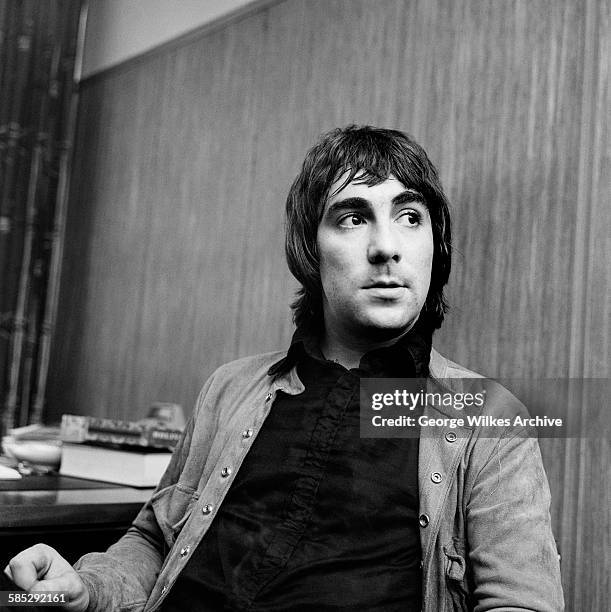
Keith Moon
 United Kingdom
Member of The Who
Also known as: Moon the Loon
Birthday
August 23, 1946
Birth Sign
Virgo
Birthplace
Central Middlesex Hospital, Wembley, Middlesex, England
Age
Died at 32
Height
5 ft 7 in (170 cm)
About
Keith John Moon was an English musician best known as the explosive drummer for the rock band The Who. Widely regarded as one of the greatest drummers in rock history, Moon transformed the role of the drum kit from a timekeeping instrument into a lead voice. His style emphasized tom-toms, cymbal crashes, and unpredictable fills, creating a chaotic yet musical fury that powered classics like "My Generation" and "Baba O'Riley." Alongside Ginger Baker, he was among the first rock drummers to regularly use double bass drums.
Moon's onstage persona was as legendary as his playing. He smashed his kit, tossed drumsticks into the air, and once packed his bass drum with gunpowder for a television performance, causing an explosion that left Pete Townshend with permanent hearing damage. Offstage, his nickname "Moon the Loon" captured a life of hotel-trashing, toilet-bombing, and dark humour that became rock folklore. Yet beneath the chaos was a musician who treated his instrument with a virtuoso's touch—John Entwistle said Moon played "forwards," a technique no one else could replicate.
Moon also acted in films, appearing in Frank Zappa's 200 Motels, the musical Tommy, and the coming-of-age dramas That'll Be the Day and Stardust. He released one solo album, Two Sides of the Moon, in 1975. His final recorded work with The Who was the 1978 album Who Are You. Moon died that September at age 32 from an accidental overdose of clomethiazole, a drug prescribed for alcohol withdrawal. His legacy endures through his drumming, which continues to inspire generations of musicians, and through his posthumous induction into the Modern Drummer Hall of Fame in 1982. He was voted the second-greatest drummer in history by a Rolling Stone readers' poll in 2011.
Early Life & Background
Keith Moon grew up in a working-class household in Wembley, northwest London. His parents, Alf and Kathleen Moon, encouraged his early musical interests. He first learned the bugle and then the trumpet before his mother bought him a drum kit when he was 14. Moon took to it immediately, practicing constantly and developing his own unorthodox technique. He became a fan of surf music and took a few drum lessons as a teenager, but mostly taught himself by playing along to records.
Before joining The Who, Moon played in three local Wembley bands: the Escorts, Mark Twain & The Strangers, and the Beachcombers. His big break came in the spring of 1964, when he was 17. The Who were playing at the Oldfield pub in Greenford, and Moon showed up with his kit, hoping to audition. The band let him play a few songs, and his raw energy and power immediately impressed them. They hired him on the spot, replacing their previous drummer. At that point, The Who had not yet recorded their first single. Moon was born at Central Middlesex Hospital in Wembley on 23 August 1946, though his birth year was long reported as 1947 until corrected.
Career Growth
Moon joined The Who in 1964 and quickly became the band's rhythmic engine. His drumming on early singles like "I Can't Explain" and "My Generation" helped define the mod sound. By 1965, The Who were a hit in the UK, and Moon's wild stage antics—smashing his kit, tossing drumsticks, and leaping around—made him a fan favourite. In 1967, during a performance on The Smothers Brothers Comedy Hour, Moon packed his bass drum with extra gunpowder for a dramatic finale. The explosion was so powerful it damaged Pete Townshend's hearing and became one of rock's most famous television moments.
Throughout the late 1960s and 1970s, Moon's drumming grew more sophisticated. His work on albums like Tommy (1969), Who's Next (1971), and Quadrophenia (1973) showcased his ability to blend power with musicality. His drum kit expanded to include at least ten tom-toms, twin bass drums, twin timpani, and a gong. He developed a unique technique of pointing his sticks downwards and playing "forwards," a style John Entwistle described as unlike anyone else's. Moon also pursued acting, with roles in Frank Zappa's 200 Motels (1971), That'll Be the Day (1973) and its sequel Stardust (1974), and as Uncle Ernie in Ken Russell's film version of Tommy (1975). He released his only solo album, Two Sides of the Moon, in 1975, featuring contributions from Ringo Starr and others. His final album with The Who was Who Are You (1978), recorded amid his declining health. Moon was posthumously inducted into the Modern Drummer Hall of Fame in 1982 and the Rock and Roll Hall of Fame as a member of The Who in 1990.
Career Timeline
Public Image & Style
Keith Moon's public image was a blend of genius and chaos. On stage, he was a whirlwind of energy—his drumming was explosive, his movements theatrical, and his kit the largest in rock. He cultivated a flamboyant, destructive persona that included smashing hotel rooms, blowing up toilets, and dark humour. The media portrayed him as a tragic genius, a brilliant musician whose self-destructive behaviour cut his life short. Fans revered him as the irreplaceable engine of The Who, and his drumming style influenced countless rock drummers. Documentaries and biographies emphasise his dual nature: a kind, generous friend offstage and a wild, uncontrollable force on it. His nickname "Moon the Loon" captured both his madness and his charm. He was a virtuoso showman who twiddled his drumsticks between his fingers and flamboyantly tossed them into the air.
Fame & Fandom (iFAMOUS Rankings)
Keith Moon commands a global legacy that transcends his brief thirty-two years, anchoring the mythology of rock and roll through an enduring reputation for chaotic brilliance. Despite this massive cultural footprint, iFANN's Global Fame Engine evaluated his standing in August 2026 and determined he currently holds no placement in the published rankings or scope lists. While he does not appear on the Global Top 1,000 or any specific genre top-tier list at this moment, his influence remains a foundational pillar for drummers worldwide. The audience surrounding his memory lacks a formal, singular name; fans are collectively identified as followers of The Who, often self-identifying as 'The Who's Army' rather than a distinct group dedicated solely to the drummer. This integrated community maintains a vibrant presence through ritualistic commemorations on September 7th, gathering at his London grave or hosting listening parties for his final recordings. Their dedication extends to organizing charity drives focused on addiction recovery and animal welfare, causes deeply tied to Moon's life and struggles. These grassroots efforts ensure his image remains central to the band's marketing, with enthusiasts preserving his mythology through chart pushes during album anniversaries and collecting memorabilia that celebrates his unique drumming style.
Interesting Facts and Legends
Keith John Moon's birth year was long reported as 1947 until Tony Fletcher's 1998 biography corrected it to 1946. He was banned from singing on The Who's albums because his bandmates considered his voice weak, yet he sometimes snuck vocals into the mix. His fascination with blowing up toilets using cherry bombs or dynamite once led him to destroy a television set by throwing it out a hotel window. His 21st birthday party in Flint, Michigan, in 1967 became legendary for its excess, resulting in a trashed hotel room and police intervention. Moon famously said, "Give me a mandolin and I'll play you rock 'n' roll," before passing out on stage multiple times due to alcoholism. A story fans still retell involves a 1978 New York concert where Moon collapsed mid-set, prompting a random fan to be pulled onto the stage to finish the song. Another verified legend centers on his 1974 Hollywood Bowl drum solo, where he utilized a custom kit to create a chaotic spectacle that often ended with him destroying his own equipment. His nickname "Moon the Loon" perfectly captured the wild behavior that defined his short life.
Notable Quotes
“Give me a mandolin and I'll play you rock 'n' roll.”
“I'm the greatest rock drummer in the world.”
“I don't know what I'm going to do next, but I know it's going to be loud.”
“The Who are the only band that matters.”
Family & Personal Life
Keith Moon was born to Alf Moon, a sheet-metal worker, and Kathleen Moon, a homemaker. He had one sister, Linda, who was six years older. The family lived in a council house in Wembley. Moon's mother was supportive of his musical ambitions and bought him his first drum kit. He married model Kim Kerrigan on March 17, 1966, and they had a daughter, Amanda, born on July 12, 1966. The marriage was strained by Moon's alcoholism, infidelity, and destructive behaviour; they separated in 1973 and divorced in 1975. Kim later married footballer Ian McLagan and passed away in 2006. In his final years, Moon lived with his girlfriend Annette Walter-Lax in a flat in Mayfair, London. His daughter Amanda Moon now manages his estate.
Notable Connections
Keith Moon was the drummer for The Who, alongside Pete Townshend, Roger Daltrey, and John Entwistle. He collaborated with Frank Zappa on the film 200 Motels and worked with Ken Russell on Tommy. His solo album featured contributions from Ringo Starr, Harry Nilsson, and others. Moon's ex-wife Kim Kerrigan later married Ian McLagan of the Faces. His daughter Amanda Moon manages his estate.
Relationships & Dating History
Keith Moon married model Kim Kerrigan on March 17, 1966. They had one daughter, Amanda, born July 12, 1966. The marriage was troubled by Moon's alcoholism, infidelity, and destructive behaviour. They separated in 1973 and divorced in 1975. Kim later married footballer Ian McLagan. In his final years, Moon dated Annette Walter-Lax from around 1975 until his death in 1978. She was present at the flat when Moon died of an accidental overdose. As of 2026, Moon is deceased; his ex-wife Kim McLagan passed away in 2006, and his daughter Amanda manages his estate.
- MarriedKim McLagan1966 - 1975Married on March 17, 1966; had daughter Amanda; divorced in 1975 due to Moon's alcoholism and infidelity.
- DatedAnnette Walter-Lax1975 - 1978Moon's girlfriend in his final years; present at his death from an overdose.
Death & Aftermath
Died
September 7, 1978 (aged 32)
Death Place
London, England
Cause of Death
Accidental overdose of Clomethiazole
On the evening of September 7, 1978, Keith Moon stumbled into the Hampstead home of his friend and The Who bassist John Entwistle at 60 West End Lane after a benefit concert for The Children's Society earlier that day. He had consumed a large quantity of Heminevrin tablets prescribed to manage severe alcohol withdrawal, arriving agitated and disoriented before collapsing in the bedroom. Paramedics arrived to find him unresponsive, and despite their efforts, he was declared dead at the scene. An official coroner's inquest later ruled the death an accidental overdose of Clomethiazole, noting no evidence of foul play or criminal intent, though accounts vary on whether the ingestion was a tragic miscalculation or a deliberate attempt to sleep off a binge.
The reaction to his passing was immediate and profound across the rock world. Roger Daltrey described Moon as having unique algorithms compared to any other drummer, while Pete Townshend called him the heart of the group. Fans held spontaneous vigils outside the band's offices in Wembley, and sales of The Who's back catalog surged in the months following his death. A private funeral service took place six days later at Golders Green Crematorium on September 13, attended by close family and bandmates including Daltrey, Townshend, and Entwistle. The ceremony featured a drum solo tribute by session drummer Dave Mattacks, and Moon's ashes were scattered in the crematorium garden according to his family's wishes.
Posthumous recognition followed quickly, with Moon inducted into the Rock and Roll Hall of Fame as part of The Who in 1990. His legacy continues through the Keith Moon Foundation, which supports young drummers, and various tributes including a scheduled 2026 concert by the Modern Drummer Magazine Foundation. While his estate faced significant debts during his life, royalties from albums like Who Are You and ongoing earnings have stabilized over decades to support his heirs and the foundation.
Net Worth (Estate Value)
$5–10 Million
iFANN Editorial Team estimate
Updated for 2026, iFANN currently estimates Keith Moon's estate value at $5–10 Million. Although Moon died in 1978 with a modest estate plagued by spendthrift habits, significant debts, and poor financial management, his posthumous earnings have stabilized over decades. The primary revenue streams remain ongoing royalties from The Who's catalogue, featuring classic albums like Who's Next, Tommy, Quadrophenia, and Who Are You. These funds originate from streaming, album sales, and licensing deals for films, television, commercials, and video games. Additional income flows from merchandise such as T-shirts, posters, and memorabilia bearing Moon's likeness, alongside posthumous releases including reissues, box sets, and archival live recordings. The estate is managed by his daughter Amanda Moon and legal representatives. While his financial situation at death was dire, the enduring popularity of The Who's music has provided a steady income stream for his heirs.
Awards Won (1)
Keith Moon was posthumously inducted into the Modern Drummer Hall of Fame in 1982, becoming only the second rock drummer ever chosen. He was also inducted into the Rock and Roll Hall of Fame in 1990 as a member of The Who. In 2011, Rolling Stone readers voted him the second-greatest drummer in history.
1982 · Hall of Fame
Lifetime achievement
Known For
Two Sides of the Moon
1975 · Solo album
Tommy
1975 · Uncle Ernie
That'll Be the Day
1973 · J.D. Clover
Stardust
1974 · J.D. Clover
200 Motels
1971 · Nun
Keywords
Sources
Quick Facts
- Profession
- drummer, musician, actor
- Born
- August 23, 1946
- Birthplace
- Central Middlesex Hospital, Wembley, Middlesex, England
- Died
- September 7, 1978
- Death Place
- Mayfair, London, England
- Gender
- Male
- Spouse
- Kim McLagan
- Children
- Amanda Moon
- Height
- 5 ft 7 in (170 cm)
Personal Details
- Full Name
- Keith John Moon
- Height
- 5 ft 7 in (170 cm)
- Spouse
- Kim McLagan
- Children
- Amanda Moon
Filmography
6
Total
5
Film
1
TV
Frequently Asked Questions
How did Keith Moon die?
Was Keith Moon married?
What was Keith Moon's net worth when he died?
How old was Keith Moon when he joined The Who?
Did Keith Moon have children?
Similar People
Join the community
fans discussing