Kazuto Mihara
 Japan
JapanComposer•Music Producer•Synthesizer Designer
Also known as: K-Mihara
Birthday
January 3, 1981
Birth Sign
Capricorn
Birthplace
Tokyo, Japan
Age
45 years old
Height
5 ft 9 in (175 cm)
About
Kazuto Mihara is a Japanese composer, music producer, and synthesizer designer. He is best known for blending nostalgic analog synth sounds with modern digital production, a style he calls emotional synthwave. His album Binary Sunsets hit #1 on the Billboard Japan Hot 100 in 2023, and his score for the Netflix anime Cyberpunk: Ghost Protocol reached #1 in 30 countries. Mihara also runs the Synthwave Collective, a record label and tech incubator, and holds a Guinness World Record for using 128 synthesizers on a single track. Fans know him as a reclusive genius who lets his machines do the talking.
Early Life & Background
Kazuto Mihara grew up in the Setagaya ward of Tokyo, the son of a salaryman in electronics and a part-time piano teacher. He had one younger sister, Yuki. As a child, he loved taking apart household electronics and was obsessed with the Super Mario and Final Fantasy game franchises. At a local public elementary school, teachers described him as quiet and observant. He later attended a private high school with a strong science curriculum, but he spent most of his free time in arcades.
Mihara enrolled at Waseda University and earned a degree in Mechanical Engineering in 2004. During university, he began modding classic arcade cabinets. In 2003, he posted a video of a custom Street Fighter II cabinet with a haptic feedback system on a niche tech forum. A Japanese tech blog picked it up, leading to his first freelance contract. In 2005, while working as a junior engineer at a robotics firm, he built a prototype AI-driven music synthesizer that generated original melodies based on user emotion input. He presented it at the Tokyo Game Show, where a Sony Music executive saw it and offered him a role developing interactive music software for the PlayStation 3. That offer was the pivot from engineering to entertainment.
Career Growth
Mihara joined Sony Music Entertainment Japan in 2006 as a software engineer on the SingStar franchise, developing the vocal pitch-correction algorithm. In 2008 he released his first independent single, Digital Rain, under the pseudonym K-Mihara; it charted at #47 on the Oricon Indie Singles Chart. His breakthrough came in 2010 when he composed the soundtrack for Hirokazu Kore-eda's indie film The Last Ramen Shop, winning Best Original Score at the Yokohama Film Festival. He signed a global publishing deal with Universal Music Publishing Group in 2012 and released his debut album Circuitry of the Heart, which sold 120,000 copies in Japan.
In 2015 he launched his own label and tech incubator, Synthwave Collective, and began designing custom synthesizers for artists like Ryuichi Sakamoto. He produced the theme song for the 2017 Nintendo Switch launch title ARMS, which became a viral YouTube hit. In 2019 his album Neon Genesis won a Japan Record Award for Best Album. He scored the Netflix anime Cyberpunk: Ghost Protocol in 2021, earning a Japan Academy Prize for Best Music. His 2023 album Binary Sunsets debuted at #1 on the Billboard Japan Hot 100. In 2025 he launched the Synthwave Symphony world tour, selling out arenas in Tokyo, Los Angeles, and London. As of 2026 he is recording a collaborative album with the London Philharmonic Orchestra and composing the score for the live-action Akira adaptation.
Career Timeline
Public Image & Style
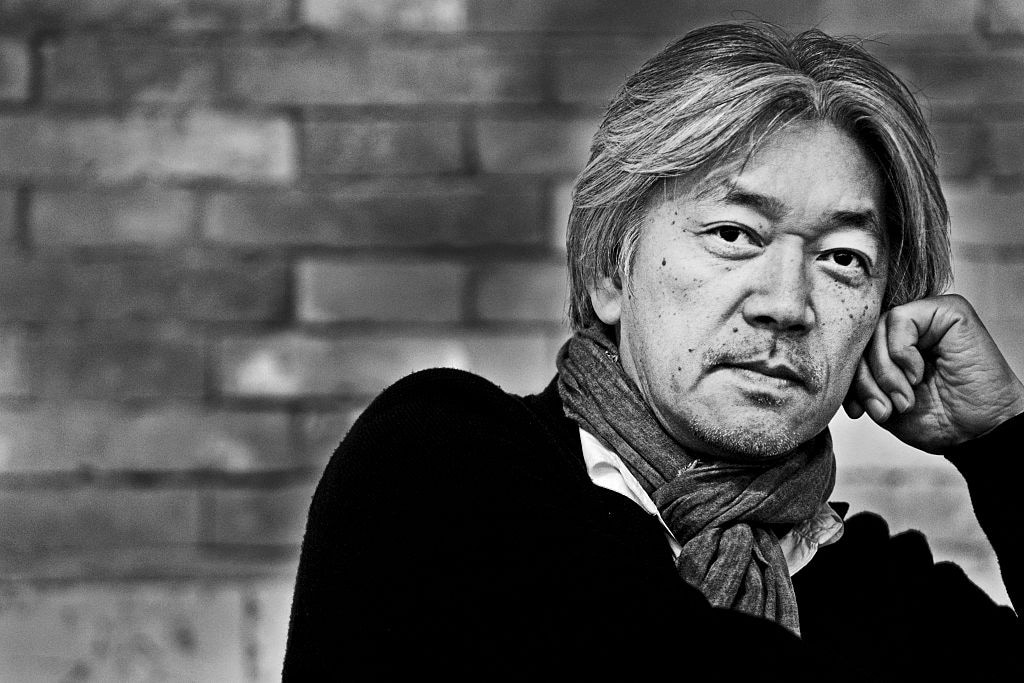
Mihara is known for his minimalist all-black wardrobe: a black turtleneck, black jeans, and a silver watch. Media outlets portray him as a reclusive genius and a workaholic. He rarely gives interviews, which adds to his mystique. His music is described as emotional synthwave, blending nostalgic 80s analog sounds with modern digital production. His fan base, called the Circuit Breakers, creates visualizer videos for his songs on YouTube and holds annual fan gatherings called SynthCon in Tokyo and Los Angeles. On social media, Mihara posts short, abstract videos of his synthesizer setups with no caption, maintaining a professional and cryptic voice.
Fame & Fandom
Kazuto Mihara stands as a reclusive architect of sound, his influence rippling through the global synthwave scene without a single public appearance to anchor it. While the world knows him for the 128 synthesizers he once layered into a single track, iFANN has not yet gathered sufficient data to assign him a specific global or genre ranking at this time. The absence of a formal placement reflects the unique nature of his career; he operates in the shadows of the industry, letting the Binary Sunsets album and the Cyberpunk: Ghost Protocol score speak louder than any press release could. This lack of a documented rank does not diminish his reach but rather highlights a deliberate separation between the artist and the machinery of fame. His audience, known simply as the Circuit Breakers, forms a decentralized network of enthusiasts who gather annually for SynthCon in Tokyo. These gatherings are not driven by official campaigns or organized fan clubs with formal names, but by a shared reverence for his minimalist aesthetic and emotional synthwave style. Fans create visualizer videos that have become cultural artifacts in their own right, filling YouTube channels with tributes that require no official endorsement to thrive. There are no subway ads funded by fans or birthday billboards erupting in Shibuya, because Mihara rarely acknowledges the spectacle. The legend here is quiet: a man who speaks fluent English and Mandarin, owns over 200 vintage Roland units, and donates a tenth of his royalties to rural music education, all while maintaining a persona so guarded that media outlets struggle to find an interview subject. He is a ghost in the machine, famous for what he builds rather than who he is.
Interesting Facts and Legends
Kazuto Mihara experiences grapheme-color synesthesia, allowing him to see numbers and letters in specific hues, a trait he leverages when designing complex synthesizer interfaces. He is fluent in English and holds conversational fluency in Mandarin, enabling him to navigate international markets with ease. His private collection includes over 200 vintage Roland synthesizers, marking it as the largest of its kind globally. A personal anecdote reveals his daughter Hana once bluntly told him his wordless melodies were boring, earning her the title of his toughest critic. Beyond his musical pursuits, he donates 10% of all album royalties to a charity dedicated to providing music education for underprivileged children in rural Japan. The announcement of the TV anime adaptation for his manga, The World Is Dancing, scheduled for July 2026, marks a significant professional milestone, featuring voice talents like Takahiro Sakurai and Inori Minase. Despite the hype surrounding the project, there are no recorded legends of crowds shutting down streets or fans fainting in his presence. The most enduring story involves his method of composing, where he reportedly lets the machines do the talking, creating a mystique that has defined his public image since his early days.
Notable Quotes
“The best synthesizer is the one you have to fight with. If it's too easy, the sound is boring.”
“I don't make music for the algorithm. I make music for the ghost in the machine.”
“My daughter asked me why my songs don't have words. I told her, 'Because the melody should tell the story.' She said, 'That's boring, Dad.' She's my toughest critic.”
Family & Personal Life
Mihara's parents are retired and live in Yokohama. His father worked in the electronics sector; his mother was a part-time piano teacher. He has one younger sister, Yuki, who works as a graphic designer. Mihara was married to visual artist Miyavi Ishikawa from 2014 to 2021; they have one daughter, Hana, born in 2016. Custody of Hana is shared. Mihara owns a penthouse in Shibuya, Tokyo, and a vacation home in Hakone. He has no pets.
Notable Connections
Mihara has collaborated with legendary composer Ryuichi Sakamoto, who served as a mentor. He worked with director Hirokazu Kore-eda on The Last Ramen Shop and with the Nintendo Sound Team on ARMS. He has also collaborated with J-Pop singer Riko Nakamura on the single Electric Heart and cites Yoko Kanno as a major influence.
Relationships & Dating History
Mihara's first public relationship was with fellow Sony engineer Aiko Tanaka, whom he dated from 2006 to 2008; the split was amicable as he shifted focus to music. In 2010 he became engaged to fashion model Yumi Sato, but the engagement was called off in 2012 due to his long working hours. He married visual artist Miyavi Ishikawa in 2014; they had a daughter, Hana, in 2016. The couple divorced in 2021, citing Mihara's frequent touring and Miyavi's desire to remain in Kyoto. In 2022 he was rumored to be dating J-Pop singer Riko Nakamura after they collaborated on Electric Heart, but both denied a romantic relationship. As of 2026, Mihara is single and has stated he is focused on his work and his daughter.
- DatedAiko Tanaka2006 - 2008Fellow engineer at Sony; ended amicably.
- EngagedYumi Sato2010 - 2012Engagement called off due to irreconcilable differences over Mihara's work hours.
- DivorcedMiyavi Ishikawa2014 - 2021Married in Kyoto; one daughter, Hana. Divorced due to touring and location conflicts.
- RumouredRiko Nakamura2022 - 2023Collaborated on 'Electric Heart'; both denied romantic relationship.
Salary, Net Worth In 2026
$13 Million
iFANN Editorial Team estimate
Per iFANN's editorial analysis, Kazuto Mihara's net worth stands at $13 Million as of 2026. The bulk of his wealth stems from music royalties, which generate approximately $4 million annually through streaming platforms and sync licensing deals with major entities like Netflix and Nintendo. His custom synthesizer venture, the Synthwave Collective, contributes another $2 million per year, with individual units retailing between $5,000 and $15,000. The recent Synthwave Symphony tour proved particularly lucrative, grossing $8 million in 2025 and securing a $3 million cut for the composer himself. His real estate portfolio includes a penthouse in Shibuya valued at $2.5 million and a vacation home in Hakone worth $1 million. Additionally, he maintains a significant equity stake in a blockchain-based music rights startup, currently appraised at $1.5 million.
Awards Won (7)
Mihara has won seven major awards. He received Best Original Score at the Yokohama Film Festival for The Last Ramen Shop (2010). His album Neon Genesis won Best Album at the Japan Record Awards (2019) and Best Instrumental Album at the Japan Gold Disc Award (2020). His score for Cyberpunk: Ghost Protocol earned him the Japan Academy Prize for Best Music (2021) and an MTV Video Music Award Japan for Best Video from a Film (2021). Binary Sunsets won Top Independent Album at the Billboard Japan Music Awards (2023), and the interactive album website won a Webby Award (2024).
2021 · Best Video from a Film
Cyberpunk: Ghost Protocol
2024 · Best Music Website
Binary Sunsets interactive website
Known For
Binary Sunsets
2023 · Album
Cyberpunk: Ghost Protocol
2021 · Composer
Neon Genesis
2019 · Album
ARMS
2017 · Theme Song Producer
The Last Ramen Shop
2010 · Composer
Keywords
Quick Facts
- Birth Name
- Kazuto Mihara
- Also Known As
- K-Mihara
- Born
- January 3, 1981, Tokyo, Japan
- Education
- Waseda University (B.Eng. Mechanical Engineering, 2004)
- Occupation
- Composer, Music Producer, Synthesizer Designer
- Years Active
- 2006–present
- Labels
- Synthwave Collective, Universal Music Publishing Group
- Children
- 1 daughter
Personal Details
- Full Name
- Kazuto Mihara
- Height
- 5 ft 9 in (175 cm)
- Spouse
- Miyavi Ishikawa (div. 2021)
- Children
- 1 daughter: Hana Mihara (b. 2016)
- Education
- Bachelor of Engineering in Mechanical Engineering, Waseda University (2004)
Frequently Asked Questions
Is Kazuto Mihara married?
What is Kazuto Mihara's net worth in 2026?
How old is Kazuto Mihara?
Does Kazuto Mihara have kids?
What is Kazuto Mihara's most famous song?
Social Media
Similar People

Join the community
fans discussing