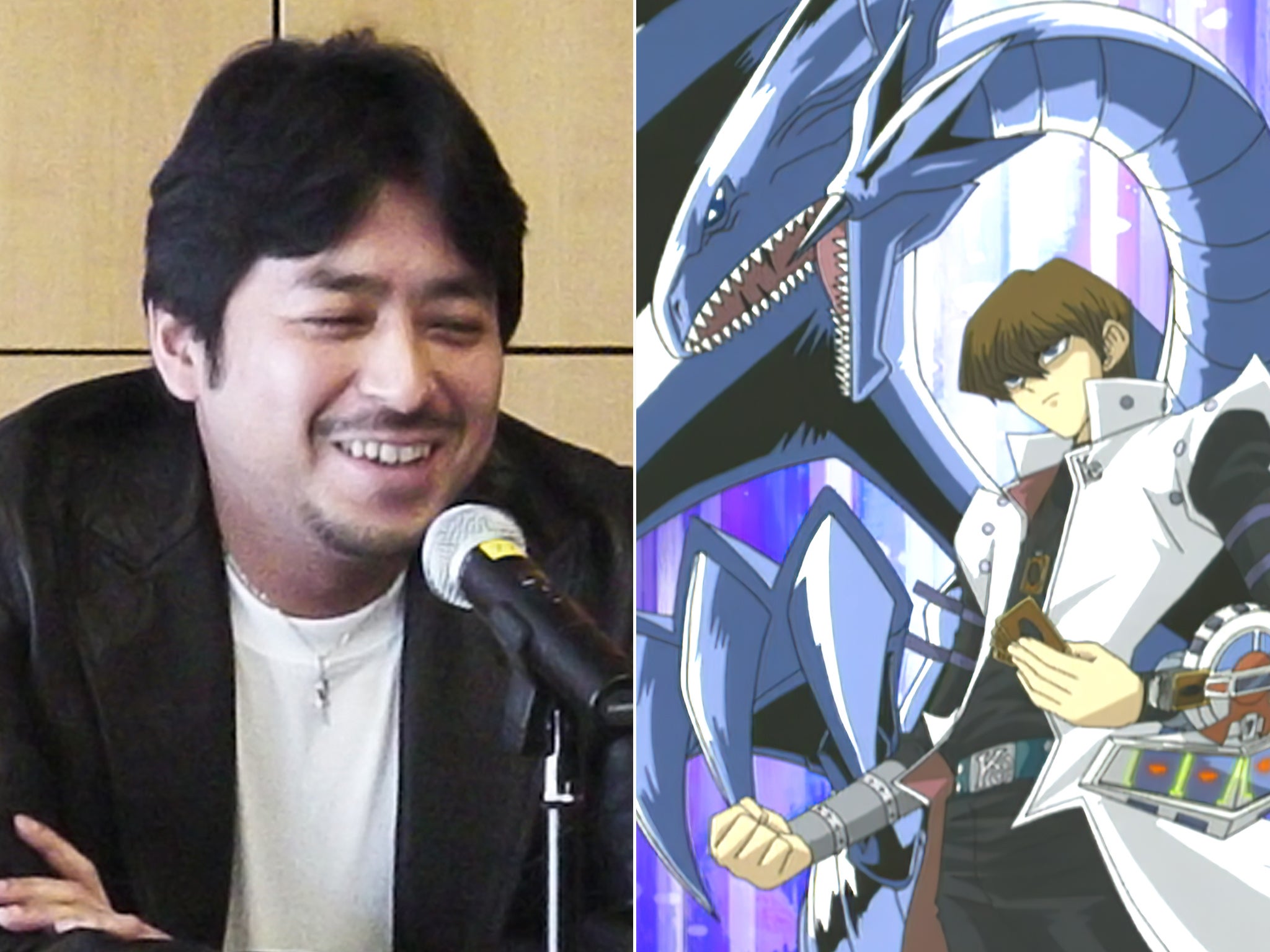
Kazuki Takahashi
 Japan
Japanmangaka•screenwriter•comics artist
Also known as: Kazuo Takahashi, Takahashi Kazuo
Birthday
October 4, 1961
Birth Sign
Libra
Birthplace
Tokyo, Japan
Age
Died at 60
About
Kazuo Takahashi (Japanese: 高橋 一雅, Hepburn: Takahashi Kazuo; October 4, 1961 – July 4, 2022), known professionally as Kazuki Takahashi (高橋 和希, Takahashi Kazuki), was a Japanese manga artist and screenwriter. He is best known as the creator of the Yu-Gi-Oh! franchise, which began as a serialized manga in Weekly Shōnen Jump from 1996 to 2004. His work evolved into one of the most successful media properties in history, spawning a trading card game that holds the Guinness World Record for the best-selling trading card game of all time.
Takahashi passed away at the age of 60 while saving three strangers from drowning in Okinawa. His death cemented his reputation not just as a storyteller but as a man who lived by the values of bravery and sacrifice he often depicted in his art. Even decades after its conclusion, the Yu-Gi-Oh! brand continues to generate significant revenue through licensing, merchandise, and digital adaptations, managed by his estate.
Early Life & Background
Born Kazuo Takahashi in Tokyo on October 4, 1961, he displayed a natural aptitude for drawing from a very young age. His early environment was steeped in a fascination with mythology, ancient history, and games, interests that would eventually shape the narrative DNA of his future masterpieces. Growing up in post-war Japan, he navigated a cultural landscape where traditional storytelling met emerging pop culture, fueling his desire to create something entirely new.
Before achieving commercial success, Takahashi spent years honing his craft through trial and error. He worked various jobs to support himself while dedicating his free time to sketching and writing stories. His breakthrough came only after submitting numerous drafts to publishers who initially rejected his concepts. He persisted through these rejections, refining his style and plot structures until he caught the attention of editors at Weekly Shōnen Jump. This period of struggle laid the groundwork for his resilience, teaching him the value of persistence that would later define his career.
His early professional steps involved creating short stories and one-shots that explored themes of competition and strategy. These initial works served as testing grounds for the complex rules and character dynamics he would later perfect. By the mid-1980s, he had established himself as a reliable contributor to the magazine, though he had not yet tapped into the global phenomenon that awaited him. It was during this pre-fame era that he developed the unique visual language and storytelling rhythm that would soon captivate millions of readers worldwide.
Career Growth
Takahashi's career trajectory shifted permanently in 1996 when he began serializing Yu-Gi-Oh! in Weekly Shōnen Jump. The series initially focused on various puzzle games and duels, but a pivotal collaboration with Konami transformed the narrative around the 'Duel Monsters' card game. This strategic pivot turned a popular comic into a cultural juggernaut, launching a multimedia empire that included video games, an animated television series, and a physical trading card game.
The release of the first Yu-Gi-Oh! video game in 1998 and the subsequent launch of the official Trading Card Game (TCG) marked the beginning of an unprecedented commercial run. By 2002, the TCG had surpassed all other card games in sales, securing a Guinness World Record that still stands today. The anime adaptation, which premiered in 1999, further amplified the franchise's reach, introducing the characters to audiences across Europe, North America, and beyond.
He completed the original manga run in 2004, but his influence extended far beyond the final page. From 2005 to 2008, he oversaw the production of subsequent anime seasons like GX and 5D's, serving as a story supervisor to ensure continuity with his original vision. In 2016, he returned to direct the story supervision for the film Yu-Gi-Oh!: The Dark Side of Dimensions, demonstrating his enduring commitment to the franchise even as it entered its third decade. His work remains the foundation for a multi-billion dollar industry that continues to thrive globally.
Career Timeline
Public Image & Style
Takahashi cultivated a persona of the quiet artisan rather than the celebrity. He was known for his modest demeanor and dedication to the craft of storytelling, often shunning the spotlight that accompanied his success. His art style, characterized by dynamic action lines and highly detailed monster designs, set a high standard for battle manga and influenced a generation of artists.
Media perception of him shifted dramatically after his death. Before then, he was viewed primarily as a talented but reserved creator. Afterward, he was reimagined as a modern-day knight, a man whose actions in his final moments validated the heroic archetypes he created. This duality, quiet professional and public hero, defines his public image today.
Fame & Fandom (iFAMOUS Rankings)
iFANN has not yet collected fame data for this person. The ranking engine is currently evaluating his profile but no published placement exists in the August 2026 rankings.
The fanbase for Yu-Gi-Oh! is vast and deeply organized, generally referring to themselves simply as 'fans' or 'Duelists.' There is no single, universally codified fandom name distinct from the general audience of the franchise. Fans are known for their competitive spirit, organizing local tournaments and preserving the integrity of the original manga rules. The community frequently engages in charitable drives and cosplay events, keeping the legacy of the series alive decades after its conclusion. Fan campaigns often focus on celebrating the original storylines and supporting new generations of players who discover the cards for the first time.
Interesting Facts and Legends
Takahashi's original concept for Yu-Gi-Oh! was much broader than just card games. Early drafts featured a variety of board games, dice games, and puzzles before he settled on the Duel Monsters format. He was also an avid collector of antique coins and historical artifacts, which heavily influenced the intricate designs of the monsters and the ancient settings in his manga.
Despite his massive global fame, Takahashi remained notoriously private. He rarely gave interviews and avoided the limelight, preferring to let his work speak for itself. This scarcity of personal information added to the mystique surrounding the creator of such a public phenomenon. Another notable fact is that the iconic 'Dark Magician' monster design was inspired by a specific type of ancient Egyptian statue he encountered during his research into mythology.
Notable Quotes
“I wanted to create a story where the power of friendship and the spirit of the cards could change the world.”
Family & Personal Life
Public records regarding Takahashi's private family life are extremely scarce. Unlike many Western celebrities, Japanese manga artists of his generation often maintained a strict separation between their public personas and their domestic lives. There is no verified information confirming marriages, engagements, or specific dating relationships in credible media outlets.
No public partner names, divorce proceedings, or children have been documented. It is widely reported that he remained dedicated to his craft and kept his personal circle small and protected. As of his death in 2022, there were no publicly acknowledged spouses or offspring, leaving his immediate family status officially unconfirmed to the public eye.
Notable Connections
Relationships & Dating History
Public records regarding Kazuki Takahashi's romantic life are non-existent in the public domain. Unlike many Western celebrities, Japanese manga artists of his generation often maintained a strict separation between their public personas and private lives. There is no verified information in available sources confirming marriages, engagements, or specific dating relationships.
No public partner names, divorce proceedings, or children have been documented in credible media outlets. Consequently, his relationship status prior to his death remains officially unconfirmed and private. It is widely reported that he remained dedicated to his craft and family, but details regarding a spouse or offspring are not part of the public record. As of his death in 2022, there were no publicly acknowledged partners.
Death & Aftermath
Died
July 4, 2022 (aged 60)
Death Place
Nago, Okinawa, Japan
Cause of Death
Drowning
On July 4, 2022, the world lost a giant of pop culture when Kazuki Takahashi was found dead in the ocean off the coast of Nago, Okinawa. He had gone into the water to snorkel and encountered three people struggling in a powerful rip current: a U.S. soldier, an 11-year-old girl, and her mother. Reports from local authorities and news outlets confirm that Takahashi dove in to rescue them. Despite his heroic efforts to pull the victims to safety, he was unable to return to shore himself. His body was discovered two days later on July 6.
The incident sent shockwaves through the global community, transforming his death from a tragedy into a defining legend. Fans and industry peers immediately hailed him as the ultimate hero, noting how perfectly his final act mirrored the themes of selflessness and courage that defined his life's work. Tributes poured in from major anime conventions, fellow creators, and organizations worldwide. The Japanese government and international media outlets alike recognized his sacrifice as a profound example of human decency.
In the wake of his passing, the Yu-Gi-Oh! franchise became a vessel for collective mourning. Special tributes appeared in subsequent manga chapters and anime broadcasts, while fans organized vigils and charity drives in his name. The story of his death has since become central to his legacy, often cited alongside his creative achievements as proof of his character. While no estate disputes have been publicly reported, his family continues to manage his intellectual property with care. In 2026, a major exhibition featuring over 370 original artworks opened in Tokyo to honor his artistic vision and ensure his contributions remain visible to new generations.
Net Worth (Estate Value)
$15 Million
iFANN Editorial Team estimate
Estimates of Kazuki Takahashi's estate value range between $5 million and $15 million, driven primarily by the enduring royalties of the Yu-Gi-Oh! franchise. The iFANN Editorial Team's analysis of his earnings, ventures, and assets points to roughly $15 Million as of 2026. This figure reflects the continued commercial viability of the intellectual property decades after the manga concluded.
The vast majority of his wealth stems from licensing fees paid by Konami for the trading card game, video games, and merchandise. Sales of figures, toys, clothing, and collectibles contribute significantly to the estate's income stream. Real estate holdings in Tokyo and Okinawa likely add to the asset base, though specific valuations remain private. Following his death, his estate is managed by family members and legal representatives who oversee new projects and maintain the brand's presence in the market.
Awards Won (1)
Takahashi received the Guinness World Record for the best-selling trading card game of all time. His work has been recognized by the Japanese government and international bodies for its contribution to pop culture and soft power. Posthumous recognition includes major exhibitions honoring his artistic legacy.
2002 · Best-Selling Trading Card Game
Yu-Gi-Oh! Trading Card Game
Known For
Yu-Gi-Oh!
1996 · Creator
Yu-Gi-Oh!: The Dark Side of Dimensions
2016 · Story Supervisor
Keywords
Sources
Quick Facts
- Profession
- mangaka, screenwriter, comics artist
- Born
- October 4, 1961
- Birthplace
- Tokyo, Japan
- Died
- July 4, 2022
- Death Place
- Nago, Okinawa, Japan
- Gender
- Male
- Birth Sign
- Libra
Personal Details
- Full Name
- Kazuo Takahashi
- Children
Filmography
2
Total
1
Film
1
TV
Frequently Asked Questions
How did Kazuki Takahashi die?
What is Kazuki Takahashi's net worth?
Did Kazuki Takahashi have any children?
When was the Yu-Gi-Oh! manga published?
Is there a museum or exhibition for Kazuki Takahashi?
Social Media
Similar People

Join the community
fans discussing