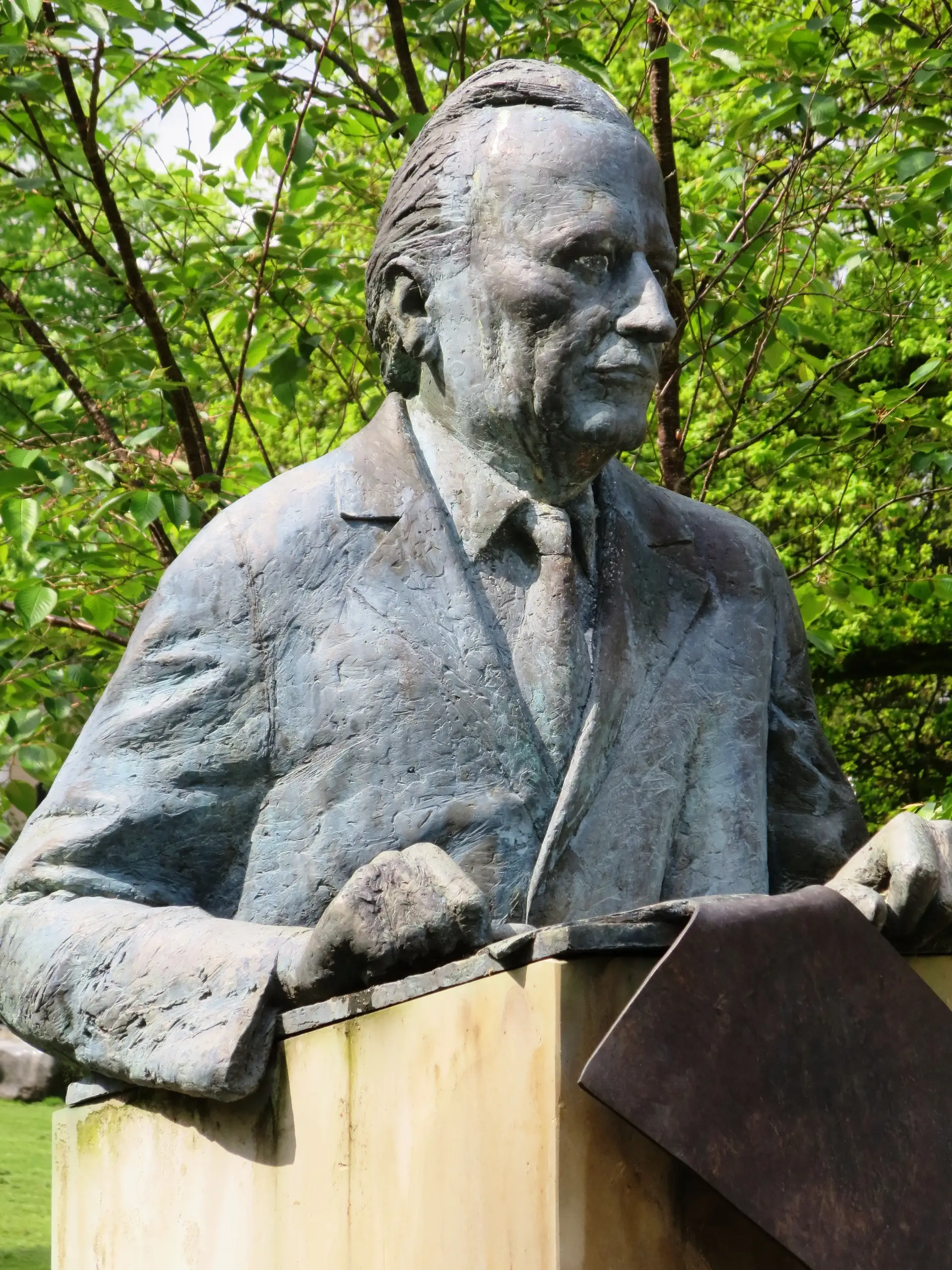
Karl Jaspers
Awards & Honours
0
Awards Won
6
Honours
3
Records
Karl Jaspers stands as a towering figure in 20th-century thought, uniquely bridging the gap between clinical psychiatry and existential philosophy. His 1913 work General Psychopathology remains a cornerstone of psychiatric diagnosis, influencing the DSM-5 and shaping how professionals understand mental illness over a century later. Beyond medicine, his philosophical contributions, particularly the concept of the "Axial Age," have become standard frameworks in world history and comparative religion. His moral courage during the Nazi era, refusing to compromise his principles even when banned from teaching, cemented his reputation as a guardian of intellectual integrity. The Karl Jaspers Prize, established posthumously, continues to recognize exceptional contributions to the humanities, ensuring his legacy endures in academic circles.

Honours & Distinctions
Doctor Honoris Causa
Honorary doctorate awarded for contributions to philosophy and psychiatry.
Doctor Honoris Causa
Honorary doctorate recognizing his interdisciplinary work.
Honorary Citizenship
Granted upon his move to Switzerland.
Honorary Citizenship
Recognizing his roots and contributions to German thought.
Member
Elected for distinguished service in the arts and sciences.
Member
Elected as a foreign member for contributions to philosophy.
Records & Feats
Founding Figure of German Existentialism
Developed a unique existentialist system that predated and influenced French existentialists like Sartre and Camus.
Concept of the Axial Age
Introduced the concept of the Axial Age (c. 800–200 BCE), now a standard framework in world history textbooks.
Primary vs Secondary Delusions
Established the distinction between primary and secondary delusions in psychiatry, a framework still used in the DSM-5.