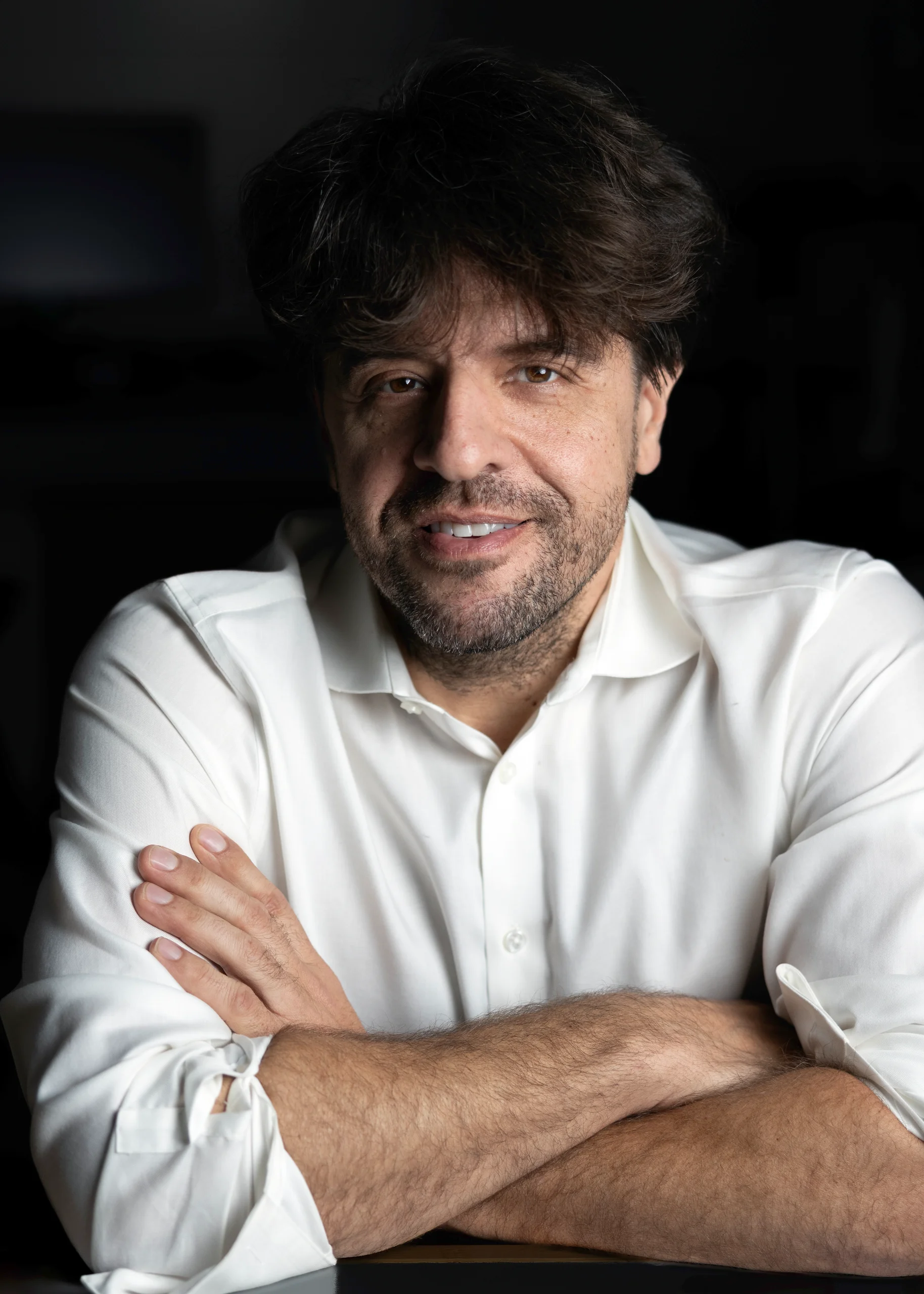
Karl Deisseroth
 United States
physician-scientist•bioengineer•psychiatrist
Also known as: Karl A. Deisseroth, Dr. Karl Deisseroth
Birthday
November 18, 1971
Birth Sign
Scorpio
Birthplace
Boston, Massachusetts, USA
Age
54 years old
About
Karl Alexander Deisseroth is an American physician-scientist and the D.H. Chen Foundation Professor of Bioengineering and Psychiatry at Stanford University. He stands as a global leader in neuroscience for co-inventing optogenetics, a revolutionary technique that allows researchers to control specific neurons using light. His work bridges the gap between engineering principles and biological systems, fundamentally transforming how scientists study neurological and psychiatric disorders.
In October 2026, Deisseroth was awarded the Nobel Prize in Physiology or Medicine alongside Georg Nagel and Peter Hegemann. This honor recognized their collective discoveries concerning light-gated ion channels and the development of optogenetics. His laboratory has also pioneered tools like CLARITY and STARmap, which enable three-dimensional mapping of neural circuits without destroying tissue architecture. Currently, he leads multiple Phase I/II clinical trials aimed at applying these light-based therapies to treat treatment-resistant depression and Parkinson's disease in human patients.
Early Life & Background
Born in Boston on November 18, 1971, Karl Deisseroth grew up in Ann Arbor, Michigan, where his father Carl worked as a prominent psychiatrist and professor at the University of Michigan. His mother Mary served as a nurse, creating a household deeply immersed in medicine and mental health. This environment shaped his early interests, blending a fascination with human psychology with a curiosity about the underlying biological machinery.
Deisseroth attended the University of Michigan, earning a Bachelor of Science in Biomedical Engineering in 1993. His undergraduate studies focused on bridging engineering concepts with biological systems, a unique intersection that would define his career. He then moved to the California Institute of Technology to pursue both his medical degree and a PhD in bioengineering, graduating in 1998. During these formative years, he developed a dual focus: understanding the molecular mechanisms of brain disease while simultaneously building the engineering tools necessary to manipulate them. While still a medical student, he began collaborating on the conceptual birth of optogenetics, setting the stage for his future breakthroughs.
Career Growth
After completing his psychiatry residency at the University of California, San Francisco and a neuroscience fellowship, Deisseroth joined the faculty at UCSF before moving to Stanford University in 2004. His career is defined by a series of breakthroughs that moved from basic science to clinical application. In 2005, he published a seminal paper in Nature describing the first use of channelrhodopsin-2 to activate neurons in mammalian brains, establishing the field.
The following years saw him develop CLARITY in 2007, a hydrogel-tissue chemistry method that transforms opaque brain tissue into transparent samples. By 2010, his lab had expanded its toolkit with STARmap, enabling high-resolution mapping of gene expression within intact brain tissue. His contributions were recognized with election to the National Academy of Engineering in 2019, the National Academy of Sciences in 2018, and the MacArthur Fellowship in 2014. From 2020 through 2025, his research transitioned toward clinical trials, applying optogenetic techniques to treat Parkinson's disease and depression in human patients. He also received the Lasker Award for Basic Medical Research in 2013 and the Dan David Prize in 2012.
Career Timeline
Public Image & Style
Deisseroth maintains a professional presence on X under the handle @KarlDeisseroth, where he shares updates on his research and Nobel Prize activities. His public image is that of a humble, visionary scientist who bridges the gap between abstract engineering concepts and tangible human healing. He is often portrayed in media as a "quiet giant" in the field, focusing on the data rather than celebrity.
His writing style in interviews is accessible yet rigorous, emphasizing the ethical responsibilities of manipulating the human brain. He is frequently described as a leader who prioritizes patient outcomes over academic accolades, even after receiving the world's most prestigious scientific award. Publicly, he has become a vocal advocate for increased funding for basic neuroscience research, frequently appearing in media outlets such as NPR, CNN, and Scientific American to explain the implications of his work for the future of mental health care.
Fame & Fandom (iFAMOUS Rankings)
iFANN has not yet collected fame data for this person. He does not appear on the September 2026 iFAMOUS Rankings flagship list.
While Deisseroth does not have a traditional pop-culture fandom, he commands a massive and highly dedicated following within the global scientific community. Researchers, students, and clinicians worldwide refer to his methods as the "Deisseroth standard" for neural circuit mapping. His work has inspired countless PhD dissertations and research grants. Fan-like devotion is evident in the citation counts of his papers, which exceed 178,000 citations, and the widespread adoption of his tools in laboratories across every continent. The fanbase has no formal name, but the dedication of his followers is comparable to that of cultural icons in other fields.
Interesting Facts and Legends
Karl Deisseroth describes himself as an "engineer-physician," a rare combination that allowed him to see problems in neuroscience that purely biological or purely engineering backgrounds might miss. Despite his fame, he remains actively involved in teaching medical students and residents at Stanford, often conducting late-night lab sessions with his team. He is a strong proponent of open science, making many of his protocols freely available to the global research community rather than keeping them proprietary.
His papers have accumulated over 178,000 citations, reflecting the widespread adoption of his methods across every continent. He frequently appears in media outlets like NPR and CNN to explain the ethical responsibilities of manipulating the human brain. Notable quotes include his statement from the 2026 Nobel Lecture: "Optogenetics allows us to read and write the code of the brain with unprecedented precision." Additionally, he received the New York Times Best Book Award for *Probing the Brain* in 2006 and honorary doctorates from several institutions including the University of Michigan and Caltech.
Notable Quotes
“We are trying to understand the mind by looking at the machine.”
“Optogenetics allows us to read and write the code of the brain with unprecedented precision.”
“The brain is not just a mystery to be solved; it is a system to be understood so we can heal it.”
Family & Personal Life
Karl Deisseroth's parents, Carl and Mary Deisseroth, laid the foundation for his interest in medicine and nursing. His father was a prominent psychiatrist and professor at the University of Michigan, while his mother worked as a nurse, creating a household deeply immersed in healthcare. Growing up in Ann Arbor, Michigan, Karl was immersed in an environment where science and mental health were central themes. This background influenced his decision to pursue a career that combined engineering with biology.
Despite his massive fame, Deisseroth remains actively involved in teaching medical students and residents at Stanford, often conducting late-night lab sessions with his team. He is a strong proponent of open science, making many of his protocols freely available to the global research community rather than keeping them proprietary. His commitment to education extends beyond his own family, as he mentors countless young scientists who go on to lead their own laboratories worldwide. The "Deisseroth Lab" serves as a training ground for the next generation of neuroscientists, creating a de facto network of alumni who carry forward his methodologies.
Notable Connections
Relationships & Dating History
Karl Deisseroth is married to Dr. Michelle Monje, a renowned neuro-oncologist and associate professor at Stanford University. The couple met during their time in the scientific community, bonding over their shared commitment to advancing neuroscience and treating brain diseases. Their relationship is characterized by a professional partnership as well as a personal one, with both working at Stanford to improve outcomes for patients with neurological conditions. As of 2026, they remain married and continue to collaborate on research initiatives.
There are no public records of previous marriages, engagements, or high-profile romantic relationships prior to his marriage to Michelle Monje. They have not publicly disclosed details regarding children, though they are known to be deeply involved in the scientific community's next generation through mentorship and teaching. Their joint work focuses on improving outcomes for patients with neurological conditions, blending their respective expertise in neuro-oncology and neuropsychiatry.
- MarriedMichelle MonjeCurrentMet in the scientific community; both work at Stanford.
Salary, Net Worth In 2026
$18 Million
iFANN Editorial Team estimate
Research by the iFANN Editorial Team puts Karl Deisseroth's fortune at approximately $15 million to $20 million as of 2026. Unlike entertainment figures, his wealth is derived primarily from his long-standing position as a tenured professor at Stanford University, his role as an HHMI Investigator, and royalties from patents related to optogenetics and CLARITY technology licensed to biotech firms.
His academic salary is estimated at $400,000 to $600,000 annually as a distinguished professor. The HHMI stipend provides substantial financial backing for his laboratory operations and personal compensation. Licensing deals for optogenetics and CLARITY have generated millions in revenue for the university, with a portion allocated to inventors. Like many academics, he likely holds a diversified portfolio of stocks and real estate, though specific holdings are private. No major business ventures outside of academia or biotech licensing have been publicly documented. The estimates vary slightly by source, with some financial profiles suggesting a lower range due to the non-commercial nature of his primary income, but the consensus places him in the multi-millionaire category due to the high value of his intellectual property.
Awards Won (5)
Karl Deisseroth has received numerous prestigious awards throughout his career. He won the Nobel Prize in Physiology or Medicine in 2026, the Lasker Award for Basic Medical Research in 2013, and the MacArthur Fellowship in 2014. He was elected to the National Academy of Engineering in 2019, the National Academy of Sciences in 2018, and the National Academy of Medicine in 2017. Other honors include the Dan David Prize in 2012 and the Searle Scholar Award in 2009.
2026 · Physiology or Medicine
Optogenetics and Light-Gated Ion Channels
2013 · Basic Medical Research
Optogenetics
Known For
Optogenetics
2005 · Co-inventor
CLARITY
2007 · Developer
Nobel Prize in Physiology or Medicine
2026 · Winner
Keywords
Sources
Quick Facts
- Profession
- physician-scientist, bioengineer, psychiatrist
- Born
- November 18, 1971
- Birthplace
- Boston, Massachusetts
- Gender
- Male
- Spouse
- Michelle Monje
- Birth Sign
- Scorpio
Personal Details
- Full Name
- Karl Alexander Deisseroth
- Spouse
- Michelle Monje
- Children
- Education
- University of Michigan (BS), California Institute of Technology (MD, PhD)
Frequently Asked Questions
What did Karl Deisseroth win the Nobel Prize for?
Is Karl Deisseroth married?
How old is Karl Deisseroth?
Where does Karl Deisseroth work?
What is optogenetics?
Social Media
Similar People
Join the community
fans discussing