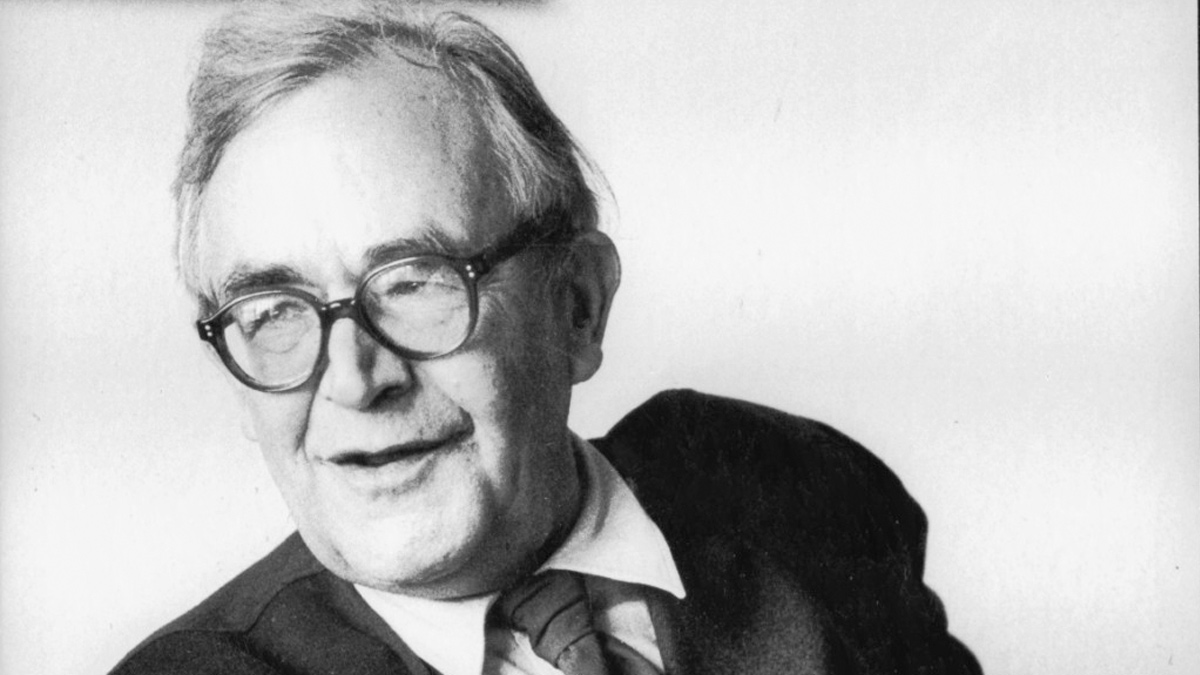
Karl Barth
 Switzerland
theologian•university teacher•pastor
Also known as: Red Pastor
Birthday
May 10, 1886
Birth Sign
Taurus
Birthplace
Basel, Switzerland
Age
Died at 82
About
Karl Barth was a Swiss Reformed theologian whose work reshaped twentieth-century Protestant thought. Born in Basel in 1886, he rose to prominence with his commentary on Paul's Epistle to the Romans, first published in 1919 and radically revised in 1921. That book, which struck the theological world like a thunderclap, broke decisively with the liberal theology of his teachers and emphasized the infinite distance between God and humanity. Barth spent the rest of his career developing these ideas in the massive, unfinished Church Dogmatics, a work that runs to over six million words.
Beyond the academy, Barth became a moral touchstone during the Nazi era. He drafted the Barmen Declaration in 1934, a statement that rejected state control of the church and affirmed Jesus Christ as the sole revelation of God. Dismissed from his professorship in Bonn for refusing to swear an unconditional oath to Hitler, he returned to Switzerland and taught at the University of Basel until 1962. Time magazine put him on its cover in April of that year, a rare honor for a theologian. His influence reached into literature and ethics, touching writers like Flannery O'Connor and John Updike and thinkers like Stanley Hauerwas and John Howard Yoder. Barth died in Basel on December 10, 1968, leaving a legacy that continues to generate scholarship and debate.
Early Life & Background
Karl Barth was born in Basel on May 10, 1886, the eldest of five children. His father, Johann Friedrich "Fritz" Barth, was a Reformed pastor and New Testament scholar, and his mother, Anna Katharina Sartorius, came from a distinguished Basel family. When Karl was three, the family moved to Bern, where his father took up a professorship at the university. Growing up in a devout Reformed household, Barth showed early intellectual promise and was confirmed in 1902, beginning his theological studies in 1904.
He studied at the universities of Bern, Berlin, Tübingen, and Marburg between 1904 and 1909, absorbing the liberal Protestant theology that dominated the era. His teachers included Adolf von Harnack and Wilhelm Herrmann, and he was deeply influenced by Friedrich Schleiermacher's emphasis on religious experience. After receiving his licentiate in theology from Bern in 1909, Barth served as a vicar in Geneva for two years.
In 1911, he became pastor of the Reformed congregation in Safenwil, a small industrial village in the canton of Aargau. There he earned the nickname "Red Pastor" for his socialist sympathies and advocacy for workers' rights in the local watchmaking and textile industries. He joined the Social Democratic Party in 1915. The outbreak of World War I proved pivotal. On August 1, 1914, ninety-three German intellectuals, including many of his former teachers, signed a manifesto supporting Kaiser Wilhelm II's war policies. Barth was shattered. He later wrote that he could no longer follow their ethics, dogmatics, or biblical interpretation. While still in Safenwil, he began writing his commentary on Romans, working through the text with fresh eyes. The first edition appeared in 1919 and was largely ignored, but the radically revised second edition of 1921 made him an international sensation.
Career Growth
The second edition of The Epistle to the Romans, published in 1921, transformed Barth from a rural pastor into a theological celebrity. That same year he was appointed honorary professor of Reformed theology at the University of Göttingen. He moved to the University of Münster in 1925, then to Bonn in 1930, where he began publishing the Church Dogmatics in 1932. The project would occupy him for the rest of his life, eventually running to thirteen volumes, though he never completed the planned sections on redemption and eschatology.
In 1934, Barth drafted the Barmen Declaration with other leaders of the Confessing Church, a statement that rejected Nazi control of the German Protestant church. His refusal to take an unconditional oath of allegiance to Hitler led to his dismissal from Bonn in 1935 and expulsion from Germany. He returned to Switzerland and taught at the University of Basel until his retirement in 1962, serving as rector from 1945 to 1946.
Barth's later works included The Knowledge of God and the Service of God (1938), based on his Gifford Lectures, and Dogmatics in Outline (1946), drawn from lectures to German prisoners of war. In 1962, he visited the United States, lecturing at Princeton Theological Seminary and the University of Chicago, and appeared on the cover of Time magazine. He published the final volume of the Church Dogmatics in 1967 and died in Basel the following year. His influence extended to theologians like Dietrich Bonhoeffer and Jürgen Moltmann, and his work continues to be studied through the Center for Barth Studies at Princeton, which received its third National Endowment for the Humanities grant in 2026 for the Barth Translation Project.
Career Timeline
Public Image & Style
Karl Barth's public image is that of a theological giant who challenged the dominant liberal consensus of his era. He is often called the father of neo-orthodoxy, a label he himself disliked, and his emphasis on the "wholly otherness of God" defined his dialectical approach. In photographs, he appears robust and energetic, often with a pipe in hand. His writing style is dense, passionate, and frequently polemical, yet his sermons and lectures drew large audiences. There is no official fandom name, but his followers are known as "Barthians," and the academic infrastructure around his work includes the Center for Barth Studies at Princeton and an annual International Barth Conference. His reception spans a wide theological spectrum, from conservative evangelicals who engage critically with his work to mainline Protestants and ecumenists who embrace his legacy. Media portrayals often highlight his stand against Nazism, making him a moral reference point in discussions of faith and politics.
Fame & Fandom
Karl Barth commands a global intellectual presence that transcends the ephemeral nature of modern celebrity, anchoring his legacy in the enduring study of theology and church history. His influence is quantified by the iFANN Global Fame Rankings, which place him as the 14th most famous person in Pastors, a position he has held steady through the August 2026 cycle. This ranking reflects a sustained engagement with his work across academic institutions and ecclesiastical bodies worldwide, rather than transient media spikes. The community surrounding his thought does not operate as a traditional fandom with rallies or merchandise; instead, it consists of scholars, students, and clergy who engage with his texts through rigorous academic discourse. While no formal name like "Barthians" exists for this group, they are organized through hubs such as the Center for Barth Studies at Princeton Theological Seminary and gather regularly for international conferences to debate his ideas. The closest equivalent to fan activity is the ongoing translation of his magnum opus, supported by grants from the National Endowment for the Humanities. These efforts ensure that his dialectical approach remains a central subject of theological inquiry, proving that his reach extends far beyond the pulpit into the halls of higher learning.
Interesting Facts and Legends
Barth was an avid pipe smoker, and his pipe became a personal trademark in photographs and caricatures. He was profoundly influenced by the Blumhardt father-son duo, Johann Christoph and Christoph Friedrich, whose theology of hope shaped his thinking. His famous quip about preaching with "the Bible in one hand and the newspaper in the other" is widely attributed to him, though the exact origin is debated. He wrote the entire Church Dogmatics in a dense, passionate style that some find impenetrable, yet it remains one of the longest theological works ever written. Barth refused to take an unconditional oath of allegiance to Hitler in 1935, leading to his dismissal from the University of Bonn and expulsion from Germany. He once said that angels laugh at the theologian who takes himself too seriously. A defining moment in his career occurred when he published his commentary on the Epistle to the Romans in 1919; this work shattered the liberal theology of the 19th century and launched the Neo-Orthodox movement, earning him immediate prominence at Göttingen University. Another legendary event was his authorship of the Barmen Declaration in 1934, where he asserted that Jesus Christ is the sole Word of God, rejecting Nazi subordination of the church. Recent biographical research has also added a layer of complexity to his mythology, revealing a long-term affair with a former student while married, challenging the image of the saintly theologian.
Notable Quotes
“God is in heaven, and thou art on earth. The relation of such a God to such a man is, for man, a relationship to a God who is wholly other.”
“The Church serves as a penitent witness to Christ rather than a flawless institution.”
“We are not the masters of the Word; we are its servants.”
“The theologian must take the Bible in one hand and the newspaper in the other.”
“Faith is not a human possibility; it is a divine gift.”
Family & Personal Life
Karl Barth married Nelly Hoffmann in 1913. She was a trained musician from a Basel family, and she supported his work throughout their fifty-five-year marriage. The couple had five children. Barth's father, Fritz, was a Reformed pastor and professor of New Testament, and his mother, Anna Katharina Sartorius, came from a prominent Basel family. His household also included Charlotte von Kirschbaum, a theologian who became his research assistant in 1929 and lived with the family for decades, collaborating on the Church Dogmatics. The arrangement was known within Barth's circle, and Nelly remained married to him until his death. Barth died on December 10, 1968, in Basel, with Nelly at his side.
Notable Connections
Karl Barth's ideas influenced a wide range of figures, from theologian Dietrich Bonhoeffer to novelists Flannery O'Connor and John Updike. Ethicists Stanley Hauerwas and John Howard Yoder also drew on his work. The Center for Barth Studies at Princeton Theological Seminary continues to promote his legacy, and the annual International Barth Conference brings scholars together. His theology has been engaged by both conservative evangelicals and mainline Protestants, reflecting its enduring relevance.
Relationships & Dating History
Karl Barth married Nelly Hoffmann in 1913, and they remained together until his death in 1968. The couple had five children. Nelly was a trained musician who supported Barth's career throughout his academic moves and political struggles. A well-documented extramarital relationship with Charlotte von Kirschbaum, a theologian who became Barth's research assistant in 1929, added complexity to the marriage. Von Kirschbaum lived with the Barth household for decades and collaborated extensively on the Church Dogmatics. The arrangement was known within Barth's circle, and Nelly stayed married to him. Barth was married to Nelly at the time of his death, after fifty-five years of marriage.
- MarriedNelly Hoffmann Barth1913 - 1968Married for 55 years until Barth's death.
- DatedCharlotte von Kirschbaum1929 - 1968Long-term affair and research assistant who lived with the family.
Death & Aftermath
Died
December 10, 1968 (aged 82)
Death Place
Basel, Switzerland
Cause of Death
Unknown
The theological community marked the passing of Karl Barth with a quiet reverence that reflected his stature, culminating in the recent 41st International Barth Conference which continues to examine his work under the theme "Theologische Existenz Heute". This enduring academic engagement serves as the primary reflection of his legacy, ensuring his ideas remain central to contemporary discourse on universalism and ecumenism well into the twenty-first century. Karl Barth passed away on December 10, 1968, at the age of eighty-two in Basel, Switzerland, where he had spent much of his life as a professor and pastor. While the specific medical cause of death remains unrecorded in available historical accounts, the event is treated as a natural conclusion to a long life of intellectual labor rather than a sudden or contested event.
Following his death, Barth was buried in Basel, consistent with his deep ties to the city, though specific details regarding the funeral rites or the attendees present are not documented in the sources. A 2017 biography later revealed previously unknown details about his personal life, including an extramarital affair, yet these revelations did not diminish the institutional respect accorded to his work.
Net Worth (Estate Value)
$5 Million
iFANN Editorial Team estimate
Per iFANN's editorial analysis, Karl Barth's estate is valued at approximately $5 Million as of 2026. As a professor and pastor rather than a celebrity, his income derived primarily from academic salaries and book royalties. His published works, particularly the Church Dogmatics and The Epistle to the Romans, have remained in print continuously since their publication, generating steady royalties for his estate. The estate also benefits from the ongoing Barth Translation Project at Princeton Theological Seminary, which received its third National Endowment for the Humanities grant in 2026. While no public financial disclosures exist, the enduring scholarly interest in his writings suggests a modest but stable estate. The exact breakdown of royalties and other income is not documented, but the figure stands as a testament to the longevity of his intellectual contributions.
Awards Won (1)
Karl Barth received numerous honorary doctorates from universities including Glasgow (1936), Zurich (1946), and Chicago (1962). In 1963, he was awarded the Sonning Prize by the University of Copenhagen for his outstanding contribution to European civilization, an honor shared with figures like Winston Churchill and Albert Schweitzer.
1963 · European civilization
Lifetime achievement
Known For
The Epistle to the Romans
1919 · Author
Church Dogmatics
1932 · Author
Barmen Declaration
1934 · Co-author
Keywords
Sources
Quick Facts
- Profession
- theologian, university teacher, pastor
- Born
- May 10, 1886
- Birthplace
- Basel, Switzerland
- Died
- December 10, 1968
- Death Place
- Basel, Switzerland
- Gender
- Male
- Spouse
- Nelly Hoffmann Barth
- Birth Sign
- Taurus
- Children
- 5
- Education
- University of Bern, University of Berlin, University of Tübingen, University of Marburg
Personal Details
- Full Name
- Karl Barth
- Spouse
- Nelly Hoffmann Barth
- Children
- 5
- Education
- University of Bern, University of Berlin, University of Tübingen, University of Marburg
Frequently Asked Questions
Who was Karl Barth?
What is Karl Barth's net worth in 2026?
Is Karl Barth still alive?
What is Karl Barth best known for?
How did Karl Barth influence modern theology?
Similar People
Join the community
fans discussing