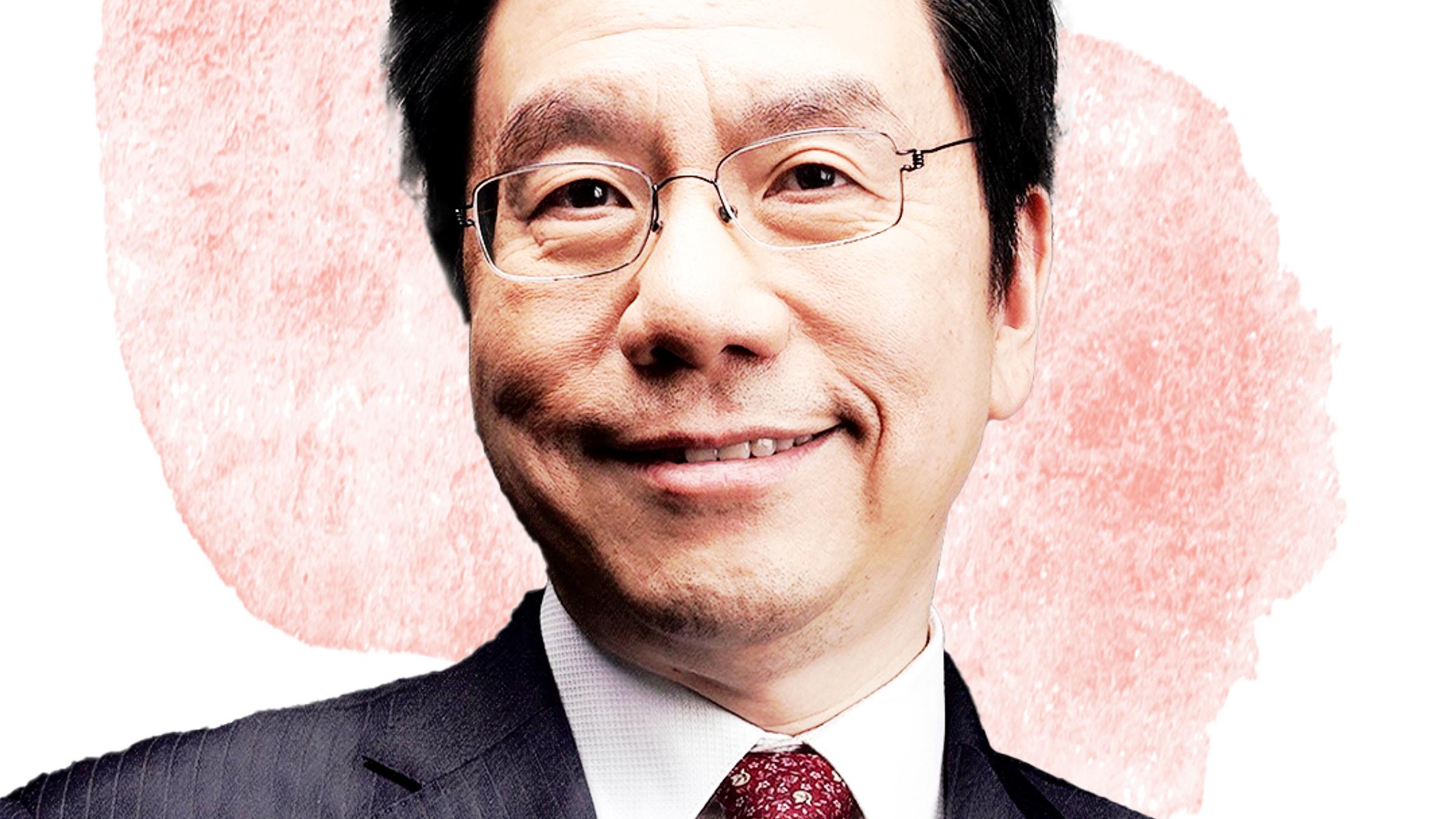
Kai-Fu Lee
 Taiwan
Computer scientist•investor•author
Also known as: Kai Fu Lee, Lee Kai-Fu, Li Kaifu
Birthday
December 3, 1961
Birth Sign
Sagittarius
Birthplace
Zhonghe District, New Taipei City, Taiwan
Age
64 years old
About
Kai-Fu Lee is a Taiwanese computer scientist, investor, and author who has been a central figure in artificial intelligence for over three decades. As the founder and CEO of 01.AI, he leads one of China's most ambitious AI startups, while also chairing Sinovation Ventures, a venture capital firm managing roughly $3 billion. He is widely recognized for his pioneering work in speech recognition and for bridging the technology ecosystems of the United States and China.
Lee has held leadership roles at some of the world's most influential tech companies. He founded Microsoft Research China, served as president of Google China, and has authored bestsellers like AI Superpowers and AI 2041. His latest book, AI Native, was released in September 2026, and he continues to shape global conversations about AI's future through his writing, speaking, and investments.
In 2023, TIME named him one of the 100 most influential people in AI, and he co-chairs the World Economic Forum's Global AI Council. Fans and followers look to him for clear-eyed analysis of the AI race, whether he's predicting China's edge in consumer applications or explaining the open-source movement's impact.
Early Life & Background
Kai-Fu Lee was born in Zhonghe District, New Taipei City, Taiwan, in 1961. Growing up in Taiwan, he showed an early aptitude for mathematics and science, which eventually led him to the United States for higher education. He completed his undergraduate studies at Columbia University, where he was drawn to computer science and artificial intelligence, a field still in its infancy during his college years.
After Columbia, Lee pursued a PhD at Carnegie Mellon University. His doctoral research focused on speech recognition, a notoriously difficult problem in AI at the time. He developed Sphinx, one of the first speaker-independent continuous speech recognition systems, a breakthrough that would become a cornerstone of modern voice technology. This work earned him recognition within the academic community and set the stage for his future career.
Following his PhD, Lee briefly taught at Carnegie Mellon before moving into industry. In the early 1990s, he joined Apple, working on speech and natural language projects. He later moved to Silicon Graphics, where he gained experience in high-performance computing. These roles gave him a practical understanding of how AI could be applied in commercial products, a perspective that would define his approach to both research and business.
Career Growth
In 1998, Kai-Fu Lee joined Microsoft and was appointed founding director of Microsoft Research China, a lab that would later become Microsoft Research Asia. Under his leadership, the lab grew into one of the world's most important computer science research centers, producing breakthroughs in computer vision, natural language processing, and AI. Lee's ability to attract top talent and foster a collaborative culture made the lab a model for corporate research worldwide.
Lee left Microsoft in 2005 to become president of Google China, where he oversaw the company's entry into the Chinese market. His tenure was marked by both growth and controversy, as Google navigated the complexities of operating in a country with strict internet regulations. Lee departed in 2009, and in that same year he founded Innovation Works, a venture capital firm focused on early-stage tech startups in China. The firm, later renamed Sinovation Ventures, has since invested in dozens of successful companies, particularly in AI and fintech.
Lee's influence expanded beyond investing with the 2018 publication of AI Superpowers, which examined the global AI race between the US and China and became an international bestseller. In 2021, he co-authored AI 2041 with science fiction writer Chen Qiufan, presenting ten fictional scenarios about AI's future. In 2023, Lee founded 01.AI, a company dedicated to developing large language models. The startup has quickly gained attention, and in July 2026, Bloomberg reported that 01.AI is targeting a Hong Kong IPO in 2027. Lee's latest book, AI Native, was released in September 2026, and he continues to be a prominent voice in discussions about AI's impact on business and society.
Career Timeline
Public Image & Style
Kai-Fu Lee is regarded as a thoughtful, data-driven technologist who brings a rare combination of technical depth, business acumen, and geopolitical insight to the AI conversation. He is often described as a bridge between Silicon Valley and China's tech ecosystem, having worked at the highest levels in both. His public speaking style is measured and analytical, and he frequently offers contrarian takes, such as arguing that China will lead in consumer AI applications. Lee's audience is composed of technology professionals, business leaders, policymakers, and AI enthusiasts who follow his books, social media, and speaking engagements. He doesn't have a fandom in the traditional sense, but his insights are widely shared and discussed across platforms.
Fame & Fandom (iFAMOUS Rankings)
Kai-Fu Lee stands as the 16th most famous person in China and holds the position of the 48th most famous person in AI, placements that reflect his enduring influence across both national and sector-specific landscapes. These rankings, anchored by the iFANN Global Fame Rankings, track his prominence through a comprehensive lens of global attention, media coverage, and consumption signals without needing to dissect the underlying algorithms. His standing has remained steady through recent cycles, underscoring a consistent relevance that few technologists achieve over decades.
Despite this high profile, Lee does not command a traditional fandom with specific names, rituals, or fan clubs. There is no organized group dedicated to his birthday or street-side billboards, nor are there viral campaigns driven by adoring crowds. Instead, his audience is a diverse coalition of industry professionals, venture capitalists, students, and technology enthusiasts who engage with him through academic discourse and business strategy. The connection between Lee and his followers is built on intellectual exchange rather than celebrity worship. While some might wish for a more theatrical following, his legacy remains rooted in the serious work of bridging Silicon Valley and Chinese tech ecosystems, making his influence felt in boardrooms and laboratories rather than at fan conventions.
Interesting Facts and Legends
Lee's doctoral research on the Sphinx speech recognition system was so foundational that it became a standard reference in the field for years. His perspective on technology took on deeper personal meaning after a 2013 cancer diagnosis, prompting profound reflections on the role of AI in healthcare and human purpose. He is known for pragmatic views on open versus closed models, arguing that open source may win on reach while closed source wins on margin. Furthermore, he has noted that among China's top ten large language models, "it doesn't matter much which one you use," suggesting a high level of market commoditization. His social media presence remains professional and educational, focusing on insights rather than personal updates.
Among his most iconic professional moments is the authorship of *AI Superpowers*, a text that defined the narrative of the US-China AI race. In July 2026, he confirmed that his startup 01.AI targets a Hong Kong Stock Exchange IPO in 2027, following a profitability target set for 2024. Another defining moment occurred at the World Artificial Intelligence Conference in 2026, where he stated, "AI is already smarter than any of us here," signaling a shift in how he perceives the current state of artificial intelligence. These events mark his transition from a researcher to a strategic architect of the future.
Notable Quotes
“AI is already smarter than any of us here.”
“Open source may win on reach and adoption, while closed source wins on margin and ecosystem control. In that world, being late does not mean being irrelevant.”
Family & Personal Life
Kai-Fu Lee has kept his family life largely out of the public eye. He is married and has children, though he rarely shares details about them in interviews or on social media. In his writings and talks, he has occasionally mentioned his family as a motivating force in his views on AI and human purpose. His battle with cancer, which he revealed in 2013, was a deeply personal experience that he has discussed in relation to his values and priorities. The family resides primarily in China, where Lee is based for his work with Sinovation Ventures and 01.AI.
Notable Connections
Kai-Fu Lee's career has been closely tied to several major organizations and individuals. He worked at Apple, Microsoft, and Google, where he held senior positions. He co-authored AI 2041 with science fiction writer Chen Qiufan. His venture capital firm, Sinovation Ventures, has invested in a wide range of Chinese tech companies. As the founder and CEO of 01.AI, he is at the helm of one of China's most closely watched AI startups.
Relationships & Dating History
Kai-Fu Lee has maintained a notably private personal life, and there is no publicly documented dating history. He is married and has children, but he has not shared details about his spouse or the timeline of his relationship. Unlike celebrities in entertainment or politics, Lee's romantic life has never been a subject of media speculation or coverage. As of 2026, he remains married, though his wife's name and profession are not public knowledge.
- MarriedCurrentLee is married, but details about his spouse are not publicly available.
Salary, Net Worth In 2026
$500 Million
iFANN Editorial Team estimate
iFANN currently estimates Kai-Fu Lee's net worth at $500 Million as of 2026. The bulk of this wealth stems from his chairmanship of Sinovation Ventures, a firm managing approximately $3 billion in assets. As chairman, Lee holds equity in the firm and earns carried interest on investments that have delivered successful exits within China's tech sector. He also maintains a significant stake in 01.AI, the AI startup he founded in 2023. The company aims for a Hong Kong IPO in 2027, a listing that could substantially increase his personal fortune. Until then, the valuation remains private, though rapid growth points to high potential upside. Beyond these ventures, Lee generates royalties from bestsellers like *AI Superpowers* and newer works including *AI 2041* and *AI Native*. Previous executive roles at Apple, Microsoft, and Google provided substantial compensation packages, though exact figures remain undisclosed. His net worth has grown steadily over the past decade, driven by investment success and the rising value of AI-related companies.
Awards Won (1)
Kai-Fu Lee has received recognition for his contributions to AI, including being named one of TIME's 100 Most Influential People in AI in 2023. He has also been honored as a Fellow of the IEEE and has been invited to speak at prestigious forums such as TED and the World Economic Forum. His work has been acknowledged by academic and industry institutions worldwide.
2023 · Recognition
AI contributions
Known For
AI Superpowers
2018 · Author
AI 2041
2021 · Co-author
01.AI
2023 · Founder & CEO
Sinovation Ventures
2009 · Chairman
Keywords
Sources
Quick Facts
- Profession
- Computer scientist, investor, author
- Born
- December 3, 1961
- Birthplace
- Zhonghe District, New Taipei City, Taiwan
- Gender
- Male
- Birth Sign
- Sagittarius
- Education
- Columbia University, Carnegie Mellon University (PhD)
Personal Details
- Full Name
- Kai-Fu Lee
- Education
- Columbia University, Carnegie Mellon University (PhD)
Frequently Asked Questions
What is Kai-Fu Lee's net worth in 2026?
Is Kai-Fu Lee married?
What is Kai-Fu Lee known for?
How old is Kai-Fu Lee?
What companies did Kai-Fu Lee found?
Similar People

Join the community
fans discussing