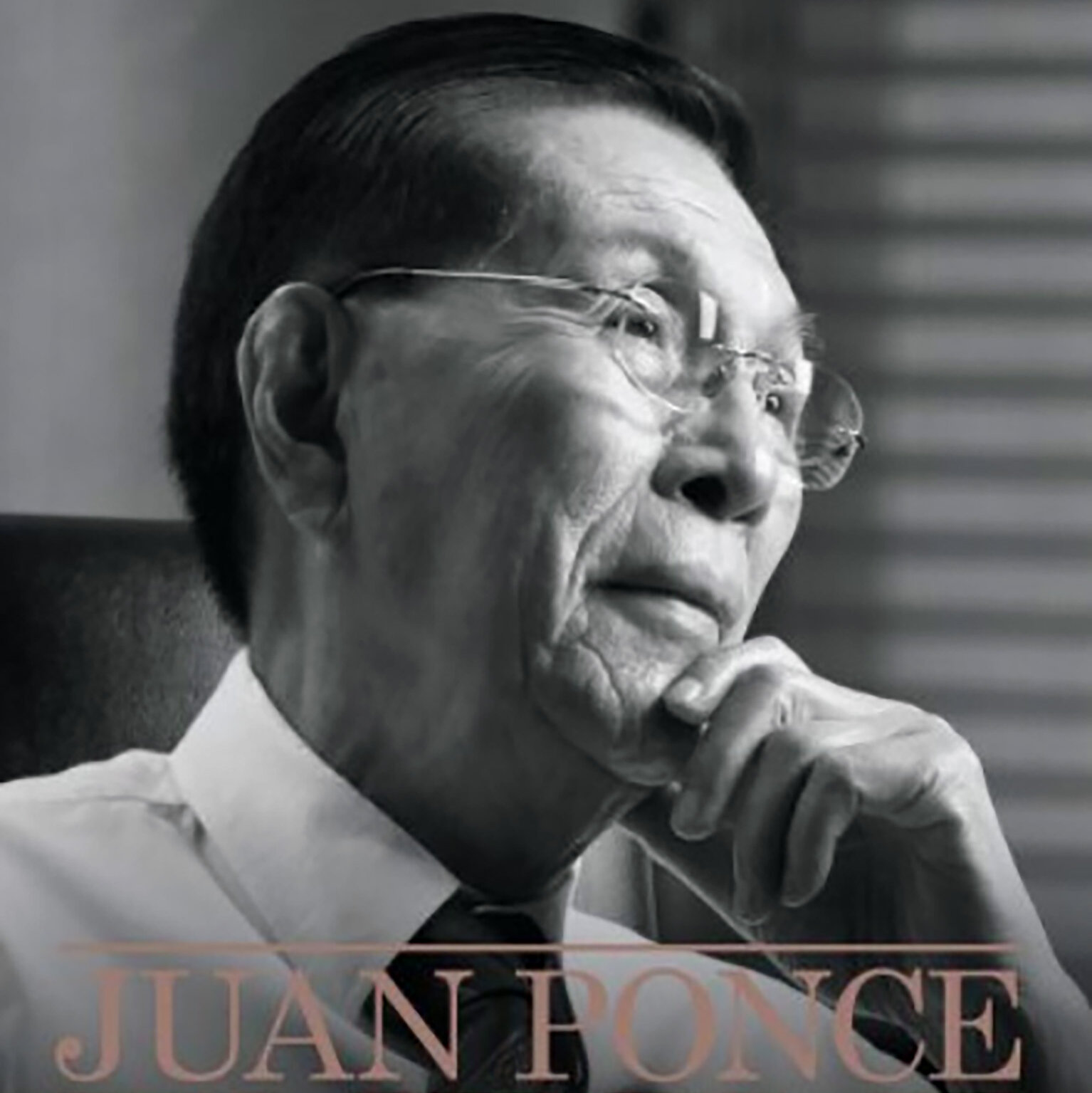
Juan Ponce Enrile
 Philippines
Also known as: JPE, Juanito Furagganan
Birthday
February 14, 1924
Birth Sign
Aquarius
Birthplace
Gonzaga, Cagayan, Philippines
Age
Died at 101
About
Juan Furagganan Ponce Enrile Sr., known as JPE, was a towering figure in Philippine politics for over six decades. A lawyer by training, Enrile served as the 26th President of the Senate from 2008 to 2013, and his career spanned roles as Justice Secretary, Defense Minister, and Chief Presidential Legal Counsel. He was one of the longest-serving legislators in the country's history, with four Senate terms totaling nearly 23 years. Enrile passed away on November 13, 2025, at the age of 101, leaving behind a legacy as complex as the nation he served. He was interred at Libingan ng mga Bayani in Taguig, Metro Manila. Enrile's public image is deeply polarized; to his supporters, he was a brilliant legal mind and a survivor who served the nation for decades, while to his critics, he was an architect of martial law and a symbol of the Marcos dictatorship's excesses. He was often described as a "political chameleon" for his ability to shift allegiances and remain influential across different regimes. His role in the People Power Revolution earned him some credit as a democrat, but his earlier actions under Marcos overshadowed that for many. Enrile's persona was that of a shrewd, calculating politician, known for his eloquent speeches and his ability to navigate the murky waters of Philippine politics. His death in 2025 prompted mixed reactions, with human rights groups condemning his legacy while political figures like Bongbong Marcos praised his service. The political establishment highlights his intellect and public service, while human rights advocates recall him as an architect of tyranny. His death was the most recent significant news, as he was serving as Chief Presidential Legal Counsel until his passing.
Early Life & Background
Juan Ponce Enrile's early life was marked by poverty and illegitimacy. Born Juanito Furagganan on February 14, 1924, in Gonzaga, Cagayan, he was the son of Petra Furagganan and Alfonso Ponce Enrile, a lawyer and politician who was already married. Baptized into the Philippine Independent Church, he grew up in a poor household and started working for a distant relative at age seven to fund his schooling. At 20, he converted to Roman Catholicism. His education took a dramatic turn when he was expelled from school over a love triangle. The perceived injustice stung, and it shifted his ambitions from engineering to law. Eventually, his father acknowledged him, brought him to Manila, and legally changed his name to Juan Ponce Enrile. He completed his secondary education at Saint James Academy and pursued pre-law studies under his new name. Enrile's path to power began in the legal profession. He earned his law degree and built a career that would eventually intersect with Ferdinand Marcos. Before his government appointments, he worked as a lawyer, and his sharp legal mind caught the attention of the future president. By 1966, he was appointed Commissioner of the Bureau of Customs, a role that marked the start of his long and controversial public service.
Career Growth
Juan Ponce Enrile's career took off under Ferdinand Marcos. After serving as Commissioner of the Bureau of Customs from 1966 to 1968, he became Secretary of Justice and later Minister of National Defense. In 1972, he was instrumental in planning and implementing martial law, a decision that would define his legacy. As head of the Philippine Coconut Authority, he controlled the copra industry alongside business tycoon Danding Cojuangco, and he also oversaw logging operations that drastically reduced the country's forest cover. By the 1980s, internal rivalries within the Marcos circle diminished his influence.
The turning point came in February 1986. Enrile, along with the Reform the Armed Forces Movement, plotted a coup against Marcos. When the plot was discovered, he and General Fidel Ramos famously retreated to Camps Aguinaldo and Crame, publicly withdrawing their support for Marcos. This act, coupled with massive civilian protests, triggered the People Power Revolution, which ousted Marcos and restored democracy.
After the revolution, Enrile continued his political career. He was elected to the Senate in 1987 and served multiple terms, becoming one of the longest-serving legislators in Philippine history. During his tenure, he presided over the impeachment trial of Chief Justice Renato Corona, a highly polarizing event. He served as the 26th President of the Senate from 2008 until his resignation on June 5, 2013. Enrile's political agility kept him relevant across regimes. He supported ousted President Joseph Estrada in 2001 and participated in rallies preceding the May 1 riots. In 2022, he returned to government as Chief Presidential Legal Counsel under President Bongbong Marcos, a position he held until his death in November 2025. His career, spanning over six decades, was a testament to his ability to adapt and survive in a rapidly changing political landscape.
Career Timeline
Public Image & Style
Juan Ponce Enrile's public image is deeply polarized. To his supporters, he was a brilliant legal mind and a survivor who served the nation for decades. To his critics, he was an architect of martial law and a symbol of the Marcos dictatorship's excesses. He was often described as a "political chameleon" for his ability to shift allegiances and remain influential across different regimes. His role in the People Power Revolution earned him some credit as a democrat, but his earlier actions under Marcos overshadowed that for many. Enrile's persona was that of a shrewd, calculating politician. He was known for his eloquent speeches and his ability to navigate the murky waters of Philippine politics. His death in 2025 prompted mixed reactions, with human rights groups condemning his legacy while political figures like Bongbong Marcos praised his service. He was interred at Libingan ng mga Bayani, a resting place reserved for national heroes and veterans, which itself sparked controversy given his contested past.
Fame & Fandom
Juan Ponce Enrile remains a towering figure in Philippine history, his name echoing through the corridors of power long after his final breath. In August 2026, he stands as the 58th most famous person in Philippines, a slight dip from the 56th spot held in the previous cycle. His influence extends beyond borders to cement him as the 91st most famous person from Philippines, moving down from the 86th position previously recorded. These placements reflect a lifetime of navigating the treacherous waters of dictatorship and democracy, tracked by the iFANN Global Fame Rankings which monitor global attention across media coverage, search, and consumption signals worldwide. Despite his passing at age 101, his legacy persists not through adoring crowds or viral moments, but through the sheer weight of historical events he shaped. There is no formal fanbase for Enrile; political figures of his stature rarely cultivate organized fandoms with rituals or chants. Instead, his public presence was defined by formal engagements and legislative duties rather than performance art. The people who remember him do so through the lens of history books and the EDSA Revolution, where his defection from Ferdinand Marcos sparked a democratic awakening. This absence of a named fan community underscores the gravity of his role as a statesman rather than an entertainer. His story is one of strategic survival and pivotal shifts in allegiance, earning him the label of a political chameleon while simultaneously securing his place as a democrat when it mattered most.
Interesting Facts and Legends
A discrepancy lingers over Juan Ponce Enrile's birthdate. While February 14, 1924, remains the widely cited year, his son Jack revealed in 2025 that June 22, 1922, might be the true date, pushing his age at death even higher. As a teenager, Enrile faced expulsion from school due to a love triangle, an incident that steered him toward the study of law. He possessed a sharp wit and a photographic memory that served him well into his 90s. Contrary to rumors, he never earned an engineering degree despite early interests, sticking instead to his legal training. Enrile received the Order of Lakandula with the rank of Grand Commander (CLH). His career saw him shift alliances from supporting Marcos to leading the People Power Revolution, and later aligning with Bongbong Marcos. A defining legend involves his defection alongside Fidel V. Ramos, a move that triggered the EDSA Revolution and ousted the dictator. Another iconic moment was his unanimous election as Senate President in 2008, where he maintained a high legislative rating of 91.72% during his fourth term until his resignation in 2013.
Family & Personal Life
Juan Ponce Enrile was born to Petra Furagganan and Alfonso Ponce Enrile, a lawyer and politician who was already married. He grew up in poverty in Gonzaga, Cagayan, and was raised in the Philippine Independent Church before converting to Roman Catholicism. He married Cristina Castañer in 1957, and they had two children, including Jack Ponce Enrile, who later became a politician. His half-sister was Armida Siguion-Reyna, a well-known actress and singer. Enrile's family life was marked by his father's initial absence and his eventual acknowledgment. His relationship with his father was complex, but it opened doors for his education and career. He remained close to his family throughout his life, and his son Jack was a constant presence in his later years.
Notable Connections
Juan Ponce Enrile was closely associated with Ferdinand Marcos, serving as his Justice Secretary and Defense Minister. He also worked with General Fidel Ramos during the People Power Revolution. Later, he served under Bongbong Marcos as Chief Presidential Legal Counsel. His family connections included his son Jack Ponce Enrile and half-sister Armida Siguion-Reyna.
Relationships & Dating History
Juan Ponce Enrile married Cristina Castañer in 1957. They had two children together, including Jack Ponce Enrile. The marriage lasted until Cristina's death, and Enrile remained a widower for the rest of his life. There is no public record of other significant romantic relationships. His family life was relatively private compared to his political career, and he was known to be devoted to his wife and children. At the time of his death in 2025, he was a widower.
- MarriedCristina Castañer1957 - presentMarried in 1957, they had two children together, including Jack Ponce Enrile.
Death & Aftermath
Died
November 13, 2025 (aged 101)
Death Place
Unknown
Cause of Death
Natural causes due to old age
Juan Ponce Enrile peacefully returned to his Creator on November 13, 2025, according to an official statement released via his family's Facebook page. The former defense chief and Senate President passed away at the age of 101, with reports characterizing his end as natural and consistent with his extreme advanced age. While no specific medical facility was confirmed in public records, the description of a peaceful passing suggested a quiet conclusion to a life that had navigated decades of Philippine political turbulence. Major international outlets corroborated the date and circumstances, framing the event as the final chapter for one of the nation's most enduring yet polarized figures.
Reaction to the news arrived in sharp contrast. Human rights groups like SELDA, representing victims of the Marcos-era martial law period, reacted with condemnation, reflecting the deep scars left by Enrile's role during that dark time. Conversely, political colleagues from across generations hailed him as a unique architect of the country's legislative history. His death sparked extensive obituaries globally, where he was remembered as a man who helped oust Ferdinand Marcos yet remained a central figure in the legal battles that defined the post-dictatorship era. Posthumous developments focused on the defense of his historical record rather than traditional memorials.
On June 3, 2026, his daughter Katrina Ponce Enrile publicly admonished Senator Alan Cayetano for allegedly misrepresenting her father's legacy, highlighting ongoing disputes over how history would judge his tenure. A Supreme Court ruling regarding his bail bid during his lifetime continued to be cited by Senator Joseph Estrada in August 2026 as a precedent in other cases. The handling of his estate remained private.
Net Worth (Estate Value)
$10 Million
iFANN Editorial Team estimate
Per iFANN's editorial analysis, Juan Ponce Enrile's net worth stands at $10 Million. This figure reflects his extensive tenure in government and diverse business involvements throughout his life. His wealth accumulated primarily through government salaries, pensions, and strategic investments. During the Marcos era, Enrile wielded significant influence over the coconut industry, a factor that likely bolstered his financial standing considerably. Now, his estate is managed by his heirs, and its value remains a subject of public interest given his long and controversial career. Although he never publicly disclosed his full financial portfolio, this net worth estimate captures the economic reality of his decades of public service and enduring political influence.
Awards Won (1)
Juan Ponce Enrile received the Order of Lakandula with the rank of Grand Commander (CLH), a prestigious national honor in the Philippines. This recognition highlighted his contributions to the country, though his legacy remains contested. No other major awards are documented in available sources.
00Grand Commander (CLH)
Known For
People Power Revolution
1986 · Key figure who defected from Marcos
Senate President
2008 · 26th President of the Senate
Martial Law
1972 · Instrumental in its implementation
Chief Presidential Legal Counsel
2022 · Advisor to President Bongbong Marcos
Keywords
Sources
Quick Facts
- Profession
- politician, jurist, lawyer
- Born
- +1924-02-14
- Birthplace
- Gonzaga
- Died
- +2025-11-13
- Death Place
- Makati
- Gender
- Male
- Birth Sign
- Aquarius
- Spouse
- Cristina Castañer
- Children
- Jack Ponce Enrile, one other child
Personal Details
- Full Name
- Juanito Furagganan
- Spouse
- Cristina Castañer
- Children
- Jack Ponce Enrile, one other child
Frequently Asked Questions
When and where was Juan Ponce Enrile born?
What was Juan Ponce Enrile's role in the People Power Revolution?
Who was Juan Ponce Enrile married to?
When did Juan Ponce Enrile die and at what age?
What is Juan Ponce Enrile's net worth in 2026?
Join the community
fans discussing