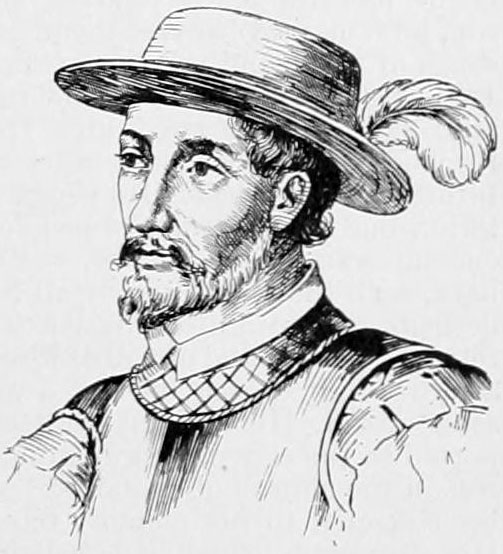
Juan Ponce de León
 Spain
Spainexplorer•conquistador•military personnel
Birthday
+1460
Birth Sign
Birthplace
Santervás de Campos
Age
Died at 61
About
Juan Ponce de León, born around 1460 in Santervás de Campos, Spain, was a seasoned military man who became a prominent explorer and conquistador in the early days of European exploration in the Americas. He began his career serving in the Spanish military before venturing across the Atlantic. His journey started in 1493, joining Christopher Columbus's second expedition as a volunteer. This marked the beginning of his significant involvement in the colonization and exploration of the New World. His career trajectory saw him rise through the ranks in the colonial administration of Hispaniola. By the early 1500s, he held a key military position, playing a role in quelling native uprisings. This experience paved the way for his independent expeditions. In 1508, he led the first European exploration of Puerto Rico, and the following year, he was appointed its first governor by the Spanish crown. During his time as governor, he amassed wealth through plantations and mining operations, though his tenure was marked by a significant legal dispute with Diego Colón, son of Christopher Columbus, over governing rights. After losing the governorship in 1511, he turned his focus to further exploration. Ponce de León is most famously known for leading the first documented European expedition to La Florida in 1513. During this voyage, he landed on the coast and charted a significant portion of the region's eastern and gulf coastlines, claiming the land for Spain and giving it the name Florida. While popular legend often associates his quest with the search for a mythical Fountain of Youth, historical evidence does not support this narrative, with most scholars viewing it as a later embellishment. He passed away in 1521 from wounds sustained during a subsequent colonization attempt in Florida.
Fame & Fandom
Centuries after his death, the Spanish conquistador Juan Ponce de León remains a fixture in American geography and folklore. His name graces springs in Florida, cities in Puerto Rico, and parks stretching from Orlando to West Palm Beach. A new statue unveiled at the Florida State Capitol in July 2026 cemented this presence, explicitly stripping away the mythical Fountain of Youth to honor the historical figure behind the legend. This modern reclamation reflects a society still grappling with how to remember a man who died in 1521 while shaping a continent. The cultural mythology surrounding him is vast, yet distinct from verified history. While popular stories claim he sought a magical spring to restore his youth, historians trace this narrative to later exaggerations. In reality, his voyages were driven by gold, land, and conversion. He arrived on the coast of Florida during Easter season in 1513, naming the territory La Florida. His life ended violently near Charlotte Harbor when an indigenous Calusa warrior wounded him with an arrow. Unlike the fountain myth, his death is a documented fact. Despite these enduring stories, there is no organized fanbase or fandom for Ponce de León. He lived centuries before celebrity culture existed, leaving no rituals, inside jokes, or campaigns. No group claims him as a mascot, and no fan-funded projects bear his name. He remains a subject of historical study rather than active adoration. Consequently, iFANN has evaluated his global standing but found no current placement in the published rankings. Juan Ponce de León does not hold a position in the Global Top 1,000 or any Top-100 scope list.
Interesting Facts and Legends
Juan Ponce de León was born around 1460 in Santervás de Campos, Spain, and began his career as a volunteer on Christopher Columbus's second expedition in 1493. He rose through the colonial ranks in Hispaniola before leading expeditions to Puerto Rico and Florida. A persistent legend claims he searched for the Fountain of Youth, though historians view this as a fabrication by Gonzalo Fernández de Oviedo y Valdés written decades after the explorer's death. Real motivations included finding gold and converting indigenous peoples. He landed in Florida on April 2, 1513, during the Pascua Florida, which gave the region its name. Recent scholarship notes that while others may have visited earlier, Ponce de León holds the credit for the first documented European settlement attempts in Puerto Rico. His life ended in July 1521 after being wounded by a Calusa warrior's arrow near Charlotte Harbor. He retreated to Cuba where the injury proved fatal. Modern tributes include a statue unveiled in Tallahassee in July 2026 that deliberately omits the fountain element to separate history from myth.
Death & Aftermath
Died
+1521-01-01 (aged 61)
Death Place
Unknown
Cause of Death
Unknown
Awards & Accolades
Keywords
Quick Facts
- Profession
- explorer, conquistador, military personnel
- Born
- +1460
- Birthplace
- Santervás de Campos
- Died
- +1521-01-01
- Death Place
- Havana
- Gender
- Male
Join the community
fans discussing