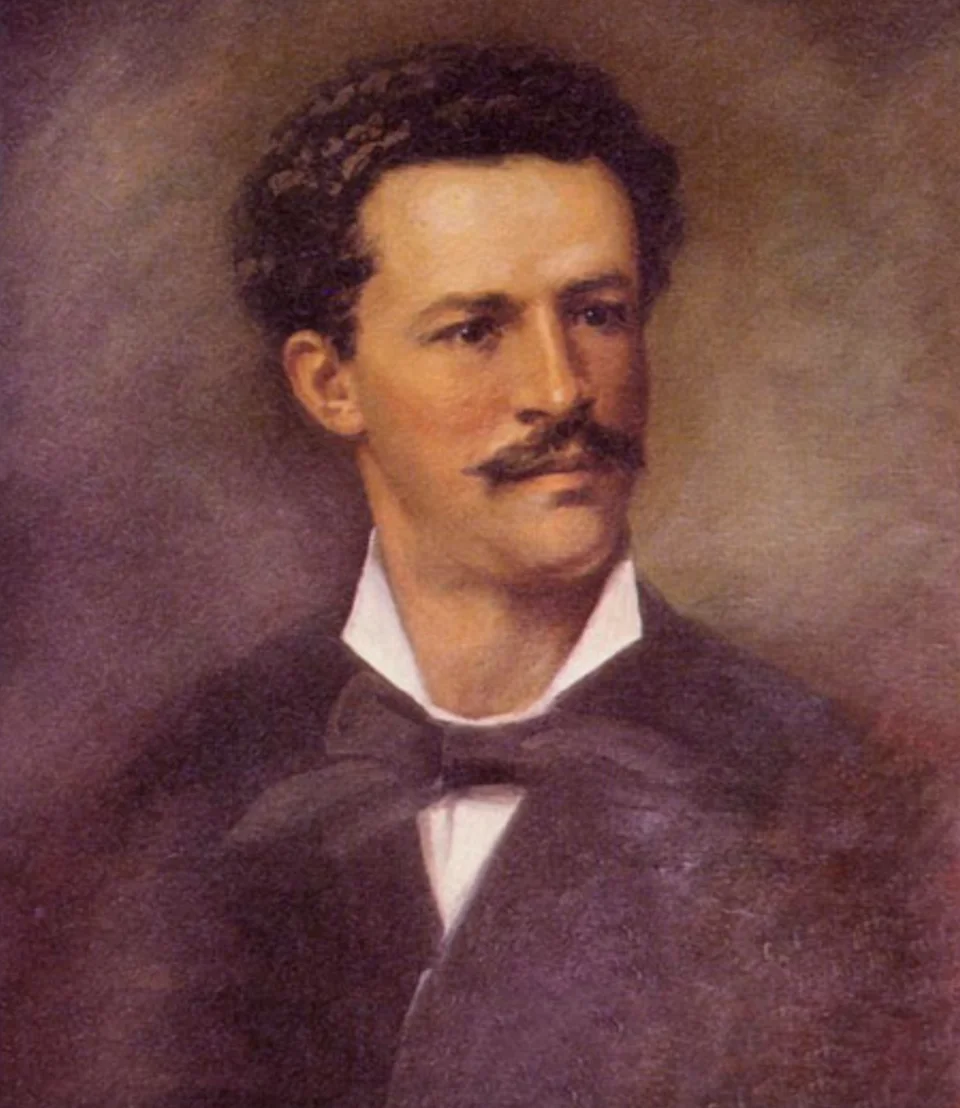
Juan Montalvo
 Colombia
Birthday
April 13, 1832
Birth Sign
Aries
Birthplace
Ambato, Ecuador
Age
Died at 56
About
Juan Montalvo was an Ecuadorian essayist and novelist, a central figure in Latin American letters whose sharp prose and unyielding liberalism made him a formidable voice against tyranny and clerical power. Born in Ambato in 1832, he spent his life in exile and in print, wielding language as a political weapon. His best-known works, including Las Catilinarias and Siete tratados, remain touchstones of Spanish-language essay writing, and his posthumous sequel to Don Quixote shows a playful yet serious engagement with the classics.
Montalvo's reputation rests on his fearless opposition to Ecuador's authoritarian rulers, especially Gabriel García Moreno and Ignacio de Veintemilla, whom he attacked through his magazine El Cosmopolita. His essays blend moral philosophy, political critique, and literary flair, earning admiration from later writers such as Jorge Luis Borges and Miguel de Unamuno. Though he died in Paris in 1889, his body was returned to Ambato, where a mausoleum honors his legacy. Today he is remembered as Ecuador's most influential man of letters, a writer whose ideas outlived the regimes he fought.
Early Life & Background
Juan María Montalvo Fiallos was born on April 13, 1832, in Ambato, a city in the Ecuadorian Andes. His parents were of Spanish descent, and his family belonged to the provincial elite, though little else is documented about his early household. He studied at the San Luis Seminary in Quito, where he received a classical education that included Latin, rhetoric, and philosophy. Even as a young man, Montalvo was drawn to liberal ideas, and he began writing essays and poems that criticized the conservative, church-aligned establishment.
His first published work appeared in the 1850s, and he quickly gained a reputation as a sharp polemicist. In 1860, he founded El Cosmopolita, a magazine that became his primary platform for political and social commentary. Through its pages, he attacked the dictatorship of Gabriel García Moreno, who had aligned the state closely with the Catholic Church. Montalvo's outspokenness forced him into exile, first to Colombia and later to France, but he continued to write and publish from abroad. These early years, marked by education and the first stirrings of dissent, set the stage for his later literary achievements.
Career Growth
Montalvo's breakthrough came with the publication of Las Catilinarias in 1880, a series of essays that directly denounced the tyranny of Ignacio de Veintemilla. The work, titled after Cicero's orations against Catiline, framed political corruption as a moral failing and called for civic resistance. It was widely read across Latin America and established Montalvo as a leading voice of liberal thought.
Two years later, in 1882, he published Siete tratados, a collection of essays on ethics, aesthetics, and politics that critics consider his masterpiece. The book was praised for its stylistic elegance and intellectual range, and it earned Montalvo international recognition. His final major work, Capítulos que se le olvidaron a Cervantes, appeared in 1895, after his death. This playful sequel to Don Quixote demonstrated his deep engagement with Spanish literature and his belief that classic texts could be reimagined for contemporary audiences. Montalvo also left behind Geometría Moral, published posthumously in 1902, which further cemented his reputation as a thinker unafraid to question authority.
Career Timeline
Public Image & Style
Montalvo cultivated the image of a solitary intellectual, a man who preferred the pen to the sword but wielded it with equal force. He saw himself as a moral guardian of the nation, and his essays often carried a prophetic tone, as if he were speaking from a mountaintop. In the public imagination, he became a symbol of resistance against tyranny, and his name was invoked by later generations of Latin American reformers.
His style was deliberately ornate, drawing on classical rhetoric and Spanish Golden Age prose, which made his work both admired and criticized. Supporters praised his eloquence and courage; detractors called him arrogant and impractical. Over time, his image has been romanticized as that of the exiled writer who never compromised his principles, a figure of intellectual integrity in a region often ruled by caudillos.
Fame & Fandom (iFAMOUS Rankings)
Juan Montalvo commands a global audience defined by academic study and historical reverence rather than the frenetic energy of modern celebrity culture. As a 19th-century essayist, his reach extends through university syllabi and literary archives across Latin America and Spain, where his sharp prose remains a touchstone for political philosophy. Despite this enduring influence, iFANN's Global Fame Engine has evaluated this person, but they do not currently hold a placement in the published rankings (Global Top 1,000 or a Top-100 scope list). He is not ranked among the world's most famous figures today because his fame operates within the specific, quiet channels of literature and history rather than the broad signals of pop consumption that drive contemporary lists. Consequently, there is no formal fandom name documented for his followers; his admirers are scholars, students, and lovers of Spanish American letters who engage with his work without the organized rituals or official branding seen in modern entertainment spheres. While he once stood as a solitary intellectual wielding his pen against tyranny, today his legacy persists as a respected chapter in history books rather than a trending topic on social media.
Interesting Facts and Legends
Montalvo was known for his sharp wit, and one of his most quoted lines, though not confirmed verbatim, is his famous threat against Gabriel García Moreno: "My pen has killed him." He was referring to his writings that helped stir opposition to the dictator. He spent much of his later life in Paris, where he died, but his remains were later moved to a mausoleum in Ambato, Ecuador, designed by the sculptor Luis Mideros. Montalvo's library, which he kept in exile, contained over 3,000 volumes, reflecting his wide-ranging intellectual interests. Despite his anti-clerical stance, Montalvo was deeply religious in his own way, and his essays often drew on Christian ethics to argue for social justice. He was an admirer of Cervantes and wrote not only a sequel to Don Quixote but also several critical essays on the novel. A widely retold story from his era describes how his fiery essays against the church and state caused such public outrage that authorities frequently attempted to ban his publications, yet his words continued to circulate underground, fueling the very liberal movements he championed. This reputation as a fearless polemicist turned him into a national hero in Ecuador, cementing a legend where his written attacks were said to be more deadly than any physical weapon.
Family & Personal Life
Montalvo married Clotilde Cerdà i Bosch, a Spanish pianist and writer who was known by the pen name Esmeralda Cervantes. The couple had no children together. Their marriage was marked by Montalvo's frequent absences due to exile and his intense focus on writing. Little else is recorded about his immediate family, though his upbringing in a conservative household likely influenced his later rebellion against clerical authority. His family's social standing allowed him access to education and literary circles, but he ultimately broke with the traditional values of his class to champion liberal reforms.
Notable Connections
Montalvo's work was admired by later literary giants, including Jorge Luis Borges and Miguel de Unamuno, who saw in him a precursor of modern Latin American essay writing. His political opponents, Gabriel García Moreno and Ignacio de Veintemilla, were the targets of his most biting critiques. His wife, Clotilde Cerdà i Bosch, was a noted performer and writer in her own right, and their marriage was part of the intellectual culture of the time.
Relationships & Dating History
Montalvo married Clotilde Cerdà i Bosch, a Spanish pianist and writer, in a union that was both personal and intellectual. The couple shared a passion for the arts, and Clotilde, who performed under the name Esmeralda Cervantes, was a well-known figure in European salons. They had no children. Their marriage endured through Montalvo's long periods of exile, though the couple often lived apart. At the time of his death in 1889, Montalvo was married to Clotilde.
- MarriedClotilde Cerdà i Bosch? - 1889Montalvo was married to Clotilde at the time of his death.
Death & Aftermath
Died
January 17, 1889 (aged 56)
Death Place
Madrid
Cause of Death
Unknown
Juan María Montalvo Fiallos, the renowned Ecuadorian essayist and novelist known for his anti-clericalism and status as one of the finest writers of 19th-century Spanish American prose, died on January 17, 1889. Historical accounts confirm he was living in exile in Madrid at the time of his death due to his political activism against the dictatorship of Gabriel García Moreno in Ecuador. While the exact date is confirmed across historical records, specific details regarding the precise location of his death within Spain, the official medical cause, the circumstances of his final days, and the results of any autopsy or inquest are not documented in the available search results.
The search results do not contain information on the date, location, or nature of his burial or cremation, nor do they list notable attendees or performances associated with his interment. Posthumously, Montalvo has been recognized as an influential figure in Latin American literature, with Britannica noting his enduring legacy as a satirist and writer. His works, including the unfinished sequel to Don Quixote titled Capítulos que se le olvidaron a Cervantes, continued to circulate, cementing his status as a thinker who questioned authority without flinching.
Net Worth (Estate Value)
$1 Million
iFANN Editorial Team estimate
As a 19th-century writer, Montalvo did not amass significant wealth from his books during his lifetime. His income came primarily from his family's modest resources and occasional contributions to periodicals. He lived frugally, often in exile, and dedicated his energy to writing rather than financial gain. In today's terms, his estate would be valued modestly, mainly through the continued publication of his works in Spanish-language editions. Per iFANN's editorial analysis, as of 2026, his literary estate is estimated to be worth around $1 million, reflecting royalties from academic and general readership. This figure is based on the ongoing demand for his essays in Latin American literature courses and the occasional reissue of his complete works.
Awards & Accolades
Known For
Las Catilinarias
1880 · Author
Siete tratados
1882 · Author
Capítulos que se le olvidaron a Cervantes
1895 · Author
Keywords
Sources
Quick Facts
- Profession
- Essayist, novelist
- Born
- April 13, 1832
- Birthplace
- Ambato, Ecuador
- Died
- January 17, 1889
- Death Place
- Paris, France
- Gender
- Male
- Spouse
- Clotilde Cerdà i Bosch
- Birth Sign
- Aries
Personal Details
- Full Name
- Juan María Montalvo Fiallos
- Spouse
- Clotilde Cerdà i Bosch
Frequently Asked Questions
Who was Juan Montalvo?
What are Juan Montalvo's most famous works?
What was Juan Montalvo's political stance?
Who admired Juan Montalvo's writing?
Where is Juan Montalvo buried?
Join the community
fans discussing