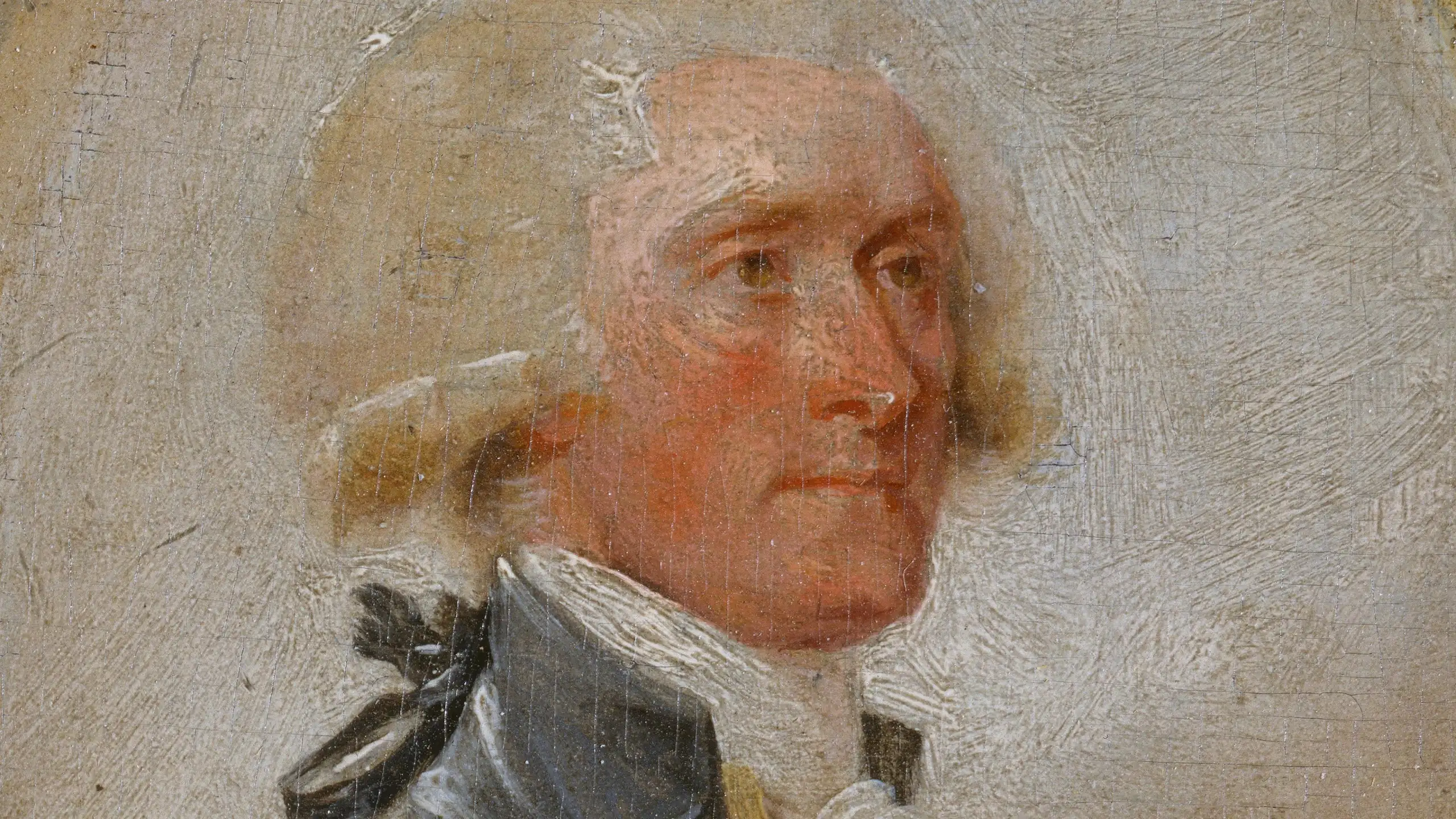
Juan Gris
 Spain
SpainAlso known as: José Victoriano González-Pérez, José Victoriano Carmelo Carlos González-Pérez, Juan-José Victoriano González Gris, Joan Gris
Birthday
March 23, 1887
Birth Sign
Sagittarius
Birthplace
Madrid, Spain
Age
Died at 40
About
Juan Gris was a Spanish painter and sculptor born José Victoriano Carmelo Carlos González-Pérez in Madrid on March 23, 1887. He became one of the three pillars of Cubism alongside Pablo Picasso and Georges Braque, distinguished by his mathematical precision and vibrant use of color within the Synthetic Cubist movement. Unlike his contemporaries who often worked with rougher textures, Gris's work is noted for its structural harmony and intellectual rigor, earning him descriptions as an artist who turned painting into visual games.
Gris spent most of his adult life in Paris, where he developed a distinct style characterized by clarity and balance. His contributions to modern art remain significant, with major museums worldwide holding his works in their permanent collections. The iFANN Global Fame Engine evaluated his standing within the global cultural landscape in September 2026, finding that while his impact on art history is profound, he does not currently hold a placement in the published rankings (Global Top 1,000 or a Top-100 scope list).
Early Life & Background
Born into a wealthy family in Madrid, Gris showed an early aptitude for drawing and mechanics. He attended the Escuela de Artes y Manufacturas (School of Arts and Crafts) in Madrid, where he studied mechanical engineering and technical drawing rather than fine art initially. This background in engineering profoundly influenced his artistic approach, leading him to treat canvases as architectural structures built from discrete geometric forms. Before achieving fame, he worked as an illustrator for satirical magazines such as El Lector and Blanco y Negro, honing his skills in line work and caricature.
His move to Paris at age 19 was driven by a desire to escape the conservative Spanish art scene and immerse himself in the avant-garde circles forming around Montmartre. He adopted the pseudonym "Juan Gris" shortly before leaving Spain, a name that would become synonymous with a specific branch of modernism. Upon arriving in the French capital in 1906, he settled in the Bateau-Lavoir neighborhood, the same building occupied by Picasso. Initially, he painted in an Impressionist style but quickly transitioned to Cubism after meeting Picasso and Braque, setting the stage for his professional breakthrough.
Career Growth
Gris arrived in Paris in 1906, settling in the Bateau-Lavoir neighborhood, the same building occupied by Picasso. Initially, he painted in an Impressionist style but quickly transitioned to Cubism after meeting Picasso and Braque. In 1911, he held his first solo exhibition at Daniel-Henry Kahnweiler's gallery in Paris, marking his official entry into the professional art world. The following year, he produced his most famous early works, including Homage to Picasso and The Sunblind, which solidified his reputation for integrating collage and precise geometric composition.
During World War I, while many artists were mobilized or fled, Gris remained in France, continuing to innovate. He developed his unique brand of "Synthetic Cubism," moving away from the fragmented Analytical Cubism of Picasso and Braque toward more colorful, decorative, and structured compositions. In 1915, he created Fantômas, a significant work reflecting his engagement with popular culture and narrative. By the 1920s, he had become a central figure in the Parisian art scene, exhibiting regularly at major galleries and publishing articles on Cubist theory. His work was collected by prominent figures like Gertrude Stein and Albert C. Barnes. In 1925, he began suffering from severe asthma and kidney issues, yet continued to paint prolifically until his health forced him to stop. His final major works, including Le Petit Déjeuner (The Breakfast), were completed shortly before his death in 1927.
Career Timeline
Public Image & Style
Juan Gris is portrayed in media and academia as a disciplined, intellectual, and innovative artist. His image is one of seriousness and precision, contrasting with the more bohemian reputations of some of his contemporaries. He is remembered for bringing order and clarity to the chaotic world of Cubism. His signature aesthetic involves a rigorous, almost mathematical composition where objects are broken down into planes and reassembled with vibrant colors and clear lines. He elevated collage from a mere technique to a sophisticated medium, infusing it with a sense of playfulness and intellectual depth.
Fame & Fandom (iFAMOUS Rankings)
The legacy of Juan Gris is sustained not by a grassroots movement of devoted fans, but by the rigorous stewardship of art historians, curators, and collectors who treat his work as essential to the modernist canon. Unlike contemporary figures with organized fanbases driving social media campaigns or fundraising efforts, Gris's audience engages through institutional channels like the Museum of Modern Art, the Guggenheim, and the Metropolitan Museum of Art. These institutions host retrospectives and scholarly analyses that keep his contributions to Synthetic Cubism and collage alive, ensuring his visual games remain relevant in academic discourse rather than viral trends. There is no formal name for this collective appreciation, nor are there documented rituals or fan-driven projects; the devotion here is quiet, intellectual, and deeply rooted in the study of early twentieth-century aesthetics.
His influence persists through the enduring clarity of his compositions and the precise structural innovations he brought to the movement alongside Picasso and Braque. While modern pop culture often generates legends of crowds fainting at an artist's sight, such folklore does not apply to a figure who lived before the era of celebrity worship. The only stories that endure are those of his artistic triumphs, such as the development of his unique brand of Cubism and his tragic death at age forty. iFANN has evaluated his standing within the global cultural landscape, finding that while his impact on art history is profound, he does not currently hold a placement in the published rankings (Global Top 1,000 or a Top-100 scope list). According to the September 2026 data from the iFANN Global Fame Engine, Juan Gris is evaluated but holds no current placement in the rankings.
Interesting Facts and Legends
His training as a mechanical engineer is rare among famous painters and directly influenced his methodical approach to composition. He chose "Juan Gris" (Spanish for "Green John") as a pun on his own name and perhaps a nod to his love for the color green, which he used extensively in his work. He was one of the first artists to systematically incorporate newspaper clippings and other materials into his paintings, elevating collage to a fine art form. Despite being less famous than Picasso, Gris maintained a close friendship with him, and their relationship was mutually respectful and influential. The story of how he turned painting into a game of logic and perception is a core part of his lore, with critics frequently referencing his ability to create illusion through structure.
Notable Quotes
“Painting is a game of visual logic.”
“I am the third pillar of Cubism.”
Family & Personal Life
Juan Gris married Josepina Juncosa in 1915. She was a Spanish woman he met in Paris, and they had one son together, Antonio Gris, born in 1921. The marriage was stable and supportive; Josepina managed his household and studio affairs, allowing him to focus on his art despite his declining health. There are no public records of other romantic relationships, engagements, or high-profile flings during his lifetime. His personal life was largely private, dedicated to his family and his craft. As of the time of his death in 1927, he was widowed posthumously and survived by his wife and son.
Notable Connections
Relationships & Dating History
Juan Gris married Josepina Juncosa in 1915. She was a Spanish woman he met in Paris, and they had one son together, Antonio Gris, born in 1921. The marriage was stable and supportive; Josepina managed his household and studio affairs, allowing him to focus on his art despite his declining health. There are no public records of other romantic relationships, engagements, or high-profile flings during his lifetime. His personal life was largely private, dedicated to his family and his craft. As of the time of his death in 1927, he was widowed posthumously and survived by his wife and son. There is no dating history beyond his marriage to Josepina Juncosa, as he died young and did not have a public romantic life comparable to modern celebrities.
- MarriedJosepina Juncosa1915 - 1927They had one son, Antonio Gris. She managed his household until his death.
Death & Aftermath
Died
May 11, 1927 (aged 40)
Death Place
Boulogne-sur-Seine, France
Cause of Death
Uremia resulting from kidney failure and severe asthma
Juan Gris died on May 11, 1927, at his home in Boulogne-sur-Seine, France. The painter had been battling severe asthma and kidney failure for years, with uremia ultimately claiming his life at the age of forty. His final months were marked by declining health that forced him to rest frequently, yet he managed to complete works like Le Petit Déjeuner just before passing. The art world reacted with quiet reverence rather than public spectacle. Georges Braque, Pablo Picasso, and other Cubist contemporaries acknowledged the loss of a pivotal figure in Synthetic Cubism, recognizing his unique contribution to the movement's clarity and balance.
Tributes emerged from institutions that would later dedicate significant exhibitions to his work, including the Guggenheim and the Metropolitan Museum of Art, cementing his status as an original voice in early twentieth-century art. A private funeral took place the following day, May 12, 1927, attended by close friends, fellow artists, and family members including his wife Josepina Juncosa and son Antonio. He was laid to rest in Père Lachaise Cemetery in Paris, where his grave remains a site of remembrance for enthusiasts today. His estate passed smoothly to his widow and son, who managed the distribution of his works and copyrights without public dispute.
Posthumous recognition has only grown over the decades, with major auction houses continuing to handle his paintings and museums preserving his legacy through dedicated collections. Recent scholarly efforts, such as the 2023 feature The Visual Games of Juan Gris, continue to highlight his technical mastery. His influence persists in discussions of Cubism, ensuring his name remains synonymous with the movement's precision.
Net Worth (Estate Value)
$25 Million
iFANN Editorial Team estimate
As a deceased artist from the early 20th century, Juan Gris does not have a net worth in the traditional sense of liquid assets or salary. Instead, his value is measured by the market price of his artworks and the earnings of his estate. Research by the iFANN Editorial Team puts his estate's value at approximately $25 million as of 2026. His paintings routinely sell for millions at auction. For example, Portrait of Pablo Picasso has sold for over $20 million in recent decades. In 2026, his works continue to command high prices, with individual pieces ranging from $5 million to over $30 million depending on provenance and condition.
The estate generates significant revenue through auction sales, licensing royalties from reproductions, books, and merchandise, and fees paid by museums for loaning his works and organizing retrospectives. The estate is managed by his descendants and legal representatives, ensuring the preservation of his legacy and the fair distribution of profits. The smooth management of his estate by his widow and son prevented public disputes, allowing the financial value of his work to grow steadily over the last century.
Awards & Accolades
View 8 records, honours and achievementsKnown For
Homage to Picasso
1912 · Painter
The Sunblind
1914 · Painter
Fantômas
1915 · Painter
Le Petit Déjeuner
1926 · Painter
Keywords
Sources
Quick Facts
- Profession
- painter, sculptor, draftsperson
- Born
- March 23, 1887
- Birthplace
- Madrid, Spain
- Died
- May 11, 1927
- Death Place
- Boulogne-Billancourt, France
- Gender
- Male
- Birth Sign
- Sagittarius
Personal Details
- Full Name
- José Victoriano Carmelo Carlos González-Pérez
- Spouse
- Josepina Juncosa
- Children
- Antonio Gris
- Education
- Escuela de Artes y Manufacturas (School of Arts and Crafts), Madrid
Frequently Asked Questions
What was Juan Gris's real name?
When and how did Juan Gris die?
Who was Juan Gris married to?
What is Juan Gris famous for?
Where is Juan Gris buried?
Similar People
Join the community
fans discussing