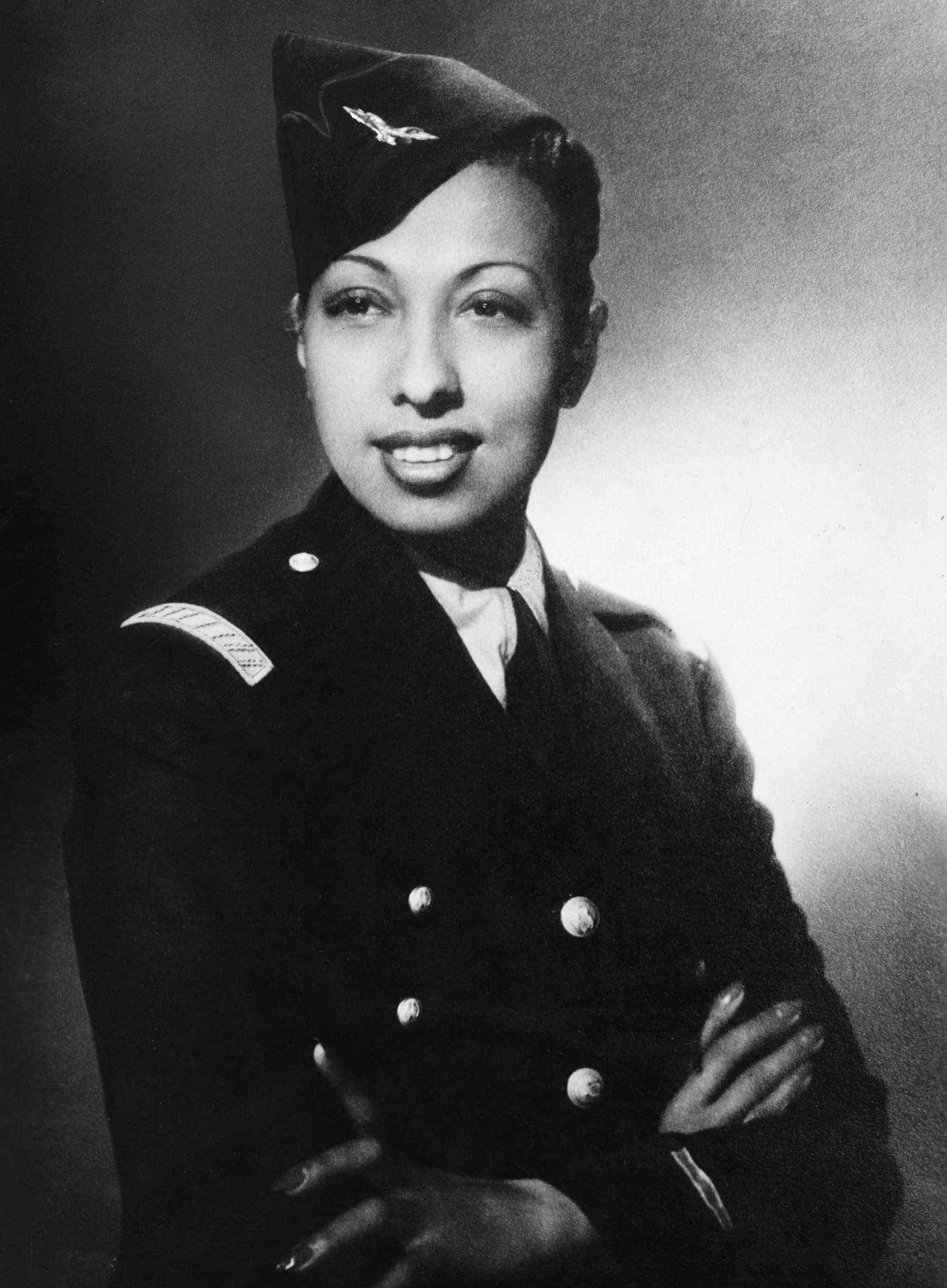
Josephine Baker
 France
dancer•singer•actress•civil rights activist
Also known as: Freda Josephine McDonald, Joséphine Baker, The Black Venus, The Creole Goddess
Birthday
June 3, 1906
Birth Sign
Gemini
Birthplace
St. Louis, Missouri, USA
Age
Died at 68
Height
5 ft 4 in (163 cm)
About
Josephine Baker was an American-born French dancer, singer, actress, and civil rights activist who became one of the most celebrated entertainers of the 20th century. Born Freda Josephine McDonald in St. Louis, she moved to Paris in 1925 and quickly rose to fame with her electrifying performances in La Revue Nègre and later at the Folies Bergère. Her iconic banana skirt routine in the 1927 revue Un vent de folie defined the Jazz Age aesthetic and earned her the titles "Black Venus" and "Creole Goddess." Beyond the stage, she made history as the first Black woman to star in a major motion picture, the silent film Siren of the Tropics.
Baker's life extended far beyond entertainment; she was a dedicated civil rights activist and a spy for the French Resistance during World War II. She refused to perform for segregated audiences in the United States and adopted twelve children of diverse racial backgrounds, calling them her "Rainbow Tribe." Her commitment to equality and her unique lifestyle made her a symbol of freedom and resilience. She died in Paris in 1975 and was posthumously inducted into the Panthéon in 2021, becoming the first Black woman to receive this highest French honor.
Early Life & Background
Freda Josephine McDonald was born on June 3, 1906, in St. Louis, Missouri, into a family living in poverty under the harsh realities of segregation. Her mother, Carrie McDonald, worked as a domestic servant, while her father, Willie McDonald, was a Pullman porter. The family faced constant instability, moving frequently between Chicago and St. Louis in search of better opportunities. By the time she was ten, Freda had dropped out of the fifth grade to support her family, working as a maid, washerwoman, and child laborer in cotton fields. Despite these hardships, she displayed an early passion for performance, singing in church choirs and participating in local talent shows.
Her path to professional stardom began in her teens when she joined a traveling vaudeville troupe called the Brown Buddies. This experience provided her first taste of the stage, allowing her to refine her dance skills and develop a confident presence. In 1921, she traveled to New York City to perform in the groundbreaking musical Shuffle Along, where her energetic dancing caught the attention of producers. This opportunity marked the turning point in her life, leading to her decision to move to Paris in 1925. The city offered a level of racial acceptance and artistic freedom that was unavailable to her in the United States, setting the stage for her meteoric rise to international fame.
Career Growth
Josephine Baker's career took off immediately upon her arrival in Paris in 1925. Her breakthrough came with the performance of La Revue Nègre at the Théâtre des Champs-Élysées, where her wild, energetic dance style captivated audiences. In 1926, she signed a contract with the prestigious Folies Bergère, becoming the first Black woman to headline the venue. Her 1927 revue Un vent de folie cemented her status as a global icon, featuring her signature costume: a skirt made of artificial bananas. This performance became a defining image of the Jazz Age.
In 1927, she starred in the silent film Siren of the Tropics (*La Sirène des tropiques*), directed by Alexander Korda, making her the first Black woman to lead a major motion picture. Throughout the 1930s, she remained a dominant figure in European cabaret, performing at venues like the Casino de Paris and the Bobino. Her signature song, "J'ai deux amours," expressed her love for both America and France. During World War II, she served as a spy for the French Resistance, smuggling intelligence hidden in her sheet music and hosting meetings at her estate, La Muette. Her wartime service was officially recognized posthumously when the CIA declassified documents confirming her espionage work in 2020. She received the Resistance Medal, the Croix de Guerre, and was named a Knight of the Legion of Honour by General Charles de Gaulle.
After the war, Baker continued her entertainment career while increasingly focusing on activism. She refused to perform for segregated audiences in the United States during her tours. In 1951, she purchased the Château de la Muette in Fontvieille, France, where she raised her "Rainbow Tribe" of twelve adopted children. In 1968, following the assassination of Martin Luther King Jr., she was offered a leadership role in the Civil Rights Movement but declined to prioritize the safety of her children. Her legacy was further honored in 2021 when she became the first Black woman inducted into the Panthéon in Paris.
Career Timeline
Public Image & Style
Josephine Baker is portrayed as a symbol of Black excellence, female empowerment, and LGBTQ+ history. Her media presence is characterized by her vibrant personality, her commitment to civil rights, and her unique lifestyle. She is remembered as a trailblazer who challenged racial barriers and embraced a life of freedom and creativity. Her signature style included exotic costumes, particularly the banana skirt, and her dynamic, energetic dance style. She was often referred to as the "Black Venus" and the "Creole Goddess." Her public image was one of confidence and defiance, refusing to compromise her principles even when it meant losing lucrative opportunities in the United States. She was featured on the covers of Time magazine in the 1930s and appeared in multiple issues of Vogue and Ebony. Her influence has been recognized by Rolling Stone, which ranked her among the greatest performers of the 20th century, and TIME, which named her one of the 100 most influential people of the 20th century.
Fame & Fandom (iFAMOUS Rankings)
Josephine Baker's enduring appeal transcends the typical celebrity fanbase, evolving into a global community of admirers who celebrate her as a symbol of Black excellence, female empowerment, and LGBTQ+ history. Unlike modern stan cultures that organize chart pushes or birthday campaigns, her legacy is sustained by academic institutions, civil rights organizations, and cultural historians who honor her through museum exhibitions and the preservation of her former home, La Muette. Fans, often calling themselves "Bakerites," have campaigned for her induction into the Panthéon and the preservation of her homes. This unique devotion keeps her story alive for new generations, particularly following recent projects like the 2026 announcement of a major biopic starring FKA Twigs, which has revitalized interest in her extraordinary life. The sheer scale of her influence, which tracks global attention across media coverage, search, and consumption signals worldwide, ensures she remains a towering figure in cultural memory. Josephine Baker is currently the 57th most famous person in Art & Design, a position holding steady from the previous cycle within the iFANN Global Fame Rankings. She is also ranked the 93rd most famous person from France in the September 2026 rankings. Her Wikipedia page receives over 50,000 views monthly in English alone.
Interesting Facts and Legends
Josephine Baker was famous for walking her pet cheetah, Chouchou, on a leash through the streets of Paris, causing scenes and headlines. She famously smuggled military intelligence hidden in the empty spaces of her sheet music during World War II. Her 1927 performance in the banana skirt remains one of the most iconic images of the 20th century. A new exhibition titled "Unleashed: Pets Performers" featuring Chouchou opened in May 2026, highlighting her eccentric life. A major biopic titled *Josephine Baker*, starring FKA Twigs, began filming in August 2026 in Hungary, France, and Bulgaria, with Aunjanue Ellis-Taylor joining the cast. Directed by Maïmouna Doucouré and produced by StudioCanal, the film aims to bring her story back to the forefront of popular culture. Additionally, a cabaret-style musical about her life premiered at the Fort Myers Fringe in May 2026. In September 2026, a special reimagining of Baker's work was presented at the Paris Opera, celebrating her legacy on the most opulent stage in Paris. She received the NAACP Spingarn Medal in 1952 and an honorary doctorate from Howard University around 1968.
Notable Quotes
“I have two loves: my country and Paris.”
“I am not a Negro, I am a human being.”
“The only way to get rid of prejudice is to show that it is wrong.”
Family & Personal Life
Josephine Baker adopted twelve children whom she called the "Rainbow Tribe," raising them at her estate, the Château de la Muette, instilling in them values of unity and tolerance. These children were of diverse racial backgrounds, including Jairos from Kenya, Aicha from Ethiopia, Maria from Haiti, Jean-Claude from France, Rodolphe from France, Yolande from France, Corinne from France, Patrick from France, Dominique from France, Christian from France, Marie-Thérèse from France, and André from France. Although she and her second husband, Jo Bouillon, had no biological children together, their shared love of music and the arts created a strong foundation for their family life. Baker's commitment to her children was so profound that she declined a leadership role in the Civil Rights Movement in 1968 to ensure their safety. Her second husband, Jo Bouillon, a jazz trumpeter and conductor, managed much of her career and supported her in raising the Rainbow Tribe. The family lived together in Fontvieille, France, creating a unique household that reflected Baker's vision of global unity.
Notable Connections
Relationships & Dating History
Josephine Baker was married twice. Her personal life was marked by her commitment to her "Rainbow Tribe" and her advocacy for racial equality. She met Jean Lion, a wealthy French industrialist, in the late 1930s. They married in 1937, which granted Baker French citizenship. The marriage ended in divorce in 1947. There were no children together. Later, she married Jo Bouillon, a French jazz trumpeter and conductor, in 1952. Their relationship was deeply rooted in their shared love of music and the arts. Bouillon managed much of her career during this period. He survived her, and they remained married until her death in 1975. They had no biological children together, but Baker continued to raise her adopted "Rainbow Tribe" with him. While Baker was known to have had romantic relationships prior to her marriages, historical records focus primarily on her two legal unions. Public accounts confirm her bisexuality, though specific details of other partners are less documented in mainstream biographies compared to her marriages. She was widely rumored to have had relationships with women, including the French writer Colette and various artists in her circle, but these were often treated as close friendships or unconfirmed rumors rather than publicized romances. As of her death in 1975, she was widowed.
- MarriedJean Lion1937 - 1947Granted Baker French citizenship; divorced
- MarriedJo Bouillon1952 - 1975Jazz trumpeter; survived her; raised Rainbow Tribe together
Death & Aftermath
Died
April 12, 1975 (aged 68)
Death Place
Paris, France
Cause of Death
heart disease
Josephine Baker passed away on April 12, 1975, in Paris at the age of 68. Official records state the cause was heart disease, though her family did not release detailed medical reports or autopsy findings to the public. Her death marked the end of a life that had bridged continents and challenged racial barriers for decades. Tributes poured in from across Europe and the United States, honoring her dual legacy as a celebrated entertainer and a courageous resistance fighter. She was buried in Monaco, a choice reflecting her deep ties to the French Riviera and her status as a global citizen. The years following her death saw a resurgence of interest in her contributions to history. In 2020, declassified documents from the CIA and French intelligence confirmed the extent of her espionage work during World War II, where she smuggled intelligence hidden in her sheet music scores and hosted secret meetings at her estate, La Muette. This revelation cemented her reputation not just as an artist but as a vital agent of the French Resistance. The most significant posthumous honor arrived on November 30, 2021, when she became the first Black woman inducted into the Panthéon in Paris, the final resting place of France's greatest heroes. Her estate, including the Château de la Muette which now serves as a museum, continues to generate revenue through tourism and licensing deals. Recent projects have kept her story in the spotlight, including a major biopic starring FKA Twigs that began filming in late 2026, ensuring her legacy reaches new generations.
Net Worth (Estate Value)
$15 Million
iFANN Editorial Team estimate
As Josephine Baker passed away in 1975, her net worth is now reflected in the value of her estate. Estimates vary, but her estate, including the Château de la Muette and Villa Kérylos, is valued significantly higher today due to historical significance and tourism. The Château de la Muette is now a museum and cultural center. The iFANN Editorial Team estimates her estate's current value at approximately $15 Million based on ongoing revenue streams and asset appreciation. Revenue sources include museum admissions, licensing deals for her image and likeness, royalties from posthumous releases, and merchandise. The estate is managed by her descendants and foundations dedicated to preserving her legacy. As of 2026, the estate continues to generate income through the aforementioned channels, with the biopic starring FKA Twigs expected to further boost interest and revenue. The estate also benefits from the increased global attention driven by the 2026 exhibitions and the upcoming film release.
Awards Won (5)
Josephine Baker received numerous prestigious awards throughout her life and posthumously. She was awarded the Resistance Medal and the Croix de Guerre for her bravery during World War II. She was named a Knight of the Legion of Honour by General Charles de Gaulle. In 1952, she received the NAACP Spingarn Medal for outstanding achievement by an African American. Posthumously, she was inducted into the Panthéon in Paris on November 30, 2021, becoming the first Black woman to receive this honor. She also received an honorary doctorate from Howard University and the French National Order of Merit.
1946 · Military Service
French Resistance
1946 · Military Service
French Resistance
Known For
Siren of the Tropics
1927 · Lead Actress
La Revue Nègre
1925 · Dancer
Un vent de folie
1927 · Headliner
Keywords
Sources
Quick Facts
- Profession
- singer, vedette, film actor
- Born
- +1906-06-03
- Birthplace
- St. Louis
- Died
- +1975-04-12
- Death Place
- Paris
- Gender
- Female
- Spouse
- Jo Bouillon, Jean Lion
- Birth Sign
- Gemini
Personal Details
- Full Name
- Freda Josephine McDonald
- Height
- 5 ft 4 in (163 cm)
- Spouse
- Jean Lion, Jo Bouillon
- Children
- Jairos, Aicha, Maria, Jean-Claude, Rodolphe, Yolande, Corinne, Patrick, Dominique, Christian, Marie-Thérèse, André
- Education
- Elementary school (dropped out after fifth grade)
Filmography
15
Total
10
Film
5
TV
Frequently Asked Questions
Who was Josephine Baker?
How many children did Josephine Baker adopt?
What was Josephine Baker's most famous costume?
Did Josephine Baker serve in the military?
When was Josephine Baker inducted into the Panthéon?
Join the community
fans discussing