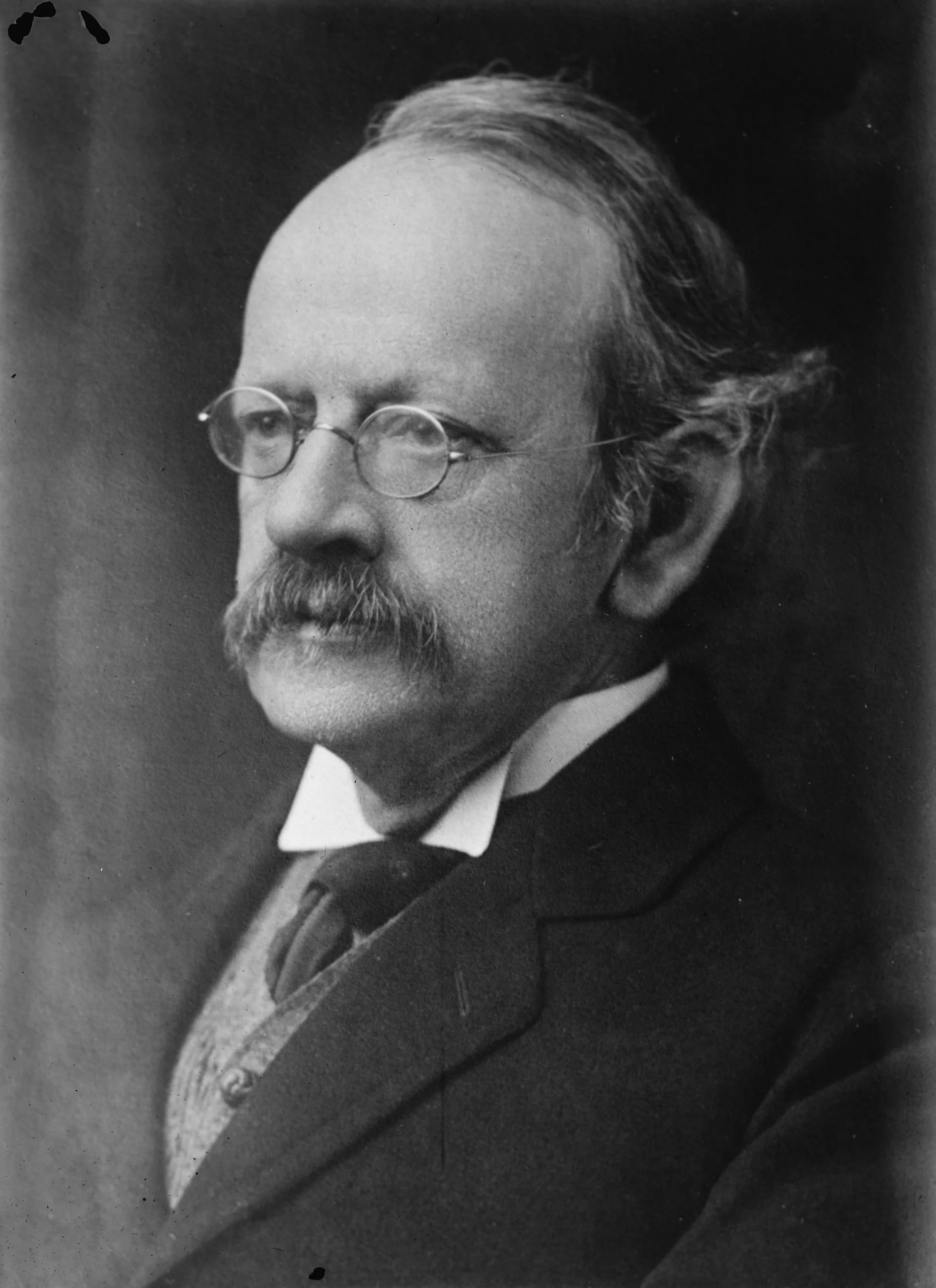
Joseph John Thomson
Awards & Honours
3
Awards Won
5
Honours
2
Rankings
2
Covers
3
Records
Sir Joseph John Thomson stands as one of the most influential scientists in history. His discovery of the electron in 1897 opened the door to the field of subatomic physics, fundamentally changing our understanding of matter. He was the first person to identify a subatomic particle, a feat that earned him the 1906 Nobel Prize in Physics. His mentorship legacy is equally remarkable; he guided seven students to win their own Nobel Prizes, more than any other supervisor. His son George also won a Nobel Prize, making them one of only four father-son pairs to achieve this honor. His work on isotopes and mass spectrometry continues to be foundational in modern chemistry and physics.
Awards
Honours & Distinctions
Fellow of the Royal Society
Elected for his contributions to physics.
President of the Royal Society
Served as the head of the UK's national academy of science.
Knight Bachelor
Knighted by King Edward VII for services to science.
Copley Medal
Awarded for his contributions to physics.
National Inventors Hall of Fame
Inducted posthumously for the discovery of the electron.
Rankings & Lists
TIME 100
Top 10 Scientists
Magazine Covers
Nature
1906-11-15
The New Atom
Nature
1915-05-20
New President of the Royal Society
Records & Feats
Father-Son Nobel Laureates
One of only four pairs of father and son to both win Nobel Prizes.
Most Nobel Mentees
Mentored seven students who won their own Nobel Prizes.
First Subatomic Particle Discovery
First person to discover the electron.